


V Bank Carbon Filter
In industrial air purification and gas-phase filtration, the V bank carbon filter represents a critical engineering solution for the removal of Volatile Organic Compounds (VOCs), odors, and corrosive gases. Designed to handle high airflow volumes while maintaining a low pressure drop, these filters are a staple in environments where air quality directly impacts process integrity, equipment longevity, and regulatory compliance. For engineers and procurement professionals, understanding the mechanical design, media selection, and integration of these filters into broader filtration systems is essential for optimizing plant performance.
At Kaifil, our focus on precision metal filtration components often intersects with gas-phase filtration requirements. While we specialize in stainless steel wire mesh and custom cartridges, the structural housing and pre-filtration stages for V bank systems frequently demand the durability and chemical resistance that only high-grade stainless steel can provide. This guide explores the technical nuances of V bank carbon filters to assist in the selection and implementation of effective industrial filtration strategies.
The Engineering Logic of V Bank Geometry
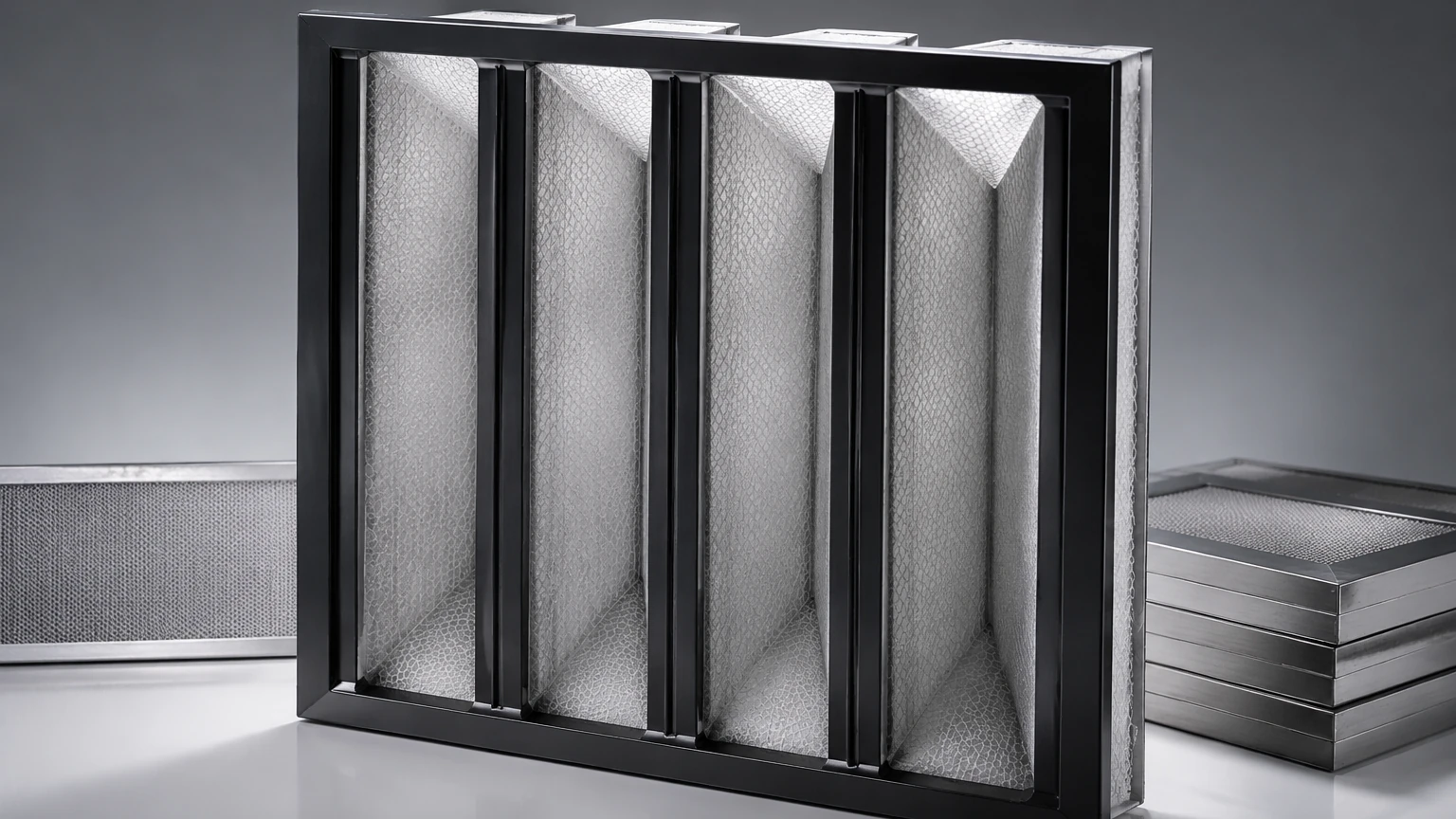
The primary challenge in gas-phase filtration is providing sufficient contact time between the air stream and the adsorbent media without creating an excessive restriction to airflow. The "V" bank design—sometimes referred to as a header-style or multi-V design—addresses this by arranging the filter media in a series of V-shaped pleats or panels within a standard 24×24 inch (or similar) frame.
Surface Area Maximization
By utilizing the V-shape, manufacturers can pack significantly more activated carbon media into a single unit compared to a traditional flat-panel filter. This increased surface area allows for a higher carbon loading capacity. In industrial applications, a higher mass of carbon generally correlates with a longer service life and a higher capacity for contaminant adsorption.
Airflow Dynamics and Pressure Drop
Static pressure is a major concern for HVAC and process air systems. A V bank carbon filter is engineered to minimize initial resistance. The geometry allows the air to pass through the media at a lower face velocity even when the overall system velocity is high. This reduction in velocity through the media—often called the "dwell time" or "residence time"—is critical for the adsorption process, as it gives the gas molecules more time to be captured by the pores of the activated carbon.
Activated Carbon Media: The Core of Adsorption
The performance of a v bank carbon filter is fundamentally dictated by the type and quality of the carbon media housed within the V-shaped panels. Activated carbon is processed to have a vast network of microscopic pores, creating an enormous internal surface area (often exceeding 1,000 square meters per gram).
Types of Carbon Base Materials
1. Coal-Based Carbon: Known for its high density and a broad range of pore sizes (mesopores and macropores), making it effective for a wide spectrum of industrial VOCs.
2. Coconut Shell Carbon: Characterized by a high concentration of micropores. This makes it exceptionally efficient at capturing small-molecule gases and odors, and it is often preferred in pharmaceutical and food-grade applications due to its purity.
3. Wood-Based Carbon: Typically has a more open pore structure, useful for capturing larger molecular weight compounds.
Impregnated Carbons for Specific Contaminants
Standard activated carbon works through physical adsorption (Van der Waals forces). However, for certain inorganic gases that do not readily adsorb, the carbon must be chemically treated or "impregnated."
* Acid Gas Removal: Carbon treated with potassium hydroxide (KOH) or sodium hydroxide (NaOH) is used to neutralize gases like hydrogen sulfide (H2S) and sulfur dioxide (SO2).
* Ammonia Removal: Phosphoric acid-impregnated carbon is utilized in cleanrooms and chemical plants to target ammonia and low-molecular-weight amines.
* Formaldehyde and Mercury: Specialized impregnants are used to create chemical bonds (chemisorption) with these specific hazardous vapors.
Structural Integrity and Frame Materials
In demanding industrial environments, the frame of the v bank carbon filter must withstand mechanical stress, humidity, and potential chemical exposure. While plastic and galvanized steel frames are common in commercial HVAC, industrial process applications often require more robust materials.
Stainless Steel Housings and Frames
For applications in chemical processing or offshore environments, stainless steel frames (typically Grade 304 or 316L) are utilized. Stainless steel offers superior corrosion resistance and prevents the structural degradation that can lead to air bypass. As a manufacturer of custom filtration solutions, Kaifil emphasizes the importance of material compatibility; using a stainless steel frame ensures that the filter does not become a source of contamination itself through oxidation or chemical reaction with the process stream.
Gasket and Seal Integrity
No matter how efficient the carbon media is, the filter is only as effective as its seal. V bank filters usually feature a header frame that seats against a mounting track. High-quality EPDM or silicone gaskets are necessary to prevent "bypass," where untreated air leaks around the filter. In high-temperature or high-purity environments, the selection of the gasket material is as critical as the filter media itself.
Technical Performance Metrics for Engineers
When evaluating a v bank carbon filter for a specific project, engineers should focus on several key performance indicators (KPIs):
* Carbon Loading (Weight): This is the total weight of the activated carbon in the filter. Higher weight typically means a longer lifespan before breakthrough occurs.
* CTC (Carbon Tetrachloride) Activity: A measure of the carbon's porosity. A higher CTC percentage indicates a higher potential for adsorption.
* Initial Pressure Drop: Measured in inches of water gauge (in. w.g.) or Pascals (Pa). It is vital to ensure the system's fans can handle the resistance at the required CFM (Cubic Feet per Minute).
* Residence Time: The theoretical time the air spends in contact with the carbon bed. For effective VOC removal, a residence time of 0.1 seconds or higher is often targeted, depending on the concentration of the contaminant.
Integration with Multi-Stage Filtration Systems
A v bank carbon filter should rarely be used as a standalone unit. To protect the carbon media and extend its life, a multi-stage approach is standard practice in industrial engineering.
Pre-filtration Requirements
Activated carbon is an adsorbent for gases, not a filter for particulates. If dust or oil mist reaches the carbon bed, it will clog the micropores, a phenomenon known as "blinding." This renders the carbon useless for gas adsorption. Therefore, high-efficiency particulate filters (such as MERV 13-15 or HEPA filters) should always be installed upstream of the carbon bank.
Post-filtration and Media Containment
In some processes, there is a risk of "carbon dusting," where small particles of carbon media break off and enter the downstream air. To prevent this, especially in pharmaceutical or electronics manufacturing, a final stage of filtration is often required. This is where Kaifil’s expertise in stainless steel wire mesh becomes invaluable. Precision metal mesh can serve as a robust secondary containment layer, ensuring that no carbon fines migrate into the clean environment.
Industrial Applications and Use Cases
Chemical and Petrochemical Processing
V bank carbon filters are used to scrub vent gases and protect control rooms from corrosive vapors that could damage sensitive electronics. They are essential for managing emissions of benzene, toluene, and other aromatic hydrocarbons.
Pharmaceutical and Laboratory Environments
Maintaining a sterile and contaminant-free environment requires the removal of trace chemical vapors. V bank filters are often integrated into the AHUs (Air Handling Units) of cleanrooms to ensure that outside air intake is free of urban pollutants and that exhaust air does not carry hazardous laboratory fumes.
Food and Beverage Production
Odor control is a primary concern in food processing. Whether it is removing the smell of frying oils or protecting ingredients from cross-contamination by ambient odors, high-capacity carbon filters provide the necessary adsorption capacity to maintain product quality.
Selection and Procurement Considerations
When sourcing v bank carbon filters, it is important to confirm the specific environmental conditions of the installation site. Factors such as relative humidity (RH) can significantly impact performance; standard activated carbon begins to lose efficiency when RH exceeds 60-70%, as water molecules compete for space in the carbon pores. In such cases, engineers may need to specify specialized media or implement dehumidification stages.
Furthermore, the total cost of ownership (TCO) should be calculated based on the replacement cycle. While a filter with higher carbon loading may have a higher initial price, the reduced frequency of replacement and lower labor costs often result in a lower TCO over the life of the system.
For more information on industrial filtration components and custom stainless steel solutions that support high-performance air and liquid systems, you can visit our Main Page to review product options and application support. At Kaifil, we provide the engineering expertise and manufacturing precision required to meet the most demanding industrial filtration challenges.
Conclusion
The v bank carbon filter is an indispensable component in the toolkit of the industrial engineer. By combining the high surface area of the V-shaped design with the chemical versatility of activated carbon, these units provide a high-capacity solution for gas-phase contamination. Successful implementation requires a holistic view of the filtration system, including robust structural frames, appropriate pre-filtration, and a clear understanding of the specific contaminants being targeted. By focusing on these technical details, facilities can ensure a safe, compliant, and efficient operating environment.
