


Vacuum Dehydration Oil Purification System
In industrial environments, the integrity of lubricating and hydraulic oils is paramount to the longevity of machinery. Contamination, specifically in the form of water and particulate matter, represents one of the leading causes of component failure and unplanned downtime. A vacuum dehydration oil purification system serves as a sophisticated engineering solution designed to remove all three forms of water—free, emulsified, and dissolved—along with entrained gases and solid contaminants. For engineers and maintenance professionals, understanding the technical nuances of these systems is essential for maintaining fluid health and optimizing operational efficiency.
Understanding Water Contamination in Industrial Fluids
Water enters industrial oil systems through various avenues, including seal leaks, atmospheric condensation, and cooler failures. Unlike simple particulate contamination, water exists in oil in three distinct states. Free water is non-homogenized and typically settles at the bottom of a reservoir. Emulsified water is chemically or mechanically bonded to the oil, creating a cloudy appearance. Dissolved water is held within the molecular structure of the oil, much like humidity in the air, and is invisible to the naked eye.
While traditional centrifugal separators or coalescing filters can effectively remove free and some emulsified water, they often struggle with dissolved water. This is where a vacuum dehydration oil purification system becomes necessary. By removing dissolved water, the system prevents the oil from reaching its saturation point, thereby ensuring that the fluid remains chemically stable and capable of providing adequate lubrication. Failure to manage these moisture levels leads to oxidation, additive depletion, and the formation of acids and sludge, all of which accelerate the wear of precision metal components.
Principles of Vacuum Dehydration Technology
The operation of a vacuum dehydration oil purification system is based on the physical principle that the boiling point of water decreases as the surrounding pressure decreases. At standard atmospheric pressure, water boils at 100°C (212°F). However, by creating a vacuum within a controlled chamber, the boiling point can be reduced significantly—often to temperatures as low as 45°C to 55°C (113°F to 131°F).
In a typical cycle, the contaminated oil is heated to a safe operating temperature and then introduced into a vacuum chamber. Inside the chamber, the oil is distributed over a large surface area, often using specialized dispersal media or "sparging" techniques. This increased surface area facilitates the rapid evaporation of water and gases. Because the operating temperature is kept relatively low, the thermal integrity of the oil and its additive package is preserved. The evaporated water vapor is then drawn out of the chamber by a vacuum pump and condensed or exhausted, leaving behind purified oil.
Critical Components of a Vacuum Dehydration Oil Purification System
A high-performance vacuum dehydration oil purification system is comprised of several integrated subsystems, each requiring precise engineering and high-quality components to function effectively.
The Vacuum Chamber and Dispersal Media
The heart of the system is the vacuum chamber. To maximize the mass transfer of water from the oil to the vapor phase, the oil must be spread into thin films. This is achieved through dispersal elements. In high-end systems, these elements are often constructed from stainless steel wire mesh or specialized media that provide a high surface-area-to-volume ratio without causing excessive pressure drops.
Heating Systems
Heaters are used to lower the viscosity of the oil and provide the latent heat of vaporization required to boil off the water. It is critical that these heaters have a low watt-density to prevent localized overheating (hot spots) which can cause carbonization or "cracking" of the oil molecules.
Particulate Filtration Elements
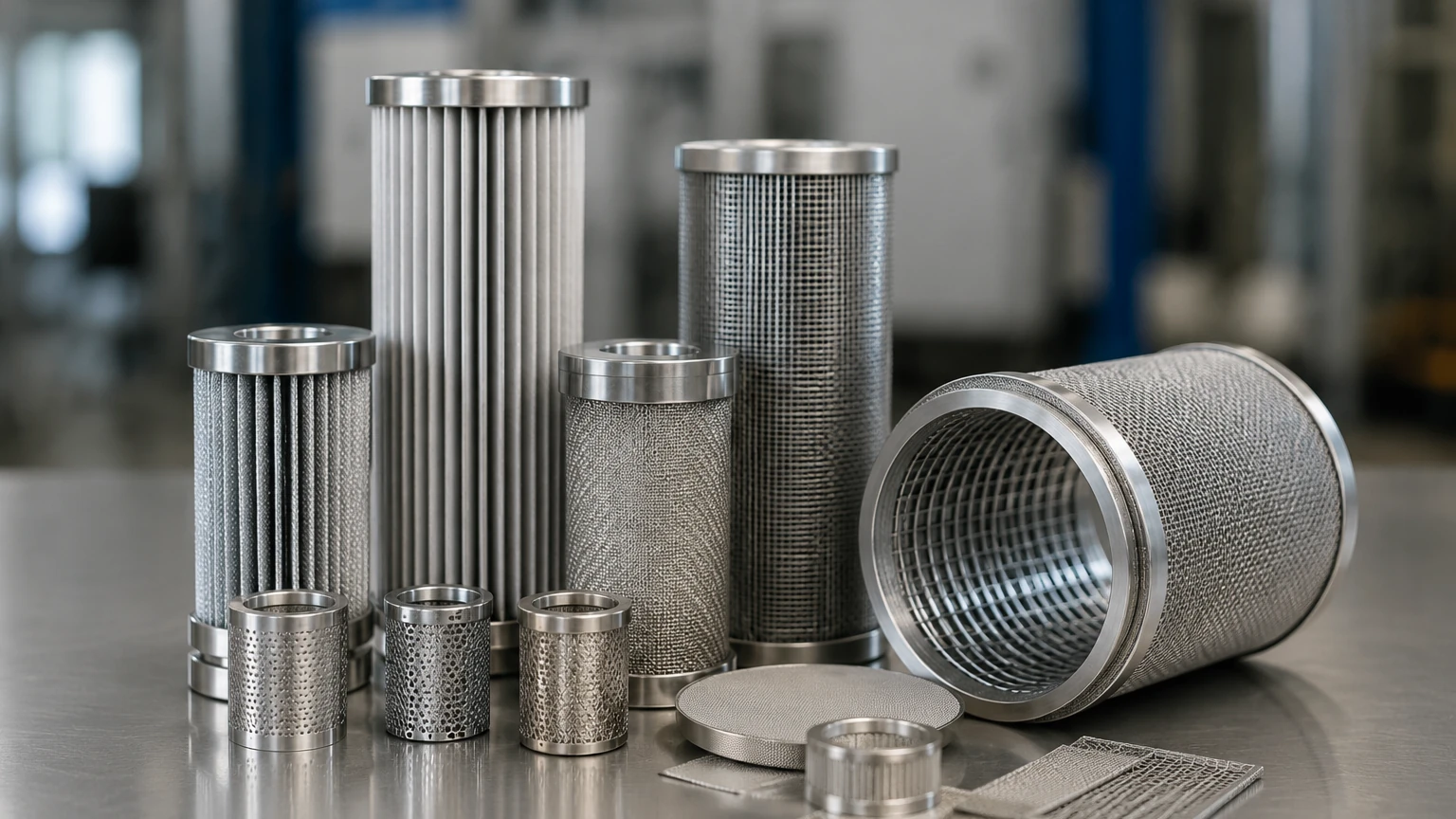
While dehydration is the primary goal, removing solid particles is equally important to meet ISO cleanliness standards. Most systems utilize a two-stage filtration process. A primary filter protects the pump and internal components, while a high-efficiency polishing filter is located at the discharge point. For demanding industrial applications, custom stainless steel filter cartridges are preferred due to their chemical compatibility and ability to withstand high differential pressures. For technical specifications on these components, engineers often refer to the Main Page of specialized manufacturers to ensure the media matches the fluid's chemical profile.
Vacuum and Discharge Pumps
The vacuum pump maintains the necessary negative pressure, while the discharge pump returns the purified oil to the reservoir. These pumps must be sized correctly to ensure a balanced flow rate that allows for sufficient residence time within the vacuum chamber.
Engineering Considerations for System Specification
When selecting or designing a vacuum dehydration oil purification system, several engineering parameters must be evaluated to ensure the equipment is fit for the specific application.
1. Flow Rate vs. Residence Time: The effectiveness of water removal is directly proportional to the time the oil spends in the vacuum chamber. A higher flow rate might seem efficient but can reduce the dehydration efficiency per pass if the chamber is undersized.
2. Viscosity Handling: High-viscosity oils (such as ISO VG 460 or 680 gear oils) behave differently under vacuum than low-viscosity hydraulic fluids. The system must be capable of heating and pumping these fluids without cavitating the pumps or fouling the dispersal media.
3. Material Compatibility: The seals, gaskets, and filter media must be compatible with the specific oil type. For example, phosphate ester fluids used in power generation require different seal materials (such as Viton or EPDM) compared to standard mineral oils. Stainless steel filtration components are often the default choice for their broad chemical resistance.
4. Vacuum Level Control: Excessive vacuum can sometimes strip volatile additives from certain specialty oils. Advanced systems include vacuum regulators to maintain the pressure at an optimal level that removes water without compromising the oil's chemical formulation.
Maintenance and Operational Best Practices
To maintain the performance of a vacuum dehydration oil purification system, a rigorous maintenance schedule is required. The most frequent maintenance task is the monitoring and replacement of particulate filter elements. As the system cleans the oil, the filters will accumulate debris, leading to an increase in differential pressure. Utilizing high-quality, cleanable stainless steel mesh filters can sometimes offer a lower total cost of ownership compared to disposable fiberglass elements, especially in high-contamination environments.
Condensate management is another critical factor. If the system uses a water-cooled condenser, the cooling water flow must be monitored. If it uses a vacuum pump that exhausts vapor directly, the exhaust lines must be clear to prevent backpressure. Furthermore, regular oil analysis should be conducted to verify that the system is achieving the target water levels (typically below 100 ppm for most industrial applications) and maintaining the required ISO cleanliness codes.
Selecting the Right Filtration Elements for Oil Purification
The efficiency of any oil purification process is ultimately limited by the quality of its filtration components. In a vacuum dehydration oil purification system, filters are not merely accessories but essential safeguards. The primary filter must be robust enough to handle the initial "slugs" of contamination, while the final stage filter must provide the precision required to protect sensitive hydraulic valves or high-speed bearings.
Engineers should confirm the following when sourcing filter components:
* Beta Rating: Ensure the filter has a high beta ratio (e.g., βx[c] ≥ 1000) at the required micron level to ensure consistent particulate removal.
* Structural Integrity: For systems operating under varying temperatures and pressures, stainless steel pleated cartridges offer superior resistance to pleat bunching and media migration compared to synthetic alternatives.
* Customization: Often, standard off-the-shelf filters do not fit the specific flow requirements or housing dimensions of a custom-built purification rig. Working with a manufacturer that provides custom stainless steel filtration solutions allows for optimized performance tailored to the specific viscosity and flow rate of the system.
Conclusion
A vacuum dehydration oil purification system is an indispensable tool for modern industrial fluid management. By leveraging the physics of reduced boiling points, these systems provide a comprehensive solution for water and gas contamination that other methods cannot match. However, the success of the system depends on the integration of high-quality components, particularly the filtration media that protects the machinery and the system itself. By focusing on engineering fundamentals—such as surface area, material compatibility, and precise particulate control—purchasing teams and engineers can ensure their oil purification strategy yields the maximum possible return on investment through extended fluid life and reduced mechanical wear. For those seeking to integrate high-precision components into their purification setups, reviewing professional manufacturing capabilities on the Main Page is a recommended starting point for technical evaluation.
Download Vacuum Dehydration Oil Purification System as a PDF
