


Vacuum Dehydrator Oil Purification Systems
In heavy industrial environments, the integrity of lubricating and hydraulic oils is a primary factor in machinery longevity and operational uptime. Contamination, specifically in the form of water and particulate matter, is the leading cause of component failure in turbines, large gearboxes, and hydraulic power units. Vacuum dehydrator oil purification systems represent the most effective technology for removing all three forms of water—free, emulsified, and dissolved—along with entrained gases and solid contaminants. For engineers and maintenance managers, understanding the technical nuances of these systems and the critical role of precision filtration components is essential for maintaining system reliability.
Understanding the Mechanics of Vacuum Dehydration
Vacuum dehydrator oil purification systems operate on the principle of vacuum distillation. Unlike centrifugal separators or simple coalescing filters, which primarily target free water, vacuum dehydration can reach deep into the oil’s molecular structure to remove dissolved moisture.
The process begins by heating the contaminated oil to a controlled temperature, typically between 50°C and 70°C. While this temperature is well below the atmospheric boiling point of water, the system introduces a deep vacuum (often between 25 and 28 inches of Hg). This significantly lowers the vapor pressure, causing the water to boil and evaporate at these lower temperatures. This is a critical engineering consideration, as it prevents the thermal degradation of the oil’s additive package, which could occur if the oil were heated to 100°C at atmospheric pressure.
Once the water turns to vapor, it is drawn out of the dehydration chamber and condensed or exhausted. The remaining oil, now dry, is pumped through a high-efficiency particulate filter to remove solid contaminants before being returned to the reservoir. The success of this cycle depends heavily on the surface area available for evaporation and the efficiency of the final filtration stage.
The Impact of Water and Particulate Contamination on Industrial Lubricants
Water is a destructive force in industrial oils. It promotes oxidation, leads to the depletion of additives (such as anti-wear and rust inhibitors), and causes acid formation. In hydraulic systems, water can lead to vapor cavitation, which erodes metal surfaces. Furthermore, water reduces the lubricating film strength, leading to metal-to-metal contact and accelerated wear in bearings and gears.
Particulate contamination acts synergistically with water. Silt and metallic fines can act as catalysts for oxidation. When vacuum dehydrator oil purification systems are deployed, they must address both issues simultaneously. Achieving a target ISO 4406 cleanliness code (such as 16/14/11) requires not just the removal of water but the precise capture of particles down to the low micron range. This is where the quality of the internal filtration components, such as those found on the Main Page, becomes the deciding factor in system performance.
Engineering the Filtration Core: Stainless Steel vs. Conventional Media
While the vacuum chamber handles the moisture, the particulate removal is handled by filter elements. In many vacuum dehydrator oil purification systems, engineers must choose between disposable fiberglass/paper media and permanent, cleanable stainless steel wire mesh.
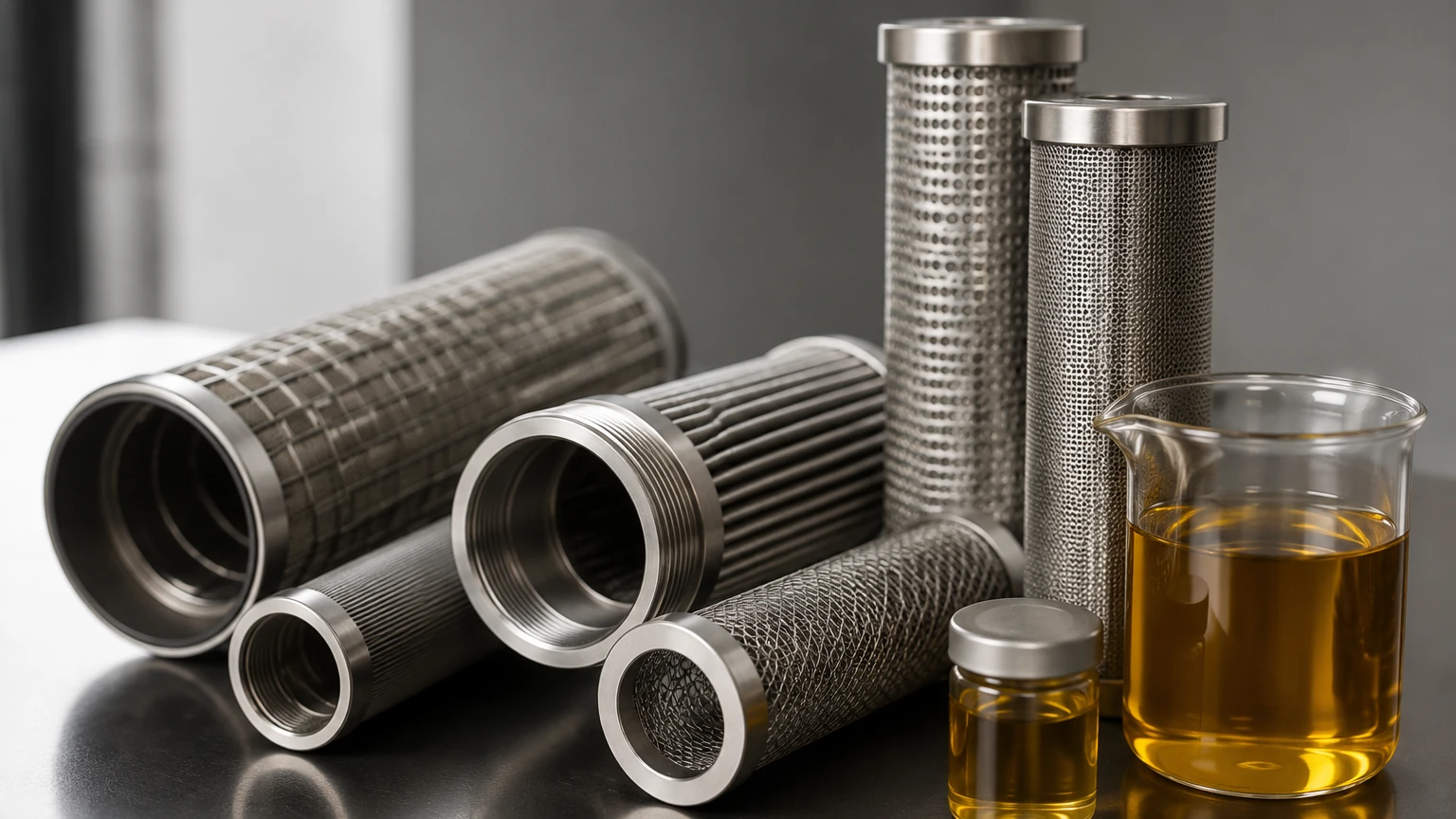
Stainless steel filtration components, a specialty of manufacturers like Kaifil, offer several technical advantages in these demanding applications:
1. Chemical Compatibility: Industrial oils often contain aggressive additives or may be synthetic-based (e.g., phosphate esters). Stainless steel (304 or 316L) provides superior resistance to chemical attack compared to polymer-based media.
2. Structural Integrity: Vacuum systems involve pressure differentials. Stainless steel filter cartridges are engineered to withstand high collapse pressures, ensuring that the filter does not fail and release a bypass of contaminants into the clean oil stream.
3. Temperature Resistance: Although the dehydration process is controlled, localized heat or system malfunctions can subject filters to thermal stress. Metal mesh remains stable at temperatures that would cause cellulose filters to become brittle.
4. Precision and Uniformity: Custom-woven wire mesh allows for exact control over pore size. This ensures a consistent Beta ratio, which is the measure of a filter’s efficiency in capturing particles of a specific size.
Key Selection Criteria for Vacuum Dehydrator Filter Components
When specifying or replacing filters within vacuum dehydrator oil purification systems, engineers should evaluate several technical parameters to ensure compatibility and performance.
Micron Rating and Efficiency
It is vital to distinguish between nominal and absolute micron ratings. For critical hydraulic systems, an absolute-rated filter is required. If the system is designed to protect high-tolerance servo valves, the post-vacuum filtration stage may require a 3-micron or 6-micron absolute rating. The wire mesh density must be selected to balance filtration fineness with the flow resistance (pressure drop).
Flow Rate and Viscosity
Oil viscosity changes significantly with temperature. A vacuum dehydrator must be able to process oil at its startup viscosity as well as its operating viscosity. The filter elements must be sized to handle the maximum flow rate of the system's pump without triggering the bypass valve. Over-sizing the filter area, often through pleated designs, can reduce the flux rate and extend the service life of the element.
Material Selection
For most mineral oil applications, Grade 304 stainless steel is sufficient. However, in environments involving corrosive gases or specialized fire-resistant fluids, Grade 316L is preferred due to its higher molybdenum content, which provides enhanced pitting resistance.
Operational Challenges and Troubleshooting in Oil Purification
Operating vacuum dehydrator oil purification systems is not without challenges. One common issue is foaming. When oil with high water content or depleted anti-foam additives enters the vacuum chamber, it can foam excessively, potentially fouling the vacuum pump. Modern systems use foam sensors and air-bleed valves to manage this, but the physical design of the oil distribution internal to the chamber also plays a role.
Another challenge is the management of "silt" or ultra-fine particulates. If the primary filter is too coarse, these particles will continue to circulate, acting as an abrasive. Conversely, if the filter is too fine without sufficient surface area, it will clog rapidly, leading to frequent maintenance. Using pleated stainless steel cartridges can provide the necessary surface area to hold a significant volume of contaminants while maintaining a low pressure drop.
Customization and OEM Integration for Specialized Applications
Many industrial applications require bespoke vacuum dehydrator oil purification systems. For instance, in the power generation industry, turbine oil conditioners must handle massive volumes of oil with high reliability. In the pharmaceutical or food processing sectors, the materials used in the filtration system must meet stringent cleanliness and compatibility standards.
Customization options often include:
* Custom End-Cap Configurations: Ensuring the filter element fits perfectly into existing OEM housings without leaks.
* Reinforced Cores: For systems with high-viscosity fluids or high-pressure pulses.
* Multi-Layered Mesh: Combining different mesh counts to create a graded density filter, which captures larger particles on the outer layers and finer particles toward the center, significantly increasing dirt-holding capacity.
Manufacturers like Kaifil work closely with system integrators to develop these customized metal filter components, ensuring that the filtration performance matches the specific requirements of the vacuum dehydration unit.
Maintenance Strategies and Total Cost of Ownership
The total cost of ownership (TCO) for vacuum dehydrator oil purification systems is heavily influenced by the maintenance cycle of the filter elements. While disposable elements have a lower initial purchase price, the ongoing costs of replacement, shipping, and disposal can be substantial. Furthermore, the environmental impact of disposing of oil-soaked filters is an increasing concern for many corporations.
In contrast, stainless steel wire mesh filters offer a "clean and reuse" capability. In many industrial settings, these elements can be ultrasonically cleaned or backflushed, restoring them to near-original performance. This longevity makes them a more cost-effective solution over the life of the purification system, especially in high-contamination environments where disposable filters would require weekly changes.
Regular monitoring of the pressure differential across the filter is the most effective way to determine the maintenance schedule. A sudden rise in pressure indicates a high particulate load, while a sudden drop could indicate a breached element or a bypass valve stuck in the open position.
Conclusion: Optimizing Oil Health for Industrial Efficiency
Vacuum dehydrator oil purification systems are indispensable tools for any facility relying on high-performance lubricants. By effectively removing water, air, and particulates, these systems prevent the chemical breakdown of oil and the mechanical wear of expensive machinery components.
The effectiveness of these systems, however, is only as good as the filtration components within them. Specifying high-quality stainless steel wire mesh and precision-engineered filter cartridges ensures that the system operates at peak efficiency, providing the reliable oil cleanliness levels required for modern industrial standards. For those seeking to optimize their filtration hardware, exploring the technical capabilities of custom manufacturers is a vital step in ensuring the long-term success of their oil conditioning programs. For more information on specialized filtration components, professionals can Review product options and application support to find solutions tailored to their specific industrial needs.
Download Vacuum Dehydrator Oil Purification Systems as a PDF
