


Vacuum Filtration Flask
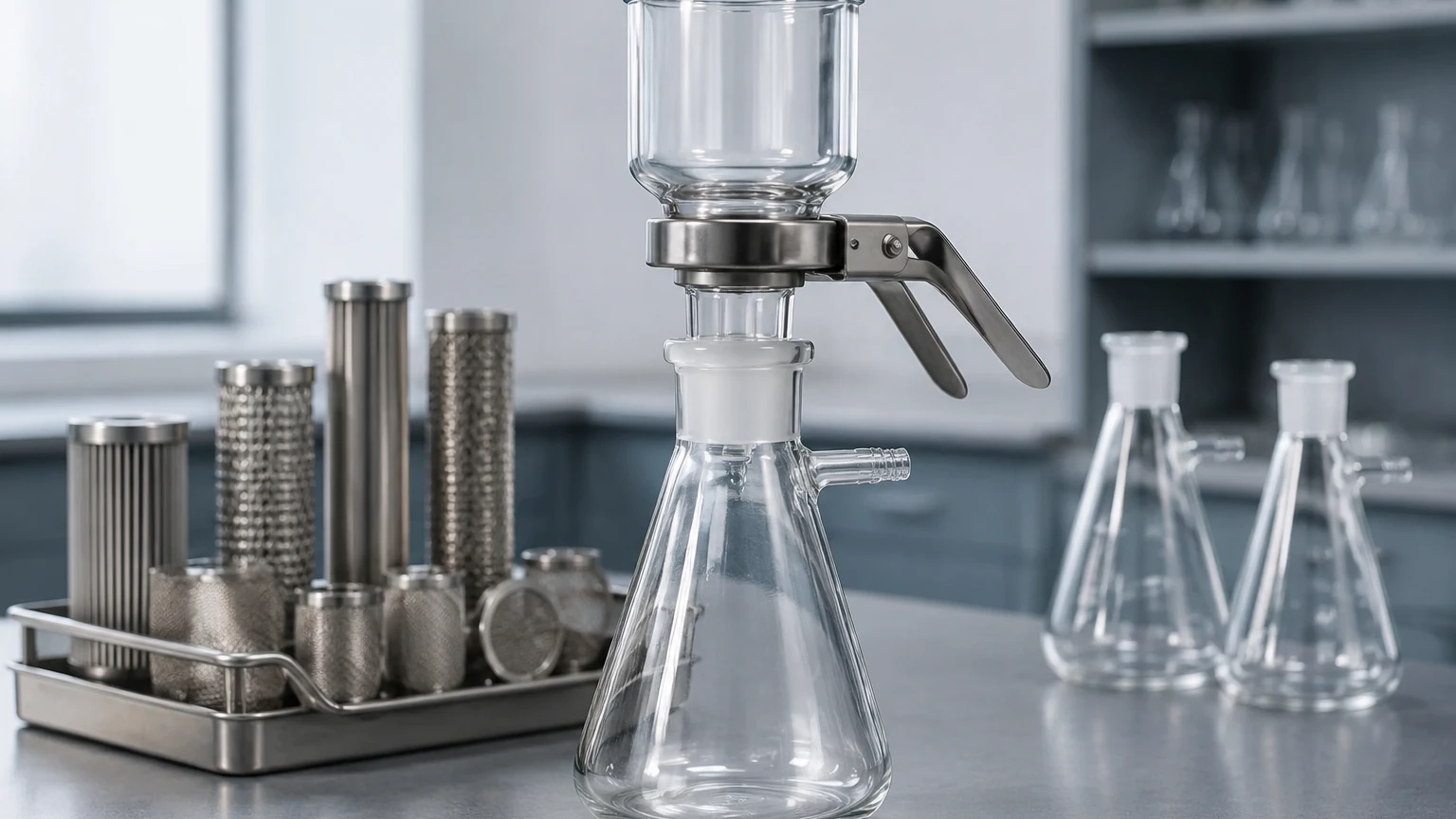
In industrial and laboratory environments, the vacuum filtration flask—also known as a Büchner flask or a side-arm flask—is a foundational component for solid-liquid separation. Unlike standard Erlenmeyer flasks, these vessels are engineered to withstand significant pressure differentials, enabling rapid filtration that gravity alone cannot achieve. For engineers and procurement specialists in sectors such as chemical processing, pharmaceuticals, and food production, understanding the technical nuances of the vacuum filtration flask is essential for optimizing throughput and ensuring process safety.
While the flask serves as the collection vessel, the efficiency of the entire system depends heavily on the compatibility between the flask, the vacuum source, and the filter media. At Kaifil, we recognize that the precision of the filter component—whether it is a wire mesh disc or a sintered stainless steel cartridge—is what ultimately determines the purity of the filtrate. This guide explores the engineering considerations, material selections, and operational best practices for utilizing vacuum filtration flasks in professional settings.
Engineering Fundamentals of Vacuum Filtration
Vacuum filtration operates on the principle of pressure differential. By reducing the pressure inside the vacuum filtration flask using a vacuum pump or a water aspirator, atmospheric pressure exerts force on the liquid above the filter medium. This "pushes" the liquid through the filter at a much higher velocity than gravity-fed systems.
Pressure Resistance and Wall Thickness
The primary engineering distinction of a vacuum filtration flask is its heavy-walled construction. Standard laboratory glassware is prone to implosion under vacuum conditions. A dedicated vacuum flask is manufactured with increased glass thickness, particularly at the base and the neck, to resist the inward force of atmospheric pressure. In industrial applications where higher vacuum levels (lower absolute pressures) are required, the mechanical integrity of the flask is the first line of defense against equipment failure and operator injury.
The Role of the Side Arm (Tubulature)
The side arm is a short glass or metal tube protruding from the neck of the flask. It is designed to connect to vacuum tubing. Modern industrial designs often feature barbed side arms to ensure a secure, leak-proof connection with thick-walled rubber or silicone hoses. In high-purity or high-temperature applications, these side arms may be replaced with threaded connectors or stainless steel fittings to prevent the degradation of the seal.
Material Selection for Industrial Flasks
Choosing the right material for a vacuum filtration flask depends on the chemical nature of the fluid, the operating temperature, and the required durability.
Borosilicate Glass 3.3
Most high-quality vacuum flasks are made from borosilicate glass 3.3. This material is favored for its low coefficient of thermal expansion and excellent resistance to chemical attack. It can withstand autoclaving and high-temperature filtration processes without cracking. However, glass remains fragile and is susceptible to mechanical shock, which can be a liability in heavy industrial environments.
Stainless Steel and Specialty Alloys
In large-scale industrial processing, glass may be replaced by stainless steel (such as AISI 316L) collection vessels that function as vacuum flasks. These are preferred when:
- The process involves highly caustic or acidic substances that might etch glass over time.
- The system is integrated into a permanent production line where breakage is not an option.
- The filtration process operates at extreme temperatures or high pressure differentials that exceed the safety limits of borosilicate glass.
Kaifil specializes in providing the internal filtration components that interface with these stainless steel systems, ensuring that the filtration accuracy remains consistent even under rigorous industrial conditions.
Integration with Custom Filtration Components
A vacuum filtration flask is only as effective as the filter it supports. Traditionally, these flasks are paired with Büchner funnels and paper filters. However, modern industrial requirements often demand more robust solutions.
Stainless Steel Wire Mesh Filters
For applications requiring high durability and reusability, stainless steel wire mesh filters are integrated into the vacuum setup. Unlike paper filters, which can tear under high vacuum or degrade in the presence of solvents, wire mesh provides a rigid, precise filtration surface. These components can be customized to fit the specific neck diameter of a vacuum filtration flask, providing a seamless transition from the funnel to the collection vessel.
Sintered Metal Cartridges
In pharmaceutical and fine chemical industries, sintered metal filter cartridges are often used in conjunction with vacuum systems. These provide exceptional micron-level precision and can be cleaned and sterilized repeatedly. When designing a vacuum filtration assembly, engineers must ensure that the flow rate of the filter cartridge does not exceed the capacity of the vacuum filtration flask to handle the incoming volume, as this can lead to turbulence and potential carry-over into the vacuum line.
For more information on selecting the right metal filter components for your vacuum system, you can review product options and application support on our Main Page.
Key Evaluation Criteria for Selection
When specifying a vacuum filtration flask for a B2B application, several technical parameters must be confirmed to ensure the equipment is fit for purpose.
1. Volume Capacity vs. Working Volume
It is a common error to select a flask based on its total volume. In practice, the working volume of a vacuum filtration flask should never exceed 50-60% of its total capacity. This prevents the filtrate from being drawn into the side arm and subsequently into the vacuum pump, which can cause significant damage to the pump's internal diaphragms or oil.
2. Neck Diameter and Stopper Compatibility
The neck of the flask must be perfectly round and sized to accommodate standard rubber stoppers or specialized adapters. A poor fit at the neck is the most common source of vacuum leaks. For industrial setups, ground glass joints (such as 24/40 or 29/42) provide a more reliable seal than rubber stoppers, especially when dealing with volatile organic compounds (VOCs).
3. Vacuum Rating
Engineers should verify the maximum vacuum rating of the flask. While most borosilicate flasks are rated for full vacuum (approx. 1 bar or 760 mmHg), any surface scratches or chips significantly reduce this rating. In a B2B procurement context, sourcing flasks with reinforced bases and ISO/DIN compliance certifications is a prerequisite for safety.
Common Risks and Mitigation Strategies
Operating a vacuum filtration flask involves inherent risks that must be managed through proper engineering controls and SOPs.
Implosion Hazards
Implosion is the primary safety risk. It occurs when the external atmospheric pressure exceeds the structural strength of the flask. To mitigate this:
- Visual Inspection: Always inspect the flask for "star cracks," deep scratches, or etching before use.
- Plastic Coating: Many industrial glass flasks now come with a plastic or epoxy coating. In the event of an implosion, the coating contains the glass shards, preventing them from scattering.
- Shielding: Use a safety shield or place the flask inside a secondary containment vessel during operation.
Vacuum Pump Contamination
If the flask overfills or if the liquid foams excessively, filtrate can enter the vacuum line. This is particularly dangerous when filtering corrosive or flammable liquids. The installation of a "trap"—a second vacuum filtration flask placed between the collection flask and the pump—is a standard engineering practice to protect the vacuum source.
Performance Expectations and Maintenance
To maintain the efficiency of a vacuum filtration system, regular maintenance of both the flask and the associated filter media is required.
Cleaning and Sterilization
In the food and pharmaceutical sectors, cross-contamination is a critical concern. Borosilicate glass and stainless steel flasks can be autoclaved. However, the cleaning of the filter medium is equally important. Stainless steel wire mesh filters should be ultrasonically cleaned to remove deeply embedded particulates that can cause "blinding" (clogging), which increases the vacuum load and slows down the filtration process.
Replacement Cycles
Unlike the filter media, which may have a defined lifespan based on particulate loading, a vacuum filtration flask does not have a fixed replacement cycle. Instead, it is replaced based on condition. In high-throughput industrial environments, it is recommended to replace glass flasks every 12-24 months of heavy use, as microscopic stress fractures can accumulate over time due to repeated pressure cycling.
Total Cost of Ownership (TCO) Considerations
When evaluating the cost of vacuum filtration equipment, procurement teams must look beyond the initial purchase price of the flask. The TCO includes:
- Durability: A cheaper, thinner-walled flask may break more frequently, leading to downtime and replacement costs.
- Filter Compatibility: Using high-quality, reusable stainless steel filters from manufacturers like Kaifil can significantly reduce the long-term cost of consumables compared to single-use paper or plastic filters.
- Process Efficiency: A properly sized flask and pump combination reduces the time required per batch, directly impacting labor costs and equipment utilization rates.
Conclusion
The vacuum filtration flask is a vital link in the industrial filtration chain. While it may appear to be a simple vessel, its engineering—from wall thickness to material compatibility—is critical for the success of pressurized separation processes. By pairing a high-quality flask with precision-engineered metal filter components, industrial operators can achieve superior filtration accuracy, enhanced safety, and optimized production timelines.
For engineers looking to customize their filtration systems or source high-performance stainless steel filter elements that integrate perfectly with industrial vacuum setups, exploring the technical resources available on our Main Page is the recommended next step. Our team at Kaifil is dedicated to providing the technical expertise and manufacturing precision required to meet the most demanding industrial filtration challenges.
