


Vacuum Pump Filters
In industrial vacuum systems, the integrity of the vacuum pump is directly linked to the quality of its filtration components. Vacuum pump filters serve as the primary line of defense against contaminants that can compromise mechanical tolerances, degrade lubricants, and lead to premature equipment failure. For engineers and maintenance professionals, selecting the appropriate filtration solution requires a deep understanding of the specific application environment, the nature of the contaminants involved, and the mechanical constraints of the vacuum system.
Industrial vacuum pumps—whether rotary vane, screw, claw, or liquid ring—operate under precise clearances. The introduction of even minute particulates or corrosive vapors can lead to abrasive wear, chemical degradation of internal seals, and a significant drop in volumetric efficiency. Consequently, vacuum pump filters are not merely accessories but critical engineering components that ensure process stability and environmental compliance.
The Role of Filtration in Vacuum Systems
Filtration in a vacuum circuit is typically categorized by its position relative to the pump: inlet filtration, exhaust filtration, and internal oil filtration. Each serves a distinct purpose in maintaining the equilibrium of the system.
Inlet Filtration (Suction Side)
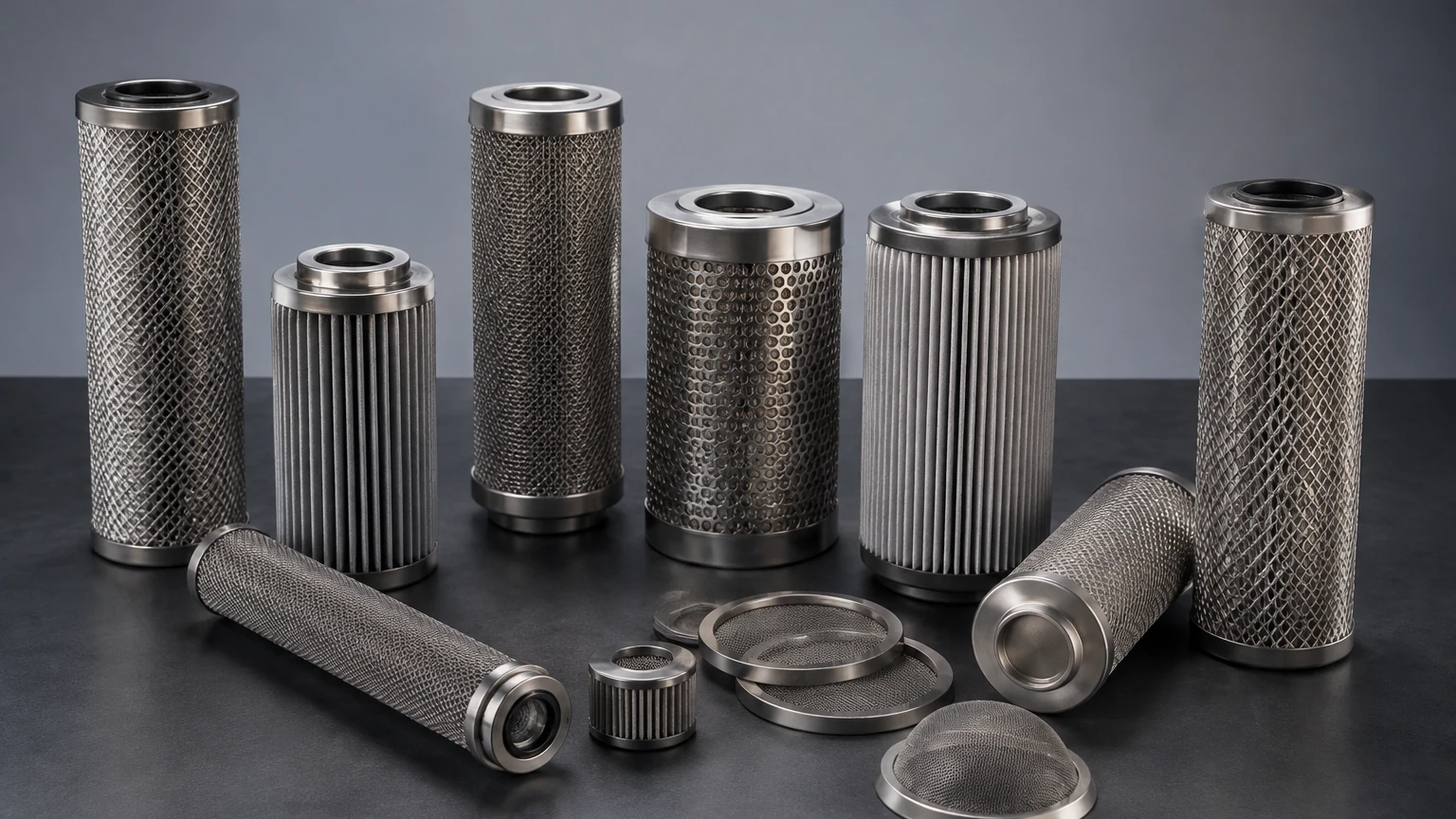
The primary objective of an inlet filter is to prevent solids, liquids, and vapors from entering the pump chamber. In processes such as wood routing, plastic extrusion, or bulk material handling, large volumes of dust and debris are common. Without an effective inlet filter, these particles can score the cylinder walls of a rotary vane pump or jam the tight tolerances of a screw pump. High-efficiency inlet filters often utilize stainless steel wire mesh or pleated metal elements to provide high surface area and low resistance to flow, ensuring that the pump maintains its required vacuum level without excessive energy consumption.
Exhaust Filtration (Discharge Side)
In oil-lubricated vacuum pumps, the exhaust air carries a fine mist of lubricant, known as oil aerosol. Exhaust filters, often referred to as oil mist eliminators or coalescing filters, are designed to capture these sub-micron droplets and return the oil to the pump's reservoir. This process is essential for maintaining a clean working environment and preventing the loss of expensive lubricants. For dry vacuum pumps, exhaust filters may still be required to capture any process-related particulates before the air is vented or recirculated.
Internal Oil Filtration
For pumps that rely on oil for sealing and cooling, the internal oil must remain free of contaminants. Internal oil filters remove carbon deposits, metal wear particles, and sludge that can form over time. By maintaining the purity of the lubricant, these filters extend the service life of the pump bearings and vanes.
Technical Specifications and Selection Criteria
When specifying vacuum pump filters, engineers must evaluate several technical parameters to ensure the chosen component meets the operational demands of the facility. For comprehensive technical data and to Review product options and application support, visiting the Kaifil Main Page provides access to specific material grades and filtration ratings.
Micron Rating and Efficiency
The micron rating defines the size of particles the filter is capable of capturing. In vacuum applications, this is often a balance between protection and performance. A filter with an excessively fine micron rating may cause a significant pressure drop (conductance loss), which reduces the effective pumping speed at the vacuum chamber. Conversely, a rating that is too coarse will allow damaging particles to pass through. Standard industrial vacuum filters typically range from 1 to 50 microns, depending on whether they are used for fine gas cleaning or heavy-duty particulate removal.
Material Compatibility and Durability
The choice of filter media is critical, especially in chemical processing or pharmaceutical applications where corrosive gases are present. Stainless steel (304 or 316L) is the preferred material for demanding environments due to its exceptional resistance to corrosion, high temperatures, and mechanical stress. Unlike paper or synthetic media, stainless steel wire mesh filters can be cleaned and reused, providing a lower total cost of ownership over the equipment's lifecycle.
Flow Rate and Conductance
In vacuum technology, the ability of a gas to flow through a component is known as conductance. Every filter introduces a restriction. Engineers must ensure that the filter's flow capacity exceeds the pump's maximum displacement to prevent "choking" the system. A properly sized filter housing and element will minimize the pressure differential (ΔP), ensuring that the vacuum level at the process point remains consistent with the pump's performance curve.
Engineering Challenges in Vacuum Filtration
Selecting a filter involves navigating several engineering trade-offs. One of the most common challenges is managing "carry-over" in exhaust systems. If the coalescing element is saturated or incorrectly sized, oil mist may bypass the filter, leading to environmental contamination and increased oil consumption.
Another challenge is the management of condensable vapors. In applications like vacuum drying or distillation, vapors may condense inside the filter housing. If not managed with appropriate drains or heating jackets, this liquid can be pulled into the pump or cause the filter media to blind. Stainless steel filter cartridges are particularly effective here, as they can be integrated into housings designed for high-pressure washdowns or steam sterilization (SIP) in pharmaceutical contexts.
The Advantages of Custom Stainless Steel Filters
While off-the-shelf filters may suffice for standard utility vacuum, specialized industrial processes often require customized filtration solutions. Custom-engineered stainless steel filters offer several advantages:
1. Precision Pleating: By pleating stainless steel wire mesh, the effective filtration area is significantly increased within the same footprint. This allows for higher dirt-holding capacity and longer service intervals.
2. Structural Integrity: Under high vacuum or sudden pressure surges, inferior filter elements may collapse. Sintered metal or reinforced wire mesh designs provide the structural rigidity necessary to withstand these forces.
3. Thermal Stability: In high-temperature vacuum processes, such as heat treating or metallurgy, synthetic filters will melt or outgas. Stainless steel maintains its mechanical properties at temperatures exceeding 500°C.
4. Chemical Resistance: For processes involving aggressive solvents or acidic vapors, 316L stainless steel provides the necessary resistance to prevent pitting and stress corrosion cracking.
Maintenance and Replacement Cycles
The performance of vacuum pump filters must be monitored through regular maintenance schedules. The most effective way to track filter health is by measuring the pressure drop across the element using a differential pressure gauge. A sudden increase in ΔP indicates that the filter is loaded with contaminants and requires cleaning or replacement.
For reusable stainless steel filters, cleaning protocols may include ultrasonic cleaning, backwashing, or chemical cleaning, depending on the nature of the contaminant. It is essential to verify that the cleaning process does not damage the mesh pore structure. In critical applications, a bubble point test may be performed after cleaning to ensure the integrity of the filter element.
Failure to replace or clean filters in a timely manner can lead to:
* Overheating: The pump must work harder to overcome the restriction, leading to higher operating temperatures and oil degradation.
* Reduced Pumping Speed: The time required to reach the target vacuum level increases, slowing down production cycles.
* Pump Damage: In extreme cases, a blinded inlet filter can cause the pump to cavitate or suffer from oil starvation.
Selecting the Right Partner for Filtration Solutions
For OEM manufacturers and plant engineers, partnering with a specialist like Kaifil ensures that the filtration components are optimized for the specific mechanical and chemical demands of the system. Whether the requirement is for a standard wire mesh intake filter or a complex, custom-designed stainless steel cartridge for a pharmaceutical vacuum dryer, the focus remains on durability and precision.
When evaluating a supplier, confirm their capabilities in material traceability, filtration accuracy testing, and their ability to provide customized designs that fit existing housing constraints. For more information on how custom metal filtration can improve your system's reliability, you can visit the Main Page to explore technical resources and product specifications.
Conclusion
Vacuum pump filters are vital for the longevity and efficiency of industrial vacuum systems. By understanding the nuances of micron ratings, material science, and flow dynamics, engineers can select filtration solutions that protect their equipment and optimize their processes. In demanding environments, the transition from disposable media to high-performance stainless steel filtration often yields significant improvements in uptime and a reduction in long-term operational costs. Proper selection, combined with a rigorous maintenance strategy, ensures that the vacuum system remains a reliable asset in the industrial production chain.
