


Waste Water Filtration System
In the modern industrial landscape, the implementation of an efficient waste water filtration system is no longer merely a regulatory requirement; it is a critical component of operational sustainability and resource recovery. Industrial processes across chemical, pharmaceutical, and food and beverage sectors generate complex effluent streams that contain a variety of contaminants, including suspended solids, oils, and chemical residues. To manage these effectively, engineers must design or select filtration solutions that can withstand harsh environments while maintaining precise filtration accuracy.
Manufacturers like Kaifil specialize in providing high-performance stainless steel filtration components that serve as the core of these systems. By focusing on durable materials and customized engineering, industrial facilities can achieve reliable discharge quality and, in many cases, reclaim water for reuse within the facility. For a broader overview of available filtration technologies and custom manufacturing capabilities, technical teams often refer to the Main Page of specialized manufacturers to align their specific application needs with proven engineering solutions.
Understanding the Role of Filtration in Industrial Wastewater Management
A waste water filtration system typically functions as a multi-stage process designed to remove physical impurities from water before it is either discharged into municipal sewers or treated further for internal reuse. The primary objective is to protect downstream equipment, meet environmental standards, and reduce the overall load on secondary treatment processes, such as biological reactors or chemical oxidation units.
Mechanical filtration remains the most common first line of defense. By utilizing physical barriers like stainless steel wire mesh or precision-engineered cartridges, systems can effectively capture particles ranging from large debris down to sub-micron levels. The choice of filtration technology depends heavily on the nature of the waste stream. For instance, high-solids loading requires robust, cleanable filters, whereas polishing stages for high-purity discharge may require fine-mesh cartridges with specific retention ratings.
Key Components of a Robust Waste Water Filtration System
The efficacy of any waste water filtration system is determined by the quality and suitability of its internal components. Unlike standard water filters, industrial wastewater components must handle fluctuating pH levels, high temperatures, and abrasive particles.
Stainless Steel Filter Cartridges
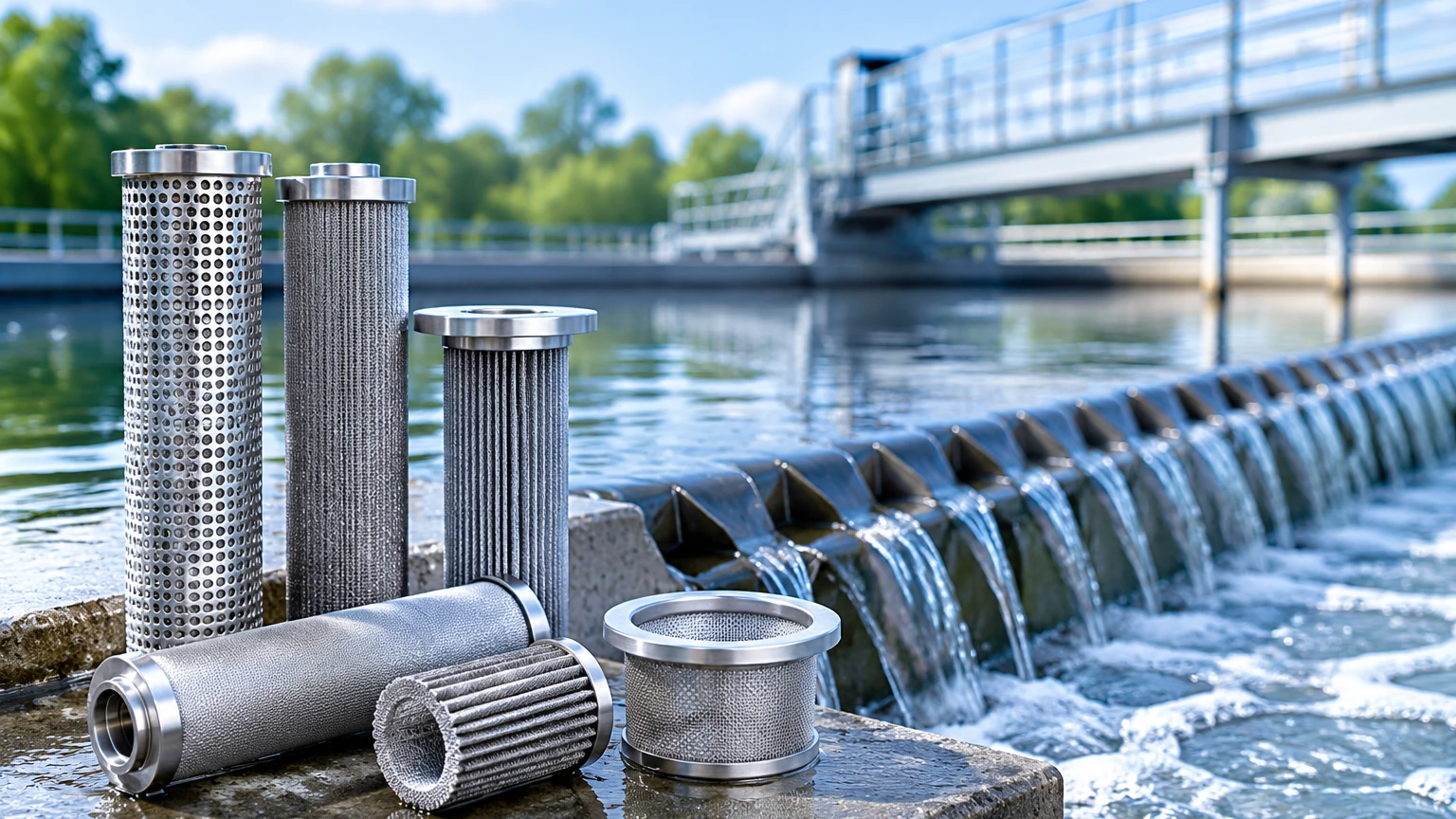
Stainless steel cartridges are preferred in industrial wastewater applications due to their exceptional mechanical strength and thermal stability. Unlike plastic or fabric alternatives, these cartridges do not deform under high differential pressure. They are typically constructed from 304 or 316L stainless steel, providing the necessary corrosion resistance for treating chemically aggressive effluent.
Wire Mesh Filters
Precision wire mesh is a versatile medium used in both coarse and fine filtration stages. In a waste water filtration system, wire mesh filters offer a high open area, which translates to lower pressure drops and higher flow rates. These filters can be pleated to increase the surface area, significantly extending the time between cleaning cycles.
Wedge Wire Screens
For heavy-duty applications involving high solids concentration, wedge wire screens provide a non-clogging surface. The V-shaped profile of the wire ensures that only two-point contact is made with particles, reducing the risk of blinding and making backwashing more effective.
Engineering Considerations for Filter Selection and Sizing
Selecting the right components for a waste water filtration system requires a deep dive into the hydraulic and physical characteristics of the application. Engineers must balance filtration efficiency with operational costs and maintenance requirements.
1. Micron Rating and Retention Efficiency: The micron rating defines the size of the particles the filter is intended to capture. It is essential to distinguish between nominal and absolute ratings. In critical wastewater applications where specific discharge limits must be met, absolute-rated stainless steel mesh is often required to ensure consistent performance.
2. Flow Rate and Flux: The volume of water passing through the filter per unit of time (flow rate) and the flow per unit of filter area (flux) are critical. Overloading a filter leads to rapid pressure buildup and potential bypass, while oversizing leads to unnecessary capital expenditure.
3. Differential Pressure (ΔP): This is the difference in pressure between the upstream and downstream sides of the filter. A well-designed system will have a low initial ΔP. Monitoring the increase in ΔP is the standard method for determining when a filter needs cleaning or replacement.
4. Chemical Compatibility: Wastewater often contains solvents, acids, or bases. Selecting the correct grade of stainless steel (e.g., 316L for high chloride environments) is vital to prevent pitting and stress corrosion cracking.
Material Selection: The Advantages of Stainless Steel in Corrosive Environments
In the context of a waste water filtration system, material selection is perhaps the most significant factor in determining the total cost of ownership. While polymer-based filters may have lower initial costs, they often fail in demanding industrial environments, leading to frequent replacements and system downtime.
Stainless steel, particularly when utilized in wire mesh and cartridge forms, offers several distinct advantages:
* Durability: It can withstand high-pressure surges and mechanical shocks that would rupture synthetic media.
* Temperature Resistance: Many industrial wastewater streams are hot, originating from boiler blowdown or heat exchange processes. Stainless steel maintains its structural integrity at temperatures where plastics would soften or melt.
* Cleanability: Stainless steel filters are inherently reusable. They can be cleaned via backpulsing, ultrasonic cleaning, or chemical sanitization, making them a more sustainable choice compared to disposable filter elements.
* Sustainability: By using permanent or semi-permanent metal filters, facilities significantly reduce their solid waste output, aligning with green manufacturing initiatives.
Maintenance and Operational Longevity of Industrial Filters
The longevity of a waste water filtration system is directly tied to its maintenance regime. Because wastewater is inherently unpredictable, the filtration media must be capable of being restored to its original state through effective cleaning protocols.
Backwashing and Cleaning
In automated systems, backwashing is the primary method of maintenance. This involves reversing the flow of fluid through the filter to dislodge accumulated solids. Stainless steel wire mesh is particularly well-suited for this, as its rigid structure prevents the mesh from shifting during the high-pressure reverse flow. For deeper cleaning, especially in the food and pharmaceutical industries, Clean-in-Place (CIP) systems use specialized chemicals to dissolve organic or mineral scaling without disassembling the filter housing.
Monitoring and Replacement Cycles
Even the most durable stainless steel filters have a service life. Regular inspection for mechanical wear, corrosion, or permanent fouling is necessary. By tracking the time it takes for the differential pressure to reach its terminal point after each cleaning, maintenance teams can predict the eventual end-of-life for the filter elements and schedule replacements during planned shutdowns, avoiding emergency outages.
Integrating Customized Solutions into Existing Infrastructure
Every industrial facility has unique constraints, from physical space limitations to specific flow requirements. A "one-size-fits-all" approach rarely works for an effective waste water filtration system. Customization is often required in the design of filter housings, the configuration of the mesh layers, and the end-cap fittings of cartridges.
OEM manufacturers like Kaifil provide the engineering support necessary to develop bespoke filtration components. This might involve creating multi-layered sintered mesh for high-pressure applications or designing custom-sized cartridges that fit into legacy filter vessels. Customization ensures that the filtration system integrates seamlessly with existing pumps, piping, and control systems, optimizing the overall hydraulic efficiency of the plant.
Total Cost of Consideration for Purchasing Teams
When evaluating a waste water filtration system, purchasing teams should look beyond the initial purchase price. The total cost of ownership (TCO) includes:
* Consumable Costs: The frequency and cost of replacing disposable filters versus the energy and water used in cleaning reusable stainless steel filters.
* Labor Costs: The man-hours required for filter changes and manual cleaning.
* Disposal Costs: Fees associated with disposing of contaminated filter media.
* Downtime: The lost production value when the filtration system is offline.
By investing in high-quality stainless steel filtration components, companies often find that the higher initial investment is recouped within the first year through reduced replacement costs and improved system uptime.
Conclusion
An effective waste water filtration system is a sophisticated assembly of engineering choices, where the quality of the filtration media determines the success of the entire treatment process. For industries dealing with complex and aggressive effluent, stainless steel wire mesh and cartridges offer the durability, precision, and cleanability required to maintain continuous operations.
By understanding the technical nuances of micron ratings, material compatibility, and maintenance requirements, engineers can specify systems that not only meet environmental regulations but also contribute to the facility's bottom line. For those looking to explore specific component designs or seek technical advice on custom filtration solutions, visiting the Main Page of an experienced manufacturer is the first step toward optimizing industrial wastewater performance.
