


Waste Water Filtration
Industrial waste water filtration is a critical process designed to remove contaminants, suspended solids, and impurities from water generated during manufacturing, chemical processing, and other industrial activities. Unlike municipal treatment, industrial effluent often contains complex chemical compositions, abrasive particles, and varying temperature profiles that demand robust, high-performance filtration solutions. For engineers and facility managers, selecting the correct filtration media is not merely a matter of compliance, but a strategic decision that affects equipment longevity, operational efficiency, and the total cost of ownership.
Effective waste water filtration serves multiple purposes: protecting downstream equipment such as membranes and high-pressure pumps, ensuring environmental regulatory compliance, and facilitating the recycling of process water. As industries move toward "zero liquid discharge" (ZLD) goals, the precision and durability of filtration components have become paramount. To explore the full range of technical specifications and custom manufacturing capabilities available for these demanding environments, professionals can refer to our Main Page for detailed product data.
Understanding the Fundamentals of Industrial Waste Water Filtration
The process of waste water filtration typically involves the mechanical separation of solids from a liquid carrier. In industrial settings, this is often categorized into primary, secondary, and tertiary stages. Metal filtration components, particularly those constructed from stainless steel, are most frequently employed in primary and tertiary stages where mechanical strength and chemical resistance are non-negotiable.
Primary filtration focuses on the removal of large debris and heavy suspended solids. Here, coarse wire mesh or wedge wire screens are utilized to prevent clogging of sensitive downstream systems. In contrast, tertiary or "polishing" stages require much finer filtration, often down to the sub-micron level, to remove residual particulates before the water is discharged or reused in the production cycle.
Engineering a filtration system requires a deep understanding of the particle size distribution (PSD) within the effluent. A system designed without an accurate PSD analysis will either suffer from frequent blinding (clogging) if the mesh is too fine, or fail to protect downstream assets if the mesh is too coarse. Therefore, waste water filtration must be approached as a balance between flow rate requirements and the required level of purity.
Material Selection: The Advantages of Stainless Steel Media
In the context of industrial waste water filtration, the choice of material is the primary determinant of a filter’s service life. While polymer-based or disposable media may be cost-effective for low-intensity applications, they often fail under the thermal and chemical stresses of industrial waste streams. Stainless steel, specifically grades 304, 316, and 316L, remains the industry standard for several technical reasons:
1. Corrosion Resistance: Industrial waste water often contains chlorides, acids, or alkaline cleaning agents. 316L stainless steel, with its molybdenum content, provides superior resistance to pitting and crevice corrosion in these aggressive environments.
2. Thermal Stability: Many industrial processes discharge water at elevated temperatures. Stainless steel maintains its structural integrity and filtration accuracy at temperatures that would cause synthetic media to soften or deform.
3. Mechanical Strength: Waste water systems often experience pressure surges or high differential pressures as the filter cake builds up. Metal mesh and sintered metal cartridges can withstand these stresses without the risk of media migration or structural collapse.
4. Cleanability and Reusability: Unlike disposable cartridges, stainless steel filters are cleanable. They can be subjected to backwashing, ultrasonic cleaning, or chemical CIP (Clean-In-Place) cycles, significantly reducing the long-term waste footprint and replacement costs.
Engineering Parameters for Effective Filtration Design
When specifying components for waste water filtration, engineers must evaluate several technical parameters to ensure the system performs as expected under variable load conditions.
Micron Rating: Absolute vs. Nominal
In waste water applications, the distinction between absolute and nominal micron ratings is critical. A nominal rating refers to the ability of the filter to retain a major percentage of particles of a certain size, whereas an absolute rating indicates the diameter of the largest hard spherical particle that will pass through the filter. For critical applications protecting reverse osmosis (RO) membranes, absolute-rated stainless steel mesh is often preferred to ensure no bypass occurs.
Flow Rate and Pressure Drop (ΔP)
The relationship between flow rate and pressure drop is governed by the open area of the filter media. A filter with a high percentage of open area will allow for higher flow rates with lower initial pressure drops. However, in waste water filtration, one must also account for the "dirt holding capacity." As particles accumulate on the surface of the mesh, the pressure drop will increase. Engineering the surface area to be large enough to accommodate this accumulation without frequent downtime is essential for operational efficiency.
Structural Reinforcement
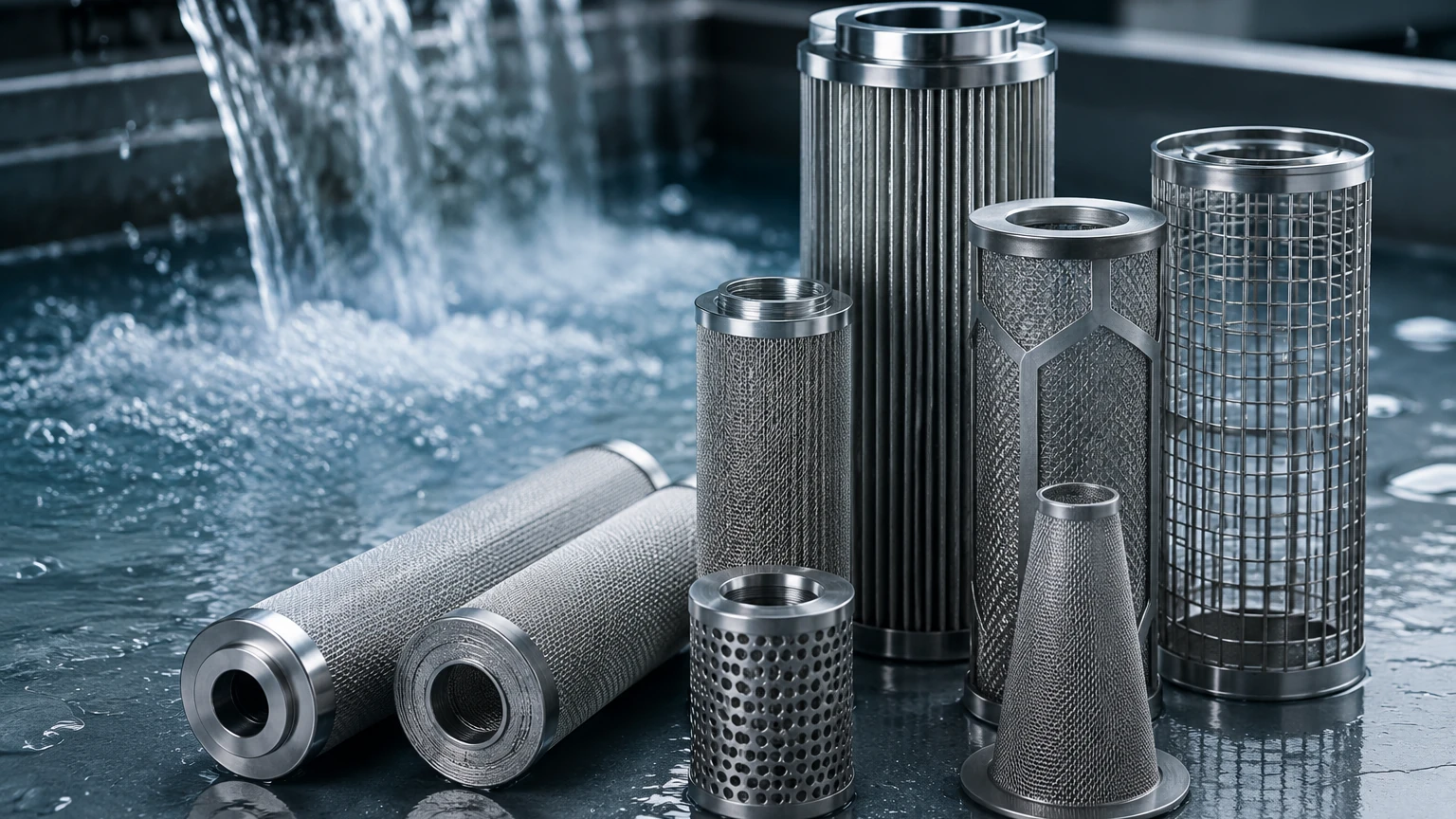
For high-pressure applications, a single layer of wire mesh may not suffice. Sintered multi-layer mesh, which bonds multiple layers of wire cloth together through heat and pressure, provides a combination of fine filtration and high mechanical strength. The support layers provide the necessary rigidity to prevent the filtration layer from deforming under the weight of the captured solids.
Navigating Operational Risks and Performance Degradation
Waste water filtration systems are subject to several risks that can lead to premature failure or reduced efficiency if not properly managed.
Biofouling: In many industrial sectors, especially food and beverage or pulp and paper, the waste water contains organic matter that encourages the growth of biofilms. These films can quickly blind a filter, leading to a rapid increase in differential pressure. Selecting stainless steel allows for the use of aggressive biocides or high-temperature steam sterilization to eliminate biofouling without damaging the filter media.
Abrasive Wear: Effluents from mining, glass manufacturing, or metal finishing often contain abrasive particles. These can erode the wires of a mesh filter over time, enlarging the pore sizes and compromising filtration accuracy. Utilizing hardened stainless steel or specialized weaves can mitigate this erosion and extend the component's life.
Chemical Incompatibility: While stainless steel is highly resistant, certain chemicals, such as concentrated hydrochloric acid, can still cause rapid degradation. It is vital to confirm the full chemical profile of the waste stream, including trace elements and cleaning chemicals, to ensure the selected alloy is appropriate for the application.
Maintenance Strategies for Reusable Metal Filters
The primary advantage of using stainless steel in waste water filtration is the ability to restore the filter to its original state through cleaning. A well-defined maintenance schedule is necessary to optimize the life cycle of the filter.
* Backwashing: This is the most common automated cleaning method. By reversing the flow of fluid through the filter, the accumulated solids are dislodged from the surface of the mesh. The effectiveness of backwashing depends on the weave type; for instance, plain square weaves are generally easier to backwash than complex dutch weaves.
* Ultrasonic Cleaning: For filters that have become deeply fouled with fine particulates or scale, ultrasonic cleaning uses high-frequency sound waves to create cavitation bubbles. These bubbles implode on the surface of the mesh, stripping away contaminants that manual or chemical cleaning might miss.
* Chemical Soaking: In cases of mineral scaling or heavy oil contamination, soaking the filter in a compatible acid or surfactant solution can dissolve the foulants. It is imperative to ensure that the cleaning agents used do not cause intergranular corrosion in the stainless steel.
By implementing these strategies, the total cost of ownership for a stainless steel filtration system is often lower than that of disposable systems, despite the higher initial capital expenditure.
Customization and OEM Solutions for Specialized Requirements
No two industrial waste water streams are identical. Differences in particle shape, fluid viscosity, and flow dynamics mean that off-the-shelf filtration solutions often fall short of optimal performance. Customization is frequently required to meet specific engineering challenges.
OEM manufacturing capabilities allow for the adjustment of every aspect of the filter component. This includes custom dimensions to fit existing housings, specialized end-cap configurations (such as NPT, flange, or double open end), and the integration of internal support cores for high-collapse-pressure requirements. Furthermore, the weave pattern—whether it be plain, twilled, or plain dutch—can be selected to prioritize either flow rate or particle retention based on the specific needs of the waste water filtration process.
For engineers developing new treatment systems, partnering with a manufacturer that understands the nuances of metal filtration is essential. This collaboration ensures that the filter is not just a component, but a high-performance tool tailored to the specific rigors of the application. For further information on how custom metal filtration can be integrated into your industrial processes, please visit our Main Page.
Conclusion: Selecting the Right Path for Waste Water Management
Effective waste water filtration is a cornerstone of modern industrial operations. By moving away from disposable media and toward durable, cleanable stainless steel solutions, companies can achieve higher levels of process reliability and environmental responsibility. The selection process requires a rigorous evaluation of the fluid's chemical and physical properties, the required filtration accuracy, and the long-term maintenance strategy.
When these factors are correctly addressed, the resulting filtration system provides a robust defense for downstream assets and ensures that waste water treatment remains a seamless part of the production cycle. Whether the goal is protecting a high-pressure pump or meeting stringent discharge limits, high-quality metal filtration components are the most reliable choice for demanding industrial environments.
