


Water Filtration Bags
In industrial water treatment, the selection of filtration media is a critical engineering decision that impacts operational efficiency, maintenance frequency, and the purity of the final effluent. Water filtration bags represent one of the most versatile and cost-effective methods for removing suspended solids from liquid streams. Unlike complex membrane systems, bag filtration utilizes a pressure-driven approach to capture contaminants within a replaceable or cleanable bag structure.
For engineers and procurement teams, understanding the technical nuances of water filtration bags—ranging from material science to hydraulic performance—is essential for optimizing system design. This guide examines the engineering principles, material considerations, and selection criteria necessary for implementing effective bag filtration solutions in demanding industrial environments.
Fundamentals of Bag Filtration Mechanics
Bag filtration operates primarily through two mechanisms: surface filtration and depth filtration. The choice between these mechanisms depends on the particle size distribution of the influent and the required clarity of the effluent.
Surface Filtration
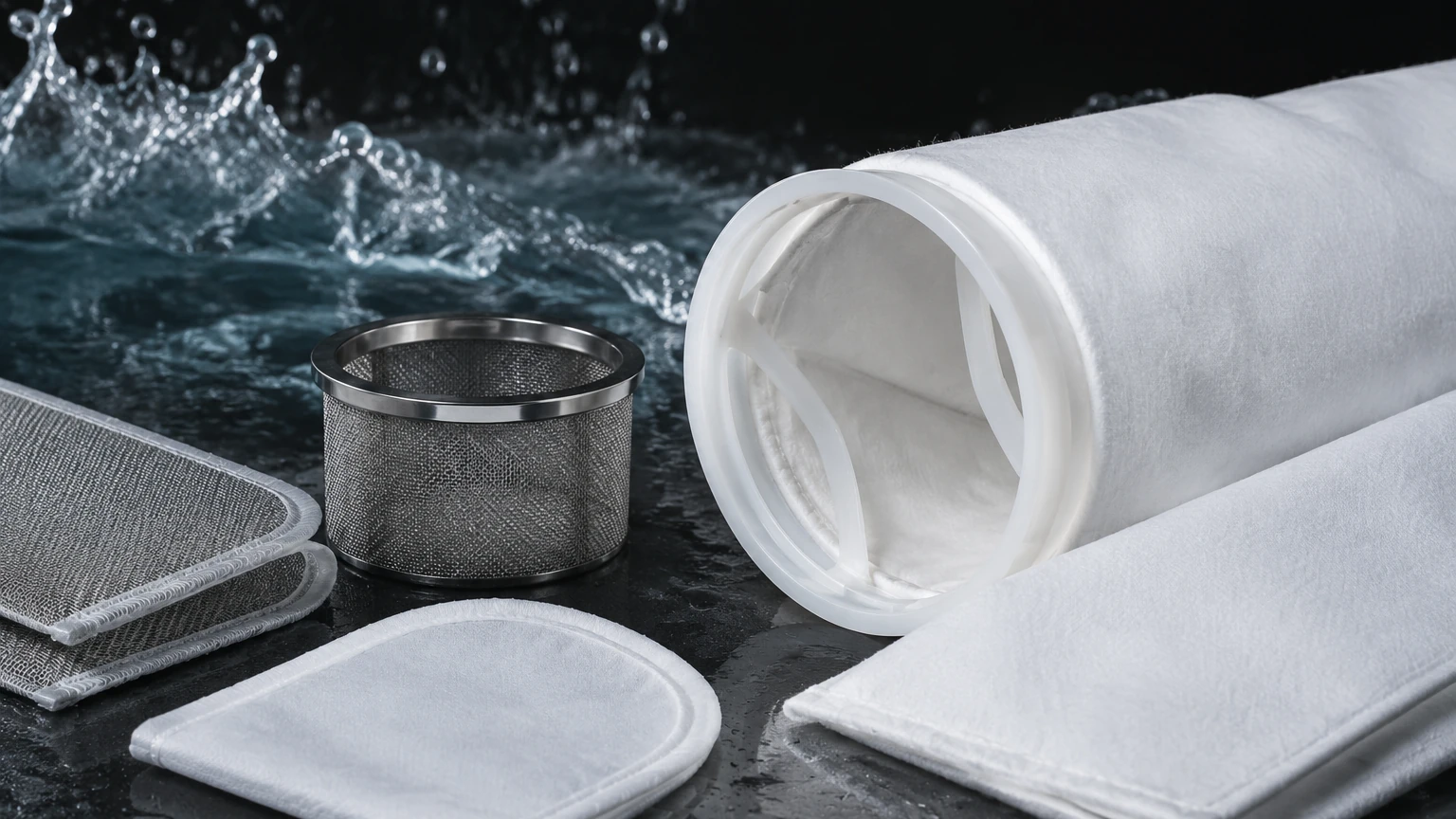
Surface filtration occurs when particles larger than the pore size of the filter media are trapped on the upstream surface of the bag. This is typical of monofilament mesh bags, including those made from stainless steel or nylon. These bags are characterized by a precise, two-dimensional pore structure. Surface filtration is ideal for applications requiring high accuracy for specific particle sizes, as the mesh provides a consistent physical barrier. One significant advantage of surface filtration, particularly with metal mesh, is the ability to clean and reuse the filter media, reducing the total cost of ownership.
Depth Filtration
Depth filtration involves the capture of contaminants within the tortuous path of a thick filter medium, such as needlefelt or melt-blown fibers. As water passes through the multi-layered structure of the bag, particles are trapped throughout the thickness of the material. This mechanism is highly effective for capturing a wide range of particle sizes and offers a higher dirt-holding capacity than standard surface filters. However, depth filtration media are typically disposable and cannot be effectively cleaned once the internal structure is saturated with solids.
Material Selection and Chemical Compatibility
The performance of water filtration bags is heavily influenced by the material of construction. Engineers must evaluate materials based on chemical compatibility, temperature resistance, and mechanical strength.
1. Polypropylene (PP): A widely used synthetic fiber for depth filtration. PP offers excellent resistance to acids and alkalis and is generally cost-effective. However, it has a relatively low temperature threshold (typically up to 90°C) and is susceptible to oxidation in the presence of certain strong oxidizing agents.
2. Polyester (PE): Similar to polypropylene but with higher temperature resistance (up to 150°C). Polyester is preferred in applications involving hot water or mild solvents, though it has limited resistance to concentrated alkalis.
3. Nylon Monofilament: Used for precision surface filtration. Nylon provides high mechanical strength and good abrasion resistance, making it suitable for removing coarse solids or as a pre-filter.
4. Stainless Steel Mesh: For the most demanding industrial applications, stainless steel wire mesh (typically 304 or 316L) is the gold standard. Stainless steel water filtration bags offer unmatched durability, high-temperature tolerance (exceeding 250°C), and resistance to high differential pressures. Manufacturers like Kaifil specialize in these precision metal components, providing solutions that are both cleanable and resistant to the corrosive environments often found in chemical processing or heavy industrial water loops.
Engineering Performance Metrics: Micron Ratings and Flow Rates
Selecting the correct water filtration bags requires a deep dive into performance specifications. The two most misunderstood metrics are micron ratings and flow capacity.
Nominal vs. Absolute Micron Ratings
A nominal rating indicates the ability of the filter to trap a specific percentage (usually 60% to 80%) of particles of a given size. Most standard felt bags are nominally rated. An absolute rating implies that 99.9% or more of particles at the specified micron size will be retained. For critical applications, such as pharmaceutical water or fine chemical processing, absolute-rated bags or precision-engineered stainless steel mesh are required to ensure consistent water quality.
Hydraulic Capacity and Differential Pressure
The flow rate through a filter bag is determined by the surface area of the bag, the viscosity of the fluid, and the initial pressure drop ($ΔP$). Engineers must design systems where the initial clean pressure drop does not exceed 2-3 PSI. As the bag accumulates solids, the $ΔP$ will increase. It is industry standard to replace or clean water filtration bags when the differential pressure reaches 15-25 PSI. Exceeding these limits can lead to "breakthrough," where particles are forced through the media, or mechanical failure of the bag or housing.
Comparing Bag Filtration to Cartridge Systems
When designing a filtration stage, engineers often weigh the benefits of bags versus cartridges. While both serve similar purposes, their applications differ based on the volume and nature of the contaminants.
* Flow Volume: Bag filters are generally better suited for high-flow applications. A single #2 size bag can often handle flow rates that would require multiple standard 10-inch cartridges.
* Solids Loading: Bags have a larger internal volume, allowing them to hold a greater mass of solids before requiring service. This makes them ideal for primary filtration or pre-filtration stages where the water contains a high concentration of suspended solids.
* Precision: Cartridge filters typically offer higher precision and are available in sub-micron ratings that bags cannot easily achieve. Therefore, a common industrial configuration involves using water filtration bags for bulk solids removal followed by cartridge filters for final polishing.
* Waste and Cost: Disposable bags generate less waste by volume than cartridges but must be replaced more frequently if the solids loading is extremely high. In such cases, switching to a cleanable stainless steel mesh bag can significantly reduce recurring operational costs.
Industrial Application Scenarios
Water filtration bags are utilized across a spectrum of industries, each with unique technical requirements:
Chemical Processing
In chemical plants, water is used for cooling, solvent dilution, and as a reactant. Filtration bags must withstand aggressive pH levels and high temperatures. Stainless steel mesh bags are frequently employed here because they do not leach fibers into the process stream and can withstand the chemical cleaning cycles required to remove scale or organic buildup.
Food and Beverage
Filtration in this sector requires FDA-compliant materials. Water filtration bags are used to remove sediment from source water and to clarify process liquids like juices or syrups. The emphasis here is on preventing microbial growth, which necessitates regular replacement of synthetic bags or the use of electropolished stainless steel components that offer no crevices for bacterial colonization.
Cooling Towers and HVAC
Open-loop cooling towers are prone to atmospheric contamination, including sand, silt, and biological matter. Bag filters are installed in side-stream configurations to continuously remove these solids, preventing the fouling of heat exchangers. This application prioritizes high flow rates and ease of maintenance, as bags can be swapped out quickly during routine system inspections.
Customization and OEM Considerations
Standard off-the-shelf filtration bags do not always meet the rigorous demands of specialized industrial machinery. Engineers often require customized filtration solutions to fit unique housing dimensions or to achieve specific flow characteristics.
When working with a manufacturer, it is important to confirm the following technical specifications:
* Flange and Ring Design: The sealing mechanism (e.g., plastic flange, steel ring, or specialized gasket) is the most common point of bypass. A custom-engineered seal ensures that 100% of the water passes through the filter media.
* Reinforcement: In high-pressure systems, bags may require external support or internal liners to prevent bursting.
* Material Grade: For corrosive environments, specifying 316L stainless steel over 304 can significantly extend the service life of the filter component.
For those managing complex projects, reviewing the Main Page of a dedicated filtration manufacturer can provide insights into the range of customization options available, from specialized wire mesh weaves to proprietary housing connectors.
Maintenance and Operational Best Practices
To maximize the efficiency of water filtration bags, a proactive maintenance strategy is required. Relying solely on a calendar schedule for bag changes often leads to either premature replacement (wasting resources) or delayed replacement (risking system downtime).
1. Install Differential Pressure Gauges: This is the only reliable way to monitor bag saturation. Automated systems can be set to trigger an alarm when the $ΔP$ reaches the terminal limit.
2. Use Multi-Bag Housings for High Flow: For flow rates exceeding 200 GPM, multi-bag housings allow for continuous operation. Some designs permit the isolation of individual bags for replacement without shutting down the entire line.
3. Proper Seating: Ensure the bag is fully seated in the basket. Even a 1mm gap around the flange can allow thousands of gallons of unfiltered water to bypass the system, potentially damaging downstream equipment like high-pressure pumps or sensitive membranes.
4. Pre-Wetting: For certain synthetic depth media, pre-wetting the bag with clean water can help establish the initial flow and prevent air entrapment within the fiber matrix.
By integrating these technical considerations into the procurement and operational phases, industrial facilities can ensure that their water filtration bags provide reliable, high-performance protection for their critical infrastructure.
