


Water Treatment Screening
In industrial water management, water treatment screening serves as the critical first line of defense. It is a mechanical process designed to remove large solids, debris, and suspended particulates from raw water sources or process streams before they reach more sensitive downstream equipment. For engineers and procurement professionals, selecting the appropriate screening technology is not merely about particle removal; it is about protecting high-value assets such as pumps, heat exchangers, and membrane filtration systems from damage and fouling.
Effective water treatment screening requires a deep understanding of fluid dynamics, material science, and the specific contaminants present in the source water. Whether the application involves municipal intake, industrial cooling towers, or wastewater discharge, the choice of screening media directly impacts the efficiency, maintenance frequency, and total operational cost of the entire treatment plant.
The Fundamental Role of Water Treatment Screening
Water treatment screening is categorized primarily by the size of the openings in the screening media. Coarse screening typically targets large debris (greater than 6mm), while fine screening addresses smaller particulates that could interfere with biological treatments or damage fine filtration stages. In industrial contexts, the primary objective is to ensure that the influent water meets the physical quality requirements for subsequent processing stages.
Without robust screening, downstream components face several risks:
1. Mechanical Damage: Large solids can cause catastrophic failure in centrifugal pumps or erode valve seats.
2. Heat Transfer Loss: Particulates can settle in heat exchanger tubes, leading to scaling and reduced thermal efficiency.
3. Membrane Fouling: For facilities utilizing Reverse Osmosis (RO) or Ultrafiltration (UF), inadequate screening leads to rapid membrane plugging, necessitating frequent chemical cleanings and shortening membrane lifespan.
By implementing a high-performance screening solution, facilities can stabilize their processes and reduce the frequency of unscheduled downtime. For organizations evaluating their current filtration infrastructure, reviewing technical specifications on our Main Page can provide insights into the manufacturing standards required for industrial-grade components.
Selecting the Right Screening Media: Stainless Steel Wire Mesh
While various materials are used for water treatment screening, stainless steel wire mesh remains the industry standard for demanding industrial applications. Unlike synthetic polymers or lower-grade metals, stainless steel offers a unique combination of mechanical strength, corrosion resistance, and precision.
Material Grades
In most water treatment environments, Type 304 and Type 316L stainless steel are the preferred materials. Type 304 is suitable for general freshwater applications, providing excellent durability. However, for brackish water, seawater, or chemically aggressive process streams, Type 316L is essential due to its molybdenum content, which provides superior resistance to pitting and crevice corrosion.
Weave Types and Performance
The geometry of the screening media determines its filtration characteristics. Common configurations include:
* Plain Weave: Offers a high open area and low pressure drop, ideal for high-flow coarse screening.
* Twill Weave: Allows for thicker wires in a given mesh count, providing increased mechanical strength for high-pressure applications.
* Dutch Weave: Provides a complex, three-dimensional pore structure that excels in fine filtration and surface-loading applications where high retention accuracy is required.
Key Engineering Parameters for Effective Screening
When specifying a water treatment screening solution, engineers must balance several competing technical parameters. A failure to account for these variables can lead to premature screen failure or insufficient filtration performance.
Micron Rating and Filtration Accuracy
The micron rating defines the largest particle that can pass through the screen. In water treatment screening, it is vital to distinguish between nominal and absolute ratings. A nominal rating indicates the ability to retain a percentage of particles, whereas an absolute rating guarantees that no particle larger than the specified size will pass. For critical protection of downstream membranes, absolute-rated stainless steel cartridges are often preferred.
Open Area and Flow Velocity
The "open area" is the ratio of the area of the openings to the total area of the screen. A higher open area results in a lower clean pressure drop (ΔP) and allows for higher flow velocities. However, as the open area increases, the structural integrity of the wire mesh may decrease. Engineers must calculate the "face velocity" of the water as it passes through the screen to prevent particle "breakthrough" or excessive impingement force that could deform the mesh.
Differential Pressure (ΔP) Limits
As solids accumulate on the screen surface, the differential pressure across the media increases. The screen must be engineered to withstand the maximum expected ΔP without collapsing or bypassing. This is particularly important in automated systems where backwashing is triggered by pressure sensors.
Customization Options for Industrial Applications
Every industrial facility has unique spatial constraints and fluid characteristics. Standard, off-the-shelf screens rarely provide the optimal balance of performance and longevity. Custom-engineered filtration components allow for the optimization of the screening process based on specific site data.
Structural Configurations
Screening media can be fabricated into various forms to suit different equipment designs:
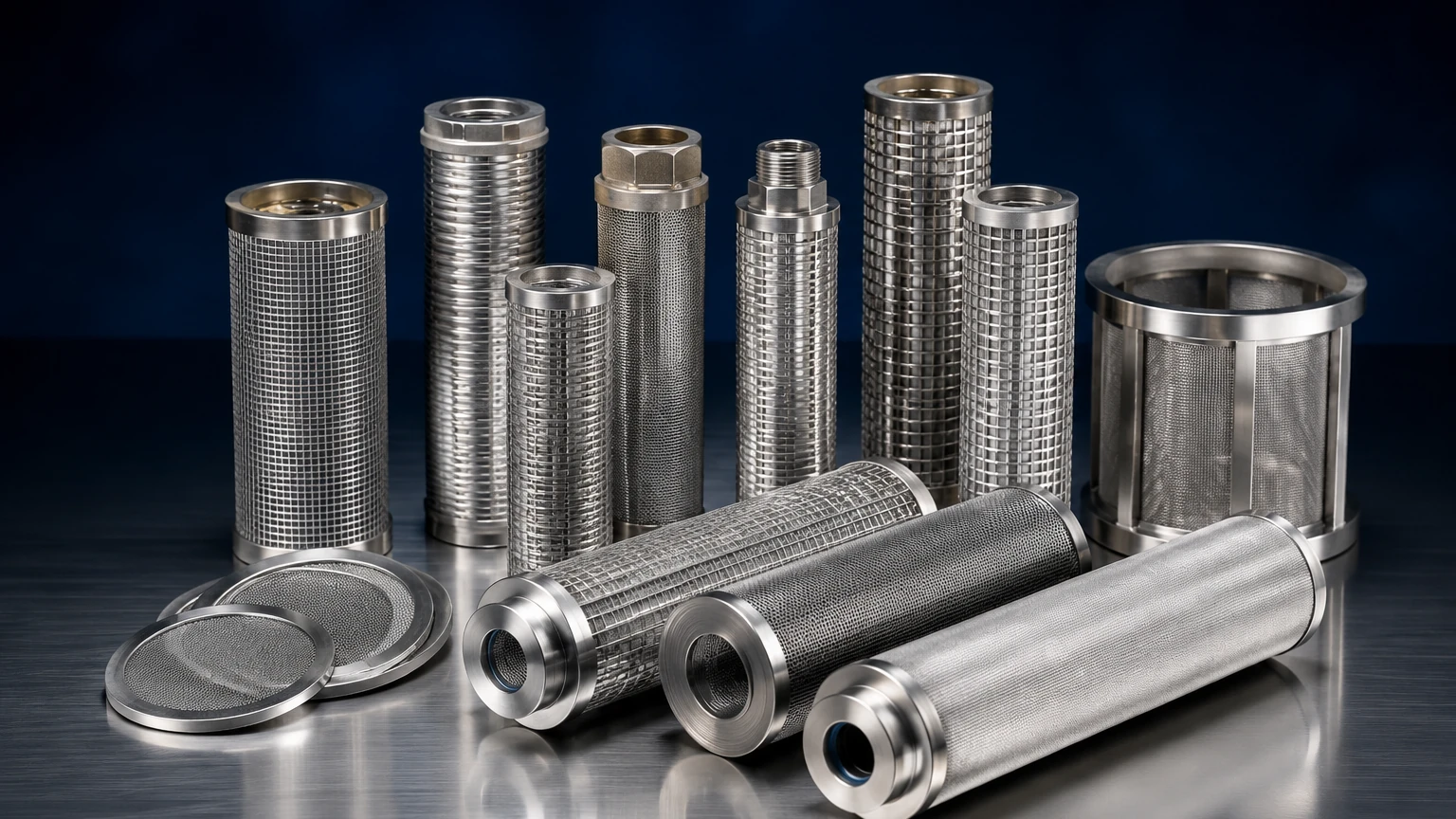
* Cylindrical Filter Elements: Used in pressurized housing for continuous flow applications.
* Pleated Cartridges: Increase the available surface area within a compact footprint, significantly extending the time between cleaning cycles.
* Wedge Wire Screens: Utilize V-shaped profiles to provide a non-clogging surface, which is particularly effective for high-solids loading in wastewater screening.
OEM Integration
For original equipment manufacturers (OEMs), sourcing precision-manufactured screening components is vital for the reliability of their branded systems. Customization includes specific end-cap configurations, reinforced internal cores for high-pressure environments, and specialized welding techniques (such as plasma or TIG welding) to ensure the integrity of the filter medium under thermal or mechanical stress.
Maintenance, Cleaning, and Operational Longevity
The longevity of a water treatment screening system is heavily dependent on its cleanability. In many industrial settings, manual cleaning is impractical due to the scale of operations or the nature of the contaminants.
Backwashing and Regenerative Cleaning
Stainless steel screens are highly amenable to backwashing—a process where the flow is reversed to dislodge accumulated debris. The rigid nature of metal mesh ensures that the pore structure remains stable during the high-pressure pulses required for effective cleaning. This is a significant advantage over synthetic media, which may stretch or blind over time.
Assessing Wear and Replacement Cycles
Regular inspection of the screening media is necessary to identify signs of wear, such as:
* Erosion: Thinning of the wires due to abrasive particles in the water stream.
* Fatigue Cracking: Often caused by repeated pressure cycles or vibration.
* Chemical Degradation: Indicated by discoloration or pitting on the metal surface.
By tracking the rate of pressure increase after each cleaning cycle, operators can predict the end-of-life for a screen and schedule replacements during planned maintenance windows, avoiding emergency shutdowns.
Total Cost Considerations for Procurement Teams
When evaluating water treatment screening solutions, the initial purchase price is only one component of the total cost of ownership (TCO). High-quality stainless steel filtration components often command a higher upfront investment than disposable or lower-grade alternatives, but they deliver long-term value through several mechanisms:
1. Reduced Replacement Frequency: Durable metal screens can last for years, whereas synthetic filters may need replacement every few months.
2. Lower Energy Consumption: Screens designed with an optimized open area maintain a lower differential pressure, reducing the energy required by pumps to maintain flow rates.
3. Protection of Downstream Assets: The cost of replacing a damaged high-pressure pump or a fouled RO membrane stack far outweighs the investment in a premium screening solution.
4. Waste Reduction: Permanent, cleanable screens eliminate the waste stream associated with disposable filter cartridges, aligning with corporate sustainability goals.
For technical professionals tasked with optimizing water treatment infrastructure, focusing on the engineering specifications and material quality of the screening media is essential. To explore a range of high-performance filtration components designed for these demanding environments, please consult our Main Page.
Conclusion
Water treatment screening is a sophisticated engineering discipline that requires a balance of material science and fluid mechanics. By selecting the correct stainless steel mesh, optimizing the structural design, and considering the long-term operational impacts, industrial facilities can ensure reliable, cost-effective water processing. As industrial requirements become more stringent regarding water reuse and discharge quality, the role of precision screening will only continue to grow in importance.
