


What Does a Gas Filter Do
In industrial engineering and process management, the purity of gaseous media is a critical factor that directly influences the reliability of equipment and the quality of the final product. Whether dealing with compressed air, natural gas, nitrogen, or specialized process gases, the presence of contaminants can lead to mechanical wear, chemical interference, and system downtime. To mitigate these risks, engineers rely on gas filtration systems. But specifically, what does a gas filter do in a high-demand industrial environment?
At its core, a gas filter is a device designed to remove solid particulates, liquid droplets, and sometimes vaporous contaminants from a gas stream. By employing various physical mechanisms, these filters ensure that the gas reaching sensitive downstream components meets specific cleanliness standards. For professionals looking to optimize their systems, understanding the technical nuances of gas filtration is essential for selecting the right components from a Main Page of filtration solutions.
The Primary Functions of an Industrial Gas Filter
To answer the question of what does a gas filter do, one must look at the three primary roles it plays within a pressurized or atmospheric system: protection, purification, and separation.
1. Protection of Downstream Equipment
High-velocity gas streams often carry abrasive particles such as pipe scale, rust, and sand. If these particles reach precision components like valves, regulators, or turbines, they act as sandblasting agents, causing rapid erosion and mechanical failure. A gas filter acts as a physical barrier, capturing these solids before they can cause damage. This is particularly vital in hydraulic and pneumatic systems where tight tolerances are the norm.
2. Process Purification
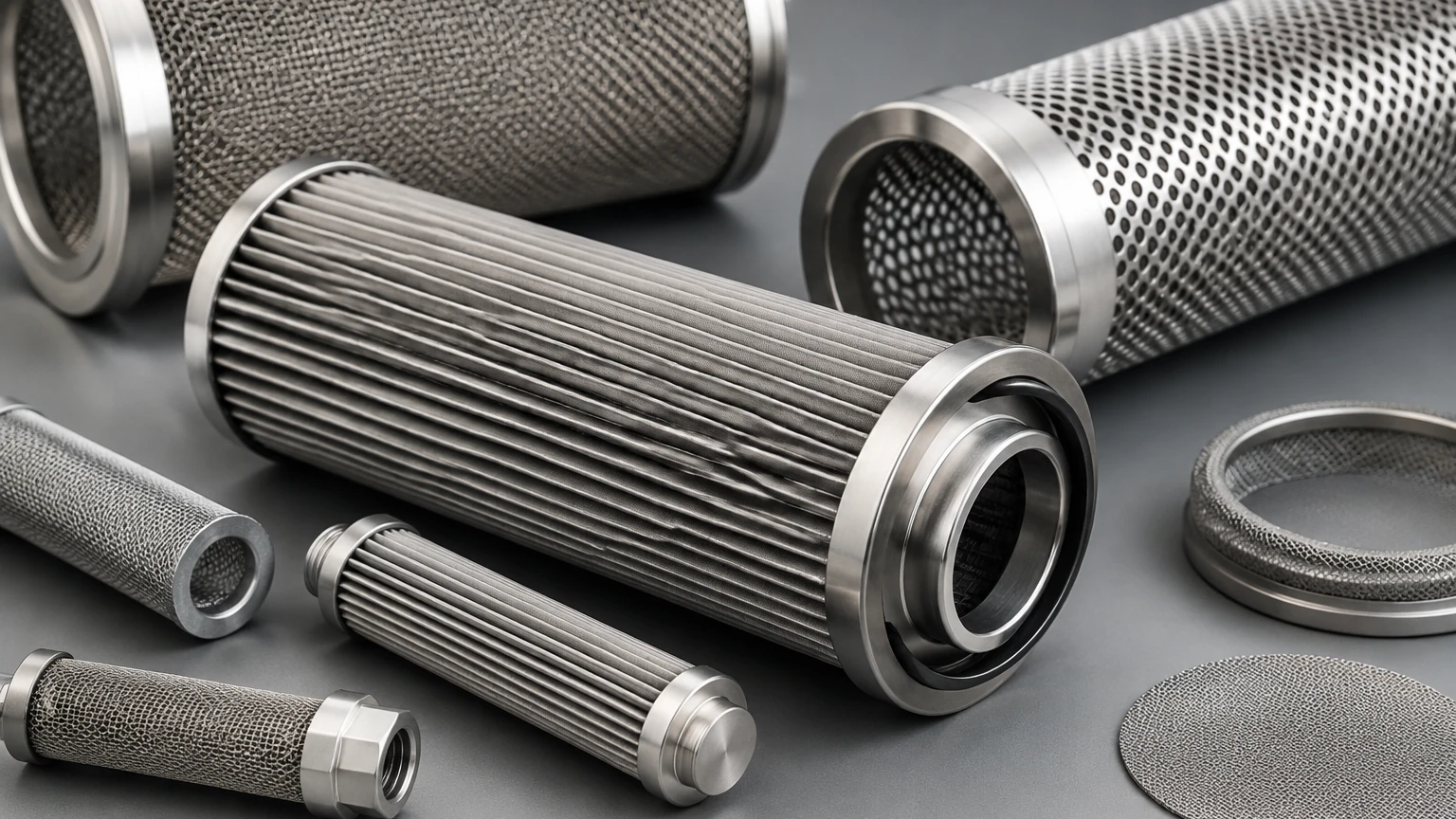
In industries such as pharmaceuticals and food and beverage, the gas itself is often a part of the production process (e.g., nitrogen blanketing or carbonation). In these instances, the filter ensures that the gas does not introduce microbial contaminants or foreign matter into the product. Stainless steel filter cartridges are frequently used here due to their ability to be sterilized and their resistance to corrosion.
3. Liquid and Aerosol Separation
While many think of filters as only removing solids, many gas filters (specifically coalescing filters) are designed to remove liquid water and oil aerosols. These liquids can cause corrosion in piping or interfere with chemical reactions. By forcing the gas through a specialized medium, small droplets are encouraged to join together (coalesce) into larger drops that can be drained away.
Technical Mechanisms: How Gas Filtration Works
Understanding what does a gas filter do requires a look at the physics of filtration. Unlike liquid filtration, which relies heavily on simple mechanical straining, gas filtration utilizes several distinct physical principles depending on the particle size and gas velocity.
Inertial Impaction
This mechanism applies to larger particles (typically those greater than 1 micron). Because these particles have significant mass, they cannot follow the streamlines of the gas as it twists through the filter media. Instead, their inertia carries them forward until they collide with a fiber or the mesh surface, where they become trapped.
Interception
Interception occurs when a particle follows a gas streamline but comes close enough to a filter fiber to be captured by it. This is generally effective for mid-sized particles that are too small for heavy inertia but too large for significant diffusion.
Diffusion (Brownian Motion)
For very small particles (sub-micron level), the gas molecules themselves knock the particles around in a random pattern known as Brownian motion. This erratic movement increases the likelihood that the particle will eventually bump into a filter fiber and stay there. This is why high-quality gas filters are surprisingly efficient at capturing particles much smaller than the actual gaps in the filter mesh.
Material Selection and Engineering Considerations
When evaluating what does a gas filter do for a specific application, the material of the filter element is the most important engineering decision. In demanding industrial environments, stainless steel is often the material of choice.
Stainless Steel Wire Mesh
Stainless steel wire mesh filters provide precise pore sizes and excellent mechanical strength. They are ideal for high-pressure applications where the filter must maintain its structural integrity under significant stress. Furthermore, they are reusable; after a cleaning cycle (such as ultrasonic cleaning or backwashing), they can be returned to service, lowering the total cost of ownership.
Sintered Metal Components
Sintered metal filters are created by fusing metal powders or fibers together without melting them. This creates a porous structure with high tortuosity, providing exceptional depth filtration. These are often used when the gas temperature is extremely high or when the chemical environment is too aggressive for synthetic polymers.
Compatibility and Corrosion Resistance
Engineers must ensure that the filter housing and element are compatible with the gas being processed. For example, in the chemical processing industry, 316L stainless steel is preferred for its superior resistance to pitting and crevice corrosion, especially when trace amounts of moisture or acidic gases are present.
Evaluating Filter Performance: Key Metrics
To truly understand what does a gas filter do in terms of performance, engineers must look at specific data points provided by the manufacturer.
* Micron Rating: This indicates the size of particles the filter is capable of removing. It is important to distinguish between "nominal" (an approximate value) and "absolute" (the size at which 99.9% of particles are captured) ratings.
* Pressure Drop (Delta P): Every filter creates a restriction in the flow. A high initial pressure drop means the system must work harder to push gas through, increasing energy costs. Monitoring the increase in pressure drop over time is the standard method for determining when a filter element needs to be replaced or cleaned.
* Flow Rate Capacity: Filters must be sized correctly to handle the maximum expected flow of the system. If the flow is too high, the velocity of the gas can strip captured particles off the media (re-entrainment) or cause the filter element to collapse.
Common Risks of Poor Gas Filtration
If a gas filter fails to do its job—either due to poor selection or lack of maintenance—the consequences can be severe. In the pharmaceutical sector, an unfiltered nitrogen stream could contaminate an entire batch of medicine, leading to massive financial losses and regulatory scrutiny. In natural gas pipelines, the absence of effective filtration can lead to "black powder" accumulation, a mixture of iron sulfides and oxides that clogs valves and damages compressors.
Furthermore, in food and beverage production, gas filters are the last line of defense against oil carryover from compressors. If oil aerosols reach the packaging line, they can affect the taste, smell, and safety of the food product.
Customization and OEM Solutions
In many B2B scenarios, standard off-the-shelf filters are insufficient. This is where the expertise of a specialized manufacturer becomes invaluable. Customization allows for the adjustment of filtration accuracy, housing dimensions, and connection types to fit specific machinery.
When discussing what does a gas filter do with an OEM provider, engineers should confirm:
* Operating Temperature and Pressure: Can the filter withstand the extremes of the process?
* Chemical Environment: Is the stainless steel grade appropriate for the specific gas composition?
* Maintenance Access: Is the filter designed for quick replacement to minimize downtime?
By working closely with manufacturers like Kaifil, companies can develop filtration components that are tailored to the unique demands of their industrial environment, ensuring both durability and precise performance.
Conclusion: The Strategic Value of Gas Filtration
In summary, what does a gas filter do? It serves as the primary guardian of industrial system health. By removing solid particulates, liquid aerosols, and contaminants, it prevents equipment wear, ensures product purity, and maintains process efficiency. For engineers and purchasing teams, selecting a filter is not merely a maintenance task but a strategic decision that impacts the total cost of operation and the reliability of the entire facility.
Effective gas filtration requires a balance of material science, fluid dynamics, and mechanical engineering. By choosing high-quality stainless steel filtration solutions and adhering to rigorous maintenance schedules, industrial operators can protect their investments and achieve consistent, high-performance results. For more technical specifications and to explore custom filtration options, visiting a professional Main Page is the first step toward optimizing your industrial gas systems.
