


What Does a Protein Skimmer Do
In the realm of industrial water treatment and large-scale aquaculture, maintaining water quality is a complex engineering challenge that requires a multi-faceted approach to filtration. While mechanical filtration—such as the stainless steel wire mesh and cartridges provided by Kaifil—removes suspended solids, certain dissolved contaminants require a different physical process. This is where the protein skimmer, also known as a foam fractionator, becomes essential. Understanding what does a protein skimmer do is critical for engineers designing Recirculating Aquaculture Systems (RAS), public aquaria, and specific industrial wastewater treatment plants.
A protein skimmer is a device designed to remove dissolved organic compounds (DOCs) from water before they have the opportunity to break down into nitrogenous waste, such as ammonia and nitrite. By leveraging the physical properties of air-water interfaces, these systems provide a proactive solution to waste management that complements traditional mechanical and biological filtration stages.
Understanding Foam Fractionation: The Core Mechanism
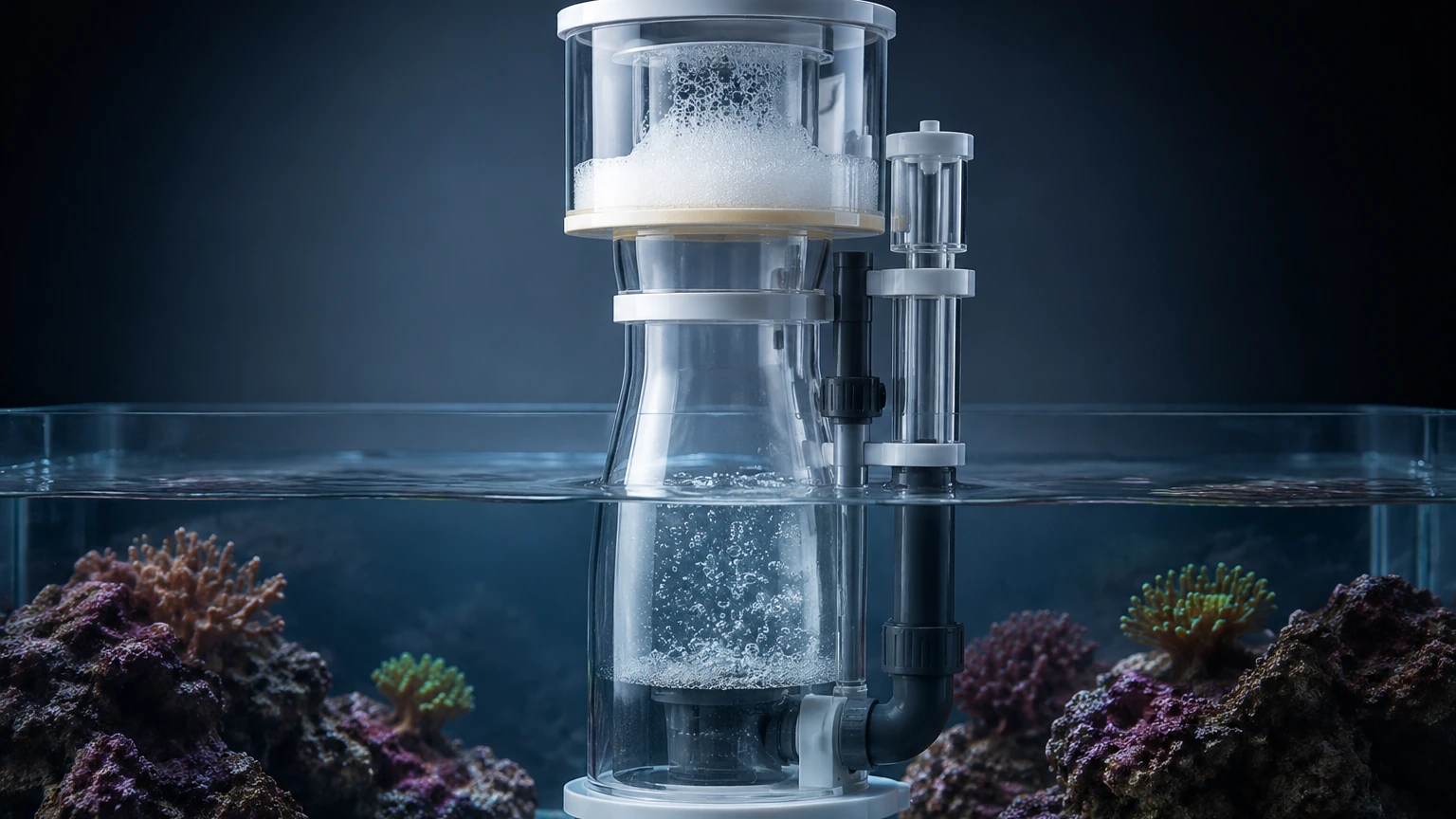
To answer the question of what does a protein skimmer do, one must look at the process of foam fractionation. This is a chemical engineering process that separates hydrophobic molecules from a liquid phase using rising air bubbles.
Most organic waste molecules in water are "amphipathic." This means they possess a hydrophilic (water-attracting) end and a hydrophobic (water-repelling) end. When air is injected into a column of water, these molecules are naturally attracted to the air-water interface of the bubbles. The hydrophobic ends attach to the air bubble, while the hydrophilic ends remain in the water.
As the bubbles rise through the reaction chamber, they collect these organic molecules, creating a concentrated film on the bubble's surface. When the bubbles reach the top of the chamber, they form a stable foam. This foam is then pushed over a "neck" and into a collection cup, effectively removing the waste from the water column entirely. This process is distinct from mechanical filtration because it targets molecules that are dissolved or in a colloidal state, which would pass through even the finest stainless steel mesh.
The Role of Protein Skimmers in Industrial Water Treatment
In industrial applications, the primary goal of a protein skimmer is to reduce the "organic load" on the rest of the filtration system. By removing proteins, fats, and other organic debris at the molecular level, the skimmer provides several key benefits to the overall process:
1. Reduction of Biological Oxygen Demand (BOD): Organic waste consumes oxygen as it decomposes. By removing this waste physically, a skimmer reduces the BOD, ensuring more dissolved oxygen is available for livestock or aerobic bacterial processes.
2. Prevention of Nitrate Accumulation: Traditional biological filters convert ammonia to nitrite and then to nitrate. While nitrate is less toxic, its accumulation can lead to algae blooms and other water quality issues. Protein skimmers remove the precursors to ammonia, slowing the rate of nitrate buildup.
3. Improved Water Clarity: Dissolved organics often contribute to a yellow or brown tint in water (chromophoric dissolved organic matter). Skimmers effectively remove these pigments, leading to higher UV penetration and better visual clarity.
4. Gas Exchange: The massive amount of air-to-water contact within a skimmer chamber facilitates the off-gassing of carbon dioxide and the saturation of the water with oxygen.
For engineers evaluating these systems, it is important to note that protein skimmers are significantly more efficient in saltwater than in freshwater. The higher surface tension and ionic strength of saltwater allow for the creation of much smaller, more stable bubbles, which increases the available surface area for organic attachment.
Technical Specifications: Bubble Size and Contact Time
The efficiency of a protein skimmer is governed by two main variables: bubble surface area and contact time.
Bubble Surface Area
Small bubbles are more effective than large bubbles. A large volume of micro-bubbles provides a vastly greater total surface area for organic molecules to bind to compared to the same volume of large bubbles. In industrial skimmers, this is often achieved through high-efficiency venturi injectors or needle-wheel pumps. These components must be precision-engineered to maintain a consistent air-to-water ratio. In many high-end systems, the intake for these injectors is protected by fine Main Page filtration components to prevent debris from clogging the air-injection mechanism.
Contact Time
Contact time refers to the duration an air bubble remains in the water column before reaching the surface. Longer contact time allows the bubble to "scrub" more organics from the water. Engineers increase contact time by designing taller reaction chambers or using counter-current flow patterns, where water flows downward against the upward rise of the bubbles. Achieving the optimal balance between flow rate and contact time is essential for maximizing the removal rate of DOCs.
Comparing Protein Skimmers to Mechanical Mesh Filtration
While both protein skimmers and mechanical filters (like those manufactured by Kaifil) are used to clean water, they target different types of contaminants. A comprehensive filtration strategy usually involves both.
* Mechanical Filtration (Stainless Steel Mesh/Cartridges): These are designed to remove particulate matter—fish waste, uneaten food, and suspended solids. The efficiency is determined by the micron rating of the mesh. For example, a 50-micron stainless steel filter cartridge will capture any particle larger than 50 microns.
* Protein Skimming: This targets dissolved molecules that are far smaller than any mechanical filter can catch. A protein skimmer will remove a protein molecule that is only a few nanometers in size.
In a typical industrial setup, water first passes through a mechanical pre-filter. This protects the protein skimmer from large debris that could disrupt the foam or clog the injectors. Following the skimmer, the water may move to biological filtration or UV sterilization. By using high-quality stainless steel mesh for pre-filtration, operators ensure that the protein skimmer can operate at peak efficiency without mechanical interference.
Material Selection and Engineering Durability
When specifying a protein skimmer for an industrial environment, material selection is paramount. Because these devices are most effective in saltwater, corrosion resistance is a primary concern. Most commercial skimmer bodies are constructed from heavy-duty acrylic or fiberglass-reinforced plastic (FRP). However, the internal components and the surrounding plumbing often require metal reinforcements.
This is where 316L stainless steel becomes vital. Components such as fasteners, pump shafts, and intake screens must withstand the highly corrosive nature of aerated saltwater. Engineers often look to specialized manufacturers like Kaifil to provide custom filtration components that can be integrated into the skimmer's support infrastructure. Durable materials reduce the total cost of ownership by extending the replacement cycle and minimizing downtime caused by component failure.
Maintenance Cycles and Operational Efficiency
An industrial protein skimmer is not a "set and forget" device. Its performance depends heavily on regular maintenance. The most critical maintenance task is cleaning the collection cup and the "neck" of the skimmer. As foam rises, it leaves behind a coating of organic sludge (skimmate). If this layer becomes too thick, it increases surface tension and prevents new foam from rising, significantly dropping the skimmer's efficiency.
Engineers should consider the following when evaluating the operational cost of a skimmer:
* Auto-Wash Systems: Many large-scale skimmers include spray bars that periodically wash the neck of the skimmer to maintain performance.
* Power Consumption: The pumps required to generate micro-bubbles and move large volumes of water can be energy-intensive. Selecting high-efficiency motors is essential for long-term sustainability.
* Component Replacement: Parts such as venturi gaskets, needle wheels, and air filters will eventually wear out. Ensuring a supply of high-quality replacement parts is necessary for continuous operation.
Integration into Multi-Stage Filtration Systems
Understanding what does a protein skimmer do allows engineers to better integrate it into a complete treatment train. A skimmer is rarely the only filtration step. For instance, in a pharmaceutical wastewater application, a skimmer might be used to remove specific surfactants or oils before the water reaches a membrane bioreactor. In aquaculture, it is the primary defense against the organic buildup that would otherwise overwhelm the biofilter.
When designing these systems, the flow rate through the skimmer should typically be 1 to 2 times the total system volume per hour, though this varies based on the organic load. Coordination between the mechanical filtration stage (using wire mesh or cartridges) and the protein skimming stage is essential. If the mechanical filter is too coarse, the skimmer becomes clogged; if it is too fine, it may require excessive maintenance. Finding the "sweet spot"—often through the use of customizable stainless steel filtration solutions—ensures the entire system remains balanced.
Conclusion
In summary, what does a protein skimmer do? It provides a unique and powerful method of removing dissolved organic waste by exploiting the physical attraction between organic molecules and air bubbles. For B2B buyers and engineers, the protein skimmer is a vital component in any high-load aqueous system, particularly those involving saltwater or high concentrations of proteins and lipids.
While the skimmer handles the molecular level of cleaning, the overall success of the filtration system depends on the reliability of every stage. High-performance mechanical filtration remains the foundation of water treatment. To explore how custom stainless steel mesh and precision filter cartridges can support your industrial filtration needs and protect your downstream equipment, Review product options and application support at Kaifil. By combining advanced foam fractionation with robust mechanical filtration, industrial operators can achieve superior water quality, reduced operational risks, and enhanced system longevity.
