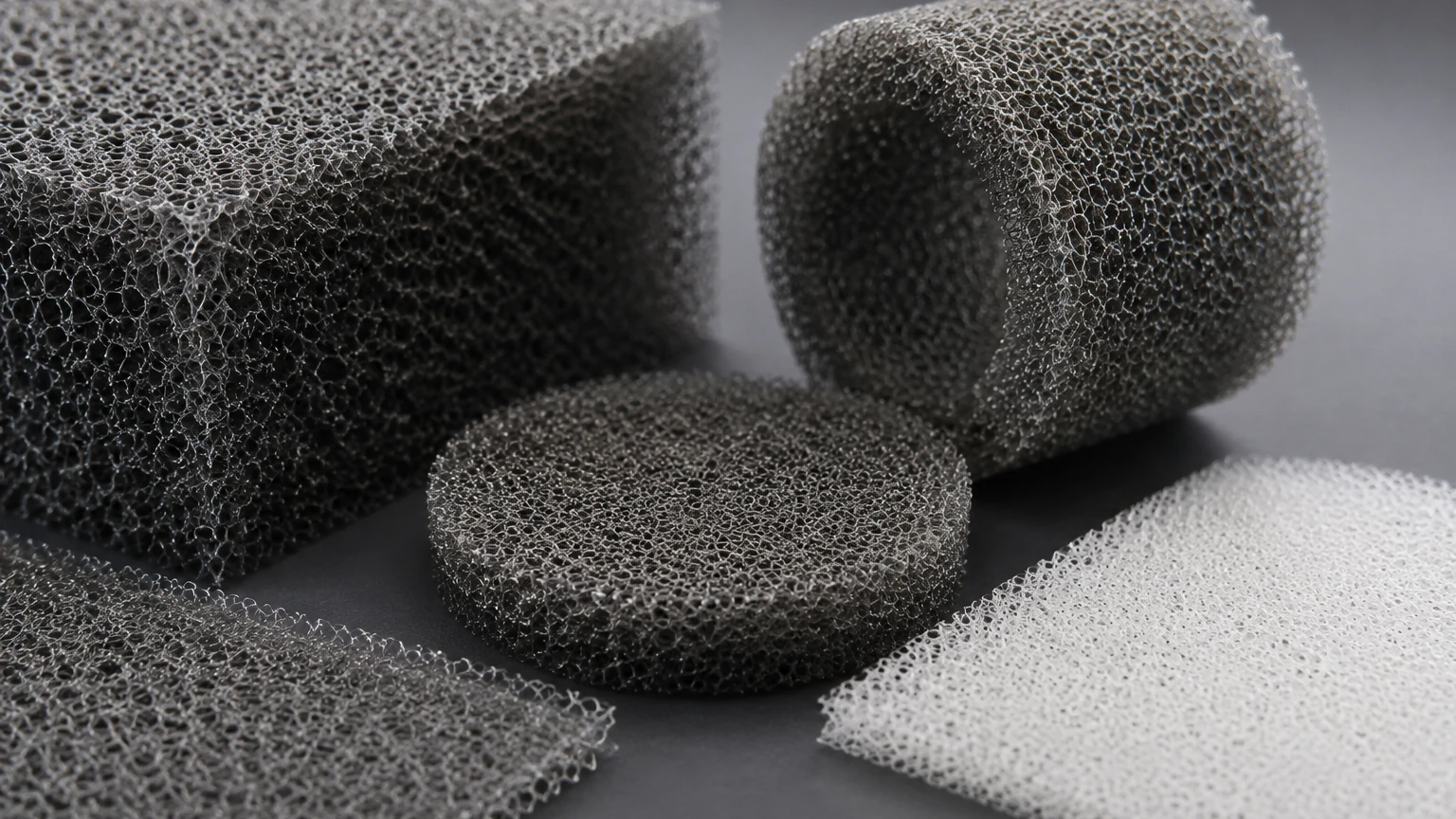
What Is Reticulated Polyurethane Foam
In the landscape of industrial filtration and material science, reticulated polyurethane foam stands as a critical component for fluid management, air purification, and acoustic insulation. For engineers and procurement specialists, understanding the technical nuances of this material is essential for optimizing system performance and ensuring long-term durability. While often used as a standalone media, reticulated foam frequently serves as a primary stage in complex filtration systems that may eventually require the precision and durability of stainless steel components.
Defining the Structure: What Is Reticulated Polyurethane Foam?
Reticulated polyurethane foam is a porous, low-density, solid foam characterized by an "open-cell" structure. Unlike standard polyurethane foams used in furniture or packaging—which contain a mix of open and closed cells—reticulated foam has undergone a specific manufacturing process to remove the thin cell membranes (often called "windows") that exist between the polymer strands.
What remains is a three-dimensional skeletal matrix. This structure provides a high degree of permeability, allowing gases and liquids to pass through with minimal resistance while providing a vast surface area for particle entrapment or chemical interaction. The term "reticulated" itself refers to this net-like or web-like configuration. Because the membranes are removed, the foam typically possesses a void volume ranging from 95% to 98%, making it an exceptionally lightweight yet structurally sound medium for diverse industrial applications.
The Reticulation Process: Thermal vs. Chemical Methods
To understand what is reticulated polyurethane foam at a functional level, one must examine how the cell membranes are eliminated. There are two primary industrial methods for achieving this state:
1. Thermal Reticulation (Zapping)
Thermal reticulation, often referred to as "zapping," involves placing a block of standard open-cell foam into a large vacuum pressure vessel. The vessel is evacuated and then filled with a precise mixture of combustible gases (typically hydrogen and oxygen). When ignited, a controlled explosion occurs. The resulting flash of heat is intense enough to melt the thin, high-surface-area cell membranes but is too brief to damage the thicker skeletal struts of the foam. This process results in a very clean, consistent skeletal structure.
2. Chemical Reticulation (Quenching)
Chemical reticulation involves passing the foam through a caustic bath, usually a heated sodium hydroxide (NaOH) solution. The chemical reaction selectively dissolves the thin cell membranes through a process of hydrolysis. While effective, chemical reticulation requires extensive rinsing and drying to ensure no residual caustic agents remain within the matrix, which could otherwise compromise the material's integrity or contaminate the fluids being filtered.
Key Performance Metrics: PPI and Porosity
When specifying reticulated foam for an industrial project, the most critical metric is PPI (Pores Per Inch). This value determines the filtration efficiency and the pressure drop across the media.
* Low PPI (10–30): These foams have large pores and are typically used for coarse filtration, such as pre-filters for HVAC systems or large-scale water intake screens. They offer the lowest resistance to flow.
* Medium PPI (45–70): This range is common in small engine air filters and general industrial liquid filtration. It balances particle capture efficiency with a manageable pressure drop.
* High PPI (80–110): These foams are used for fine filtration and specialized applications like medical devices or cosmetic applicators. However, as PPI increases, the risk of clogging also increases, necessitating more frequent maintenance or higher-pressure pumps.
Engineers must also consider the "void volume." Because reticulated foam is nearly all empty space, it has a high dirt-holding capacity. This allows it to capture a significant volume of contaminants before the pressure drop reaches a critical threshold, extending the service life compared to surface-loading media.
Chemical Composition: Polyester vs. Polyether
Not all reticulated polyurethane foams are chemically identical. The choice between polyester and polyether bases is determined by the environmental conditions of the application.
* Polyester-Based Foam: This variant offers superior resistance to hydrocarbons, oils, and many common chemicals. It is generally stronger and more resistant to abrasion. However, polyester foam is susceptible to hydrolytic degradation; it will break down over time when exposed to high humidity and heat. It is the preferred choice for oil filtration and fuel tank explosion suppression.
* Polyether-Based Foam: Polyether foams are highly resistant to water and humidity, making them the standard for water treatment, outdoor applications, and medical environments where moisture is constant. While they have slightly lower tensile strength and less resistance to certain oils compared to polyester, their hydrolytic stability is essential for aqueous systems.
Reticulated Foam in Industrial Filtration Systems
In many industrial contexts, reticulated polyurethane foam serves as a "depth filter." Unlike a wire mesh or a thin membrane that captures particles on its surface, a depth filter captures particles throughout its entire thickness. As a fluid flows through the tortuous path of the skeletal matrix, particles are trapped by the struts via impingement and interception.
However, for high-precision or high-pressure environments, foam has limitations. This is where engineers often transition to more robust solutions. For those managing demanding industrial processes, exploring the Main Page of a specialized manufacturer like Kaifil provides insight into how stainless steel filtration components can augment or replace foam in critical stages. While foam is excellent for pre-filtration, stainless steel wire mesh and cartridges offer the chemical resistance and structural integrity required for high-temperature and high-pressure chemical processing.
Engineering Considerations for Selection
When evaluating what is reticulated polyurethane foam for a specific B2B application, engineers should confirm the following technical parameters:
1. Flow Rate and Pressure Drop: Every filter introduces resistance. Engineers must calculate the maximum allowable pressure drop ($ΔP$) at the required flow rate. If the foam is too dense (high PPI), it may starve a pump or cause a system bypass.
2. Temperature Limits: Standard polyurethane foams typically operate safely between -40°C and 120°C. Beyond this range, the polymer may soften, lose its structural integrity, or begin to outgas.
3. Chemical Compatibility: It is vital to cross-reference the fluid being filtered with the foam's base (polyester vs. polyether). Failure to do so can lead to "swelling" or the total disintegration of the filter media, which can then contaminate downstream equipment.
4. Replacement Cycles: Unlike permanent stainless steel filters, reticulated foam is often treated as a consumable. Engineers must factor in the total cost of ownership, including the labor required for frequent replacements and the environmental impact of disposal.
Common Risks and Failure Modes
While reticulated foam is a versatile material, it is not without risks. One common failure mode is "compression set," where the foam loses its ability to return to its original shape after being compressed. This can lead to gaps in the filter housing, allowing unfiltered fluid to bypass the media.
Another risk is UV degradation. Most polyurethane foams are sensitive to ultraviolet light. If used in outdoor applications without UV stabilizers or protective housings, the foam will become brittle and crumble into fine dust, which can then enter the process stream. Finally, in high-velocity gas streams, the foam struts can vibrate and eventually break off (media migration), leading to downstream contamination. In such scenarios, a transition to a rigid metal filter is often the recommended engineering solution.
The Relationship Between Foam and Metal Filtration
In a comprehensive filtration strategy, reticulated foam and stainless steel filters often work in tandem. For example, in a hydraulic system, a coarse 20 PPI reticulated foam might be used as a pre-filter in a reservoir to catch large debris. This protects the finer, more expensive stainless steel filter cartridges located downstream in the high-pressure lines.
By using foam as a sacrificial pre-filter, the service life of the precision metal components is significantly extended. This layered approach optimizes the total cost of filtration by ensuring that the most expensive components are only dealing with the finest particles they were designed to handle.
Conclusion: Making an Informed Decision
Understanding what is reticulated polyurethane foam requires looking past its simple appearance to the complex chemistry and physics of its skeletal structure. It is a highly efficient, cost-effective medium for depth filtration, acoustic damping, and fluid management. However, its performance is strictly bound by its chemical composition and physical PPI rating.
For engineers designing systems for the chemical, pharmaceutical, or food and beverage industries, the selection of filtration media must be a balance of efficiency, compatibility, and durability. While reticulated foam serves a vital role in many pre-filtration and low-severity applications, it is important to recognize when the operating environment demands the superior performance of custom stainless steel solutions. By confirming chemical compatibility, flow requirements, and structural needs early in the design phase, technical teams can ensure the reliability and efficiency of their industrial processes.