


Which Filter Media Requires Breathing Protection
In industrial filtration environments, safety is as critical as performance. While the primary goal of any filtration system is to remove contaminants from a process stream, the filter media itself can sometimes pose a respiratory hazard to the operators who handle, install, or maintain it. Understanding which filter media requires breathing protection is essential for compliance with occupational health and safety standards, such as those set by OSHA and NIOSH, and for ensuring the long-term health of technical personnel.
Respiratory risks typically arise during two phases: the handling of dry, unused media and the removal of spent media that has captured hazardous particulates. This article examines the technical characteristics of various filtration materials, identifying those that necessitate personal protective equipment (PPE) and exploring how engineering choices—such as opting for stainless steel filtration solutions—can mitigate these risks.
Understanding the Respiratory Hazards of Filter Media
The need for breathing protection is generally dictated by the physical state and chemical composition of the filter media. Hazards are primarily categorized into particulate inhalation and chemical off-gassing.
Particulate hazards occur when a material is "friable," meaning it can be easily crumbled or reduced to a powder by hand pressure. When these materials are handled, they release microscopic fibers or dust into the air. If these particles are smaller than 10 micrometers (PM10) or, more dangerously, smaller than 2.5 micrometers (PM2.5), they can bypass the upper respiratory tract and settle deep within the lungs (the alveolar region).
Chemical hazards are less common in standard mechanical filtration but can occur with chemically treated media or during high-temperature applications where polymer-based filters may undergo thermal degradation, releasing volatile organic compounds (VOCs). Identifying which filter media requires breathing protection involves a thorough review of the Safety Data Sheet (SDS) for every material used in the filtration process.
Fibrous Media: Fiberglass and Mineral Wool
Fiberglass and mineral wool are among the most common materials used in high-efficiency air and liquid filtration. These materials are highly effective at trapping small particles due to their dense, tortuous paths. However, they are also primary candidates for requiring respiratory protection.
Fiberglass media consists of extremely fine glass fibers. During installation or when cutting filter mats to size, these fibers can break and become airborne. Inhalation of glass fibers can cause acute irritation of the throat and lungs. While most modern synthetic vitreous fibers are designed to be biosoluble (meaning they dissolve in lung fluid over time), the mechanical irritation and potential for long-term scarring (fibrosis) necessitate the use of N95 or P100 respirators during handling.
Mineral wool, often used in high-temperature industrial gas filtration, poses similar risks. The fibers are often sharper and more brittle than synthetic polymers. When these filters are replaced, the vibration and mechanical stress of removal can release a cloud of "dust" that contains both the original media fibers and the concentrated pollutants the filter was designed to capture.
Granular Media: Activated Carbon and Diatomaceous Earth
Granular and powdered media are widely used in chemical processing and water treatment for their adsorption capabilities. Because these materials are often handled in bulk, they present significant dust inhalation risks.
Activated Carbon
Activated carbon is used to remove odors, VOCs, and chlorine. It is naturally dusty. When loading carbon into deep-bed filters or handling carbon-impregnated filter cartridges, fine carbon dust is easily aerosolized. Carbon dust is not only a respiratory irritant but can also be an explosion hazard in high concentrations. Operators should use respiratory protection whenever carbon media is being poured or agitated.
Diatomaceous Earth (DE)
Diatomaceous earth is a popular filter aid in the food and beverage industry. It consists of the fossilized remains of diatoms. The primary risk with DE is its crystalline silica content. Prolonged inhalation of crystalline silica can lead to silicosis, a permanent and potentially fatal lung disease. Because of this, DE is one of the most strictly regulated filter media, and breathing protection is mandatory during any process where the powder is not fully contained within a liquid slurry.
Ceramic and Porous Stone Media
Ceramic filter elements are valued for their extreme thermal and chemical resistance. They are often used in the filtration of hot gases or aggressive acids. While a solid ceramic cartridge is stable during operation, the risks appear during maintenance.
If a ceramic filter cracks or is subjected to abrasive cleaning methods (such as sandblasting or high-pressure grinding), it can release ceramic dust. Like DE, many industrial ceramics contain aluminosilicates or crystalline silica. When determining which filter media requires breathing protection, engineers must account for the end-of-life disposal and cleaning phases of ceramic elements, as these are the moments when the material is most likely to be compromised and rendered into inhalable dust.
Polymer Membranes and Synthetic Felts
Synthetic media, such as polypropylene, polyester, and PTFE (Teflon), are generally considered safer to handle than fiberglass or carbon because they are made of continuous filaments that do not easily break into microscopic dust. However, they are not entirely without risk.
In high-velocity gas streams, some low-quality synthetic felts can undergo "fiber migration," where small pieces of the plastic fiber break off and enter the downstream flow. While this is primarily a product contamination issue, it can become a workplace safety issue if the filters are being processed or incinerated. Furthermore, PTFE membranes, if exposed to temperatures exceeding their thermal stability limit (typically around 260°C), can release toxic fumes that cause "polymer fume fever." In these specialized high-heat applications, respiratory protection against gases and vapors is required.
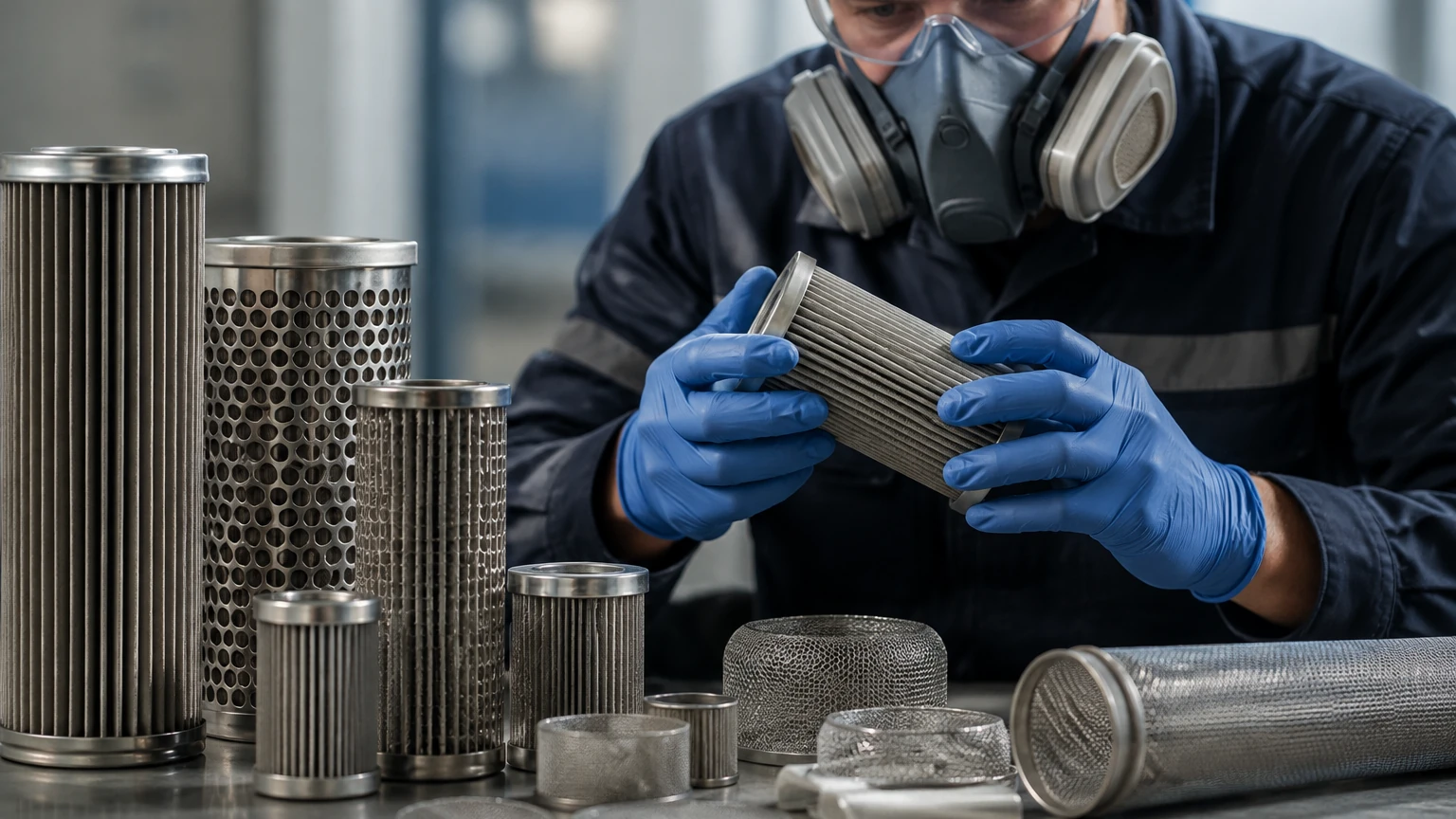
The Stainless Steel Advantage: Minimizing Respiratory Risks
For many industrial applications, the risks associated with friable or dusty media can be entirely avoided by selecting metallic filtration solutions. Stainless steel filter media, such as those produced by Kaifil, represent a significant safety upgrade over traditional fibrous or granular materials.
Stainless steel wire mesh and sintered metal fiber felt are inherently non-friable. Because the material is made of drawn metallic wires or sintered fibers, there is no risk of individual particles breaking off and becoming airborne during routine handling, installation, or cleaning. This makes stainless steel an ideal choice for industries with stringent air quality requirements, such as pharmaceuticals and high-purity chemical manufacturing.
Furthermore, stainless steel filters are cleanable and reusable. Unlike fiberglass or carbon filters that must be discarded—often creating a dust hazard during the bagging and disposal process—stainless steel cartridges can be cleaned via ultrasonic baths, backpulsing, or chemical circulation. This reduces the frequency of media handling and ensures that the filtration system remains a closed loop for as long as possible. For engineers looking to optimize both safety and performance, reviewing the Main Page for technical specifications on metal mesh durability is a recommended step in the procurement process.
Engineering Controls vs. Personal Protective Equipment (PPE)
In the hierarchy of safety controls, PPE (like respirators) is considered the last line of defense. When dealing with filter media that requires breathing protection, engineers should first look for ways to eliminate the hazard or implement engineering controls.
1. Elimination/Substitution: Replace friable media (like fiberglass) with non-shedding media (like stainless steel mesh) where the filtration efficiency allows.
2. Enclosure: Use automated bag-in/bag-out (BIBO) housing systems for hazardous filtration processes. These systems allow operators to change filters inside a sealed plastic bag, preventing any dust or fibers from entering the ambient air.
3. Ventilation: Install local exhaust ventilation (LEV) at the point where filter cartridges are removed or where bulk media is loaded.
If these controls are insufficient, then a formal respiratory protection program must be implemented. This includes fit-testing for respirators, medical evaluations for staff, and specific training on how to identify which filter media requires breathing protection based on the SDS.
Selection Criteria for Safe Filtration Systems
When specifying a filtration system, purchasing teams and engineers should evaluate the "Total Safety Cost" of the media. While a fiberglass or carbon-based filter may have a lower initial purchase price, the ancillary costs can be high. These include:
* The cost of high-grade respirators and replacement filters.
* The time required for specialized safety training and fit-testing.
* The increased insurance premiums associated with handling hazardous dusts like crystalline silica.
* The cost of hazardous waste disposal for spent media.
By contrast, a custom stainless steel filtration solution offers a lower risk profile. Because the media does not shed and is highly resistant to mechanical failure, the respiratory requirements for operators are significantly reduced. This leads to a safer work environment and lower long-term operational costs.
Summary of Media and Protection Requirements
To assist in the selection process, the following table summarizes the typical respiratory protection needs for common filter media:
| Filter Media Type | Primary Hazard | Breathing Protection Required? |
| :— | :— | :— |
| Fiberglass | Synthetic Vitreous Fibers | Yes (N95 or higher during handling) |
| Activated Carbon | Carbon Dust / Fines | Yes (During loading/unloading) |
| Diatomaceous Earth | Crystalline Silica | Yes (Mandatory N95/P100) |
| Ceramic (Broken) | Aluminosilicate Dust | Yes (During maintenance/disposal) |
| Stainless Steel Mesh | None (Non-friable) | No (Under normal handling) |
| Polymer Felts | Fiber Migration (Minimal) | Generally No |
Conclusion
Identifying which filter media requires breathing protection is a fundamental aspect of industrial process design. While many common materials like fiberglass, carbon, and diatomaceous earth offer excellent filtration properties, they bring inherent respiratory risks that must be managed through strict safety protocols and PPE.
For facilities looking to streamline their operations and enhance worker safety, switching to non-friable, durable media like stainless steel is a proven strategy. Stainless steel filters provide the precision required for demanding industrial applications without the dust and fiber shedding associated with disposable media. By prioritizing materials that do not compromise air quality, engineers can ensure a more efficient, compliant, and safer production environment.
Download Which Filter Media Requires Breathing Protection as a PDF
