


Zelfreinigende Filter
In modern industrial processing, the efficiency of a filtration system is often measured by its ability to maintain continuous operation without frequent manual intervention. A zelfreinigende filter (self-cleaning filter) represents a critical engineering solution for industries where downtime for maintenance is costly or where the fluid contains high levels of suspended solids. These automated systems are designed to remove contaminants from liquid streams and then clean the filter element itself, either based on a timed interval or a specific pressure differential, ensuring that the process flow remains uninterrupted.
For engineers and procurement professionals, selecting the right self-cleaning technology requires a deep understanding of fluid dynamics, material compatibility, and the mechanical mechanisms that drive the cleaning process. As a specialist in stainless steel filtration components, Kaifil provides the high-precision wire mesh and wedge wire elements that serve as the heart of these systems, ensuring durability under high-pressure and corrosive conditions.
The Engineering Logic Behind Self-Cleaning Filtration
The primary objective of a zelfreinigende filter is to automate the removal of debris from the filter medium to prevent clogging. In traditional manual systems, as particles accumulate on the surface of the filter element, the pressure drop (Delta P) across the unit increases. Once the pressure drop reaches a critical threshold, the system must be shut down, and the filter element removed and cleaned or replaced.
Automated systems eliminate this bottleneck through two primary mechanisms: mechanical scraping and backwashing. The choice between these two depends largely on the nature of the contaminants, the viscosity of the fluid, and the required filtration accuracy.
Mechanical Scraper Filters
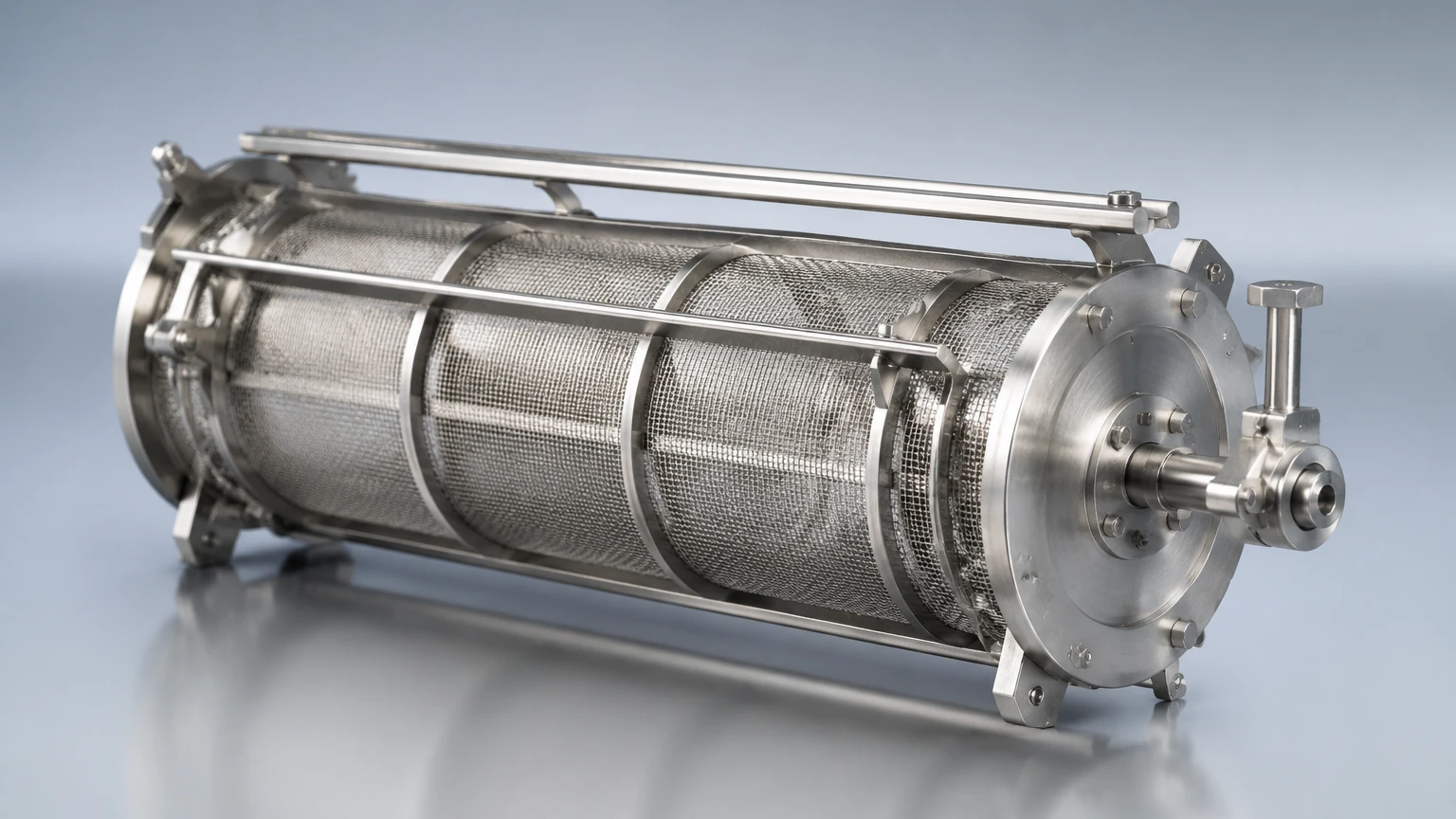
Mechanical cleaning is typically used for highly viscous fluids or applications with sticky, organic contaminants. In this design, a scraper blade—often made of reinforced polymer or stainless steel—moves across the surface of a cylindrical filter element. The element is usually a wedge wire screen or a perforated metal sheet.
As the scraper moves, it physically dislodges the "filter cake" from the surface. The debris then settles into a collection chamber at the bottom of the filter housing, where it can be purged through a blow-down valve without stopping the main flow. This method is highly effective in food processing (e.g., chocolate or oils) and chemical manufacturing where fluids are thick and prone to fouling.
Backwash Filtration Systems
Backwashing systems are more common in water treatment, cooling towers, and low-viscosity chemical processing. These systems use a portion of the filtered fluid (or an external clean fluid source) to wash the contaminants off the filter element in the reverse direction of the normal flow.
When the sensor detects a high differential pressure, a valve opens to create a low-pressure zone. This causes a high-velocity reverse flow through a small section of the filter element, lifting the particles off the mesh and flushing them out through a waste line. Modern backwash filters often use a rotating suction scanner or multiple filter chambers to ensure that only a small portion of the filter is being cleaned at any given time, allowing the overall process flow to continue at near-full capacity.
Critical Components: The Role of Stainless Steel
The reliability of a zelfreinigende filter is fundamentally tied to the quality of the internal filter element. Because these elements are subjected to constant mechanical stress—either from scraping blades or high-velocity reverse flows—they must be engineered for extreme structural integrity.
Wedge Wire vs. Wire Mesh
Stainless steel wedge wire is frequently the preferred medium for self-cleaning applications. It consists of V-shaped profiles welded onto support rods. This design creates a "slot" that widens inwardly, which reduces the likelihood of particles becoming wedged (plugging) and makes the cleaning process more efficient.
For finer filtration requirements (below 50 microns), multi-layer sintered wire mesh is often employed. Sintering bonds multiple layers of stainless steel mesh together through a heat-treatment process, creating a robust, porous plate that can withstand the rigors of automated cleaning without deforming. Kaifil specializes in these custom metal filtration components, ensuring that the material grade—typically 304 or 316L stainless steel—matches the chemical demands of the application.
Technical Evaluation Criteria for Engineers
When specifying a zelfreinigende filter, engineers must look beyond the initial flow rate. Several technical parameters determine the long-term success of the installation:
1. Micron Rating and Capture Efficiency: It is essential to define the required filtration fineness. Over-specifying (choosing a micron rating that is too fine) leads to excessive cleaning cycles and increased wear, while under-specifying allows harmful particles to pass through to downstream equipment.
2. Solids Loading: The concentration of solids in the influent fluid (measured in ppm or mg/L) dictates the frequency of the cleaning cycles. High solids loading may require a larger filter surface area or a specific mechanical scraper design to handle the volume of waste.
3. Pressure and Temperature Limits: Industrial filters must be rated for the maximum operating pressure of the system, including potential pressure spikes. In chemical and pharmaceutical sectors, high-temperature resistance is also a prerequisite, making stainless steel the standard choice over plastic alternatives.
4. Flow Velocity: High velocities can cause particles to be forced through the mesh or cause erosion on the filter element. The filter housing must be sized to maintain an optimal velocity across the media surface.
5. Control Logic integration: Most automated filters are managed by a PLC (Programmable Logic Controller). The ability to adjust cleaning triggers based on time, pressure, or manual override is vital for optimizing performance as process conditions change.
Industry-Specific Applications
The versatility of the zelfreinigende filter makes it a staple in several demanding sectors:
* Chemical Processing: Used to protect pumps and nozzles from particulate matter in corrosive liquid streams. Stainless steel's resistance to chemical attack is mandatory here.
* Food and Beverage: Automated filters are used for clarifying syrups, juices, and liquid chocolate. In these applications, the system must meet sanitary standards, often requiring high-polish finishes on all internal surfaces to prevent bacterial growth.
* Water Treatment: In industrial cooling water or intake water from rivers, these filters remove sand, algae, and scale, protecting heat exchangers from fouling and reducing the need for chemical treatments.
* Pulp and Paper: Handling large volumes of water with high fiber content requires robust mechanical scraping to prevent the filter from blinding almost instantly.
Common Risks and Implementation Challenges
While self-cleaning filters reduce manual labor, they are not "set and forget" systems. Engineers should be aware of several potential risks during the implementation phase:
* Seal and Gasket Wear: In scraper-type filters, the seals around the moving shaft are subject to friction. Selecting the right elastomer (such as Viton or EPDM) or mechanical seal is critical to prevent leaks.
* Bypass Issues: If the filter element is not seated correctly or if the cleaning mechanism causes mechanical deformation, unfiltered fluid may bypass the element. Regular inspection of the internal components is necessary.
* High Waste Volume: Backwash filters generate a waste stream. If the cleaning cycle is too frequent, the volume of "reject" fluid can be significant, impacting the overall efficiency of the plant. Optimizing the trigger points for the cleaning cycle is essential to minimize fluid loss.
* Particle Morphology: Some particles, such as long fibers or very soft, deformable solids, are difficult to remove with standard backwashing. In these cases, a mechanical scraper or a specialized wedge wire profile may be required.
Total Cost of Ownership (TCO)
From a procurement perspective, the initial capital expenditure (CAPEX) of a zelfreinigende filter is higher than that of a manual bag or cartridge filter. However, the Total Cost of Ownership (TCO) is often significantly lower when considering the following factors:
* Labor Savings: Eliminates the need for technicians to manually open housings and clean elements, a process that can take hours and require specialized PPE in chemical environments.
* Reduced Consumable Costs: Unlike disposable bags or cartridges, stainless steel elements in self-cleaning filters are designed to last for years.
* Increased Production Uptime: Because the filter cleans itself while online, there is no need to stop the production line, leading to higher annual throughput.
* Environmental Impact: Reducing the disposal of contaminated filter bags or cartridges aligns with corporate sustainability goals and reduces waste management costs.
Conclusion
Implementing a zelfreinigende filter is a strategic decision that enhances the reliability and efficiency of industrial fluid systems. By automating the removal of contaminants, these systems protect downstream equipment and ensure consistent product quality. However, the success of the system depends on the precision of the filter element and the suitability of the cleaning mechanism for the specific fluid characteristics.
Engineers should work closely with manufacturers to customize the filtration media and housing materials to meet the exact demands of their application. For more information on custom stainless steel filtration components and engineering support for industrial systems, visit our Main Page to explore our full range of OEM capabilities and technical resources.
Before proceeding with a purchase, it is recommended to confirm the fluid viscosity, particle size distribution, and chemical compatibility to ensure the selected filtration solution provides the maximum return on investment and long-term durability.
