


1 2 Perforated Metal
In industrial filtration and structural engineering, the specification of 1 2 perforated metal—typically referring to 1/2-inch hole diameters or specific spacing configurations—represents a critical balance between structural rigidity and fluid throughput. For engineers and procurement specialists, selecting the correct perforated or expanded metal component requires a deep understanding of material science, mechanical tolerances, and the specific demands of the operating environment. Whether utilized as a primary screen for coarse debris or as a high-strength support cage for finer wire mesh media, these components must meet exacting standards to ensure system longevity and process efficiency.
At Kaifil, we specialize in the precision manufacturing of Perforated & Expanded Metal solutions designed for demanding industrial applications. Understanding the technical nuances of these materials is essential for optimizing filtration performance and minimizing total cost of ownership.
Defining the Technical Scope of 1 2 Perforated Metal
When discussing 1 2 perforated metal in a B2B context, the terminology generally refers to the physical dimensions of the perforations or the center-to-center (C-C) spacing. A 1/2-inch (0.500") hole is a standard size for heavy-duty industrial applications, offering significant open area while maintaining the mechanical strength of the base plate.
Hole Patterns and Geometry
The geometry of the holes significantly impacts both the flow dynamics and the structural integrity of the sheet. The most common configurations include:
* Round Holes (Staggered): This is the industry standard for most filtration and support applications. A 60-degree staggered pattern provides the highest strength-to-weight ratio and ensures uniform stress distribution across the material.
* Round Holes (Straight Line): Used primarily for aesthetic or specific directional flow requirements, though it offers lower overall structural stability compared to staggered patterns.
* Square and Slotted Holes: These are often selected for specific particulate shapes or when a higher percentage of open area is required for high-viscosity fluids.
Understanding the "1 2" Specification
In procurement, "1 2" may also refer to the gauge of the metal or the specific pitch. For example, a 1/2" hole on 11/16" centers is a frequent specification for industrial strainers. This configuration provides approximately 48% open area, which is ideal for high-flow water treatment or chemical processing systems where pressure drop must be kept to a minimum.
Material Properties and Corrosive Environment Compatibility
The performance of 1 2 perforated metal is heavily dependent on the alloy selected. Since these components are often exposed to high pressures, abrasive particulates, or corrosive chemicals, material selection is the first line of defense against premature failure.
Stainless Steel 304 and 304L
Grade 304 is the most versatile and widely used stainless steel for perforated components. It offers excellent corrosion resistance in a variety of atmospheric and processed environments. For applications involving welding, 304L (low carbon) is preferred to prevent carbide precipitation and ensure the integrity of the weld zones in filter cartridges or support baskets.
Stainless Steel 316 and 316L
In more aggressive environments, such as marine applications, pharmaceutical processing, or high-chloride chemical streams, Grade 316 is the standard. The addition of molybdenum enhances resistance to pitting and crevice corrosion. For long-term immersion in industrial solvents or acids, 316L provides the necessary durability to extend replacement cycles.
Specialty Alloys and Carbon Steel
While stainless steel is the primary choice for filtration, carbon steel may be used in hydraulic systems or oil filtration where corrosion is managed by the fluid itself. However, for most B2B industrial applications, the longevity of stainless steel justifies the initial investment by reducing downtime and maintenance costs.
Calculating Open Area and Flow Rates
One of the most critical engineering considerations for 1 2 perforated metal is the percentage of open area. This figure determines the flow capacity and the pressure drop (delta P) across the filter element.
To calculate the open area for a staggered round hole pattern, engineers use the following formula:
Open Area % = (D² × 90.69) / C²
Where:
* D = Hole Diameter (e.g., 0.500")
* C = Center-to-Center Spacing (e.g., 0.6875")
Using this formula, a 1/2" hole on 11/16" centers yields roughly 48% open area. If the application requires higher throughput, the centers can be narrowed, but this reduces the "bridge" (the metal between holes), which can compromise the structural integrity of the component under high-pressure differentials.
Structural Role in Industrial Filtration Systems
In many high-pressure systems, 1 2 perforated metal does not act as the primary filter medium but rather as the structural backbone.
Support Cores and Cages
In multi-layer filter cartridges, a perforated metal core provides the necessary collapse strength to support fine wire mesh or pleated synthetic media. Without a robust 1/2" or similar perforated support, the fine media would deform or rupture under the force of the fluid flow.
Coarse Strainers and Intake Screens
In water intake systems or large-scale chemical reactors, 1 2 perforated metal serves as a primary strainer. Its role is to capture large debris—such as stones, plastic waste, or large scale-flakes—that could damage downstream pumps, valves, or fine filtration stages. The durability of the 1/2" hole size ensures that the screen can withstand physical impacts without losing its shape.
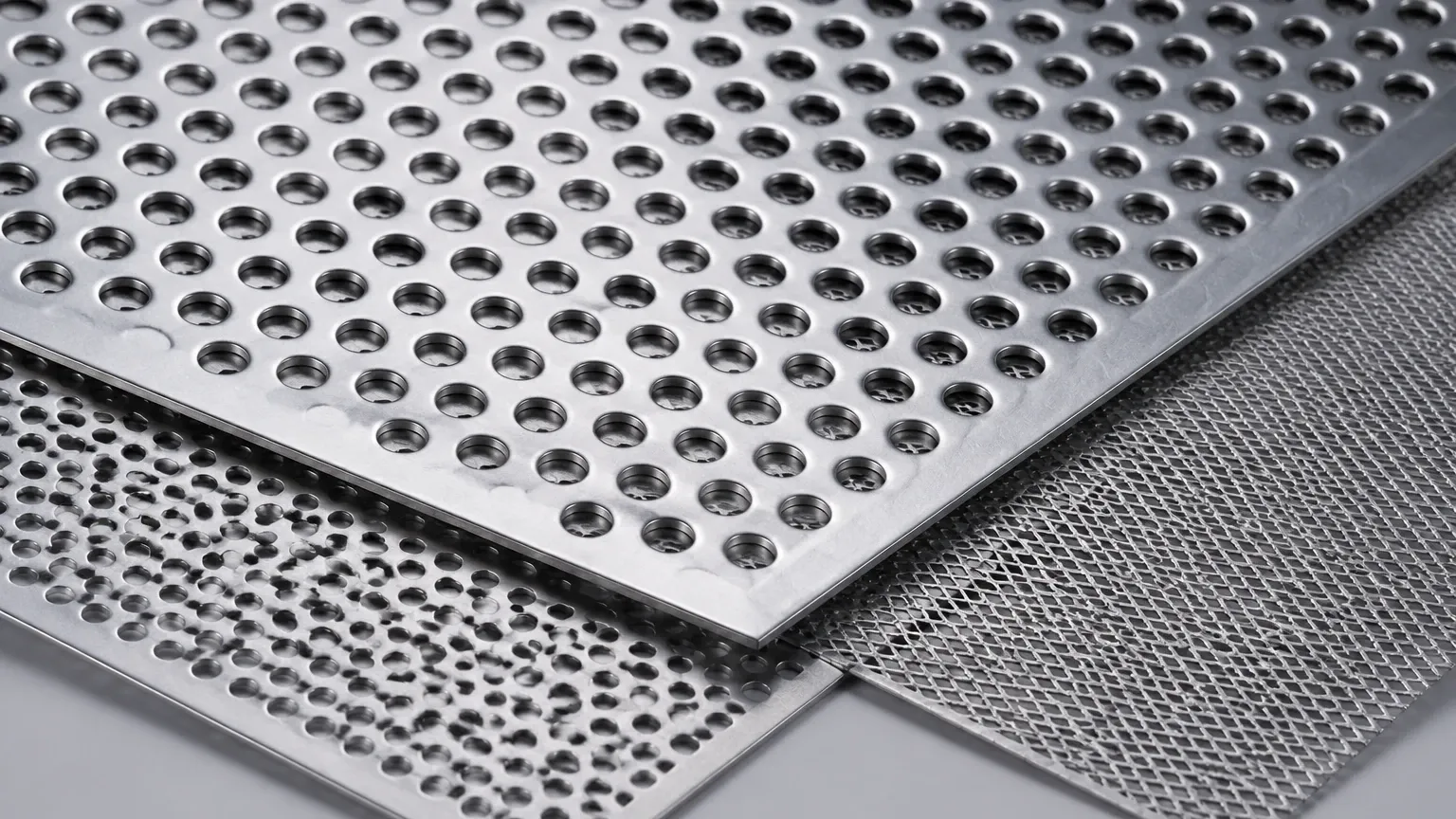
Manufacturing Processes for Perforated & Expanded Metal
Producing high-quality 1 2 perforated metal involves precision machinery and strict adherence to tolerances. At Kaifil, we utilize advanced CNC punching and expanding technologies to ensure every component meets the client’s specific engineering drawings.
Perforating vs. Expanding
While both processes create openings in metal, they serve different purposes:
* Perforating: Involves punching holes out of a solid sheet. This allows for precise control over hole size, shape, and margins (the unperforated areas around the edges). It is the preferred method for filter cores and high-pressure strainers.
* Expanding: Involves slitting and stretching the metal to create a diamond-shaped mesh. Expanded metal is often more cost-effective as there is no material waste, but it offers less precision in terms of absolute filtration rating compared to perforated sheets.
Secondary Operations
To ensure the 1 2 perforated metal is ready for industrial use, several secondary processes are often required:
* Leveling: The punching process can cause the metal sheet to curl. Precision leveling restores flatness, which is essential for components that will be rolled into cylinders.
* Deburring: Removing sharp edges and burrs is critical for safety and to prevent the snagging of fine filter mesh layers.
* Degreasing: Removing manufacturing lubricants is vital for applications in the food, beverage, and pharmaceutical industries.
Quality Control and Procurement Best Practices
When sourcing 1 2 perforated metal, engineers should confirm several key factors to ensure the product is fit for purpose. Relying on a manufacturer with deep expertise in industrial filtration, like Kaifil, helps mitigate common risks such as material fatigue or incorrect flow calculations.
Verification of Tolerances
Standard commercial tolerances may not be sufficient for precision filtration. It is important to specify tolerances for hole diameter, pitch, and sheet flatness. For cylindrical filter cores, the concentricity and the integrity of the longitudinal seam (whether welded or mechanically fastened) are paramount.
Confirming Margins
"Margins" refer to the solid areas at the edges of the sheet. For components that will be welded into a housing or onto a flange, specified margins are necessary to provide a clean welding surface. Ordering 1 2 perforated metal without specifying margins can lead to "finished" edges where holes are cut in half, making welding difficult and creating potential leak paths.
Evaluating Total Cost of Ownership
While carbon steel or lower-grade alloys may seem cost-effective initially, the total cost of ownership includes the frequency of replacement, the labor costs of maintenance, and the potential cost of downstream equipment damage if a filter fails. Investing in high-quality stainless steel Perforated & Expanded Metal ensures a longer service life and more reliable process protection.
Engineering Support and Customization
At Kaifil, we understand that no two industrial applications are identical. Whether you require a specific 1 2 perforated metal configuration for a custom hydraulic filter or a heavy-duty expanded metal screen for a wastewater treatment plant, our engineering team works closely with you to define the optimal material, pattern, and finish.
We focus on delivering filtration components that not only meet the required micron rating or flow rate but also withstand the mechanical stresses of the operating environment. From material selection and filtration accuracy to customized designs and production, Kaifil delivers dependable filtration components for demanding industrial environments.
By prioritizing technical precision and high-quality manufacturing, we help our global customers achieve efficient, durable, and cost-effective filtration performance. For more information on our capabilities or to discuss your specific project requirements, explore our range of industrial solutions and technical resources.
