


1 8 Perforated Metal Sheet
In industrial filtration and structural engineering, the specification of a 1 8 perforated metal sheet—typically referring to a 1/8-inch hole diameter—represents one of the most versatile configurations for medium-coarse filtration, support structures, and protective screening. Engineers and procurement teams must evaluate these components not just as simple metal plates with holes, but as engineered solutions where hole geometry, open area percentage, and material properties dictate the efficiency and longevity of the entire system.
As a specialized manufacturer, Kaifil provides precision-engineered Perforated & Expanded Metal solutions designed to meet the rigorous demands of chemical processing, food production, and hydraulic applications. Understanding the technical nuances of the 1 8 perforated metal sheet is essential for optimizing flow rates and ensuring structural integrity under high-pressure conditions.
Technical Specifications and Geometry
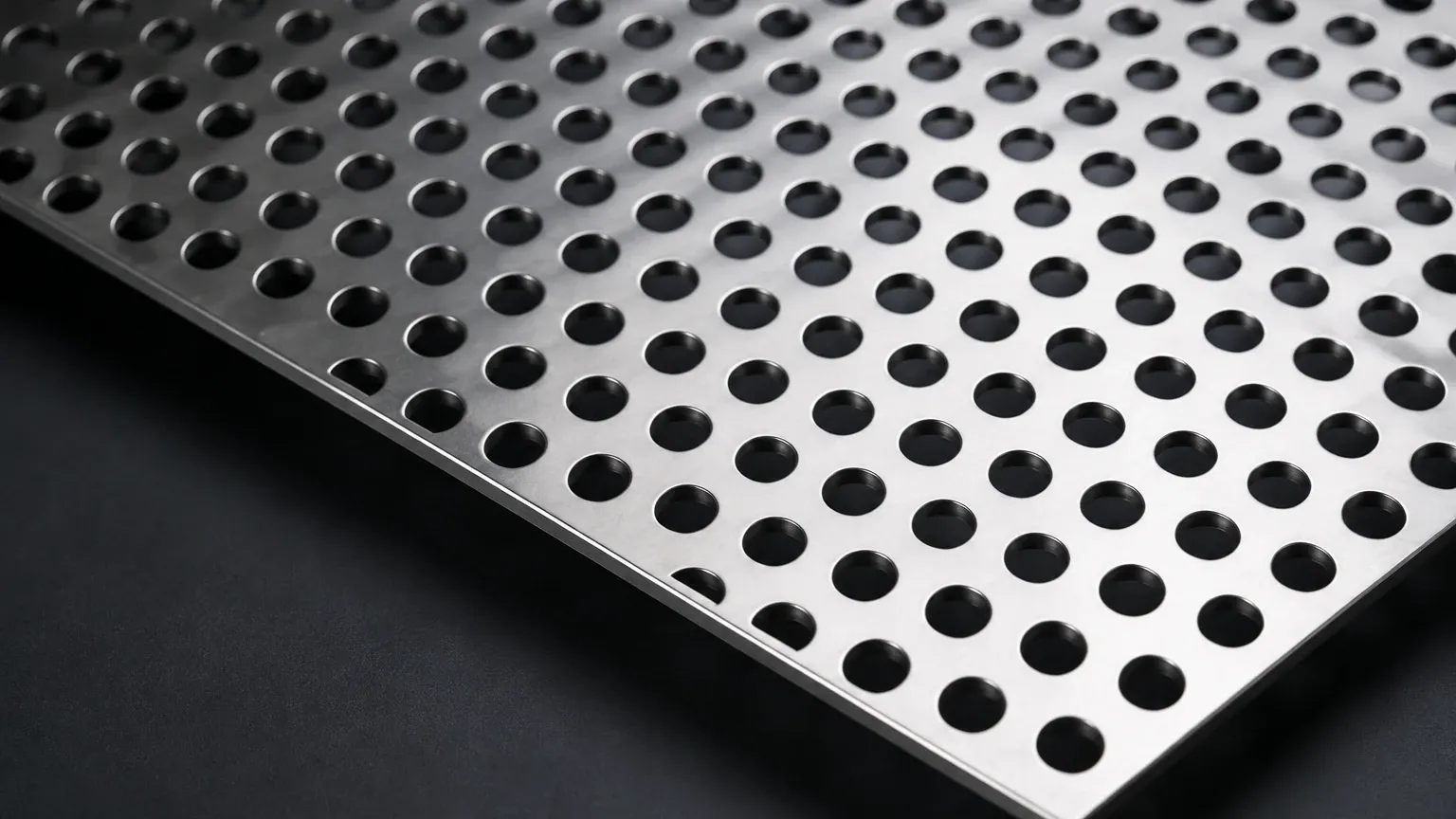
The performance of a 1/8" perforated metal sheet is defined by three primary variables: the hole diameter, the center-to-center distance (pitch), and the arrangement pattern. While the 1/8" (0.125 inch) hole size is standard, the spacing between these holes significantly alters the mechanical properties of the sheet.
Hole Patterns and Pitch
Industrial applications typically utilize a 60-degree staggered pattern. This arrangement is preferred because it offers the highest open area and uniform strength across the sheet. For a 1 8 perforated metal sheet, a common pitch might be 3/16" or 7/32".
* Staggered Pattern: Provides multidirectional strength and is ideal for high-pressure filtration environments where the sheet acts as a support for finer mesh layers.
* Straight Line Pattern: Often used for aesthetic or specific mechanical sorting applications where airflow or liquid passage needs to be aligned with specific internal components.
Calculating Open Area
The open area percentage is a critical metric for engineers calculating pressure drop (delta P) and flow velocity. For a 1/8" hole on a 3/16" staggered pitch, the open area is approximately 40%. A higher open area reduces resistance to flow but can compromise the sheet's ability to withstand mechanical stress or vibration. Conversely, a lower open area increases structural rigidity but may necessitate larger pump capacities to overcome the resulting pressure drop.
Material Selection for Industrial Environments
Choosing the correct alloy for a 1 8 perforated metal sheet is as important as the hole size itself. In industrial filtration, environmental factors such as pH levels, temperature fluctuations, and exposure to chlorides dictate the material choice.
Stainless Steel 304 vs. 316L
* Stainless Steel 304: The standard choice for general industrial use, providing excellent formability and cost-effectiveness. It is suitable for most water treatment and food-grade applications where high-concentration corrosive agents are not present.
* Stainless Steel 316L: Recommended for chemical processing and pharmaceutical environments. The addition of molybdenum provides superior resistance to pitting and crevice corrosion, particularly in environments containing chlorides or acids.
Specialized Alloys
For extreme environments, such as high-temperature exhaust systems or aggressive chemical reactors, Kaifil can manufacture perforated components using Duplex stainless steel or high-nickel alloys. These materials maintain their mechanical properties at elevated temperatures and offer enhanced resistance to stress corrosion cracking.
Engineering Applications of 1/8" Perforations
The 1 8 perforated metal sheet serves multiple roles across various sectors, ranging from primary filtration to secondary structural support.
Filtration Support Cores
In high-pressure hydraulic and liquid filtration systems, fine wire mesh is often too fragile to withstand the differential pressure on its own. A 1/8" perforated sheet is frequently rolled into a cylinder to serve as the inner or outer support core. This "backbone" prevents the pleats of the filter media from collapsing while maintaining a high enough open area to ensure efficient throughput.
Industrial Strainers and Intake Screens
In water treatment and power generation, these sheets are used as primary strainers to remove larger debris, such as pebbles or organic matter, before the fluid reaches more sensitive downstream equipment like pumps or fine membranes. The 1/8" hole size is particularly effective at protecting centrifugal pumps from cavitation-inducing solids.
Architectural and Acoustic Applications
Beyond filtration, the 1 8 perforated metal sheet is utilized in architectural cladding and acoustic dampening. When backed by sound-absorbing materials, the perforations allow sound waves to pass through and be dissipated, making them ideal for industrial engine rooms or noisy manufacturing floors.
Manufacturing Considerations and Customization
When sourcing a 1 8 perforated metal sheet, engineers must consider the manufacturing tolerances and secondary processes that affect the final product's performance.
Gauge Thickness and Flatness
The thickness of the sheet (gauge) must be balanced against the hole diameter. A general rule in perforation is that the hole diameter should not be smaller than the material thickness. For a 1/8" hole, a material thickness of 11 gauge to 22 gauge is common. Thicker materials require specialized heavy-duty punching equipment to ensure clean, burr-free edges.
Margins and Blank Areas
Customization options include the definition of "margins"—unperforated areas along the edges of the sheet. These margins are essential for welding the sheet into a frame or housing. Kaifil provides OEM services to produce sheets with complex blank areas, allowing for the integration of bolt holes or mounting brackets without compromising the integrity of the perforated pattern.
Finishing and Deburring
In industries like food and beverage or pharmaceuticals, the presence of burrs or rough edges can lead to bacterial growth or contamination. Kaifil employs advanced deburring and polishing techniques to ensure that every 1 8 perforated metal sheet meets the highest sanitary standards. Electropolishing is also available to enhance corrosion resistance and provide a mirror-like finish.
Evaluating Quality and Performance Risks
Procuring industrial filtration components involves identifying potential failure points before they impact production. When evaluating a 1 8 perforated metal sheet, technical teams should focus on the following:
1. Hole Uniformity: Inconsistent hole diameters or irregular spacing can lead to uneven flow distribution, causing localized wear on secondary filter media.
2. Flatness and Bowing: The perforation process can introduce internal stresses into the metal, leading to "oil canning" or bowing. High-quality sheets undergo leveling processes to ensure they remain flat for easy installation.
3. Material Certification: Ensure the supplier provides mill test reports (MTRs) to verify the chemical composition of the alloy, especially for 316L applications where low carbon content is critical for weldability.
Maintenance and Replacement Cycles
While stainless steel perforated sheets are highly durable, they are not maintenance-free. In filtration applications, the sheets should be inspected regularly for:
* Blinding or Clogging: Accumulation of solids that cannot be removed by backwashing.
* Erosion: High-velocity fluids containing abrasive particles can eventually wear down the edges of the perforations, increasing the hole size and reducing filtration accuracy.
* Mechanical Fatigue: In systems with frequent pressure pulsations, the metal may develop micro-cracks around the holes.
Replacement cycles depend heavily on the severity of the environment. However, by selecting the appropriate gauge and material grade during the design phase, the service life of a 1 8 perforated metal sheet can be extended significantly, lowering the total cost of ownership.
Conclusion
The 1 8 perforated metal sheet is a foundational component in industrial engineering, providing the necessary balance between fluid dynamics and structural strength. Whether used as a standalone strainer or as a critical support element in a multi-stage filtration system, its performance is dictated by precise manufacturing and informed material selection.
Kaifil specializes in delivering customized Perforated & Expanded Metal solutions that meet the specific technical requirements of global industrial leaders. By focusing on engineering accuracy and high-quality stainless steel fabrication, we help our partners achieve reliable, long-term filtration performance in the most demanding environments.
