


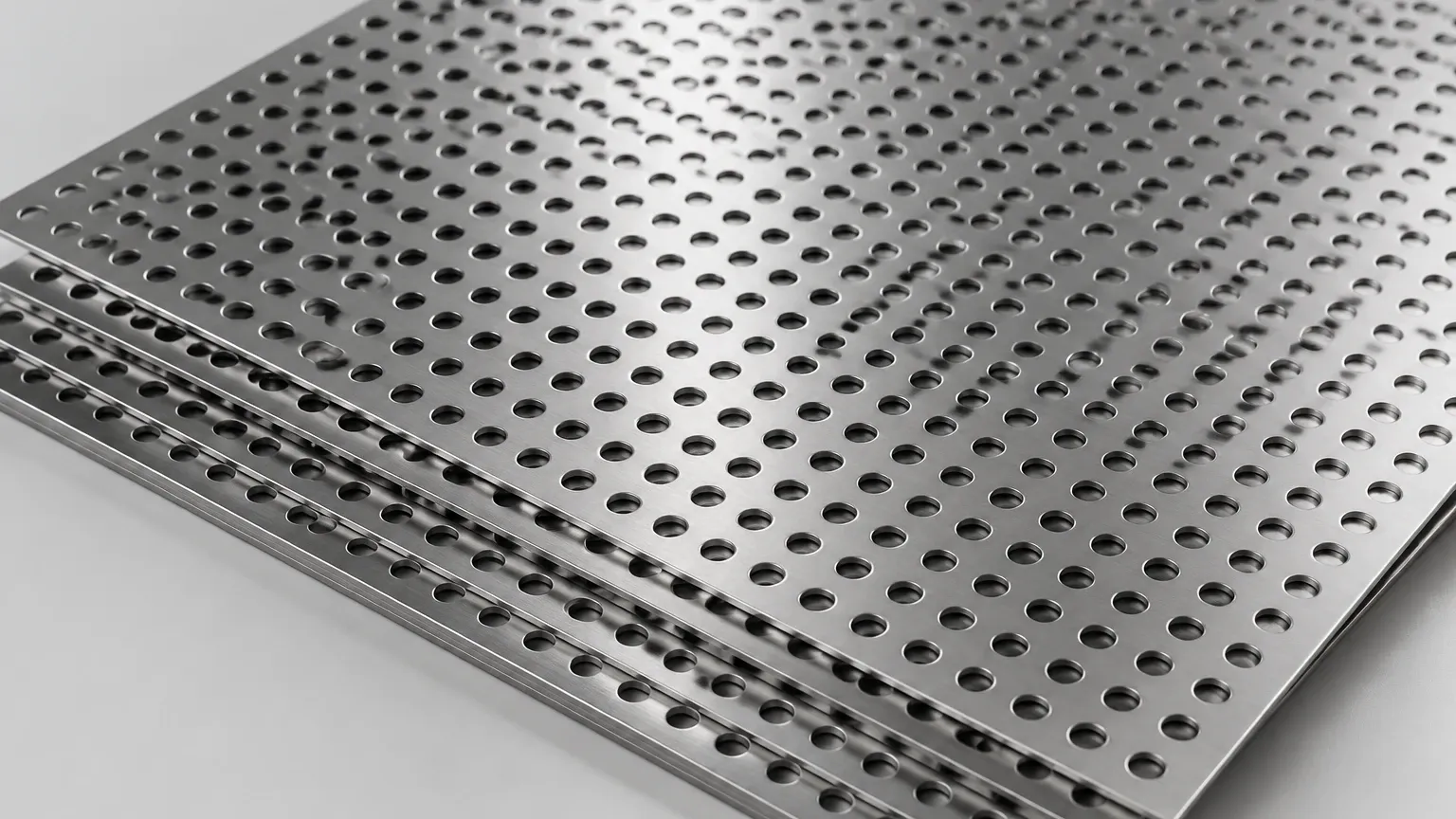
16 Gauge Perforated Sheet Metal
In industrial filtration and structural engineering, the selection of material thickness is a critical decision that balances mechanical strength, weight, and processing feasibility. 16 gauge perforated sheet metal represents one of the most versatile specifications in the metalworking industry, particularly for applications requiring a robust support structure or a durable primary filtration barrier. For engineers and procurement professionals, understanding the technical nuances of this specific gauge is essential for ensuring the longevity and efficiency of industrial systems.
At Kaifil, we specialize in the precision manufacturing of stainless steel filtration solutions. While thinner gauges may be suitable for light-duty decorative or acoustic panels, 16 gauge material is frequently the baseline for industrial-grade components, including filter cartridge cores, outer protective guards, and heavy-duty strainers used in chemical processing, water treatment, and food production.
Understanding 16 Gauge Thickness in Industrial Contexts
The term "gauge" refers to a standard measurement of thickness, but it is important to note that the actual decimal thickness varies depending on the material type (e.g., carbon steel versus stainless steel). For stainless steel, which is the primary focus for high-performance filtration, 16 gauge typically measures approximately 0.0625 inches (1.588 mm). In contrast, 16 gauge carbon steel is slightly thinner at approximately 0.0598 inches (1.519 mm).
When specifying 16 gauge perforated sheet metal, engineers must account for these slight variations, as they impact both the weight of the final assembly and the mechanical properties under pressure. This thickness is often chosen because it is thick enough to provide significant structural rigidity—preventing deformation under high flow rates—yet thin enough to be perforated with high precision and subsequently rolled or formed into cylindrical filter elements.
Key Characteristics and Performance Metrics
Choosing 16 gauge material involves evaluating several performance metrics that define how the metal will behave in a functional environment. These characteristics are central to the Perforated & Expanded Metal solutions provided for demanding industrial sectors.
Strength-to-Weight Ratio
16 gauge perforated sheet metal offers an optimal balance. It is heavy enough to resist mechanical impact and vibration in industrial piping systems but light enough to keep the overall weight of a filter assembly manageable for maintenance personnel during replacement cycles. This is particularly relevant in large-scale hydraulic systems where multiple filter elements are housed in a single vessel.
Open Area and Flow Dynamics
The "open area" of a perforated sheet is the percentage of the total area occupied by the holes. For 16 gauge material, the open area is a function of the hole diameter and the pitch (the distance between the centers of the holes). In filtration, a higher open area reduces pressure drop (delta P), which improves energy efficiency. However, increasing the open area reduces the structural integrity of the sheet. For 16 gauge material, maintaining a stable "ligament" (the solid metal between the holes) is crucial to prevent the sheet from tearing during the forming process.
Formability and Weldability
One of the primary reasons 16 gauge is favored for filter cartridges is its excellent formability. It can be rolled into small diameters without cracking, provided the perforation pattern is engineered correctly. Furthermore, this thickness is ideal for TIG (Tungsten Inert Gas) or plasma welding, allowing for strong, clean longitudinal seams that are essential for high-pressure applications.
Engineering Considerations for Filtration and Support
When 16 gauge perforated sheet metal is used as a component in a filtration system, it usually serves one of two roles: as the primary filtration media for coarse particles or as a support structure for finer wire mesh or membranes.
Support Cores for Fine Mesh
In high-pressure liquid filtration, fine stainless steel wire mesh lacks the structural strength to withstand the differential pressure as contaminants build up on the surface. A 16 gauge perforated core provides the necessary internal support. The hole pattern must be designed to align with the flow requirements of the mesh while ensuring there are no sharp edges or burrs that could puncture the delicate inner layers.
Primary Strainer Elements
For applications involving large debris—such as cooling water intake or pre-filtration in chemical plants—the 16 gauge sheet itself acts as the filter. In these cases, the hole size must be precisely specified. Common patterns include:
* Round Holes: The most common and cost-effective, offering high strength and a wide range of open area percentages.
* Square Holes: Provide a larger open area but can be more prone to structural failure under high stress.
* Slotted Holes: Ideal for filtering elongated particles or for use in vibrating screens.
Material Selection: Stainless Steel 304 vs. 316L
While 16 gauge perforated sheet metal can be manufactured from various alloys, stainless steel is the standard for industrial filtration due to its corrosion resistance and thermal stability.
1. Stainless Steel 304: This is the most common grade, offering excellent corrosion resistance in most atmospheric and fresh-water environments. It is a cost-effective choice for general industrial applications where extreme chemical exposure is not a concern.
2. Stainless Steel 316L: Containing molybdenum, 316L provides superior resistance to chlorides and acids. This is the preferred material for marine environments, pharmaceutical manufacturing, and food and beverage processing where Clean-in-Place (CIP) chemicals are used. The "L" denotes low carbon, which improves weldability and prevents sensitization—a common cause of corrosion in the heat-affected zones of welds.
Manufacturing and Customization Options
Standard off-the-shelf perforated sheets rarely meet the specific requirements of complex industrial filtration. Customization is often necessary to ensure the component fits perfectly within an existing housing or meets a specific flow rate. At Kaifil, our manufacturing capabilities allow for several customization levels for 16 gauge perforated sheet metal:
* Custom Hole Patterns: We can adjust hole diameters and spacing to achieve specific open area percentages, ranging from 10% to over 60%.
* Margin Specifications: In many applications, it is necessary to have "blank" or unperforated margins along the edges of the sheet to facilitate welding or to provide extra structural reinforcement at the ends of a filter cartridge.
* Secondary Operations: Beyond perforation, sheets can be sheared to exact dimensions, leveled to ensure absolute flatness, and degreased to remove manufacturing oils—a critical step for oxygen-service or food-grade applications.
* Surface Finishing: Options such as electropolishing or pickling can be applied to enhance corrosion resistance and ensure a smooth, burr-free surface that prevents the accumulation of bacteria or debris.
Evaluating Quality and Avoiding Procurement Risks
Procuring 16 gauge perforated sheet metal involves more than just verifying the thickness. Low-quality manufacturing can lead to several issues that compromise the performance of the filtration system.
Burrs and Sharp Edges
During the punching process, if the tooling is not sharp or properly aligned, burrs can form on the exit side of the hole. In filtration, these burrs can trap fibers, cause turbulence, or damage secondary filter media. High-quality perforated metal should undergo a deburring process.
Flatness and "Oil Canning"
The perforation process introduces internal stresses into the metal sheet, which can cause it to bow or warp (a phenomenon known as oil canning). For 16 gauge material, which is often used in automated assembly lines, flatness is critical. Precision leveling is required to ensure the sheet remains flat for subsequent shearing or rolling operations.
Hole Alignment and Tolerance
Inconsistent hole spacing can lead to "blind spots" in filtration or weak points in the structure. It is vital to confirm that the manufacturer adheres to strict tolerances regarding hole diameter and pitch, especially when the sheet is being used as a calibrated strainer.
Total Cost of Ownership and Selection Checklist
When evaluating the cost of 16 gauge perforated sheet metal, engineers should look beyond the initial purchase price and consider the total cost of ownership. A cheaper, lower-grade sheet may suffer from premature corrosion or structural failure, leading to expensive downtime and replacement costs.
Before finalizing a specification, the following checklist should be confirmed with the manufacturer:
1. Material Grade: Is 304 or 316L required for the chemical environment?
2. Exact Thickness: Is the decimal thickness compatible with the housing tolerances?
3. Open Area Calculation: Does the pattern provide the required flow rate without sacrificing the necessary strength?
4. End-Use Environment: Will the material be exposed to high temperatures, high pressures, or vibrating loads?
5. Compliance: Does the material meet industry-specific standards, such as FDA or 3A requirements for food and beverage applications?
By addressing these technical details during the design and procurement phase, industrial operators can ensure that their use of 16 gauge perforated sheet metal contributes to a reliable, efficient, and long-lasting filtration solution. Whether used as a standalone component or a critical support structure, the precision and quality of the perforation remain the foundation of industrial performance.
