


2073f Expanded Metal
In the landscape of industrial materials, specifically within the realm of filtration and structural support, 2073f expanded metal represents a specific configuration designed for durability, precise open area ratios, and mechanical stability. For engineers and procurement specialists, understanding the technical nuances of this material is essential for ensuring the longevity of filtration systems and the integrity of industrial components. As a specialized manufacturer, Kaifil provides high-performance stainless steel solutions that leverage these specific metal geometries to meet the demanding requirements of chemical processing, water treatment, and hydraulic applications.
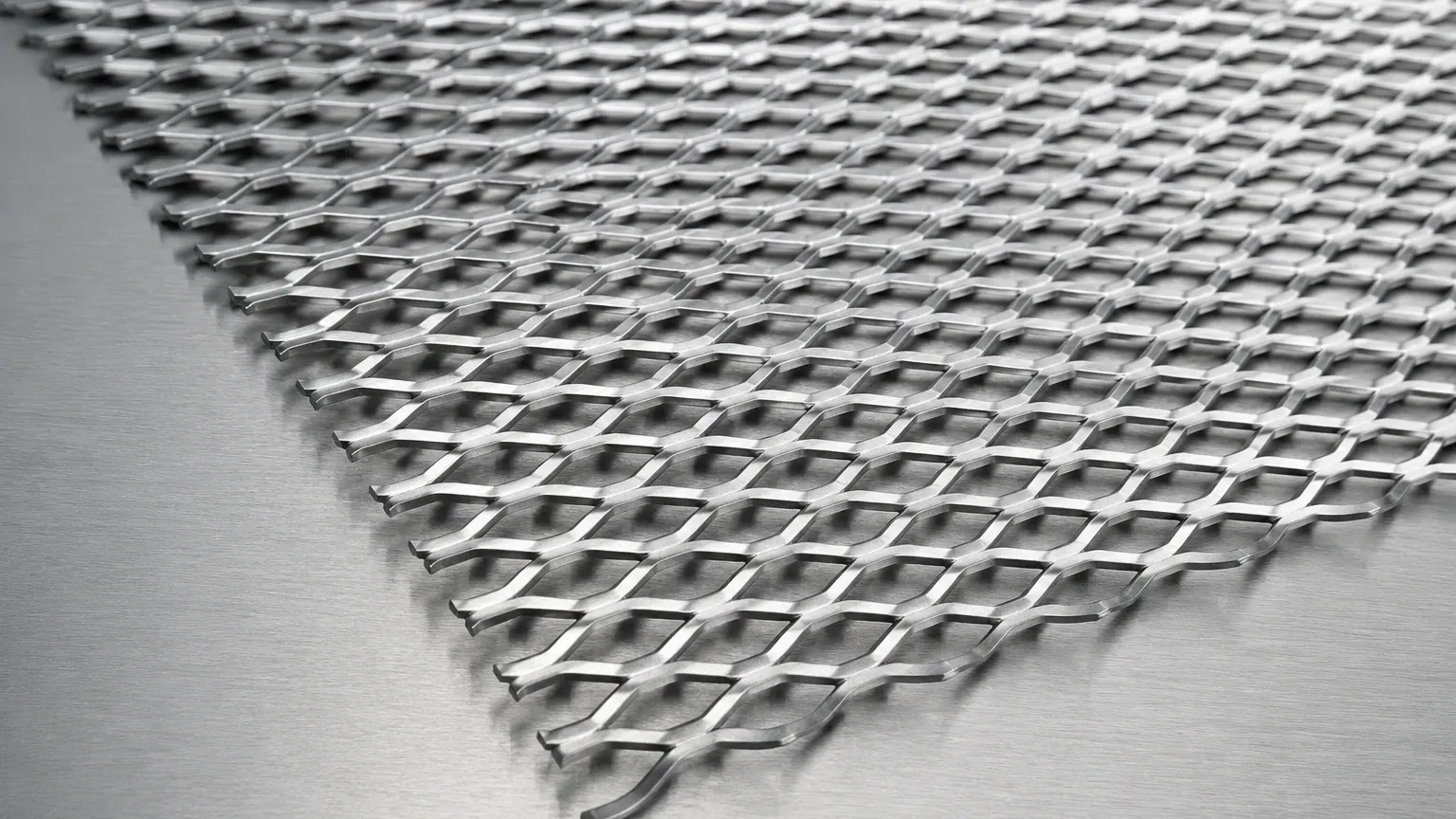
Expanded metal is produced through a process of simultaneous shearing and stretching of metal sheets. Unlike perforated metal, which involves punching holes and creating scrap, expanded metal is a zero-waste product that maintains the structural integrity of the original material. The "2073f" designation refers to a specific mesh size and style, where the "f" denotes a flattened finish—a critical factor in many industrial and filtration contexts.
Understanding the Technical Specifications of 2073f Expanded Metal
To properly integrate 2073f expanded metal into an industrial design, one must first master the terminology and measurements that define its performance. The geometry of expanded metal is characterized by several key dimensions: the Short Way of Design (SWD), the Long Way of Design (LWD), strand width, and strand thickness.
In a 2073 configuration, these dimensions are standardized to provide a specific diamond-shaped opening. The SWD typically measures the distance from the center of one bond to the center of the next bond across the short axis, while the LWD measures the same across the long axis. For the 2073f variant, these dimensions are held to tight tolerances to ensure that the material fits perfectly within filter housings or support frames.
Strand width and thickness are equally important. The strand width is the amount of metal fed into the expanding machine between each stroke, while the thickness refers to the gauge of the original sheet. In the flattened version (2073f), the material is passed through a cold-rolling mill after expansion. This reduces the thickness of the strands and increases the overall width and length of the sheet slightly, resulting in a smooth, two-dimensional surface. For engineers, this means the "nominal" thickness of the 2073f will be less than the original gauge of the metal used, a factor that must be accounted for in structural calculations.
The Flattening Process: Why "f" Matters in Industrial Applications
The distinction between raised (standard) expanded metal and flattened expanded metal (2073f) is not merely aesthetic; it fundamentally changes how the material interacts with other components in a system. Standard expanded metal has strands that are turned at an angle to the plane of the sheet, creating a slip-resistant surface with significant depth. While useful for walkways, this raised profile can be problematic in precision filtration.
Flattened 2073f expanded metal is preferred in the following scenarios:
1. Support for Fine Mesh: In multi-stage filtration, expanded metal often serves as a rigid support for finer wire mesh or filter cloth. A raised surface could create point-load stress on the delicate mesh, leading to premature tearing or deformation. The smooth surface of 2073f provides uniform support, extending the life of the primary filter element.
2. Flow Dynamics: The flat profile of 2073f offers more predictable fluid dynamics. In high-velocity hydraulic or chemical lines, the angled strands of raised metal can cause unwanted turbulence or cavitation. Flattened metal allows for a more laminar flow profile while still providing the necessary mechanical strength.
3. Safety and Handling: Flattened metal eliminates the sharp edges associated with raised strands. This is particularly important in food and beverage or pharmaceutical applications where equipment must be frequently disassembled for cleaning. The smooth surface reduces the risk of injury to personnel and prevents the snagging of cleaning tools.
Material Selection: The Advantages of Stainless Steel 2073f
While expanded metal can be manufactured from carbon steel, aluminum, or specialty alloys, stainless steel remains the gold standard for industrial filtration. Kaifil specializes in the production of stainless steel Perforated & Expanded Metal to ensure maximum resistance to corrosion and thermal stress.
Grade 304 vs. 316L
For most general industrial applications, Grade 304 stainless steel provides excellent strength and basic corrosion resistance. However, in environments involving chlorides, acids, or high-salinity water, Grade 316L is the preferred choice. The addition of molybdenum in 316L enhances its resistance to pitting and crevice corrosion, which is vital when the 2073f expanded metal is used as a permanent component in a chemical reactor or a marine filtration system.
Durability in Harsh Environments
Stainless steel 2073f expanded metal maintains its structural integrity at temperatures where carbon steel would oxidize or lose tensile strength. This makes it an ideal material for high-temperature gas filtration or steam processing. Furthermore, the inherent "spring-back" quality of stainless steel allows the expanded metal to withstand pressure surges in hydraulic systems without permanent deformation.
Role of 2073f Expanded Metal in Industrial Filtration Systems
In the context of filtration, 2073f expanded metal rarely acts alone. It is typically a component of a larger assembly, such as a filter cartridge, a basket strainer, or a pleated element. Its primary roles include:
1. Mechanical Reinforcement
Filter media, such as non-woven fibers or fine wire mesh, lack the structural rigidity to withstand high differential pressures. The 2073f expanded metal acts as a "skeleton," preventing the filter media from collapsing or bursting under the force of the fluid flow. Because it is flattened, it can be easily rolled into cylinders or welded into flat panels without creating gaps or uneven surfaces.
2. Pre-Filtration and Coarse Straining
In systems dealing with large debris—such as cooling water intake or raw chemical processing—the 2073f mesh itself may serve as the primary filtration stage. Its diamond-shaped openings are effective at capturing large particulates while maintaining a high open area, which minimizes initial pressure drop across the system.
3. Pleat Support
In pleated filter cartridges, expanded metal is often used as an outer wrap or an inner core. The 2073f specification provides a balance between strength and open area, ensuring that the pleats remain separated and fully exposed to the fluid stream. This maximizes the effective filtration area and extends the service interval of the cartridge.
Engineering Considerations: Load-Bearing and Flow Dynamics
When specifying 2073f expanded metal, engineers must calculate the percentage of open area to determine the material's impact on system pressure. The open area of 2073f is determined by the relationship between the strand width and the diamond dimensions. Generally, 2073f provides a generous open area (often exceeding 60-70%), which allows for high flow rates with minimal resistance.
Pressure Drop (ΔP)
Every component placed in a flow path introduces a pressure drop. Because 2073f is flattened, its profile is thinner than standard expanded metal, which can actually reduce the drag coefficient in certain orientations. However, engineers must ensure that the total open area of the expanded metal is significantly larger than the cross-sectional area of the inlet pipe to prevent the support structure from becoming a bottleneck.
Structural Integrity
Despite its high open area, 2073f expanded metal is incredibly strong. The interconnected strands distribute loads across the entire sheet. When used in a cylindrical filter, the hoop strength provided by the expanded metal allows the unit to survive backwashing cycles or high-pressure pulses that would destroy a less robust support structure.
Customization and Manufacturing Precision at Kaifil
Standard off-the-shelf expanded metal often fails to meet the stringent requirements of specialized industrial processes. This is where custom manufacturing becomes critical. Kaifil provides tailored 2073f expanded metal solutions that go beyond basic material supply.
Precision Cutting and Forming
Industrial filters often require expanded metal to be cut to exact circular, rectangular, or complex geometric shapes. Using advanced CNC shearing and laser cutting technology, Kaifil ensures that the 2073f sheets are dimensionally accurate, allowing for seamless integration into OEM equipment. Furthermore, the ability to roll the material into precise diameters is essential for the production of high-quality filter cartridges.
Edge Treatment and Welding
One of the biggest challenges with expanded metal is the "raw" edge where strands are cut. For filtration applications, these edges must often be deburred or enclosed in a U-channel or welded frame to prevent bypass and ensure safety. Kaifil’s expertise in TIG and spot welding allows for the creation of finished components where the 2073f mesh is securely bonded to end caps or support rings, maintaining a leak-proof seal.
Surface Finishes
Depending on the application, the 2073f stainless steel may undergo additional treatments. Electropolishing is frequently used in the pharmaceutical and food industries to create a microscopically smooth surface that resists bacterial growth and is easier to sanitize. Passivation is also standard to ensure that any free iron introduced during the manufacturing process is removed, maximizing the corrosion resistance of the final product.
Procurement Checklist for 2073f Expanded Metal
Before finalizing a purchase or specification for 2073f expanded metal, purchasing teams and engineers should confirm the following details with their supplier:
* Material Grade: Is 304 sufficient, or does the application require the superior corrosion resistance of 316L?
* Flattening Quality: Is the material truly flat, or are there residual stresses that might cause bowing or "oil-canning" in the sheet?
* Dimensional Tolerances: What are the allowable variances in SWD, LWD, and overall sheet size?
* Edge Condition: Does the application require a "bond edge" (a solid border of metal) or a "random cut" edge?
* Compliance: Does the material meet relevant industry standards such as ASTM or ISO for expanded metal products?
By addressing these factors, technical teams can ensure that the 2073f expanded metal they receive will perform reliably in the field, reducing the total cost of ownership through increased durability and reduced maintenance requirements.
Conclusion
2073f expanded metal is a vital component in the industrial filtration toolkit. Its combination of structural strength, high open area, and smooth flattened surface makes it the ideal choice for supporting delicate filter media and providing coarse filtration in harsh environments. Whether used in chemical processing, hydraulic systems, or food production, the quality of the expanded metal directly impacts the efficiency and lifespan of the entire system. By partnering with a manufacturer like Kaifil that understands the technical demands of filtration, engineers can secure customized, high-precision metal solutions that meet the most exacting standards.
