


3 4 X 9 Expanded Metal
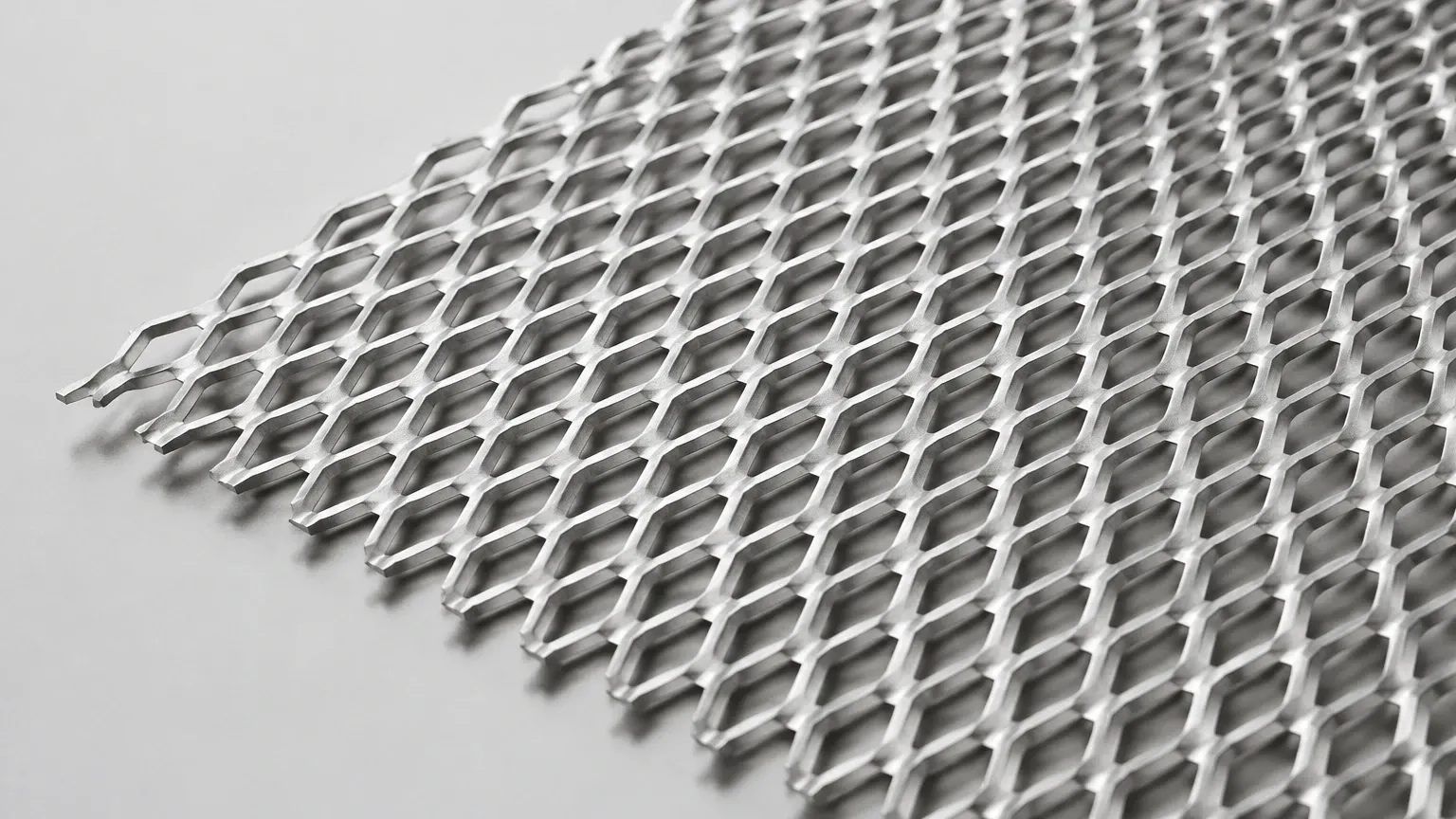
In the realm of industrial filtration and structural support, material selection is dictated by the balance between mechanical strength and functional permeability. Among the various specifications available to engineers, 3/4 #9 expanded metal stands as one of the most versatile and widely utilized standards. This specific configuration, characterized by its 3/4-inch nominal diamond opening and 9-gauge material thickness, provides a robust framework for heavy-duty filtration systems, protective guards, and reinforcement layers.
At Kaifil, we specialize in integrating high-performance Perforated & Expanded Metal into custom filtration solutions. Understanding the technical nuances of the 3/4 #9 specification is essential for engineers tasked with designing systems that must withstand high pressure, corrosive chemicals, or significant mechanical stress.
Understanding the Specifications of 3/4 #9 Expanded Metal
The nomenclature "3/4 #9" refers to two primary physical characteristics of the expanded metal sheet. To make an informed procurement decision, it is necessary to break down these dimensions and understand how they are measured in an industrial context.
Short Way of Diamond (SWD) and Long Way of Diamond (LWD)
In expanded metal terminology, the "3/4" typically refers to the nominal Short Way of Diamond (SWD). This is the distance from the center of a bond to the center of the next bond across the short axis of the diamond opening. While the nominal size is 3/4", the actual opening size may vary slightly depending on whether the material is "Standard" (raised) or "Flattened."
* SWD (Short Way of Diamond): Nominally 0.923 inches.
* LWD (Long Way of Diamond): Nominally 2.000 inches.
* Opening Size: The actual clear opening is usually approximately 0.688" x 1.562".
Gauge and Strand Dimensions
The "#9" denotes the thickness of the starting metal sheet before the expansion process. In the U.S. standard for carbon steel, 9-gauge is approximately 0.134 inches thick. However, when the metal is expanded, the resulting "strand width" and "strand thickness" become the critical metrics for calculating flow resistance and structural load-bearing capacity.
For a standard 3/4 #9 expanded metal sheet, the strand width is typically around 0.150 inches. This results in a heavy-duty mesh that offers significantly more rigidity than lighter 13 or 18-gauge alternatives.
Engineering Considerations for Industrial Filtration
When incorporating 3/4 #9 expanded metal into a filtration assembly, engineers must evaluate how the geometry of the mesh interacts with the fluid dynamics of the system. In many B2B applications, this material serves as the "skeleton" for finer filtration media.
Structural Support for Fine Mesh
In high-pressure hydraulic or chemical processing systems, fine wire mesh (such as Dutch weave or square mesh) lacks the inherent stiffness to resist deformation under flow pressure. 3/4 #9 expanded metal is frequently used as a support cage or backing. Its high thickness-to-weight ratio ensures that the primary filter media remains pleated or positioned correctly without collapsing.
Open Area and Flow Rates
One of the most critical calculations for any filtration component is the percentage of open area. This determines the pressure drop (delta P) across the filter. Standard 3/4 #9 expanded metal typically offers an open area of approximately 68% to 75%. This high transparency allows for high flow rates with minimal resistance, making it an ideal choice for coarse pre-filtration or as a protective outer wrap for industrial cartridges.
Raised vs. Flattened Profiles
* Standard (Raised): The strands are set at a sharp angle to the plane of the sheet. This creates a 3D structure that can enhance turbulence (useful in some mixing applications) and provides excellent mechanical interlocking if the metal is being cast into another material.
* Flattened: The raised metal is passed through a cold-rolling reducing mill. This creates a smooth, flat surface. For filtration, flattened expanded metal is often preferred because it prevents the sharp edges of the strands from abrading or puncturing the finer filter cloth or synthetic media layered against it.
Material Selection and Chemical Compatibility
While 3/4 #9 expanded metal is available in carbon steel and aluminum, industrial filtration applications often demand the superior properties of stainless steel. Kaifil focuses on high-grade alloys to ensure longevity in demanding environments.
Stainless Steel 304 vs. 316L
* Type 304: The standard industrial grade, offering excellent strength and basic corrosion resistance. It is suitable for food and beverage applications and general industrial water treatment.
* Type 316L: Contains molybdenum, which provides enhanced resistance to pitting and crevice corrosion in chloride-rich environments. This is the preferred choice for pharmaceutical processing and marine-grade filtration systems.
Specialty Alloys
For extreme environments involving high temperatures or highly acidic/alkaline fluids, 3/4 #9 expanded metal can be produced in Monel, Inconel, or Titanium. These materials ensure that the structural integrity of the filter is not compromised by chemical erosion over time.
Performance Evaluation in Demanding Environments
Engineers must confirm that the 3/4 #9 expanded metal can handle the specific stresses of their application. This involves evaluating several performance factors:
1. Mechanical Strength: The #9 gauge thickness provides substantial resistance to impact. In large-scale water intake systems, this material can protect sensitive internal components from large debris (sticks, stones, or ice) without deforming.
2. Vibration Resistance: In hydraulic systems, pulsation and vibration can lead to metal fatigue. The monolithic structure of expanded metal—where the strands are not woven or welded but are part of a single continuous sheet—eliminates the risk of "unraveling" or joint failure common in woven wire cloth.
3. Thermal Expansion: In high-temperature chemical reactors, the expansion of the metal must be accounted for. Stainless steel expanded metal maintains its structural form even under significant thermal cycling, which is vital for maintaining the seal integrity of a filter cartridge.
Customization and OEM Manufacturing Capabilities
Off-the-shelf expanded metal sheets rarely meet the precise tolerances required for high-end industrial filtration housings. Customization is where technical expertise becomes a value-add for purchasing teams.
Precision Cutting and Forming
3/4 #9 expanded metal is a heavy material that requires specialized equipment to shear and circle-cut. At Kaifil, we provide custom-sized discs, cylinders, and pleated supports tailored to the specific dimensions of your filtration vessel. This reduces waste and eliminates the need for secondary processing at the customer’s facility.
Surface Treatments
To further enhance performance, expanded metal can undergo various treatments:
* Electropolishing: Removes surface impurities and creates a mirror-like finish, essential for sanitary applications in the pharmaceutical industry to prevent bacterial growth.
* Passivation: Enhances the protective oxide layer on stainless steel to maximize corrosion resistance.
* Annealing: Relieves internal stresses caused by the expansion process, making the material easier to form into tight radii for small-diameter filter cartridges.
Maintenance, Replacement Cycles, and Total Cost of Ownership
From a B2B procurement perspective, the initial cost of 3/4 #9 expanded metal is only one part of the equation. The total cost of ownership (TCO) is heavily influenced by the material's durability and ease of maintenance.
Cleaning Protocols
Because expanded metal has no intersections where dirt can be trapped (unlike woven wire), it is significantly easier to clean via backwashing or ultrasonic cleaning. This is particularly important in the food and beverage industry, where Clean-in-Place (CIP) cycles are standard. The open diamond geometry allows for efficient removal of accumulated solids, extending the time between deep cleaning cycles.
Replacement Indicators
Engineers should monitor for two primary signs of failure in 3/4 #9 expanded metal:
* Strand Thinning: In abrasive slurry applications, the thickness of the strands may decrease over time. Once the #9 gauge thickness is significantly reduced, the structural integrity of the support cage is compromised.
* Bond Cracking: Excessive vibration or pressure spikes can lead to small cracks at the "bonds" (the intersection of the diamonds). Regular visual inspection during filter element replacement is recommended.
Cost Efficiency
Expanded metal is generally more cost-effective than perforated metal of similar thickness and open area. This is because the expansion process involves slitting and stretching the metal rather than punching out holes, resulting in zero scrap loss during the primary manufacturing stage. For large-scale projects, this can result in substantial savings without sacrificing performance.
Conclusion: Selecting the Right Partner for Filtration Components
Choosing 3/4 #9 expanded metal is a decision that impacts the reliability and efficiency of an entire industrial process. Whether it is used as a coarse screen in water treatment or a high-strength support in a chemical reactor, the material must meet exacting standards for alloy purity, dimensional accuracy, and structural integrity.
As a professional manufacturer, Kaifil provides the technical guidance necessary to navigate these engineering choices. By focusing on high-quality stainless steel and precision customization, we ensure that your filtration components deliver long-term value and consistent performance in the most demanding environments. When evaluating your next project, confirming the specific requirements for strand orientation, flattening, and alloy grade will ensure that the 3/4 #9 expanded metal you integrate is perfectly suited for the task at hand.
