


3 8 Perforated Metal
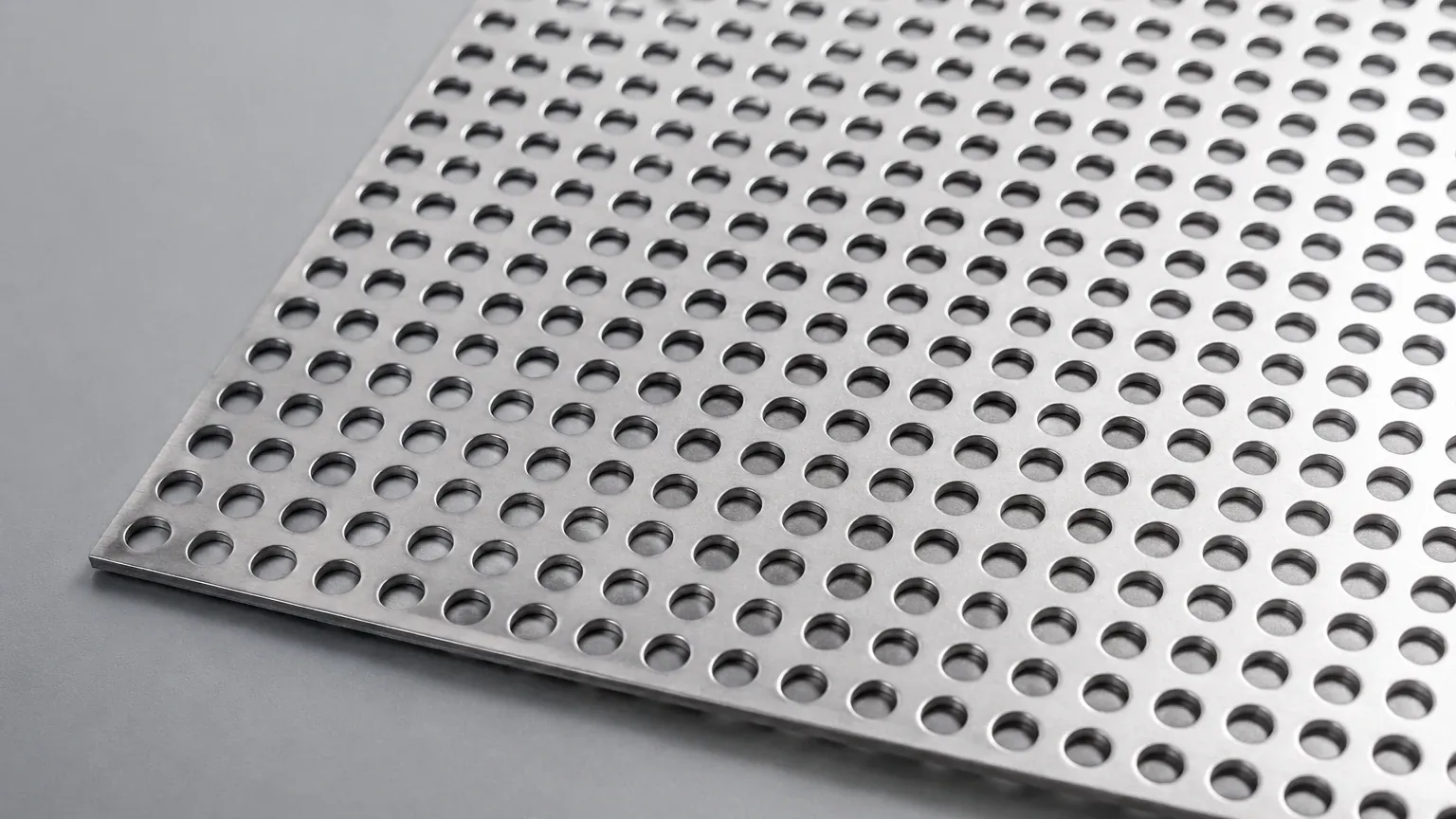
In industrial filtration and structural engineering, the specification of perforated metal is a critical factor that determines flow dynamics, structural integrity, and filtration efficiency. Among the various configurations available, 3/8" perforated metal—typically referring to a 3/8-inch hole diameter—is a widely utilized standard in heavy-duty industrial applications. This specification offers a balance between high open area and robust mechanical strength, making it suitable for everything from coarse liquid filtration to protective machinery guards.
For engineers and procurement teams, selecting the correct Perforated & Expanded Metal requires a deep understanding of how hole size, pitch, and material thickness interact. At Kaifil, we specialize in manufacturing precision metal filter components that leverage these specifications to meet the rigorous demands of chemical processing, food production, and hydraulic systems.
Understanding the Specifications of 3/8" Perforated Metal
When discussing "3 8 perforated metal," it is essential to distinguish between the hole diameter and the center-to-center spacing (pitch). In most industrial contexts, this refers to a 3/8" (0.375 inch) round hole. However, the performance of the sheet is dictated by how these holes are arranged.
Hole Diameter and Pitch
The hole diameter is the measure of the individual opening. A 3/8" opening is considered a medium-to-large perforation in the context of precision filtration. The pitch is the distance from the center of one hole to the center of the adjacent hole. For a 3/8" hole, common pitches include 1/2" or 9/16". The relationship between the diameter and the pitch determines the "Open Area" percentage.
Calculating Open Area
The open area is the ratio of the total area of the holes to the total area of the sheet, expressed as a percentage. For a standard 60-degree staggered pattern—the most common and structurally sound arrangement—the formula is:
Open Area % = (D² × 90.69) / C²
* D = Hole Diameter (0.375")
* C = Center-to-Center Spacing (Pitch)
For example, a 3/8" hole on a 1/2" staggered pitch results in approximately a 51% open area. This high percentage allows for significant fluid or air throughput while maintaining the structural rigidity of the stainless steel or alloy substrate.
Material Selection for Industrial Environments
The utility of 3/8" perforated metal is heavily dependent on the material grade. While carbon steel and aluminum are used in architectural applications, industrial filtration and chemical processing require materials that can withstand corrosive environments and high pressures.
Stainless Steel 304 and 316L
As a specialist in stainless steel filtration solutions, Kaifil primarily utilizes Grade 304 and 316L.
* Grade 304: Offers excellent strength and basic corrosion resistance, suitable for food processing and general industrial use.
* Grade 316L: Contains molybdenum, providing superior resistance to chlorides and acids. This is the preferred choice for marine environments, pharmaceutical manufacturing, and aggressive chemical filtration.
Specialized Alloys
In high-temperature or highly acidic environments, standard stainless steels may fail. In these instances, engineers may specify duplex stainless steels or nickel-based alloys. The choice of material affects not only the longevity of the component but also its weldability and formability during the fabrication of filter cartridges or support cores.
Engineering Patterns and Open Area Considerations
The arrangement of 3/8" perforations significantly impacts both the flow characteristics and the mechanical life of the filter component. There are two primary patterns used in industrial manufacturing:
60-Degree Staggered Pattern
This is the industrial standard. The holes are arranged in rows where each hole is offset from the one above it, forming an equilateral triangle between centers. This pattern provides the highest open area and uniform strength across the sheet, preventing the "weak lines" often found in straight-line patterns. It is ideal for cylindrical filter support cores where the metal must be rolled and welded without distorting the hole geometry.
Straight Line Pattern
In a straight line pattern, holes are aligned both horizontally and vertically. While easier to manufacture for certain decorative applications, it offers lower structural integrity under pressure. In filtration, straight patterns are rarely used unless specific directional flow or mechanical cleaning (such as backwashing) requires a particular alignment.
Impact on Pressure Drop
For engineers, the primary concern is the pressure drop (ΔP) across the perforated medium. A 3/8" hole provides relatively low resistance. However, as the thickness of the metal (gauge) increases, the friction within the hole itself can contribute to a higher pressure drop. Balancing the gauge of the metal with the 3/8" perforation size is critical to optimizing the total cost of ownership by reducing energy consumption in pumping systems.
Applications in Industrial Filtration and Separation
3/8" perforated metal serves as a versatile component in various stages of industrial separation. Its size makes it particularly effective for coarse filtration and as a structural foundation for finer mesh layers.
Filter Cartridge Support Cores
In high-pressure hydraulic or liquid filtration, fine wire mesh is often too fragile to withstand the differential pressure on its own. 3/8" perforated metal is rolled into tubes to serve as the internal or external support core. The 3/8" holes allow for maximum flow to reach the inner mesh while the solid metal "bridges" provide the necessary collapse strength.
Industrial Strainers and Baskets
In water treatment and chemical processing, 3/8" perforated baskets are used to remove large debris, such as stones, plastic fragments, or organic matter, before the fluid reaches more sensitive downstream equipment like pumps or fine membranes. The durability of stainless steel ensures these baskets can be cleaned and reused repeatedly.
Diffusers and Steam Spargers
In the food and beverage industry, perforated tubes with 3/8" openings are used to diffuse steam or gas into liquids. The hole size ensures a specific bubble size and distribution pattern, which is vital for efficient heat transfer or carbonation processes.
Customization and Manufacturing Capabilities
Standard off-the-shelf perforated sheets rarely meet the exacting requirements of specialized industrial equipment. Customization is where engineering value is truly realized. When sourcing Perforated & Expanded Metal, several factors can be tailored to the application:
Margin Requirements
Margins are the unperforated areas along the edges of the sheet. In the production of filter components, "no-margin" (perforations to the edge) or "specified margins" are crucial for clean welding. For example, a filter core may require a 1/2" solid margin on the long edges to facilitate a longitudinal seam weld without burning through the thin metal between holes.
Secondary Fabrication
Kaifil provides more than just flat sheets. Our manufacturing capabilities include:
* Rolling and Welding: Converting 3/8" perforated sheets into precision cylinders.
* Degreasing and Passivation: Essential for pharmaceutical and food-grade applications to ensure no residual oils or surface iron contaminants remain.
* Electropolishing: Reducing surface roughness to prevent bacterial growth and improve corrosion resistance.
Evaluation Criteria for Purchasing 3/8" Perforated Metal
Technical professionals must look beyond the basic dimensions when evaluating suppliers. Quality issues in perforated metal can lead to premature failure of filtration systems or contamination of the process stream.
Flatness and Camber
The perforation process introduces internal stresses into the metal, which can cause the sheet to curl or bow. High-quality manufacturers use leveling rollers to ensure the final product is flat within tight tolerances. This is particularly important if the metal is to be automatically fed into a CNC machine or a rolling mill.
Burr Control and Hole Quality
In filtration, burrs (small shards of metal left over from the punching process) are a significant risk. If they break off, they can damage downstream pumps or contaminate the final product. Engineers should specify "deburred" or "clean-punched" metal. The exit side of the punch should be as smooth as the entry side to ensure consistent flow and easy cleaning.
Total Cost Considerations
While the initial price per square foot is a factor, the total cost of ownership includes the lifespan of the part and the maintenance intervals. A 3/8" perforated screen made from high-quality 316L stainless steel with precise margins may have a higher upfront cost but will save significant capital in the long run by resisting corrosion and facilitating easier replacement or cleaning.
Conclusion for Engineering and Purchasing Teams
Selecting 3/8" perforated metal involves more than choosing a hole size; it requires a holistic view of the application's mechanical and chemical environment. Whether the goal is to provide structural support for a multi-layered filter cartridge or to act as a primary strainer in a water treatment plant, the interplay of material grade, open area, and fabrication quality is paramount.
By focusing on precision manufacturing and technical specifications such as staggered patterns and proper margins, engineers can ensure their filtration systems operate at peak efficiency. As a dedicated manufacturer of custom stainless steel filtration solutions, Kaifil remains committed to providing the technical expertise and high-performance components necessary for these demanding industrial applications.
