


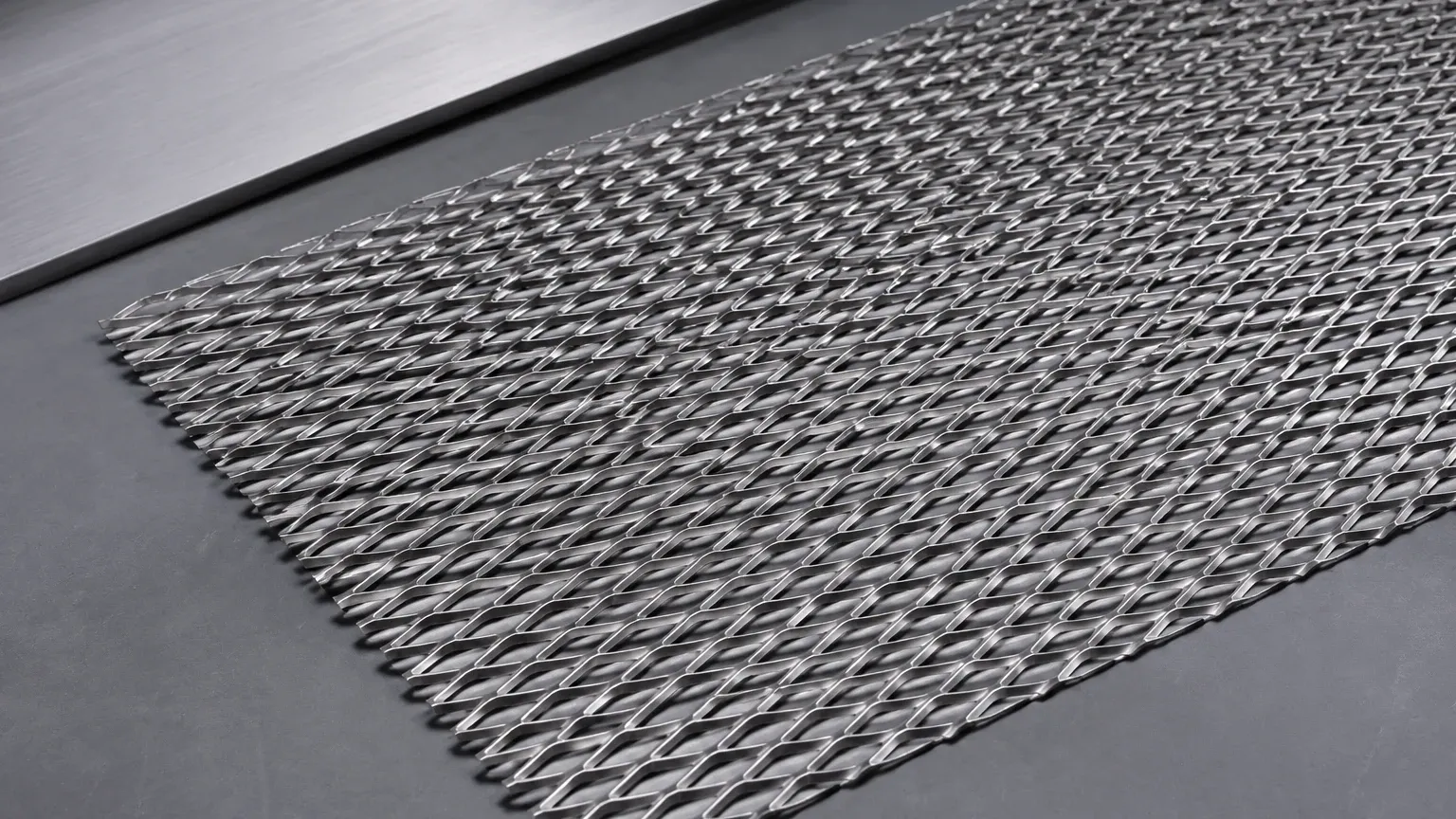
4 X 8 Expanded Metal
In industrial manufacturing and filtration engineering, the 4 x 8 expanded metal sheet serves as a fundamental building block for structural support, safety screening, and high-performance filtration components. Expanded metal is produced through a specialized process of slitting and stretching a solid metal sheet, creating a diamond-shaped pattern that remains physically connected at the "bonds." This manufacturing method ensures that the material retains its structural integrity without the need for welding or additional joining processes, making it an exceptionally durable and cost-effective solution for demanding B2B applications.
For engineers and procurement professionals, selecting the correct Perforated & Expanded Metal specifications requires a deep understanding of material properties, geometric configurations, and the specific mechanical stresses of the operating environment. Whether used as a support cage for industrial filter cartridges or as a protective barrier in chemical processing plants, the 4 x 8 expanded metal format offers a standardized footprint that simplifies logistics while providing the flexibility for further customization and precision fabrication.
The Engineering Fundamentals of Expanded Metal Geometry
Unlike woven wire mesh or perforated plate, expanded metal is defined by a unique set of geometric parameters that dictate its mechanical performance. When specifying 4 x 8 expanded metal, engineers must focus on four primary dimensions: Long Way of Design (LWD), Short Way of Design (SWD), strand width, and strand thickness.
SWD and LWD Orientation
The SWD (Short Way of Design) refers to the distance from the center of one bond to the center of the next bond across the short axis of the diamond. Conversely, the LWD (Long Way of Design) measures the distance across the long axis. In a standard 4 x 8 sheet, the orientation of these diamonds relative to the 4-foot or 8-foot edge is critical for structural calculations. Typically, the LWD runs parallel to the length of the sheet, but this can be customized based on the load-bearing requirements of the application.
Strand and Bond Characteristics
The "strand" is the single metal strip that forms the side of the diamond opening, while the "bond" is where the strands intersect. The thickness of the strand is determined by the original gauge of the metal sheet, while the strand width is determined by how much material is fed into the expanding machine. By adjusting these variables, manufacturers can produce a wide range of weights and open area percentages within the same 4 x 8 footprint.
Comparative Analysis: Standard vs. Flattened 4 x 8 Expanded Metal
One of the most significant decisions in the selection process is choosing between standard (raised) and flattened expanded metal. Each type offers distinct advantages depending on whether the primary goal is structural rigidity or surface smoothness.
Standard (Raised) Expanded Metal
In its standard form, the strands and bonds are set at a sharp angle to the plane of the sheet. This creates a three-dimensional surface that provides excellent slip resistance and a high strength-to-weight ratio. In filtration applications, raised expanded metal is often used for coarse pre-filtration or as a structural outer wrap where the angularity of the strands can help break up large debris before it reaches the primary filter media.
Flattened Expanded Metal
Flattened expanded metal is produced by passing the standard expanded sheet through a cold-roll reducing mill. This process flattens the strands and bonds into a single plane, resulting in a smooth, level surface. For engineers designing filtration systems, flattened 4 x 8 expanded metal is often the preferred choice for internal support cores. The smooth surface prevents abrasion and potential puncturing of delicate filter membranes or fine wire mesh layers, ensuring the longevity of the entire filtration assembly.
Material Selection for Demanding Industrial Environments
The performance of 4 x 8 expanded metal is heavily influenced by the alloy from which it is manufactured. While carbon steel and aluminum are common for general industrial use, stainless steel is the gold standard for high-performance filtration and chemical processing due to its superior corrosion resistance and thermal stability.
Stainless Steel (304 and 316L)
Stainless steel expanded metal is essential in environments where exposure to moisture, chemicals, or extreme temperatures is a factor. Type 304 provides excellent durability for food and beverage applications, while Type 316L (low carbon) offers enhanced resistance to pitting and crevice corrosion in marine or pharmaceutical environments. Because expanded metal is a single-piece construction, there are no crevices or welds where corrosive agents can accumulate, which is a significant advantage over welded mesh in sanitary applications.
Specialized Alloys
For highly specialized industrial needs, expanded metal can also be produced from nickel alloys, titanium, or galvanized steel. The choice of material impacts not only the initial cost but also the total cost of ownership, as high-grade alloys significantly extend the replacement cycle in aggressive chemical environments.
Applications of Expanded Metal in Filtration and Support Systems
In the context of industrial filtration, 4 x 8 expanded metal is rarely a standalone product; rather, it serves as a critical component in complex multi-stage systems. Its primary role is to provide the mechanical strength necessary to withstand high differential pressures without obstructing flow.
Filter Media Support and Pleat Spacing
In pleated filter cartridges, expanded metal is often used as a support layer for the filter media. It maintains the spacing between pleats, ensuring that the maximum surface area is available for filtration and preventing the pleats from collapsing under pressure. The diamond pattern allows for a high percentage of open area, which minimizes pressure drop across the filter.
Intake Screens and Protective Guards
Large-scale water treatment and hydraulic systems utilize 4 x 8 expanded metal to create intake screens. These screens protect sensitive pumps and downstream components from large particulate matter. The rigid nature of the expanded metal ensures that the screen maintains its shape even under the force of high-velocity fluid flow.
Catalyst Support in Chemical Reactors
In chemical processing, expanded metal sheets are used to support catalyst beds. The uniform diamond openings provide an even distribution of gas or liquid flow through the catalyst, which is vital for maintaining reaction efficiency and preventing "hot spots" within the reactor vessel.
Key Performance Indicators: Open Area and Load-Bearing Capacity
When evaluating 4 x 8 expanded metal for a specific project, engineers must calculate two critical performance indicators: the percentage of open area and the load-bearing capacity.
Calculating Open Area
The open area percentage determines the flow characteristics of the material. It is calculated based on the relationship between the strand width and the SWD/LWD dimensions. A higher open area reduces the pressure drop (Delta P) but also reduces the structural strength of the sheet. Finding the optimal balance is key to efficient filtration design. Manufacturers like Kaifil provide technical data sheets that specify the exact open area for various mesh configurations, allowing engineers to model flow dynamics accurately.
Structural Integrity and Deflection
Because expanded metal is a monolithic structure, it distributes loads more efficiently than many other materials. However, the load-bearing capacity is directional. A 4 x 8 expanded metal sheet will exhibit different deflection characteristics depending on whether the load is applied parallel or perpendicular to the LWD. Engineers must account for these directional properties when designing support frames or walkways to ensure safety and prevent permanent deformation.
Procurement Considerations and Customization for OEM Applications
While the 4 x 8 sheet is a standard size, many industrial applications require further refinement to meet specific OEM (Original Equipment Manufacturer) requirements. Understanding the available customization options can lead to significant cost savings and improved product performance.
Precision Shearing and Edging
A standard 4 x 8 sheet may have "random" edges where the diamonds are cut at various points. For filtration components that must fit into tight tolerances, precision shearing is required to provide "bond edges" or "closed diamonds." This ensures that there are no sharp, protruding strands that could damage other components or pose a safety risk during assembly.
Forming and Welding
Expanded metal can be rolled into cylinders for filter cores or bent into complex shapes for specialized guards. When welding expanded metal, it is important to consider the material thickness and the diamond pattern to ensure a strong, clean bond. Advanced manufacturing facilities use specialized equipment to maintain the geometric integrity of the diamonds during the forming process.
Surface Treatments
Depending on the application, 4 x 8 expanded metal may undergo additional surface treatments. These include electropolishing for pharmaceutical-grade stainless steel to achieve a mirror-like, easy-to-clean finish, or powder coating for added chemical resistance and aesthetic appeal in architectural applications.
Maintenance and Longevity in Corrosive Environments
The durability of expanded metal makes it a low-maintenance option for most industrial facilities. However, in filtration applications where the mesh is exposed to high particulate loads or corrosive fluids, a regular maintenance schedule is necessary to ensure optimal performance.
Cleaning Protocols
One of the primary advantages of expanded metal in filtration is its ease of cleaning. Unlike woven wire, which can trap particles at the wire intersections, the open bonds of expanded metal allow for more effective backwashing or ultrasonic cleaning. This is particularly important in the food and beverage industry, where hygiene and the prevention of bacterial growth are paramount.
Monitoring for Wear and Fatigue
In high-vibration environments or systems with frequent pressure cycling, expanded metal should be inspected for signs of metal fatigue, particularly at the bonds. While the material is inherently strong, continuous stress can eventually lead to micro-fractures. Selecting the appropriate gauge and material grade during the initial design phase is the most effective way to mitigate these risks and extend the service life of the component.
Conclusion: Selecting the Right Partner for Filtration Solutions
Choosing the right 4 x 8 expanded metal involves more than simply selecting a gauge and a mesh size. It requires a comprehensive understanding of how the material will interact with the fluid, the pressure, and the surrounding hardware. By focusing on technical specifications such as SWD/LWD, material grade, and surface finish, engineers can ensure that their filtration systems operate at peak efficiency with minimal downtime.
As a specialist in custom stainless steel filtration, Kaifil provides the technical expertise and manufacturing precision required to transform standard expanded metal into high-performance industrial components. From material selection to final fabrication, understanding the nuances of Perforated & Expanded Metal is essential for achieving reliable, long-term results in the most demanding industrial environments.
