


4×4 Expanded Metal
In the landscape of industrial filtration and structural engineering, material selection is dictated by the balance between structural integrity and functional performance. Expanded metal, a versatile material produced by simultaneously slitting and stretching metal sheets, offers a unique combination of strength, open area, and cost-effectiveness. Among the various specifications available to procurement teams and design engineers, 4×4 expanded metal—referring to the standard 4-foot by 4-foot sheet dimension—serves as a critical component in diverse applications ranging from heavy-duty filtration substrates to protective enclosures.
Understanding the technical nuances of Perforated & Expanded Metal is essential for ensuring that filtration systems operate at peak efficiency while maintaining the durability required for demanding industrial environments. This guide explores the engineering considerations, material properties, and application-specific advantages of utilizing 4×4 expanded metal sheets in industrial contexts.
The Geometry of Expanded Metal
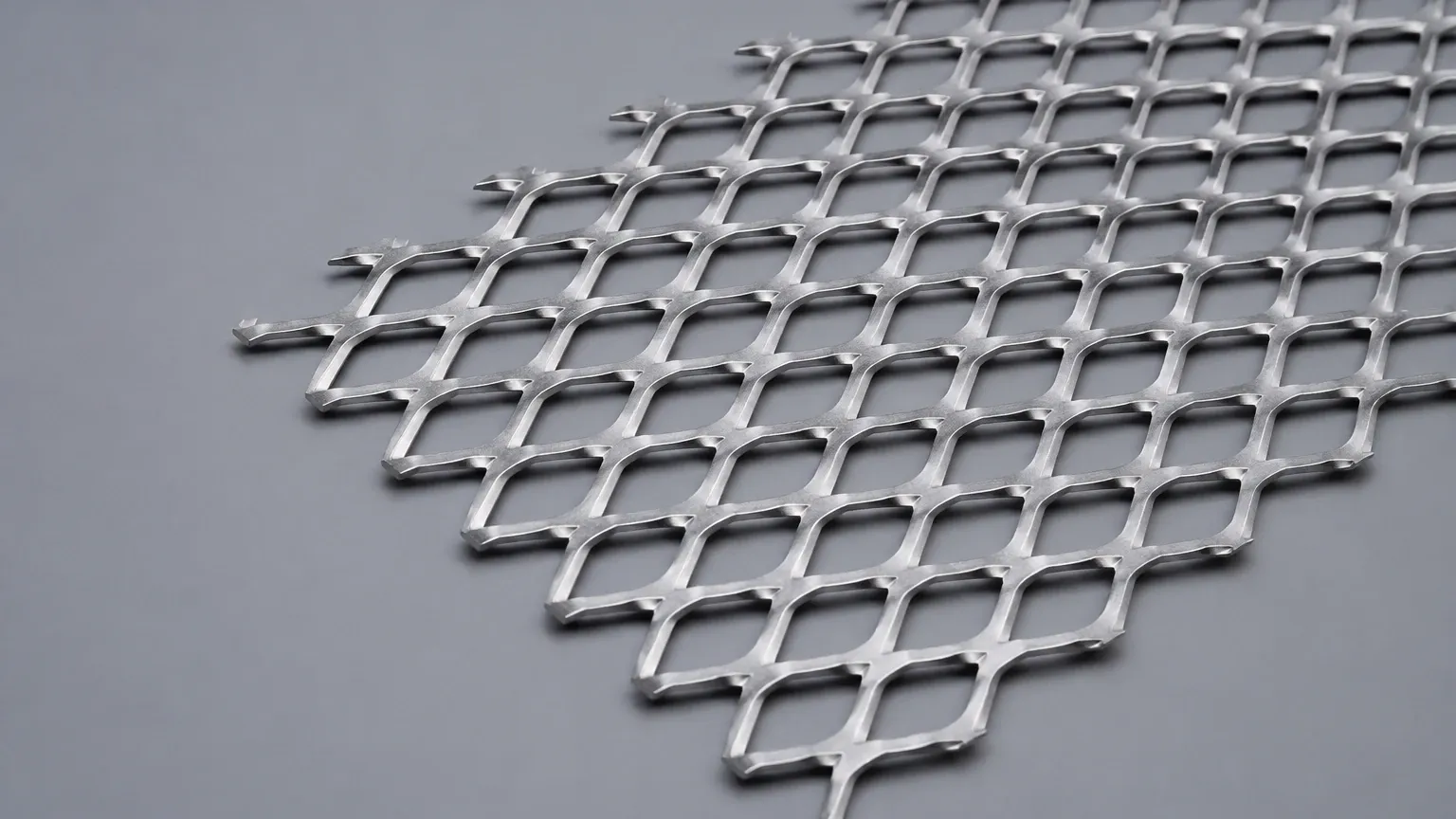
Unlike perforated metal, which is created by punching holes and removing material, expanded metal is manufactured through a process that involves no material waste. A solid sheet of metal is fed through a machine that slits and stretches the material in a single motion. This process creates a series of diamond-shaped openings, which are the hallmark of expanded metal.
Key Geometric Parameters
When specifying 4×4 expanded metal for a project, engineers must define several key dimensions that dictate the material's performance:
1. SWD (Short Way of Design/Diamond): The distance from the center of a bond to the center of the next bond across the short axis of the diamond.
2. LWD (Long Way of Design/Diamond): The distance from the center of a bond to the center of the next bond across the long axis of the diamond.
3. Strand Width: The amount of metal fed into the expanding machine between the slits.
4. Strand Thickness: The original thickness of the base metal sheet.
5. Open Area: The percentage of the sheet that is open space, which directly influences flow rates and pressure drops in filtration applications.
For a 4×4 expanded metal sheet, these parameters must be carefully calibrated to ensure that the resulting mesh provides the necessary mechanical support without obstructing the flow of fluids or gases in a filtration circuit.
Material Selection: The Case for Stainless Steel
While expanded metal can be produced from carbon steel, aluminum, or copper, industrial filtration applications typically demand the use of stainless steel. As a manufacturer specializing in custom filtration solutions, Kaifil emphasizes the importance of material grade in determining the lifespan and reliability of the filter component.
Grade 304 Stainless Steel
Grade 304 is the most common stainless steel used for expanded metal. It offers excellent corrosion resistance in many atmospheric environments and is suitable for most food and beverage or general industrial applications. It is a cost-effective choice for 4×4 expanded metal sheets that do not encounter highly acidic or saline conditions.
Grade 316 Stainless Steel
For more demanding environments, such as chemical processing, pharmaceutical manufacturing, or marine applications, Grade 316 stainless steel is preferred. The addition of molybdenum provides enhanced resistance to pitting and crevice corrosion, particularly in chloride-rich environments. When 4×4 expanded metal is used as a support structure for fine wire mesh in a chemical filter, 316 stainless steel ensures that the assembly does not degrade prematurely.
Flattened vs. Raised Expanded Metal
Engineers must choose between two primary finishes when ordering 4×4 expanded metal: raised (standard) and flattened.
Raised Expanded Metal
In its standard form, expanded metal has strands that are set at an angle to the plane of the sheet. This creates a three-dimensional surface that provides excellent grip and high structural rigidity. In filtration, raised expanded metal is often used as a pre-filter or a protective outer cage where the turbulence created by the angled strands can help break up large particulate matter before it reaches the primary filter media.
Flattened Expanded Metal
Flattened expanded metal is produced by passing the standard expanded sheet through a cold-roll reducing mill. This process flattens the strands and bonds into a single plane, resulting in a smooth, level surface. Flattened 4×4 expanded metal is often preferred when the material serves as a support substrate for delicate filter cloth or fine wire mesh. The smooth surface prevents the fine mesh from being abraded or punctured under high-pressure conditions.
Applications of 4×4 Expanded Metal in Industrial Filtration
In the context of industrial filtration, 4×4 expanded metal is rarely a standalone filter. Instead, it functions as a critical structural component within a larger filtration assembly. Its high strength-to-weight ratio makes it ideal for several specific roles.
Support for Pleated Filter Media
In high-pressure hydraulic or air filtration systems, the filter media (such as fiberglass or synthetic polymers) is often pleated to increase the surface area. Without structural support, these pleats would collapse under the force of the fluid flow. 4×4 expanded metal sheets can be cut and formed into cylinders or flat panels to provide the rigid backing necessary to maintain pleat geometry and prevent media migration.
Protective Cages and Housings
Industrial filter cartridges are often subject to mechanical stress during installation, cleaning, and operation. Expanded metal is frequently used to construct the outer cage of a filter cartridge. This cage protects the inner filtration layers from impact and ensures the cartridge maintains its shape even when subjected to back-pulsing or high differential pressures.
Pre-filtration and Strainers
In water treatment and large-scale industrial cooling systems, 4×4 expanded metal serves as a primary strainer. By selecting a mesh size that captures large debris—such as leaves, plastic, or scale—the expanded metal protects downstream components like pumps and fine membrane filters from damage and clogging.
Engineering Considerations: Flow Rate and Pressure Drop
One of the most critical aspects of selecting 4×4 expanded metal for a filtration project is calculating the impact on the system's fluid dynamics. Engineers must balance the need for structural strength with the requirement for low resistance to flow.
Calculating Open Area
The open area of expanded metal is determined by the relationship between the strand width and the SWD/LWD. A higher percentage of open area results in a lower pressure drop across the filter, which reduces the energy requirements of the system's pumps or fans. However, increasing the open area typically reduces the mechanical strength of the sheet. For a standard 4×4 expanded metal sheet, the open area can range from as low as 30% to as high as 80%, depending on the specific pattern chosen.
Turbulence and Flow Patterns
The angled strands of raised expanded metal can induce turbulence in the fluid stream. While this can be beneficial for mixing or for preventing the buildup of a filter cake on the surface of the mesh, it can also lead to increased energy loss. In systems where laminar flow is required, flattened expanded metal or specific perforated metal patterns may be more appropriate.
Customization and OEM Integration
For many industrial applications, a standard off-the-shelf 4×4 expanded metal sheet may not meet the exact requirements of a proprietary filtration design. This is where the expertise of a manufacturer like Kaifil becomes invaluable. Customization options for expanded metal include:
* Variable Mesh Sizes: Adjusting the SWD and LWD to match specific particulate sizes.
* Custom Sheet Dimensions: While 4×4 is a standard, sheets can be produced in various lengths and widths to minimize waste during the fabrication of filter components.
* Material Thickness: Selecting the precise gauge of stainless steel required to withstand the expected differential pressure of the application.
* Edge Treatments: Providing sheets with solid borders or specific edge finishes to facilitate welding or mechanical fastening into a filter housing.
By working closely with an OEM partner, engineering teams can ensure that the expanded metal components are optimized for both performance and manufacturability.
Maintenance, Durability, and Total Cost of Ownership
When evaluating 4×4 expanded metal for an industrial project, it is important to look beyond the initial purchase price and consider the total cost of ownership (TCO). Several factors influence the long-term value of the material.
Corrosion Resistance and Longevity
Using high-quality stainless steel for expanded metal components significantly extends the replacement cycle of the filter. In corrosive chemical environments, the initial investment in 316L stainless steel often pays for itself by preventing premature failure and reducing the frequency of maintenance shutdowns.
Cleanability
In many food, beverage, and pharmaceutical applications, filtration components must be cleaned regularly to prevent bacterial growth and maintain flow rates. Expanded metal, particularly the flattened variety, is relatively easy to clean using CIP (Clean-In-Place) systems or ultrasonic baths. The absence of deep crevices—compared to some woven wire meshes—reduces the risk of contaminant entrapment.
Structural Integrity Under Load
Over time, filtration components are subjected to pressure cycles. If the expanded metal support is too thin or poorly manufactured, it may suffer from metal fatigue, leading to cracks or deformation. Specifying the correct gauge and strand width for a 4×4 expanded metal sheet ensures that the structural support remains intact throughout the intended service life of the filter.
Technical Selection Checklist for Engineers
Before finalizing a purchase order for 4×4 expanded metal, procurement and engineering teams should confirm the following technical details:
1. Material Grade: Is 304 sufficient, or does the application require the superior corrosion resistance of 316/316L?
2. Style: Is raised expanded metal acceptable, or does the application require a flattened finish to protect delicate media?
3. Mesh Dimensions: Have the SWD and LWD been calculated to provide the necessary open area and structural support?
4. Load Requirements: What is the maximum differential pressure the sheet will encounter, and can the selected gauge handle that load?
5. Compliance: Does the material meet industry-specific standards (e.g., FDA compliance for food contact or ASTM standards for metal specifications)?
Conclusion
4×4 expanded metal is a fundamental material in the industrial filtration sector, offering a unique blend of structural rigidity and permeable functionality. Whether used as a protective outer cage, a pleat support, or a primary strainer, the performance of the expanded metal is a direct result of careful engineering and material selection. By understanding the geometric variables, material properties, and flow characteristics associated with Perforated & Expanded Metal, engineers can design more efficient, durable, and cost-effective filtration solutions.
Kaifil continues to support global industries by providing high-precision, customized metal filtration components. By focusing on technical excellence and material quality, we help our partners achieve reliable filtration performance in the most demanding industrial environments. When selecting 4×4 expanded metal for your next project, consider the long-term benefits of a solution tailored to your specific operational needs.
