


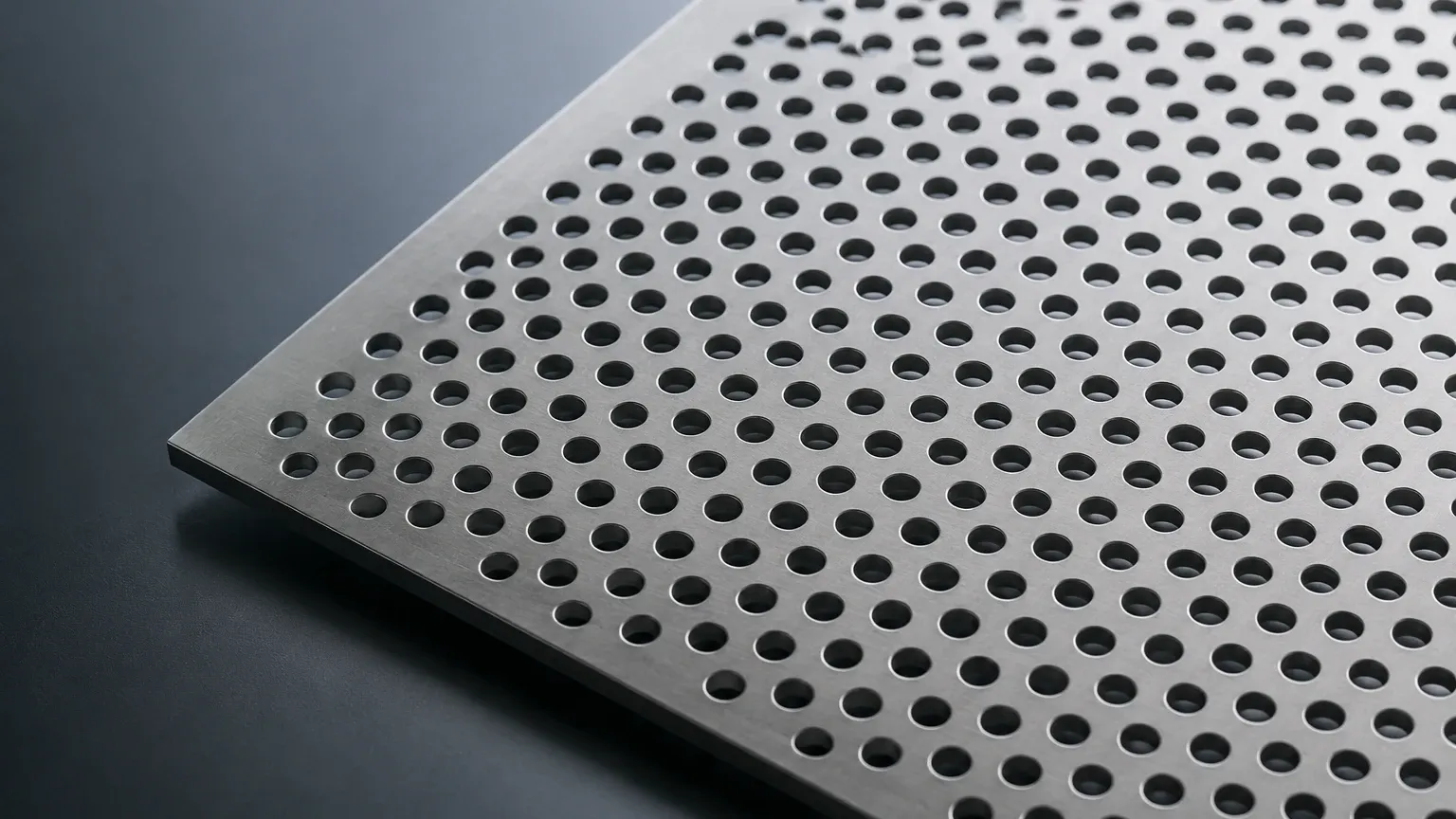
4×8 Perforated Metal Sheet
In the landscape of industrial manufacturing and filtration, the 4×8 perforated metal sheet serves as a foundational component for a vast array of applications. Measuring 48 inches by 96 inches, this standard sheet size is preferred across industries—from chemical processing to food production—due to its compatibility with standard fabrication equipment and logistics frameworks. For engineers and procurement specialists, selecting the right perforated media involves balancing structural integrity, hydraulic performance, and material longevity.
At Kaifil, we specialize in transforming raw Perforated & Expanded Metal into high-precision filtration solutions. Understanding the technical nuances of the 4×8 format is essential for optimizing the performance of filter cartridges, strainer baskets, and protective screens.
Technical Specifications of the 4×8 Perforated Metal Sheet
When specifying a 4×8 perforated metal sheet, the geometric configuration of the perforations is as critical as the external dimensions of the sheet itself. These specifications dictate how the material will behave under pressure and how effectively it will facilitate or restrict flow.
Hole Patterns and Geometry
The most common pattern for industrial filtration is the 60-degree staggered round hole. This configuration provides the highest degree of structural uniformity and maximizes the available open area. Other patterns include:
* Straight Row Round Holes: Used when specific alignment with internal components is required, though generally offering lower structural strength than staggered patterns.
* Square Holes: Often selected for high open-area requirements where flow volume is the primary concern over fine filtration.
* Slotted Holes: Ideal for applications involving elongated particles or where the media must resist blinding in specific flow directions.
Open Area Calculations
The "open area" is the percentage of the sheet that is comprised of holes. For a 60-degree staggered pattern, the calculation is typically:
`% Open Area = (D² × 90.69) / C²`
Where `D` is the hole diameter and `C` is the center-to-center distance. In filtration, a higher open area reduces pressure drop but can compromise the mechanical strength of the 4×8 perforated metal sheet, especially when subjected to high-velocity fluid streams.
Material Selection for Industrial Environments
The performance of a 4×8 perforated metal sheet is heavily dependent on its metallurgical composition. In industrial filtration, where exposure to corrosive chemicals or high temperatures is common, material selection is the first line of defense against premature failure.
Stainless Steel (304, 316, and 316L)
Stainless steel is the industry standard for filtration media. Grade 304 offers excellent corrosion resistance for general industrial use. However, for pharmaceutical or marine applications, Grade 316 is preferred due to its molybdenum content, which provides superior resistance to chlorides and pitting. 316L (low carbon) is often specified for components requiring extensive welding, as it minimizes carbide precipitation that can lead to intergranular corrosion.
Specialized Alloys
In highly aggressive chemical environments or high-temperature processing, standard stainless steels may be insufficient. In these cases, engineers may specify nickel alloys or duplex stainless steels. These materials ensure that the Perforated & Expanded Metal maintains its dimensional stability and filtration accuracy throughout its service life.
The Role of Perforated Sheets in Filtration Systems
A 4×8 perforated metal sheet is rarely used in its flat, raw state within a filtration system. Instead, it serves as the primary material for several critical components:
Support Cores for Filter Cartridges
In high-pressure hydraulic or liquid filtration, fine wire mesh or pleated media lack the structural rigidity to withstand differential pressure. Perforated sheets are rolled into cylinders and longitudinally welded to create internal or external support cores. These cores prevent the primary filter media from collapsing or bursting under load.
Intake Screens and Strainers
Large-scale water treatment and industrial cooling systems utilize perforated sheets to create intake screens. The 4×8 dimensions allow for the fabrication of large-diameter baskets or flat screens that can handle high flow rates while protecting downstream pumps and heat exchangers from debris.
Diffuser Plates
In chemical reactors and gas filtration systems, perforated metal is used to distribute flow evenly across a larger surface area. By precisely controlling the hole size and spacing across the sheet, engineers can eliminate turbulence and ensure uniform contact time with catalysts or secondary filter stages.
Comparing Perforated and Expanded Metal
While the 4×8 perforated metal sheet is a staple, it is often evaluated alongside expanded metal. Both fall under the category of Perforated & Expanded Metal, but they serve different engineering needs.
* Perforation: Created by punching holes through the metal, leaving a solid margin if required. This process allows for extremely precise hole diameters and spacing, which is vital for calibrated filtration.
* Expansion: Created by slitting and stretching the metal. This process produces no waste and creates a 3D structure that can be more cost-effective for simple structural supports or coarse guards. However, expanded metal lacks the precision of perforated sheets for fine filtration applications.
Engineering Considerations for Customization
Standard 4×8 sheets often require customization to meet specific project demands. When ordering from a manufacturer like Kaifil, engineers should confirm the following parameters:
1. Margins: Do you require "minimum margins" (holes punched to the edge) or "finished margins" (a solid border around the perimeter)? Finished margins facilitate easier welding and handling.
2. Flatness Tolerances: The punching process can introduce internal stresses that cause the sheet to bow. For precision filtration components, secondary leveling processes are often necessary to ensure the sheet remains perfectly flat for subsequent fabrication.
3. Surface Finish: Depending on the industry, the sheet may require electropolishing, pickling, or degreasing. In food and beverage applications, a smooth, burr-free surface is mandatory to prevent bacterial growth and ensure clean-in-place (CIP) effectiveness.
Installation and Maintenance in Industrial Settings
The longevity of a 4×8 perforated metal sheet depends on proper installation and a consistent maintenance schedule. In filtration applications, the primary risk is "blinding" or "clogging," where particles become lodged within the perforations.
Welding and Fabrication
When fabricating perforated sheets into filter components, TIG (Tungsten Inert Gas) welding is typically preferred for stainless steel to ensure clean, high-strength joints. It is critical to ensure that the weld does not obstruct the open area of the filter, which could lead to localized high-pressure zones.
Cleaning Protocols
Industrial filters made from perforated metal can often be cleaned and reused, providing a lower total cost of ownership compared to disposable media. Common cleaning methods include backpulsing, ultrasonic cleaning, or chemical baths. The choice of cleaning method must be compatible with the metal grade to avoid stress corrosion cracking.
Procurement: Total Cost of Ownership (TCO)
When evaluating the cost of a 4×8 perforated metal sheet, purchasing teams should look beyond the initial price per sheet. The total cost of ownership includes:
* Yield Optimization: How many parts can be cut from a standard 4×8 sheet? Minimizing scrap through efficient nesting is key to cost reduction.
* Durability: A higher-grade stainless steel may have a higher upfront cost but will reduce the frequency of replacements in corrosive environments.
* Compliance: For industries like pharmaceuticals, ensuring the material comes with full MTRs (Material Test Reports) is essential for regulatory compliance and safety.
Kaifil provides comprehensive support in selecting the optimal Perforated & Expanded Metal specifications for your specific industrial needs. By focusing on precision manufacturing and material integrity, we help engineers achieve reliable filtration performance and extended equipment life.
Whether you are designing a new filtration system or sourcing replacement components, understanding the technical capabilities of the 4×8 perforated metal sheet ensures that your choice supports both the operational efficiency and the structural demands of your application.
