


4×8 Sheet Expanded Metal Lowe’s
In the realm of industrial fabrication and structural design, the 4×8 sheet expanded metal format is considered a universal standard. While many procurement professionals and maintenance engineers may initially search for "4×8 sheet expanded metal Lowe's" to satisfy immediate, small-scale repair needs or prototyping requirements, industrial-grade applications often demand a deeper understanding of material specifications, tolerances, and metallurgical properties that go beyond retail-grade offerings.
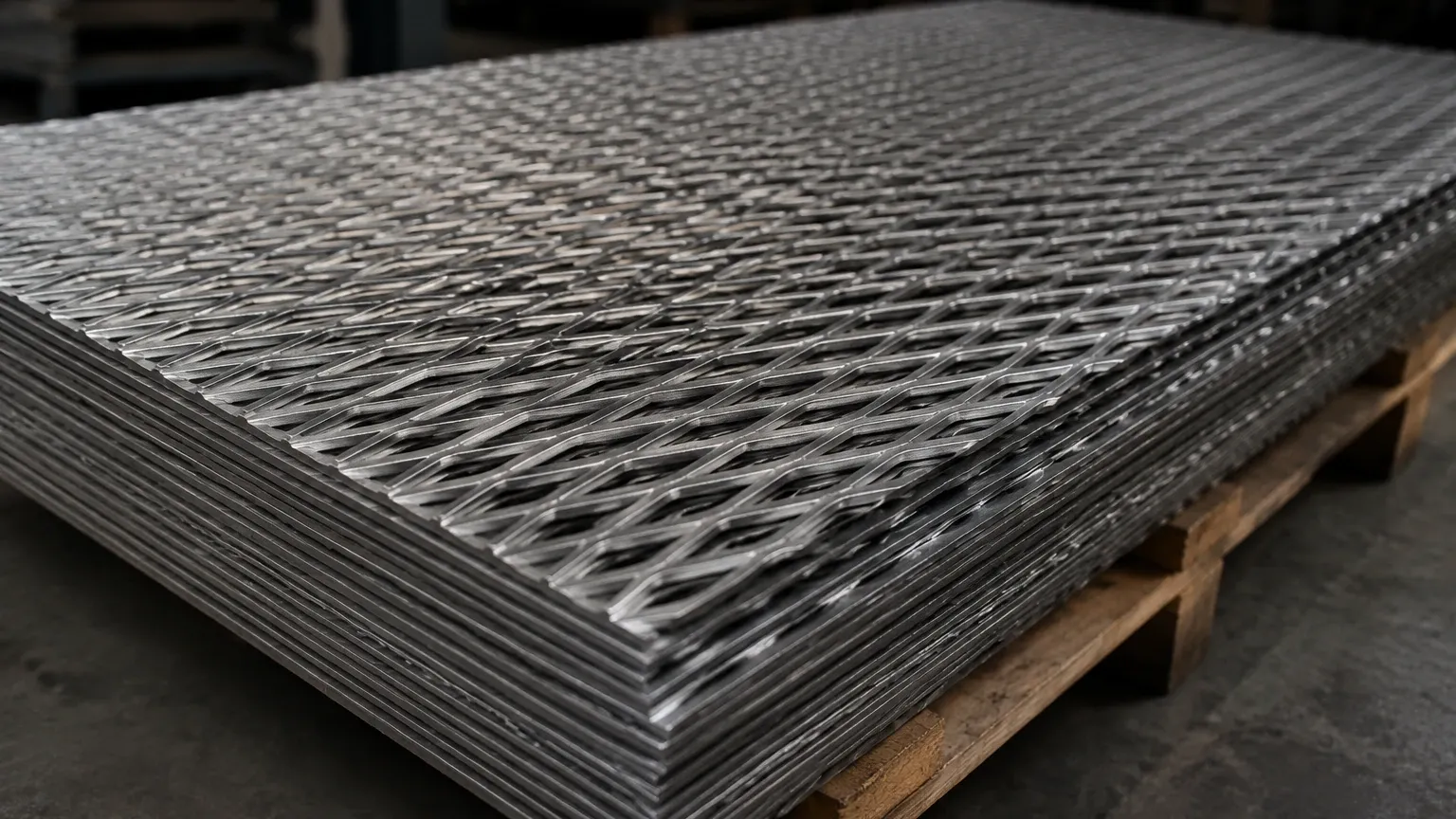
Expanded metal is a versatile material produced by simultaneously slitting and stretching a solid sheet of metal. This process creates a diamond-shaped pattern of openings, resulting in a product that is lightweight yet structurally rigid. For engineers and technical buyers, selecting the right Perforated & Expanded Metal involves evaluating the specific needs of the application—whether it is for filtration support, machine guarding, or architectural security.
Understanding the 4×8 Sheet Standard in Industrial Contexts
The 4-foot by 8-foot (48" x 96") dimension is the most prevalent sheet size in the metal industry. This standardization exists for several logistical and engineering reasons:
1. Handling and Logistics: 4×8 sheets fit perfectly onto standard industrial pallets and are easily maneuvered by forklifts and automated sheet loaders.
2. Machinery Compatibility: Most CNC punching, laser cutting, and shearing equipment is designed to accommodate the 4×8 footprint, minimizing setup time and material waste.
3. Structural Integration: In construction and industrial walkway design, joists and supports are often spaced at intervals that align with 4-foot increments, making 4×8 sheets a natural fit for flooring and partitions.
While a search for "4×8 sheet expanded metal Lowe's" might yield solutions for residential fencing or basic DIY projects, industrial environments—such as chemical processing plants or food production facilities—require materials that adhere to strict ASTM standards. These standards ensure that the weight per square foot, the percentage of open area, and the tensile strength of the strands meet the rigorous safety and performance requirements of the sector.
Technical Specifications: Beyond the Diamond Pattern
When specifying expanded metal, engineers must look past the visual pattern and focus on the technical nomenclature that defines the material's performance. The two most critical measurements are the Short Way of Design (SWD) and the Long Way of Design (LWD).
* SWD (Short Way of Design): This is the distance from the center of a bond to the center of the next bond across the short axis of the diamond.
* LWD (Long Way of Design): This is the distance from the center of a bond to the center of the next bond across the long axis of the diamond.
* Strand Width and Thickness: These dimensions determine the overall strength and weight of the sheet. In industrial filtration, for example, a thicker strand might be necessary to withstand high-pressure differentials.
Furthermore, expanded metal is available in two primary forms: Raised (Standard) and Flattened.
Raised vs. Flattened Expanded Metal
Raised Expanded Metal is the product as it comes off the expanding machine. The strands and bonds are set at a uniform angle to the plane of the sheet, providing extra strength and rigidity. This form is often used for non-slip surfaces or as a primary filter element where turbulence is desired.
Flattened Expanded Metal is manufactured by passing the raised expanded sheet through a cold-roll reducing mill. This process flattens the strands and bonds into a single plane, resulting in a smooth, level surface. Flattened sheets are often preferred when the metal serves as a support substrate for fine wire mesh filters, as the smooth surface prevents the mesh from tearing or deforming under pressure.
Material Selection for Demanding Environments
A primary limitation of searching for "4×8 sheet expanded metal Lowe's" is the restricted material selection typically found in retail environments. Retailers often stock carbon steel or galvanized steel, which may be insufficient for specialized industrial applications.
Stainless Steel (304 and 316L)
For industries such as pharmaceutical manufacturing or marine processing, stainless steel is the material of choice. Grade 304 offers excellent corrosion resistance and is suitable for most general-purpose industrial applications. However, Grade 316L is required for environments involving high salinity or exposure to aggressive chemicals. At Kaifil, we specialize in custom stainless steel solutions that ensure longevity and compliance with hygiene standards.
Aluminum
When weight is a critical factor, such as in aerospace or mobile filtration units, aluminum expanded metal provides a high strength-to-weight ratio. It is also naturally resistant to atmospheric corrosion, making it an excellent choice for outdoor ventilation and guarding.
Specialty Alloys
In high-temperature or highly corrosive chemical environments, specialty alloys like Monel or Inconel may be required. These materials are rarely available in standard 4×8 retail sheets and must be sourced from professional manufacturers capable of handling precision expansion of exotic metals.
The Role of Expanded Metal in Industrial Filtration
While expanded metal is often viewed as a structural component, its role in industrial filtration is vital. It serves as the "backbone" for many filtration systems. In a multi-layer filter cartridge, the expanded metal provides the necessary mechanical strength to support the finer filtration media, such as stainless steel wire mesh or sintered fiber felt.
Without the rigid support of an expanded metal cylinder or sheet, fine mesh would collapse under the force of fluid flow. The open area of the expanded metal is a critical engineering calculation; it must be high enough to minimize pressure drop but low enough to provide uniform support across the entire surface of the filter media.
Engineers must also consider the "bond" of the expanded metal. In filtration, the bond—where the strands intersect—must be clean and free of burrs. Any sharp edges can puncture the delicate filter mesh, leading to bypass and system failure. This is why industrial-grade Perforated & Expanded Metal undergoes rigorous quality control that retail-grade products do not.
Why Custom Fabrication Trumps Retail Availability
While "4×8 sheet expanded metal Lowe's" is a convenient search for a quick fix, B2B procurement and engineering teams often find that standard retail sheets do not meet the specific needs of their projects. Custom fabrication offers several advantages:
1. Precision Tolerances
Retail sheets are often sheared with wide tolerances. In precision engineering, a variance of even a few millimeters can disrupt an automated assembly line or prevent a filter component from seating correctly in its housing. Custom manufacturing ensures that every sheet or component meets exact dimensional specifications.
2. Edge Conditions
Standard sheets often have "random" edges, meaning the diamonds are cut at arbitrary points. For safety and assembly, many industrial applications require "closed diamond" edges or specific margins where the metal remains solid for welding or bolting. Custom expansion allows for these specific edge configurations.
3. Integrated Secondary Operations
Professional manufacturers like Kaifil can provide more than just the raw sheet. Secondary operations such as degreasing, pickling, passivating, or forming the sheet into a cylinder are essential for industrial readiness. A retail sheet would require significant additional processing before it could be used in a food-grade or high-purity application.
Evaluating Total Cost of Ownership (TCO)
When deciding between a retail source and an industrial manufacturer, it is important to look beyond the initial price per sheet. The Total Cost of Ownership includes:
* Longevity: A 316L stainless steel sheet from a specialist manufacturer will outlast a galvanized retail sheet in a corrosive environment, reducing replacement frequency.
* Installation Efficiency: Custom-sized sheets eliminate the need for on-site cutting and finishing, reducing labor costs and material waste.
* Compliance: Industrial suppliers provide Material Test Reports (MTRs) and certifications that are often required for insurance, safety audits, and regulatory compliance (such as FDA or ASME standards).
Selecting the Right Partner for Your Filtration Needs
For engineers and purchasing managers, the choice of a supplier is as critical as the choice of material. While retail outlets serve a purpose for the general public, industrial filtration and structural projects require a partner with technical expertise.
When evaluating a supplier for expanded metal, consider the following questions:
* Can they provide specific material certifications?
* Do they offer both standard and flattened options in various alloys?
* Can they assist with the engineering calculations for open area and flow rates?
* Are they capable of producing custom dimensions beyond the standard 4×8 sheet?
Kaifil provides a comprehensive range of solutions for those seeking high-performance metal components. Whether you are designing a new filtration system or need a reliable source for durable machine guards, our expertise in stainless steel and precision metal fabrication ensures that your project meets its performance goals.
To explore our full range of technical specifications and customization options, we invite you to Review product options and application support and see how our industrial-grade solutions outperform standard retail offerings.
Conclusion
The search for "4×8 sheet expanded metal Lowe's" highlights the ubiquitous nature of this material format. However, for the B2B sector, the 4×8 sheet is merely a starting point. The complexities of material science, filtration physics, and structural engineering demand a more sophisticated approach to procurement. By focusing on industrial-grade specifications, material purity, and custom fabrication capabilities, companies can ensure their systems operate with maximum efficiency and minimal downtime. In the demanding world of industrial filtration, the right metal—expanded to the right specifications—makes all the difference.
