


600×600 Metal Perforated Ceiling Tiles Price
In industrial and commercial architecture, the selection of ceiling systems is a critical decision that impacts acoustics, ventilation, and long-term maintenance costs. The 600x600mm format is the global standard for modular suspended ceilings, offering a balance between ease of installation and structural efficiency. When evaluating the 600×600 metal perforated ceiling tiles price, procurement professionals and engineers must look beyond the initial quote to understand the technical variables that drive manufacturing costs and performance outcomes.
As a specialist in Perforated & Expanded Metal, Kaifil provides precision-engineered components that meet the rigorous demands of industrial environments. Understanding the relationship between material properties, perforation patterns, and surface treatments is essential for determining the total cost of ownership for these systems.
Core Factors Influencing 600×600 Metal Perforated Ceiling Tiles Price
The pricing of perforated metal ceiling tiles is rarely a flat rate. It is a composite of material volume, processing time, and finishing requirements. To accurately budget for a project, several engineering specifications must be defined.
Material Selection and Grade
The choice of base metal is the most significant contributor to the 600×600 metal perforated ceiling tiles price.
* Aluminum: Known for its lightweight nature and natural corrosion resistance, aluminum is the most common choice for commercial ceilings. Grades like 1100 or 3003 are standard, but the price fluctuates based on the global aluminum market.
* Galvanized Steel: This provides a cost-effective alternative with higher structural strength. However, it is heavier and requires robust suspension systems, which may increase the overall installation cost.
* Stainless Steel (304/316): In specialized industrial environments, such as chemical processing plants or pharmaceutical labs, stainless steel is required for its superior chemical resistance. This material significantly increases the price point due to both raw material costs and the increased wear on perforating machinery.
Material Thickness (Gauge)
The thickness of the metal sheet—typically ranging from 0.5mm to 1.0mm for 600x600mm tiles—directly impacts the weight and rigidity. Thicker gauges prevent "oil-canning" (visible waviness) but increase the material cost and shipping weight. For most standard applications, a 0.6mm or 0.7mm thickness provides the optimal balance of price and performance.
Perforation Patterns and Engineering Complexity
The "perforated" aspect of these tiles is not merely aesthetic; it serves functional roles in acoustic damping and airflow. The complexity of the perforation process is a key driver of the 600×600 metal perforated ceiling tiles price.
Open Area Percentage
The open area is the ratio of the area of the holes to the total area of the tile. A higher open area (e.g., 22% vs. 10%) requires more punches per square meter. While modern CNC punching and high-speed rotary perforating machines are efficient, high-density patterns or micro-perforations (holes smaller than 1.5mm) increase tool wear and processing time, leading to higher costs.
Hole Geometry and Arrangement
* Round Holes: The most economical to produce due to the durability of round punches.
* Square or Slotted Holes: These can be more expensive as the tooling is more susceptible to breakage and the punching process may require slower speeds to maintain precision.
* Diagonal vs. Staggered Patterns: Staggered patterns are often preferred for their structural integrity and uniform appearance, whereas complex custom patterns may require specialized programming and setup fees.
Margin Requirements
Standard tiles usually feature a plain (non-perforated) border or "margin" to provide structural rigidity and a clean interface with the T-grid system. Custom margins that deviate from standard manufacturing presets will typically incur additional setup costs.
Surface Treatments and Aesthetic Finishes
Raw perforated metal is rarely used in ceiling applications without a protective and decorative finish. The type of finish specified will notably alter the 600×600 metal perforated ceiling tiles price.
Powder Coating
This is the industry standard for metal ceilings. It provides a durable, uniform finish available in a wide range of RAL colors. The price is influenced by the quality of the powder (e.g., standard polyester vs. high-durability architectural grade) and the thickness of the application. Anti-bacterial powder coatings are often specified for healthcare environments, adding a premium to the cost.
PVDF Coating
For environments exposed to high humidity or chemical vapors, Polyvinylidene Fluoride (PVDF) coatings offer superior resistance to fading and chemical attack. PVDF is significantly more expensive than standard powder coating and is typically reserved for high-end architectural or harsh industrial projects.
Anodizing
Primarily used for aluminum tiles, anodizing creates an oxide layer that is integral to the metal. It offers a unique metallic aesthetic but requires high-quality base material to ensure color consistency across a large batch of tiles, which can drive up the price.
Acoustic Performance and Integrated Components
In many B2B applications, perforated metal tiles are selected specifically for their acoustic properties. To achieve high Noise Reduction Coefficient (NRC) values, the tiles must be paired with acoustic media.
* Acoustic Fleece: A thin, non-woven black tissue is often heat-bonded to the back of the perforated tile. This fleece provides sound absorption by creating resistance as sound waves pass through the perforations. Adding this at the factory level is more cost-effective than field application but adds to the unit price.
* Mineral Wool/Fiberglass Pads: For high-performance acoustic requirements (e.g., in loud industrial halls), thick acoustic pads are placed behind the tiles. The cost of these inserts, along with the labor to install them, must be factored into the total ceiling system budget.
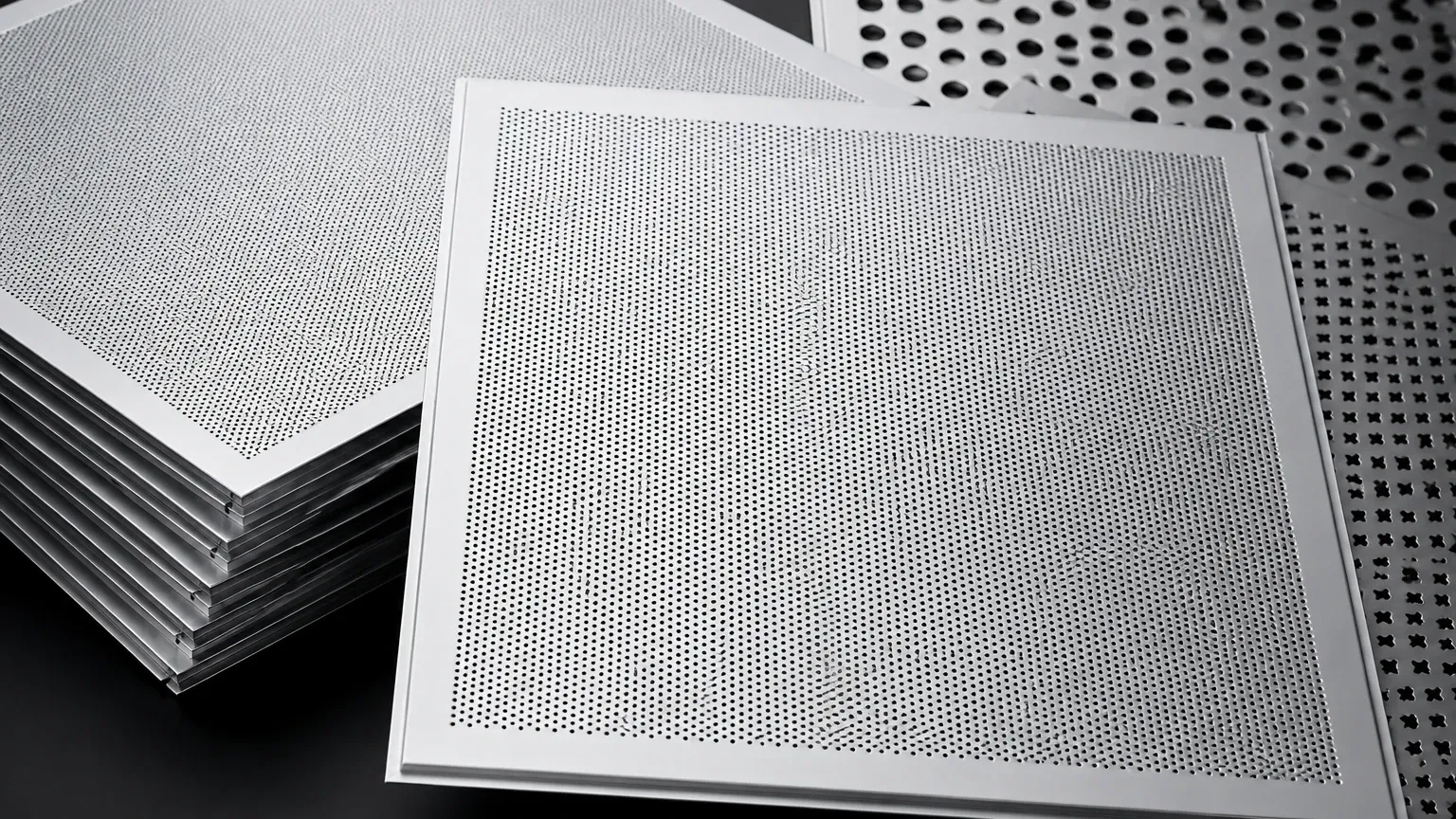
Installation Systems and Edge Details
The 600×600 metal perforated ceiling tiles price is also influenced by how the tile interacts with the suspension grid. There are three primary edge configurations:
1. Lay-in (Square Edge): The simplest and most economical design, where the tile sits flush on a standard 24mm or 15mm T-grid.
2. Tegular (Drop Edge): The tile is formed to hang slightly below the grid, creating a recessed shadow line. This requires additional metal forming (bending) steps in the factory, increasing the price.
3. Clip-in (Concealed Grid): The tiles snap into a hidden spring tee system. This provides a monolithic look and higher security but requires precision-formed edges and specialized clips, making it the most expensive of the three options.
Procurement Strategy: Minimizing Costs without Sacrificing Quality
When sourcing 600×600 metal perforated ceiling tiles, purchasing teams should consider several strategies to optimize their investment.
Volume and Standardization
Manufacturing perforated metal involves significant setup time for the machinery. Ordering standard hole patterns in large volumes allows the manufacturer to amortize these setup costs across more units, lowering the price per tile. Customizing hole sizes or tile dimensions for small orders will invariably lead to a much higher unit price.
Logistics and Packaging
Metal tiles are susceptible to edge damage during transit. The cost of robust packaging (wooden crates vs. cardboard boxes) and the logistics of shipping heavy metal components should be discussed early in the quoting process. For international projects, sea freight is the standard, but lead times must be managed to avoid expensive air freight surcharges.
Technical Verification
Before finalizing a purchase, engineers should confirm the following to avoid costly field errors:
* Fire Rating: Ensure the tiles and finishes meet local fire safety codes (e.g., Class A or Class 0).
* Load Bearing: Confirm the suspension system can support the weight of the metal tiles plus any integrated lighting or HVAC fixtures.
* Compatibility: Verify that the tile edge detail is perfectly matched to the specific brand and model of the ceiling grid being used.
Why Precision Manufacturing Matters
At Kaifil, our expertise in Perforated & Expanded Metal ensures that every component is manufactured to strict tolerances. In a ceiling system, even a 1mm deviation in a 600x600mm tile can lead to visible gaps or misalignment across a large installation. By focusing on precision punching and high-quality material sourcing, we help our clients achieve a professional finish that stands up to the rigors of industrial use.
When requesting a quote for the 600×600 metal perforated ceiling tiles price, providing a detailed technical specification—including material grade, thickness, hole diameter, pitch, and finish—will ensure the most accurate and competitive pricing. By understanding these technical drivers, B2B buyers can make informed decisions that balance aesthetic requirements with functional performance and budgetary constraints.
Download 600×600 Metal Perforated Ceiling Tiles Price as a PDF
