


6320e Expanded Metal
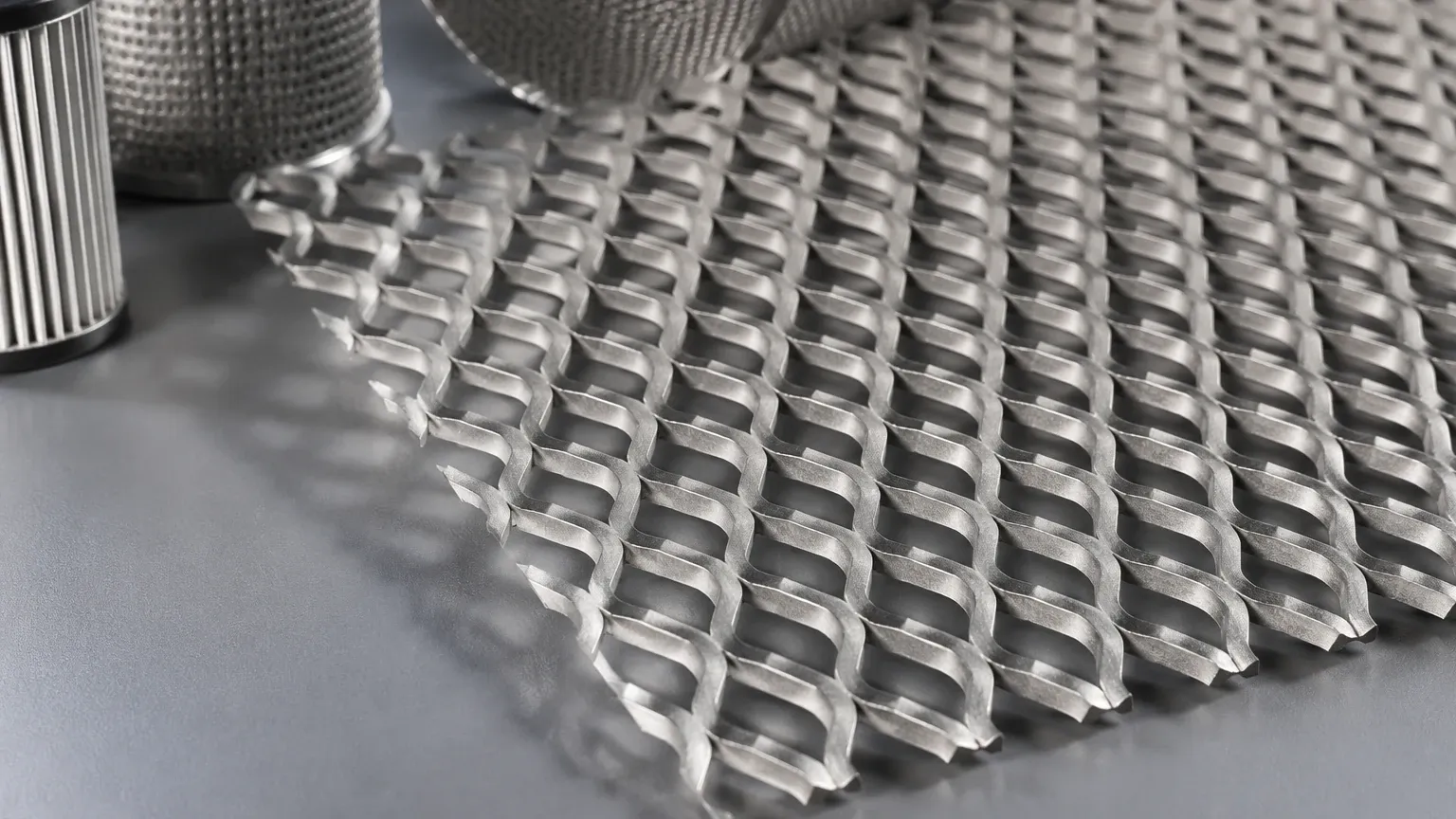
In the landscape of industrial filtration and structural engineering, selecting the correct mesh profile is critical for ensuring both mechanical integrity and operational efficiency. Among the various specifications available to engineers, 6320e expanded metal stands out as a versatile and robust solution. This specific designation refers to a precise pattern of metal that has been simultaneously slit and stretched, creating a uniform diamond-shaped mesh without the material waste associated with traditional punching processes.
For technical professionals and procurement teams, understanding the nuances of the 6320e specification is essential. It is frequently utilized as a support structure for finer filter media or as a standalone screening component in demanding environments. This guide examines the technical characteristics, material considerations, and engineering evaluations necessary when integrating Perforated & Expanded Metal into industrial systems.
Technical Characteristics of 6320e Expanded Metal
The 6320e expanded metal specification is defined by its geometric properties, which dictate its performance in filtration and structural applications. Unlike woven wire mesh, expanded metal is a single-piece construction, meaning there are no joints or weaves that can unravel or accumulate debris in the interstices. This makes it particularly valuable in sanitary or high-pressure environments.
Geometric Definitions
When evaluating 6320e, engineers must consider the following dimensions:
* Long Way of Design (LWD): The distance from a point on a diamond to the corresponding point on the next diamond across the long axis.
* Short Way of Design (SWD): The distance across the short axis of the diamond.
* Strand Width and Thickness: These dimensions determine the overall strength and the percentage of open area. The "e" in the 6320e designation often relates to specific industrial standards for flattened or specialized mesh profiles used in filtration housing.
Flattened vs. Raised Profiles
6320e expanded metal is typically available in two forms: raised (standard) and flattened. In filtration applications, the flattened variety is often preferred. Flattening involves passing the raised expanded metal through a cold-roll reducing mill, which results in a smooth, flat surface. This process is crucial when the expanded metal serves as a support for delicate filter membranes, as it prevents the sharp edges of a raised profile from puncturing or damaging the primary filtration layer.
Material Selection and Corrosion Resistance
The performance of 6320e expanded metal is heavily dependent on the base material. As a manufacturer specializing in stainless steel solutions, Kaifil emphasizes the importance of matching the alloy to the chemical and thermal demands of the application.
Stainless Steel 304 and 304L
Grade 304 is the most common choice for general industrial use. It offers excellent formability and weldability, making it ideal for custom-fabricated filter cartridges. However, in applications involving welding, 304L (low carbon) is often specified to prevent carbide precipitation and ensure the longevity of the mesh in corrosive environments.
Stainless Steel 316 and 316L
For more aggressive environments, such as chemical processing, pharmaceutical manufacturing, or marine applications, Stainless Steel 316 is the standard. The addition of molybdenum provides superior resistance to pitting and crevice corrosion, particularly in chloride-rich environments. For high-precision filtration components, 316L is frequently the material of choice to maintain structural integrity throughout the fabrication process.
Specialty Alloys
In extreme cases involving high temperatures or highly acidic fluids, specialty alloys like Monel, Inconel, or Hastelloy may be used to manufacture the 6320e profile. These materials ensure that the expanded metal does not degrade, which could otherwise lead to downstream contamination or system failure.
Engineering Evaluation for Filtration Systems
When specifying 6320e expanded metal for a filtration project, engineers must move beyond basic dimensions and evaluate the component's impact on system fluid dynamics and mechanical load.
Open Area and Flow Rates
The percentage of open area in 6320e expanded metal directly influences the pressure drop (ΔP) across the filter. A higher open area reduces resistance to flow, which lowers energy consumption for pumps and compressors. However, this must be balanced against the need for structural support. Engineers should calculate the effective open area to ensure it meets the required flow velocity without creating excessive turbulence.
Structural Rigidity and Burst Pressure
In high-pressure hydraulic or water treatment systems, the expanded metal acts as a skeleton for the filter element. It must withstand the differential pressure that builds up as the filter captures contaminants. The 6320e profile provides a high strength-to-weight ratio, but technical teams must verify that the strand thickness and bond strength are sufficient to prevent deformation or bursting under peak load conditions.
Compatibility with Filter Media
If the 6320e expanded metal is used as an outer guard or inner core for a pleated filter, its compatibility with the pleat geometry is vital. The mesh must provide uniform support across the entire surface area of the media to prevent "pleat bunching," which can lead to localized high-velocity zones and premature media failure.
Applications of 6320e Expanded Metal in Industry
The versatility of the 6320e specification allows it to be utilized across a broad spectrum of industrial sectors. Its primary role is often found in separation and protection tasks.
Chemical and Petrochemical Processing
In these industries, 6320e is used in the construction of basket strainers and catalyst support grids. Its ability to maintain a precise opening size under thermal expansion makes it more reliable than certain woven alternatives in high-temperature reactors.
Food and Beverage Filtration
The smooth, flattened surface of 6320e stainless steel expanded metal is ideal for the food industry. It is easy to clean and resists the buildup of organic matter, supporting compliance with stringent hygiene standards. It is commonly found in juice filtration systems and large-scale brewery mash tuns.
Hydraulic and Lubrication Systems
For heavy machinery, 6320e serves as a protective wrap for hydraulic filters. It shields the delicate inner media from large particles and mechanical damage during installation or maintenance, ensuring that the fluid power system remains free of harmful debris.
Customization and OEM Manufacturing Considerations
Standard off-the-shelf expanded metal rarely meets the exacting requirements of specialized industrial equipment. Partnering with a manufacturer like Kaifil allows for the customization of 6320e expanded metal to fit specific design envelopes.
Precision Cutting and Forming
Industrial filters often require expanded metal to be formed into cylinders, cones, or complex flat shapes. Precision shearing and CNC cutting ensure that the 6320e mesh fits perfectly within the filter housing, eliminating bypass paths where unfiltered fluid could escape.
Welding and Assembly
Integrating expanded metal into a larger assembly requires advanced welding techniques, such as TIG, MIG, or resistance welding. Proper welding is critical to ensure that the bonds of the 6320e mesh remain intact under vibration and pressure cycling. Manufacturers must also provide finishing services, such as passivating or electropolishing, to enhance the corrosion resistance of the weld zones.
Prototype Development
For engineers developing new filtration technologies, the ability to source small batches of customized 6320e expanded metal for prototyping is essential. This allows for real-world testing of flow characteristics and structural durability before committing to large-scale production runs.
Procurement and Quality Assurance
To avoid project delays and performance issues, purchasing teams should confirm several key factors before finalizing an order for 6320e expanded metal.
1. Dimensional Tolerances: Confirm the acceptable variance in LWD, SWD, and thickness. Even minor deviations can affect the fitment in precision-machined housings.
2. Material Certification: Request Mill Test Reports (MTRs) to verify the chemical composition of the stainless steel or alloy. This ensures the material meets the specified ASTM or ISO standards.
3. Flatness Requirements: For filtration support, specify the required degree of flatness to ensure the mesh does not introduce stress points into the filter media.
4. Edge Conditions: Determine if the mesh should have "bonded edges" (closed diamonds) or "random sheared edges" (open diamonds). Bonded edges are generally safer for handling and provide better structural integrity for cylindrical filters.
By addressing these technical and logistical details, engineers can leverage the benefits of 6320e expanded metal to create more durable and efficient industrial filtration solutions. Whether used as a primary screen or a secondary support, this material remains a cornerstone of modern industrial design.
