


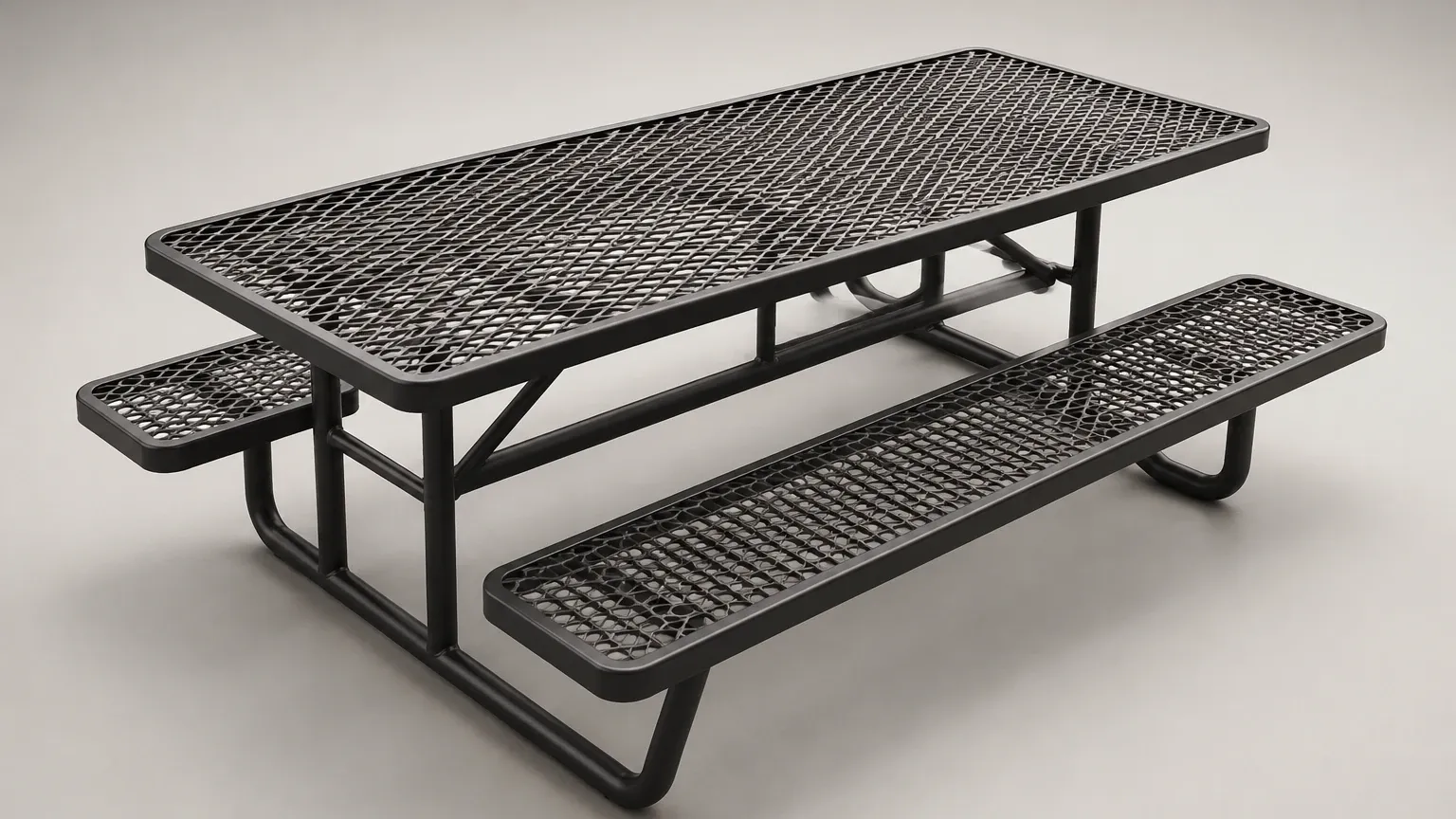
8 Rectangular Picnic Table Expanded Metal
In the realm of commercial outdoor furniture and industrial site amenities, material selection is the primary determinant of a product's lifecycle and maintenance requirements. For high-traffic environments such as corporate campuses, public parks, and industrial break areas, the 8 rectangular picnic table expanded metal configuration has emerged as a standard specification. This choice is not merely aesthetic; it is driven by rigorous engineering requirements for structural integrity, environmental resistance, and user safety.
At the core of these installations is Perforated & Expanded Metal, a material class that offers a unique combination of high strength-to-weight ratios and efficient drainage. When designing or procuring an 8-foot rectangular table, engineers must consider the mechanical properties of the mesh, the gauge of the steel, and the specific type of expansion process used to ensure the final product can withstand years of heavy use without structural failure.
The Engineering Principles of Expanded Metal
Expanded metal is manufactured through a simultaneous slitting and stretching process. Unlike perforated metal, which involves punching holes and creating scrap material, expanded metal is produced from a single solid sheet of metal that is expanded into a diamond-shaped pattern. This process is inherently resource-efficient, as it creates no waste and increases the structural rigidity of the original sheet.
For an 8-foot span, the structural demands are significant. An 8 rectangular picnic table expanded metal top must resist deflection (sagging) under concentrated loads. The "strands" and "bonds" created during the expansion process act as a series of interconnected trusses. This geometric configuration distributes weight more effectively than a solid sheet of the same thickness.
In industrial applications, expanded metal is categorized into two primary forms: raised (or standard) and flattened. For picnic tables and seating surfaces, flattened expanded metal is almost universally preferred. After the initial expansion, the sheet is passed through a cold-rolling reducing mill, which flattens the strands and bonds to create a smooth, level surface. This is critical for preventing snagging and ensuring a comfortable surface for users while maintaining the drainage benefits of the open mesh.
Structural Requirements for 8-Foot Rectangular Tables
An 8-foot (96-inch) rectangular table presents unique engineering challenges compared to smaller 6-foot variants. The longer span increases the bending moment at the center of the table, necessitating a higher-strength mesh or a more robust under-frame support system.
When specifying 8 rectangular picnic table expanded metal, several technical factors must be evaluated:
1. Gauge Thickness: Typically, heavy-duty commercial tables utilize 9-gauge or 13-gauge expanded metal. A lower gauge number indicates a thicker material. For an 8-foot span, 9-gauge is often specified to provide the necessary stiffness to prevent "bouncing" or permanent deformation under heavy loads.
2. Opening Size: The dimensions of the diamond-shaped openings (measured as Short Way of Design, SWD, and Long Way of Design, LWD) affect both the aesthetics and the functionality. A common specification is 3/4" #9 flattened expanded metal, which provides a balance between a high percentage of open area and a surface that is solid enough to support small objects like beverage containers.
3. Open Area Percentage: This refers to the ratio of the openings to the total area of the sheet. High open area percentages (typically between 50% and 70% for tables) are essential for rapid liquid drainage and wind load reduction. In outdoor environments, high-velocity winds can lift or move solid-top tables; expanded metal allows wind to pass through, increasing the stability of the installation.
Material Selection: Stainless Steel vs. Carbon Steel
While carbon steel is the most common substrate for expanded metal tables due to its cost-effectiveness, stainless steel is frequently specified for specialized industrial environments, such as chemical processing plants, coastal areas, or food-grade facilities.
Carbon Steel with Protective Coatings
For most commercial applications, carbon steel expanded metal is used in conjunction with a high-performance coating. The most common are thermoplastic (polyethylene) coatings and PVC coatings. These coatings provide a thick, cushioned barrier that protects the metal from oxidation while offering a comfortable temperature for users. In B2B procurement, it is vital to confirm that the coating is UV-stabilized to prevent cracking and peeling, which can lead to rapid corrosion of the underlying steel.
Stainless Steel Solutions
In environments where hygiene or extreme corrosion resistance is paramount, stainless steel (Grade 304 or 316) is the superior choice. Stainless steel expanded metal does not require a plastic coating, as its chromium-rich oxide layer provides inherent protection. This is particularly relevant for 8-foot tables used in pharmaceutical or food-processing break areas where chemical sanitizers are frequently used. The durability of stainless steel ensures that the 8 rectangular picnic table expanded metal components will not rust, even if the surface is scratched or abraded.
Manufacturing and Customization Considerations
As a manufacturer specializing in precision metal components, Kaifil understands that the utility of expanded metal extends beyond standard sheets. For an 8-foot rectangular table, the expanded metal must be precision-cut and often framed with a secondary metal profile, such as angle iron or tubular steel.
Edge Treatment and Safety
One of the primary concerns for engineers when using expanded metal is the presence of sharp edges. In the manufacturing of table tops and benches, the expanded metal must be "deburred" or encased in a protective perimeter frame. This frame not only protects the user but also adds significant structural rigidity to the 8-foot span. High-quality OEM manufacturers utilize robotic welding to ensure consistent bonds between the mesh and the frame, preventing the rattling or vibration that can occur with inferior manual welds.
Custom Mesh Patterns
While the standard diamond pattern is the most common, Perforated & Expanded Metal can be customized to include hexagonal or decorative patterns. For large-scale projects, custom patterns can be engineered to meet specific aesthetic requirements without compromising the load-bearing capacity of the 8-foot rectangular structure.
Maintenance and Longevity in Industrial Environments
The total cost of ownership (TCO) for an 8 rectangular picnic table expanded metal installation is significantly lower than that of wood or solid plastic alternatives. The primary maintenance advantage is the self-cleaning nature of the mesh. Rainwater, dust, and debris pass through the openings, preventing the accumulation of stagnant water which can lead to biological growth or surface degradation.
For facility managers, the maintenance protocol for expanded metal tables generally involves:
* Periodic Inspection: Checking the integrity of the protective coating (if applicable) and ensuring that the structural welds remain intact.
* Cleaning: High-pressure washing is usually sufficient to remove surface contaminants. For stainless steel variants, mild detergents can be used to maintain the luster of the metal.
* Repair: If a thermoplastic coating is breached, it can often be repaired with a localized heat-application patch kit, preventing the spread of rust.
Procurement Guidance for Engineers and Purchasing Teams
When sourcing components for an 8 rectangular picnic table expanded metal project, it is essential to move beyond generic descriptions and provide detailed technical specifications to the manufacturer. Purchasing teams should confirm the following before finalizing an order:
* Material Certification: Ensure the steel meets ASTM standards (e.g., ASTM A1011 for carbon steel or ASTM A240 for stainless steel).
* Load Rating: Request data on the maximum distributed load the 8-foot table top can support before reaching its yield point.
* Coating Thickness: For coated tables, specify a minimum thickness (typically 25-30 mils) to ensure long-term durability.
* Tolerance Levels: Define acceptable tolerances for sheet flatness and diamond alignment, especially if the expanded metal is being integrated into a larger assembly.
By focusing on these technical parameters, engineers can ensure that the selected filtration and structural components meet the rigorous demands of industrial and commercial use. Whether the application is a high-traffic public space or a controlled industrial environment, the use of high-quality Perforated & Expanded Metal ensures a balance of performance, safety, and longevity.
Conclusion
The 8 rectangular picnic table expanded metal is a staple of industrial design for good reason. Its ability to provide a large, stable, and low-maintenance surface over a significant span makes it the ideal choice for demanding environments. By understanding the nuances of gauge thickness, expansion types, and material grades, procurement professionals and engineers can make informed decisions that optimize both performance and cost-efficiency. As a professional manufacturer, Kaifil remains committed to providing the technical expertise and high-quality metal components necessary to support these critical infrastructure needs.
