


Decorative Perforated Metal Screen
In industrial and architectural engineering, the selection of materials often requires a balance between aesthetic appeal and rigorous functional performance. A decorative perforated metal screen is not merely a visual element; it is a precision-engineered component designed to manage light, airflow, sound, and structural integrity. As a core subset of Perforated & Expanded Metal solutions, these screens are utilized across diverse sectors, including chemical processing, food and beverage production, and high-end architectural facades.
For engineers and procurement professionals, understanding the technical nuances of these screens is essential for ensuring long-term durability and cost-effectiveness. This guide examines the engineering considerations, material selection criteria, and functional applications of decorative perforated metal screens in demanding environments.
Technical Fundamentals of Perforated Metal Screens
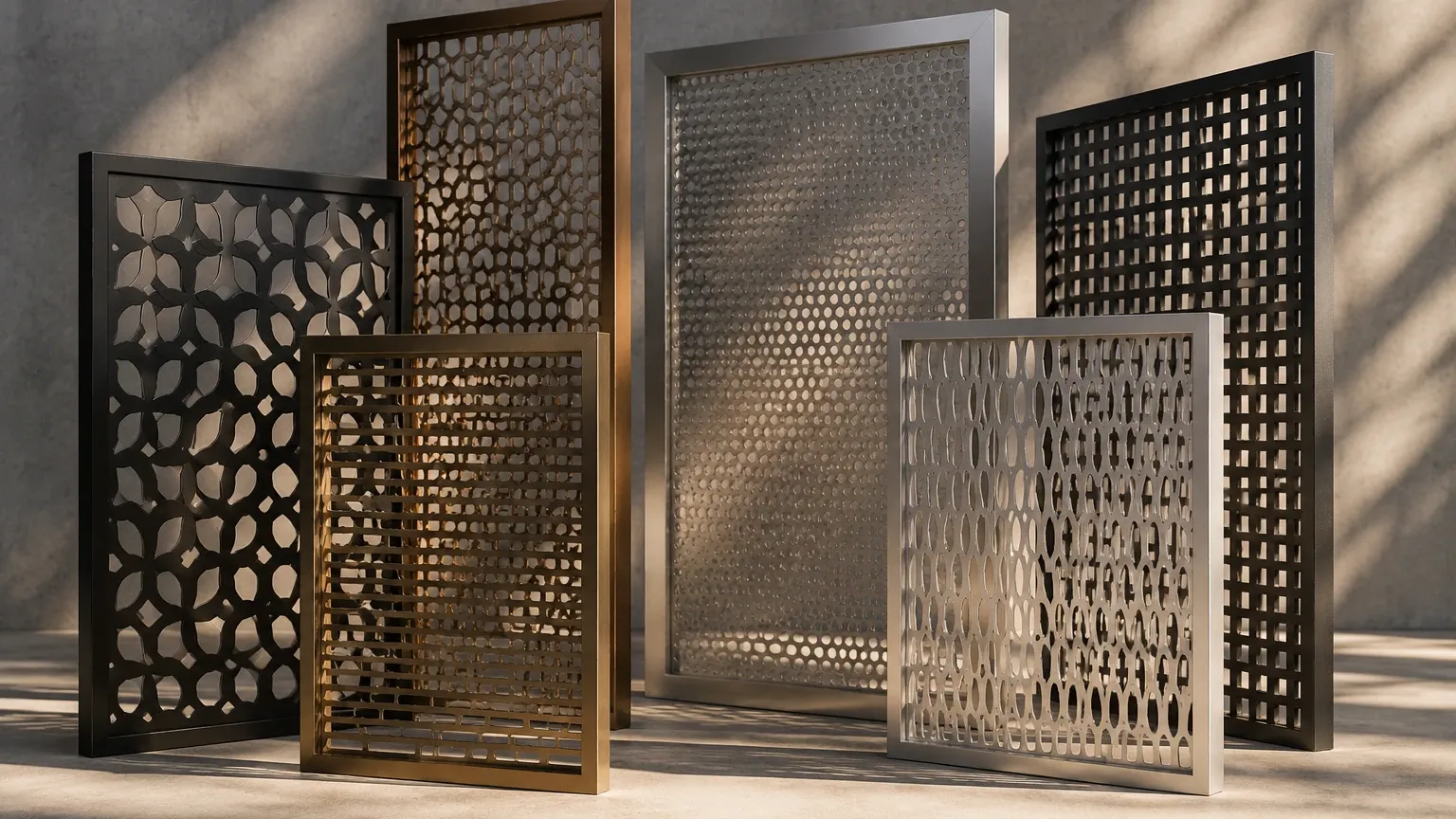
At its core, a decorative perforated metal screen is a sheet of metal—typically stainless steel, aluminum, or carbon steel—that has been mechanically punched or laser-cut to create a specific pattern of holes. Unlike standard industrial gratings, the "decorative" aspect refers to the use of complex geometric patterns, varying hole sizes, and customized spacing that provides a unique visual identity without compromising the mechanical properties of the base material.
Manufacturing these components requires advanced CNC (Computer Numerical Control) punching technology or high-precision laser cutting. For industrial applications, the consistency of the pattern is vital. Variations in the "pitch" (the distance between the centers of adjacent holes) or the "bridge" (the amount of material remaining between holes) can significantly impact the screen's structural stability and its performance in filtration or ventilation roles.
When evaluating Perforated & Expanded Metal options, engineers must prioritize the open area percentage. This calculation determines the ratio of the holes to the total area of the sheet, which directly influences parameters such as pressure drop in HVAC systems, light transmission in architectural cladding, and the efficiency of protective guards.
Material Selection for Industrial Longevity
The environment in which a decorative perforated metal screen will be installed dictates the choice of material. While aesthetic patterns are important, the chemical and physical stresses of the application are the primary drivers of material selection.
Stainless Steel (304 and 316 Grades)
Stainless steel is the preferred material for most high-performance applications. Grade 304 offers excellent corrosion resistance and is suitable for most indoor and moderate outdoor environments. However, in marine environments or chemical processing plants where exposure to chlorides and acids is common, Grade 316 is the industry standard. Its molybdenum content provides superior resistance to pitting and crevice corrosion, ensuring the decorative screen maintains its integrity and appearance over decades.
Aluminum Alloys
Aluminum is favored for weight-sensitive applications. It is naturally corrosion-resistant due to its oxide layer and is highly malleable, allowing for more intricate decorative patterns. Aluminum screens are frequently used in architectural sunshades and ceiling panels where reducing the dead load on the building structure is a priority.
Carbon Steel and Galvanized Options
For interior industrial applications where cost is a primary constraint and moisture exposure is minimal, carbon steel may be used. To prevent oxidation, these screens are often hot-dip galvanized or powder-coated. While effective, these coatings must be maintained to prevent the onset of rust, especially if the decorative pattern includes sharp edges where coatings might thin out.
Engineering the Open Area and Hole Patterns
The functionality of a decorative perforated metal screen is defined by its hole pattern. While traditional industrial screens use round or square holes for maximum efficiency, decorative variants incorporate hexagonal, slotted, or custom-designed shapes.
1. Round Holes: These are the most common and cost-effective. They offer the highest structural strength and are easiest to manufacture with high precision. They are ideal for applications requiring a balance between ventilation and shielding.
2. Square and Slotted Holes: These provide a high open area percentage, which is beneficial for maximum airflow. However, they can introduce stress concentrations at the corners, which engineers must account for in load-bearing applications.
3. Hexagonal (Honeycomb) Patterns: These offer a very high open area (up to 80%) while maintaining excellent strength-to-weight ratios. They are frequently used in high-end electronic enclosures and architectural ventilation.
4. Custom Geometric Patterns: These are often used for branding or specific architectural themes. When designing custom patterns, it is critical to ensure that the "minimum bridge" between holes is sufficient to prevent the metal from warping during the punching process or failing under mechanical stress.
Functional Roles: Beyond Aesthetics
While the term "decorative" suggests a focus on appearance, these screens perform critical industrial functions. In many B2B contexts, the decorative element is a secondary benefit to a primary technical requirement.
Acoustic Damping and Sound Control
In industrial facilities and commercial buildings, perforated screens serve as the facing for acoustic insulation materials. The holes allow sound waves to pass through the metal and be absorbed by the underlying media, reducing noise pollution in engine rooms, HVAC systems, and public spaces.
Ventilation and Thermal Management
Decorative screens are essential for equipment enclosures where heat dissipation is required. By precisely calculating the open area, engineers can ensure sufficient airflow to cool sensitive electronic or mechanical components while providing a "decorative" barrier that prevents unauthorized access or the ingress of large debris.
Safety Guarding and Security
In manufacturing environments, screens act as protective barriers for moving machinery. A decorative pattern can make these safety features less industrial in appearance, which is particularly useful in facilities that host client tours or public-facing operations, all while meeting OSHA or relevant safety standards for finger-guarding and impact resistance.
Key Evaluation Criteria for Procurement
Before finalizing a specification for a decorative perforated metal screen, purchasing teams and engineers should confirm several technical details to avoid common pitfalls in the procurement process.
* Flatness and Tolerances: Perforating a metal sheet introduces internal stresses that can cause the material to curl or buckle. It is essential to specify the required flatness and ensure the manufacturer uses leveling equipment after the punching process.
* Edge Margins: Most screens require "blank margins"—areas around the perimeter of the sheet without holes—to facilitate mounting and welding. Clearly defining these margins is necessary to ensure the screen fits the intended frame or support structure.
* Burr Removal and Surface Finish: The punching process can leave sharp burrs on the "exit" side of the hole. For decorative screens that will be touched or are located in high-traffic areas, specify deburring and surface finishing (such as pickling, passivating, or electropolishing for stainless steel) to ensure safety and enhance corrosion resistance.
* Total Cost of Ownership (TCO): While aluminum or carbon steel may have a lower initial purchase price, the long-term maintenance costs and potential for replacement due to corrosion often make stainless steel a more cost-effective choice over the lifecycle of the project.
Common Risks and Mitigation Strategies
One of the primary risks in specifying Perforated & Expanded Metal for decorative use is the "Moiré effect," an optical illusion that occurs when multiple layers of screens are viewed together, creating distracting wavy patterns. Engineers can mitigate this by carefully selecting hole sizes and spacing if multiple screens are to be overlapped.
Another risk is material fatigue. In environments with high vibration or wind loads (such as exterior cladding), the thin bridges between decorative holes can develop stress cracks. Utilizing finite element analysis (FEA) or consulting with a specialized manufacturer like Kaifil can help determine the appropriate thickness and pattern density to withstand these dynamic loads.
Finally, ensure that the supplier provides material mill certificates. In B2B applications, verifying the chemical composition of the alloy (e.g., ensuring 316 stainless steel actually contains the required molybdenum) is the only way to guarantee the screen will perform as expected in corrosive environments.
Conclusion: Selecting the Right Partner
Integrating a decorative perforated metal screen into an industrial or architectural project requires more than just an eye for design; it demands a deep understanding of material science and mechanical engineering. By focusing on the relationship between hole geometry, open area, and material durability, professionals can select solutions that enhance both the form and function of their projects.
Kaifil specializes in providing customized Perforated & Expanded Metal solutions that meet the exact technical requirements of global industrial clients. Whether you are designing a high-performance filtration system that requires a specific aesthetic or an architectural facade that must withstand harsh environmental conditions, our engineering team provides the technical support and precision manufacturing necessary to achieve reliable results. Before taking the next step in your project, confirm your structural requirements and environmental exposure levels to ensure the selected screen provides the optimal balance of performance and longevity.
