


Decorative Perforated Metal Sheet Canada
In the industrial and architectural landscapes of North America, the demand for precision-engineered metal components has evolved beyond simple utility. For engineers and procurement specialists sourcing materials, understanding the technical nuances of a decorative perforated metal sheet in Canada requires a balance between aesthetic requirements and rigorous mechanical performance. Whether utilized as a protective screen in a chemical processing plant or a high-finish architectural facade, perforated and expanded metal components must meet strict tolerances to ensure long-term durability.
As a professional manufacturer specializing in custom stainless steel filtration and metal components, Kaifil provides high-performance solutions that bridge the gap between industrial functionality and specialized design. This guide explores the engineering considerations, material selections, and application standards essential for selecting the right Perforated & Expanded Metal for Canadian industrial environments.
Understanding Perforated and Expanded Metal in Industrial Contexts
While often grouped together, perforated and expanded metals are manufactured through distinct processes that yield different mechanical properties. Choosing between them depends heavily on the intended application, required structural integrity, and the specific filtration or ventilation needs of the project.
Perforated Metal
Perforated metal is produced by punching a series of holes into a solid metal sheet. This process allows for extreme precision in hole size, shape, and spacing. In industrial filtration, perforated sheets often serve as the structural core or outer protection for filter cartridges. The ability to maintain a flat, consistent surface makes it ideal for applications where the sheet must be rolled, welded, or integrated into complex assemblies.
Expanded Metal
Expanded metal is created by simultaneously slitting and stretching a metal sheet, forming a diamond-shaped mesh. This process involves no waste, as the material is stretched rather than punched out. Expanded metal offers a high strength-to-weight ratio and is frequently used for walkways, safety guards, and coarse filtration stages. However, for high-precision decorative perforated metal sheet Canada projects, the punched perforation method is typically preferred due to the wider variety of pattern options and tighter dimensional tolerances.
Material Selection for the Canadian Environment
The Canadian climate and industrial landscape present unique challenges, including extreme temperature fluctuations and exposure to corrosive de-icing salts or marine environments. Selecting the correct alloy is the most critical decision in the procurement process to prevent premature failure and minimize the total cost of ownership.
Stainless Steel (304 and 316 Grades)
Stainless steel is the industry standard for high-performance perforated components.
- Grade 304: Offers excellent corrosion resistance and formability, making it suitable for most indoor industrial applications and standard outdoor environments.
- Grade 316: Contains molybdenum, which provides superior resistance to chlorides. This is the preferred choice for coastal regions in Canada or for use in chemical processing and food production facilities where aggressive cleaning agents are used.
Aluminum and Specialized Alloys
For weight-sensitive applications, such as architectural facades or HVAC grilles, aluminum is a frequent choice due to its natural oxide layer that resists corrosion. In specialized chemical or high-heat environments, engineers may specify nickel alloys or galvanized steel, depending on the specific pH levels and thermal stresses involved.
Technical Specifications: Hole Patterns and Open Area
When specifying a decorative perforated metal sheet in Canada, the "open area" is the primary metric used to determine both the aesthetic transparency and the functional performance (such as airflow or liquid throughput).
Calculating Open Area
The open area is expressed as a percentage. For a standard round hole pattern with a 60-degree staggered pitch, the formula used by engineers is:
Open Area % = (D² × 90.69) / P²
*(Where D = Hole Diameter and P = Center-to-Center Pitch)*
Pattern Options
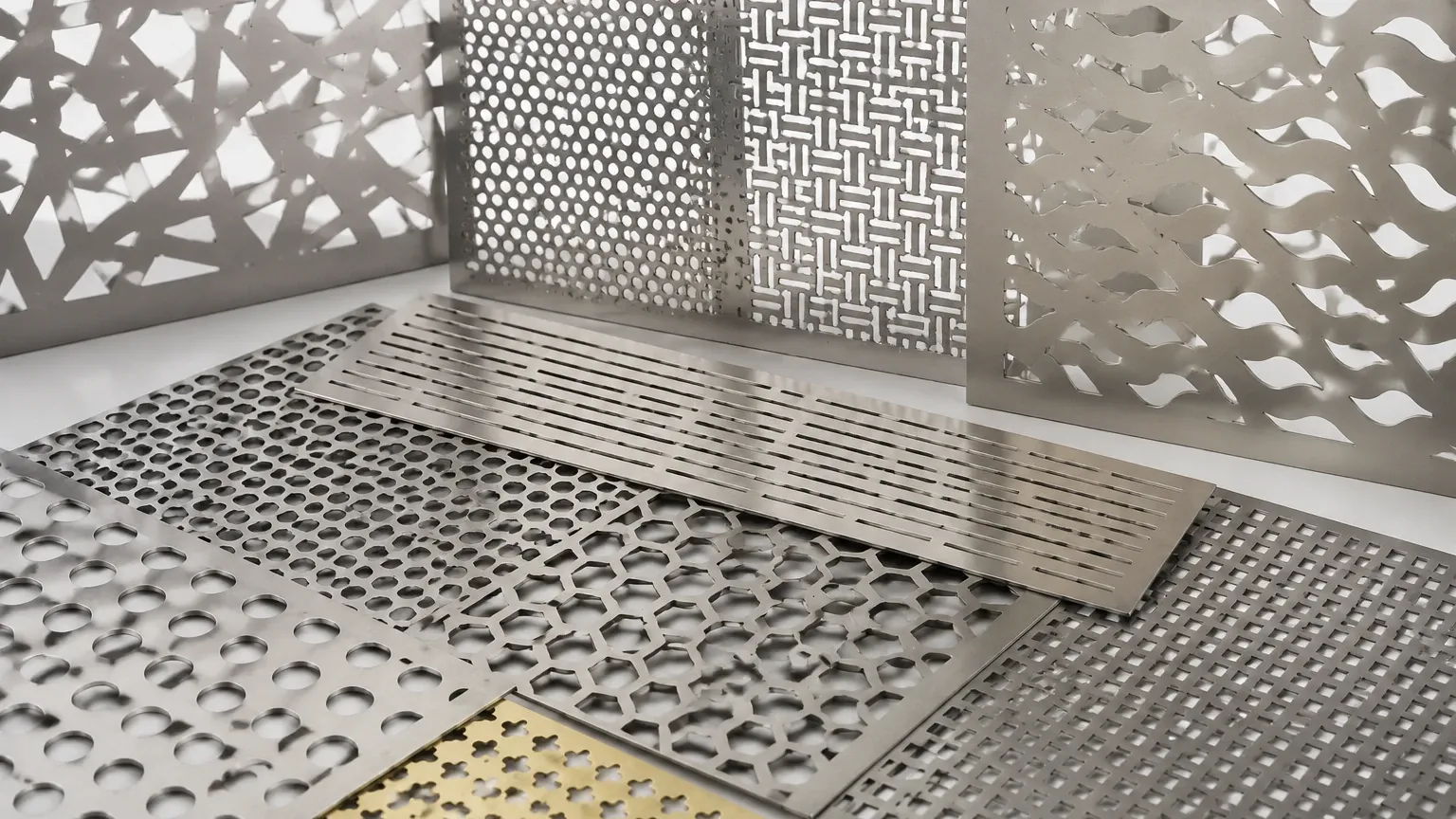
1. Round Holes: The most common and versatile pattern, offering the best structural strength and ease of cleaning.
2. Square Holes: Provide a higher open area for maximum airflow but may have lower structural rigidity compared to round holes.
3. Slotted Holes: Often used in screening and sorting applications where the orientation of the material being filtered is a factor.
4. Decorative/Custom Patterns: These involve complex geometries that can be tailored to specific architectural requirements while still maintaining the necessary structural support for industrial use.
Applications of Decorative Perforated Metal in Canada
The versatility of perforated metal allows it to serve multiple sectors, ranging from heavy industry to high-end commercial architecture.
Industrial Filtration and Screening
In the chemical and pharmaceutical sectors, perforated metal acts as a support medium for finer wire mesh filters. It provides the mechanical strength required to withstand high-pressure differentials in hydraulic systems and water treatment plants. Kaifil’s expertise in custom filtration ensures that these components are manufactured with the precision necessary for OEM integration.
Architectural Facades and Sunshades
In urban centers like Toronto, Vancouver, and Montreal, decorative perforated metal sheets are increasingly used for building envelopes. These panels provide solar shading, reducing energy costs for HVAC systems while allowing natural light to penetrate the building. The choice of pattern can create unique visual effects while meeting local building codes for wind load and safety.
Food and Beverage Processing
Canadian food safety standards require materials that are non-reactive and easy to sanitize. Perforated stainless steel is used in sorting trays, drying racks, and pasteurization equipment. The smooth edges and precise hole diameters prevent material entrapment, ensuring compliance with hygiene regulations.
Engineering Considerations for Custom Fabrication
Ordering a decorative perforated metal sheet in Canada involves more than just selecting a pattern. Engineers must confirm several technical details to ensure the final product is fit for purpose.
Margins and Blank Areas
Standard perforated sheets often have "minimum margins," meaning the perforation goes close to the edge. However, for components that require welding or mounting into frames, specific blank margins must be defined. Miscalculating margins can lead to alignment issues during installation.
Flatness and Stress Relieving
The punching process introduces internal stresses into the metal sheet, which can cause bowing or curling. For high-precision applications, the material must undergo a leveling process to ensure it meets flatness specifications. This is particularly important for large architectural panels or filter components that must fit into tight-tolerance housings.
Surface Finishes
Depending on the application, the metal may require additional processing:
- Electropolishing: Removes surface impurities and provides a high-shine finish, essential for pharmaceutical and food-grade applications.
- Powder Coating: Adds a layer of color and additional corrosion protection, often used in decorative architectural projects.
- Pickling and Passivation: Restores the corrosion-resistant chromium oxide layer on stainless steel after welding or heavy machining.
Procurement and Quality Assurance
For purchasing teams, the total cost of ownership is often more important than the initial purchase price. Sourcing from a manufacturer like Kaifil, which understands the rigors of industrial filtration and precision metalwork, ensures that the components will not require frequent replacement due to corrosion or structural failure.
Confirming Specifications
Before finalizing an order, the following data points should be confirmed with the engineering team:
- Material Grade: (e.g., SS316L for maximum corrosion resistance).
- Sheet Thickness: Gauges must be sufficient to handle the expected mechanical load.
- Hole Size and Pitch: To achieve the required filtration accuracy or open area percentage.
- Dimensional Tolerances: Crucial for OEM parts that must interface with other equipment.
Evaluating Suppliers
When evaluating providers for Perforated & Expanded Metal, it is essential to look for manufacturers with advanced CNC capabilities and a deep understanding of material science. A supplier that can provide custom designs—from material selection to final production—offers significant value in reducing lead times and ensuring technical compliance.
Conclusion: Selecting the Right Solution
Whether the goal is to enhance the aesthetic appeal of a commercial structure or to provide a robust support structure for a high-pressure filter, the selection of decorative perforated metal sheet Canada products requires technical diligence. By focusing on material integrity, precise open area calculations, and the specific environmental demands of the Canadian landscape, engineers can ensure their projects are both functional and durable.
Kaifil remains committed to delivering high-quality, customized metal filtration and perforated solutions. By combining manufacturing expertise with a focus on durability and performance, we help global customers achieve efficient and cost-effective results in the most demanding industrial environments.
