


Diamond Expanded Metal Mesh
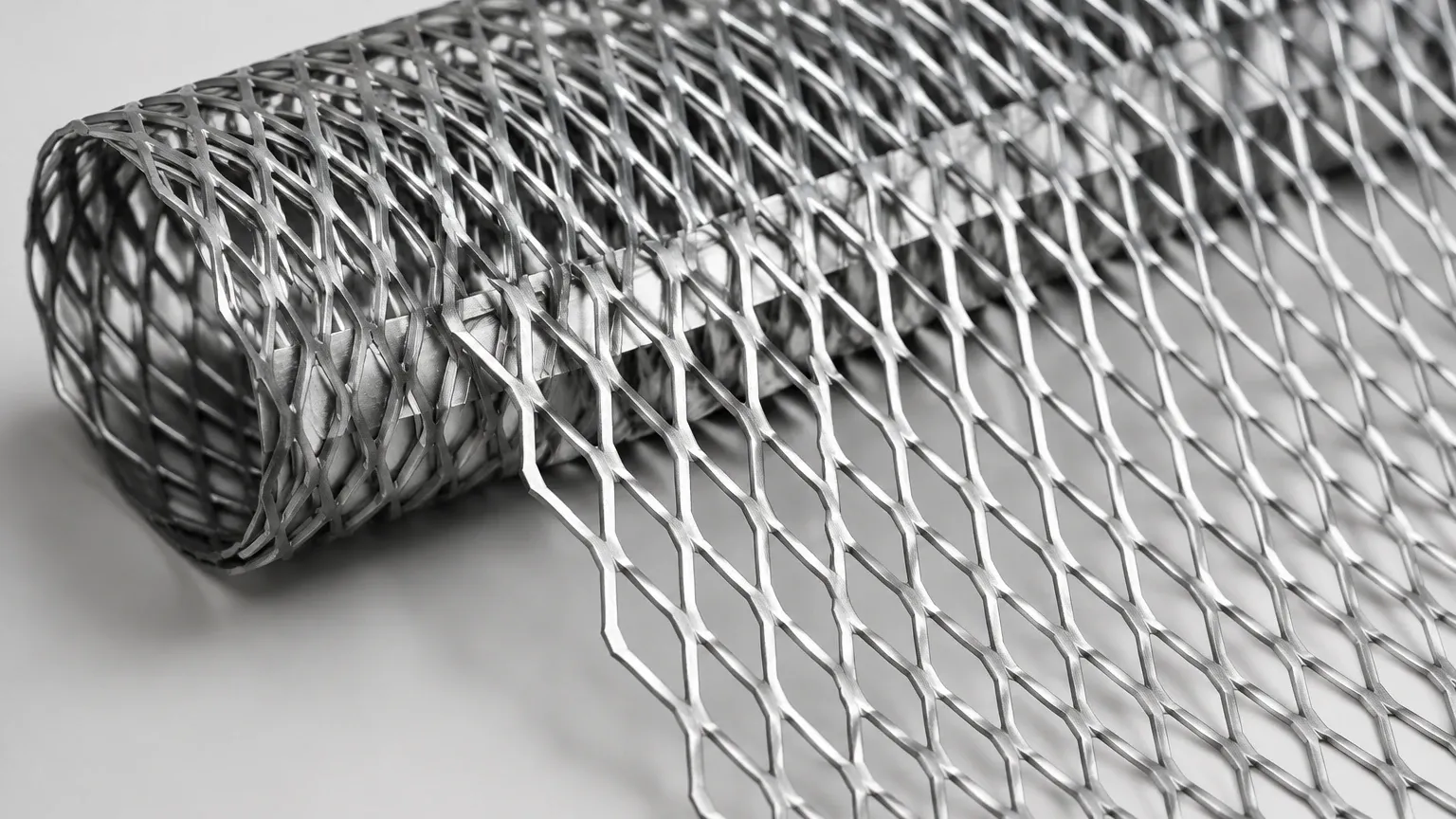
In the landscape of industrial filtration and structural support, diamond expanded metal mesh stands as a critical component characterized by its unique manufacturing process and high strength-to-weight ratio. Unlike woven wire or perforated sheets, expanded metal is produced through a simultaneous slitting and stretching process that transforms a solid metal sheet into a continuous, non-raveling mesh. For engineers and procurement specialists in the chemical, pharmaceutical, and water treatment sectors, understanding the technical nuances of this material is essential for optimizing filtration efficiency and ensuring the structural integrity of filter assemblies.
As a specialized manufacturer of custom stainless steel filtration solutions, Kaifil utilizes advanced manufacturing capabilities to produce precision-engineered Perforated & Expanded Metal components. This guide provides a technical deep dive into the engineering considerations, material selection, and application-specific benefits of diamond expanded metal mesh in demanding industrial environments.
The Engineering Mechanics of Diamond Expanded Metal
The production of diamond expanded metal mesh is a cold-forming process. A metal sheet or coil is fed through a machine equipped with a reciprocating knife that slits the metal while simultaneously stretching it. Because the metal is expanded rather than punched, there is zero material waste, making it a highly cost-effective alternative to perforated metal in many applications.
The resulting diamond-shaped openings are integral to the sheet. There are no joins, welds, or weaves. This monolithic structure ensures that the mesh cannot unravel under stress, providing superior structural stability. In filtration applications, this integrity is paramount, as any structural failure could lead to media migration or downstream contamination.
Standard vs. Flattened Expanded Metal
There are two primary forms of diamond expanded metal used in industrial settings:
1. Standard (Raised) Expanded Metal: This is the product as it comes off the expansion press. The strands and bonds are set at a uniform angle to the plane of the sheet. This creates a three-dimensional surface that offers high rigidity and excellent grip, though it may require more space within a filter housing.
2. Flattened Expanded Metal: Standard expanded metal is passed through a cold-rolling reducing mill. This process flattens the strands and bonds into a single plane, reducing the overall thickness and creating a smooth, level surface. Flattened mesh is often preferred for pleated filter supports where a thin profile and smooth contact surface are required to prevent damage to delicate filter media.
Technical Specifications and Terminology
When specifying diamond expanded metal mesh for a project, engineers must use standardized terminology to ensure precision. The geometry of the diamond opening dictates both the mechanical strength and the flow characteristics of the component.
* Long Way of Design (LWD): The distance from a point on one bond to the corresponding point on the next bond measured across the long diamond diagonal.
* Short Way of Design (SWD): The distance from a point on one bond to the corresponding point on the next bond measured across the short diamond diagonal.
* Long Way of Opening (LWO): The actual length of the opening from the inside of one bond to the inside of the opposite bond.
* Short Way of Opening (SWO): The actual width of the opening from the inside of one bond to the inside of the opposite bond.
* Strand Width: The amount of metal fed between the upper and lower dies to produce one strand.
* Strand Thickness: The thickness of the original base metal sheet.
For filtration applications, the SWD and LWD are critical for determining the open area percentage. A higher open area results in lower pressure drops across the filter, while a smaller opening size provides better support for fine wire mesh or synthetic membranes.
Material Selection for Corrosive and High-Temperature Environments
The performance of diamond expanded metal mesh is heavily dependent on the alloy selected. In the B2B industrial sector, where filters are often exposed to aggressive chemicals or extreme temperatures, stainless steel is the industry standard.
Stainless Steel 304/304L
Grade 304 is the most common stainless steel used for expanded mesh. It offers excellent corrosion resistance in a wide range of atmospheric environments and many corrosive media. It is suitable for food and beverage applications where hygiene and ease of cleaning are required.
Stainless Steel 316/316L
For more demanding environments, such as chemical processing or marine applications, Grade 316 is preferred. The addition of molybdenum provides superior resistance to chlorides and pitting corrosion. The "L" (low carbon) versions are utilized when welding is required, as they prevent carbide precipitation that can lead to intergranular corrosion.
Specialized Alloys
In specific hydraulic or high-temperature aerospace applications, other materials such as aluminum, titanium, or nickel alloys may be expanded. However, for the majority of industrial filtration needs, the durability and chemical compatibility of 300-series stainless steel provide the best total cost of ownership.
Perforated & Expanded Metal: A Comparative Analysis
Engineers often weigh the pros and cons of using perforated metal versus expanded metal for filter cages and support structures. While both fall under the category of Perforated & Expanded Metal, their performance profiles differ significantly.
| Feature | Diamond Expanded Metal | Perforated Metal |
| :— | :— | :— |
| Material Waste | Zero waste (stretched) | Significant waste (slugs punched out) |
| Strength-to-Weight | Extremely high due to truss-like bonds | Moderate |
| Structural Integrity | Monolithic; won't unravel | Dependent on ligament width |
| Flow Dynamics | 3D strands can promote turbulence | Straight-through flow |
| Cost | Generally lower for large volumes | Higher due to material loss |
| Customization | Limited by expansion ratios | Highly customizable hole patterns |
In many filtration systems, diamond expanded metal mesh is chosen as the outer protective cage or the inner core support because it provides the necessary rigidity to withstand high differential pressures without the weight or cost of thick perforated plate.
Applications in Industrial Filtration Systems
Diamond expanded metal mesh serves several distinct roles within industrial filtration assemblies. Kaifil specializes in integrating these components into complex filter designs to meet specific performance targets.
1. Pleat Support and Spacing
In pleated filter cartridges, expanded metal is often used as a support layer on both the upstream and downstream sides of the primary filter media (such as fine wire mesh or fiberglass). The diamond pattern ensures that the pleats remain open and evenly spaced even under high flow rates, preventing "pleat bunching" which can drastically reduce the effective filtration area.
2. Coarse Filtration and Pre-filtration
In water treatment and hydraulic systems, a heavy-duty diamond expanded mesh can serve as a primary coarse filter. It captures large debris before it can reach and damage more sensitive downstream components. Its robust construction allows it to be cleaned and reused multiple times, reducing replacement costs.
3. Structural Cages and Cores
High-pressure filtration environments, such as those found in oil and gas or hydraulic power units, require filter elements that can resist collapsing or bursting. Expanded metal cylinders provide the structural backbone for these elements. The interconnected bonds of the diamond mesh act like a series of trusses, distributing mechanical loads evenly across the surface.
Engineering Considerations for Customization
When partnering with an OEM manufacturer like Kaifil, engineers should be prepared to confirm several technical factors to ensure the diamond expanded metal mesh meets application requirements:
* Direction of Expansion: The orientation of the diamonds (LWD parallel or perpendicular to the length of the sheet) affects how the material bends and rolls. This is critical when forming cylindrical filter cores.
* Tolerance Requirements: Standard industrial tolerances for expanded metal may not be sufficient for precision filtration components. Specifying tighter tolerances for LWD/SWD and overall thickness is necessary for automated assembly processes.
* Surface Finish: For pharmaceutical and food-grade applications, the mesh may require electropolishing or passivating to remove surface contaminants and improve corrosion resistance.
* Edge Configuration: Expanded metal naturally has "random shears" (sharp points) at the edges. For safe handling and to prevent damage to other filter components, these edges can be bonded, U-edged, or framed.
Evaluating Total Cost of Ownership (TCO)
While the initial purchase price is a factor, the total cost of ownership for diamond expanded metal mesh is determined by its durability and impact on system efficiency. A precision-manufactured stainless steel mesh from Kaifil offers several long-term financial benefits:
1. Reduced Replacement Frequency: The high mechanical strength of the diamond bond prevents deformation under pressure surges, extending the service life of the filter element.
2. Energy Efficiency: By optimizing the open area and strand angle, engineers can minimize the pressure drop across the filter, reducing the energy required by pumps and compressors.
3. Simplified Maintenance: Stainless steel expanded mesh is amenable to various cleaning methods, including backwashing, ultrasonic cleaning, and chemical sterilization, allowing for multiple reuse cycles in many industrial processes.
Conclusion
Diamond expanded metal mesh is more than just a structural material; it is a precision-engineered component that plays a vital role in modern industrial filtration. Its unique combination of strength, cost-effectiveness, and versatility makes it an ideal choice for engineers facing the challenges of high-pressure, corrosive, or high-temperature environments.
By understanding the technical specifications—from LWD/SWD dimensions to material grades—purchasing teams can make informed decisions that enhance the reliability of their filtration systems. Kaifil remains committed to providing the technical expertise and manufacturing precision required to deliver custom Perforated & Expanded Metal solutions that meet the rigorous standards of the global industrial market. Whether you are designing a new hydraulic system or optimizing a chemical processing line, selecting the right diamond expanded metal mesh is a fundamental step toward achieving efficient and durable filtration performance.
