


Different Types of Expanded Metal
Expanded metal is a versatile industrial material produced by simultaneously slitting and stretching a single sheet of metal. Unlike perforated metal, which involves punching holes and removing material, the expanding process creates a diamond-shaped pattern without any waste. This manufacturing method results in a structural mesh that is exceptionally strong, lightweight, and cost-effective. For engineers and procurement teams, understanding the different types of expanded metal is essential for selecting the right component for filtration, structural support, or protective enclosures.
In industrial applications, particularly within the filtration sector, expanded metal serves as a critical support structure for filter media. Whether used as an inner core or an outer protective cage, the choice between various types of expanded metal dictates the pressure resistance, flow rate, and durability of the final assembly. At Kaifil, we specialize in providing high-precision Perforated & Expanded Metal solutions tailored to demanding industrial environments.
Understanding the Expanded Metal Manufacturing Process
The production of expanded metal begins with a solid metal plate or coil. This sheet is fed through an expanding machine equipped with a specialized knife set. As the knife descends, it slits the metal while simultaneously stretching it forward. This mechanical action creates a series of interconnected diamonds. Because the metal is expanded rather than cut out, the resulting mesh maintains the structural integrity of the original sheet while increasing its surface area.
One of the primary advantages of this process is that the "bonds"—the points where the strands intersect—are part of the original metal sheet. There are no welds or joins, which means the material is less prone to mechanical failure under stress compared to woven wire mesh. This inherent strength makes it an ideal candidate for high-pressure hydraulic filters and industrial strainers.
Standard Expanded Metal: The Foundation of Structural Rigidity
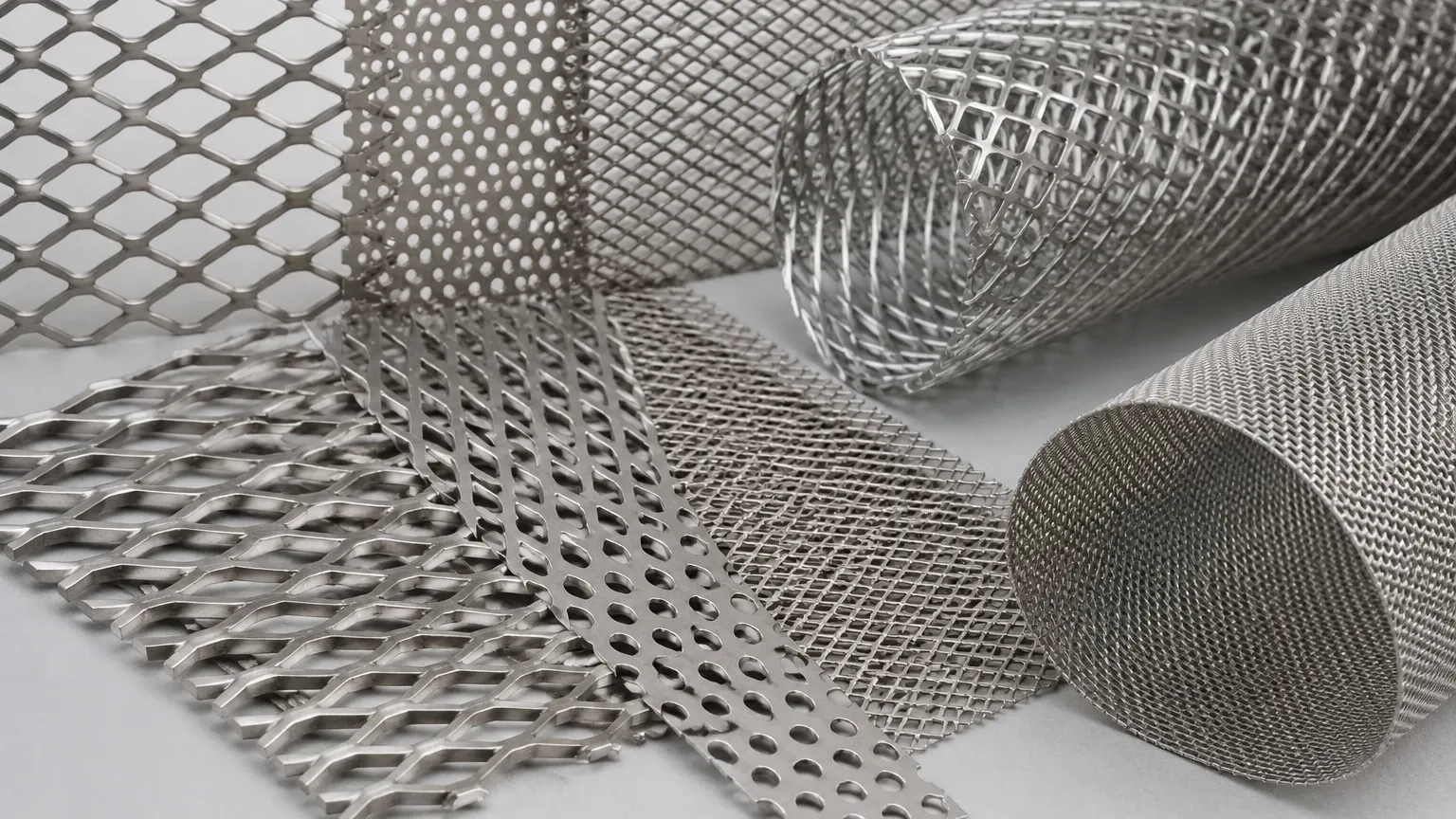
Standard expanded metal, often referred to as "raised" or "regular" expanded metal, is the direct product of the expanding machine. In this form, the strands and bonds are set at a uniform angle to the plane of the sheet. This creates a three-dimensional surface that offers several unique mechanical properties.
Characteristics of Standard Expanded Metal
1. High Strength-to-Weight Ratio: The raised strands provide significant structural rigidity, allowing the material to support heavy loads while remaining lightweight.
2. Anti-Slip Properties: The angular orientation of the strands creates a natural grip, which is why this type is frequently used in industrial walkways and stair treads.
3. Maximum Air and Fluid Flow: The open diamond pattern allows for efficient passage of air, light, and liquids, which is critical in cooling systems and coarse filtration.
In filtration systems, standard expanded metal is often utilized as an outer protective layer for large-scale filter cartridges. Its raised profile helps deflect larger debris before it can reach the finer filter media, acting as a primary pre-filter while providing the mechanical strength needed to prevent the cartridge from collapsing under external pressure.
Flattened Expanded Metal: Precision for Filtration Support
Flattened expanded metal is created by passing standard expanded metal through a cold-rolling reducing mill. This secondary process flattens the strands and bonds, resulting in a smooth, level surface that is flush with the plane of the sheet. While the flattening process slightly elongates the diamond pattern and reduces the overall thickness, it offers specific advantages for precision engineering.
Why Engineers Choose Flattened Expanded Metal
For filtration applications, flattened expanded metal is often preferred over the raised variety. When used as a support layer for delicate filter media—such as wire mesh or synthetic membranes—a smooth surface is required to prevent the media from being punctured or abraded by raised edges.
Flattened metal provides a consistent thickness across the entire sheet, making it easier to integrate into tight-tolerance assemblies. It is commonly used as the inner core of stainless steel filter cartridges, where it provides a stable platform for pleating and ensures that the filter media remains securely in place during high-velocity fluid flow.
Heavy-Duty Grating and Micro Expanded Metal
Beyond the standard and flattened varieties, the industry recognizes specialized categories designed for extreme conditions or high-precision tasks. These include different types of expanded metal such as heavy-duty grating and micro expanded metal.
Expanded Metal Grating
Grating is produced from heavier gauge plates (typically carbon steel or stainless steel) and is designed for load-bearing applications. In industrial facilities, this type of expanded metal is used for platforms and catwalks. In the context of large-scale water treatment or chemical processing plants, expanded grating may serve as a heavy-duty support base for deep-bed filtration systems, where the weight of the filter media (such as sand or activated carbon) requires a robust foundation.
Micro Expanded Metal
On the opposite end of the spectrum is micro expanded metal. This type is manufactured from very thin foils and features extremely small diamond openings. Micro expanded metal is a specialized component used in high-precision filtration, battery electrode support, and EMI/RFI shielding. Because it can be produced with very fine tolerances, it serves as an excellent alternative to fine woven wire mesh in applications where a rigid, non-fraying edge is required.
Key Technical Parameters: SWD, LWD, and Open Area
When specifying expanded metal for a project, engineers must use standardized terminology to ensure the material meets the application's performance requirements. The geometry of the diamond is defined by two primary measurements:
* SWD (Short Way of Design): The distance from the center of one bond to the center of the next bond measured across the short diamond diagonal.
* LWD (Long Way of Design): The distance from the center of one bond to the center of the next bond measured across the long diamond diagonal.
* Strand Width: The amount of metal fed into the machine between slits.
* Strand Thickness: The thickness of the original metal sheet.
Calculating Open Area
For filtration, the "open area" is perhaps the most critical metric. It determines the flow capacity and the pressure drop across the filter. A higher open area allows for greater throughput but may reduce the structural strength of the mesh. Engineering teams must balance these two factors based on the operating pressure and the viscosity of the fluid being filtered.
Material Selection for Industrial Environments
The performance of different types of expanded metal is heavily influenced by the material from which they are made. At Kaifil, we focus on high-performance alloys that can withstand corrosive environments and extreme temperatures.
1. Stainless Steel (304, 316, 316L): The gold standard for industrial filtration. 304 stainless steel offers excellent strength and basic corrosion resistance, while 316L provides superior resistance to chlorides and acids, making it essential for pharmaceutical and marine applications.
2. Aluminum: Lightweight and naturally resistant to atmospheric corrosion. Often used in HVAC filters and architectural applications where weight is a primary concern.
3. Carbon Steel: A cost-effective solution for non-corrosive environments or applications where the metal will be coated or galvanized.
4. Exotic Alloys (Monel, Inconel, Titanium): Reserved for highly specialized chemical processing or aerospace applications where standard stainless steel would fail due to extreme heat or aggressive chemical exposure.
Choosing the Right Type for Filtration and Protective Applications
Selecting the appropriate expanded metal requires a thorough evaluation of the application's operating conditions. Before finalizing a specification, engineers should confirm the following factors:
* Pressure Requirements: Will the expanded metal act as a support core? If so, the collapse strength (determined by strand thickness and bond strength) is paramount.
* Media Compatibility: If the expanded metal is in direct contact with a filter membrane, a flattened finish is usually necessary to avoid damage.
* Chemical Exposure: Does the environment require 316L stainless steel to prevent localized pitting or stress corrosion cracking?
* Cleaning Cycles: Will the filter be backwashed or ultrasonically cleaned? The mesh must be durable enough to withstand repeated cleaning without deformation.
By carefully considering the different types of expanded metal and their technical specifications, purchasing teams can optimize the total cost of ownership. While a standard carbon steel mesh might have a lower upfront cost, a precision-engineered stainless steel component from a specialized manufacturer like Kaifil ensures long-term reliability and reduced maintenance intervals in demanding industrial processes.
For more detailed technical specifications and to explore our range of custom filtration components, you can Review product options and application support to find the ideal solution for your specific engineering needs.
