


Expanded Mesh Jali
In the landscape of industrial filtration and structural components, expanded mesh jali represents a critical intersection of material efficiency and mechanical utility. Often referred to simply as expanded metal in technical specifications, the term "jali"—traditionally meaning a perforated or latticed screen—captures the intricate, diamond-shaped geometry that defines this product. For engineers and procurement specialists, selecting the right expanded mesh jali involves a deep understanding of manufacturing processes, material science, and the fluid dynamics associated with industrial filtration.
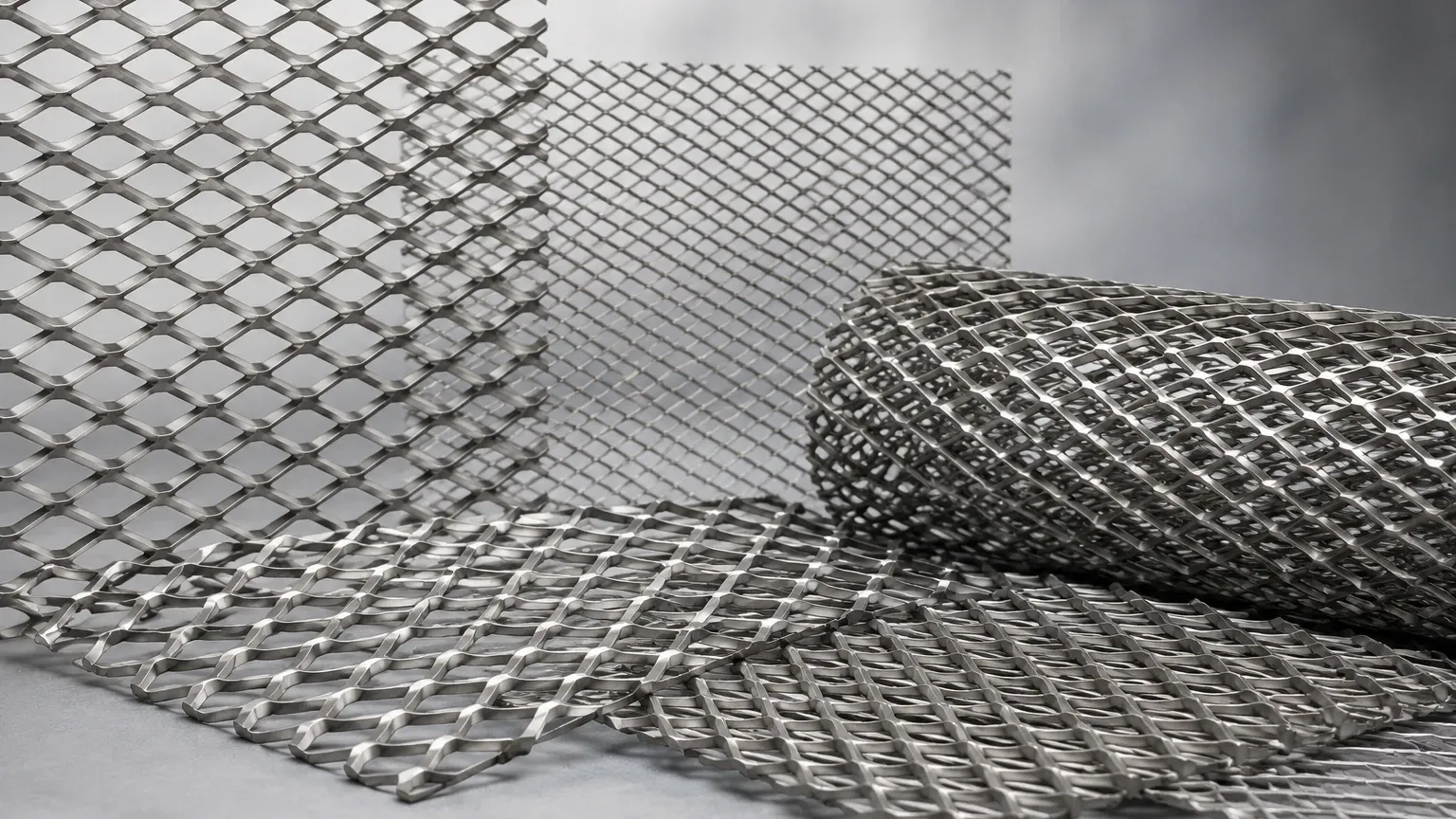
At its core, expanded mesh jali is produced by simultaneously slitting and stretching a solid metal sheet. Unlike perforated metal, which involves punching holes and generating scrap material, the expansion process is a zero-waste manufacturing method. This process results in a continuous piece of metal with interconnected strands that form a diamond-patterned mesh. The structural integrity of the original sheet is maintained because there are no welds or joins, making it an ideal candidate for high-stress industrial applications.
Manufacturing Mechanics and Structural Integrity
The production of expanded mesh jali begins with a precision machine that slits the metal sheet at specific intervals while stretching it. This mechanical action creates the characteristic diamond openings. Because the metal is expanded rather than cut out, the resulting mesh is actually stronger than the original sheet on a weight-per-square-foot basis. The strands are set at an angle to the plane of the sheet, which provides inherent structural rigidity and allows the material to withstand significant pressure without deforming.
There are two primary forms of expanded mesh used in industrial settings: raised (or standard) and flattened.
1. Raised Expanded Mesh: In this form, the strands and bonds are set at a uniform angle to the plane of the sheet. This provides maximum strength and rigidity, as well as a slip-resistant surface. In filtration, the angled strands can help direct flow or create turbulence, which may be desirable in certain mixing or heat-exchange applications.
2. Flattened Expanded Mesh: This is produced by passing the standard expanded mesh through a cold-roll reducing mill. The process flattens the strands and bonds into a single plane, resulting in a smooth, flat surface. Flattened expanded mesh is often preferred when the mesh serves as a support layer for finer filter media, as it prevents the delicate mesh from being punctured or abraded by raised edges.
When evaluating Perforated & Expanded Metal for a specific project, engineers must determine whether the three-dimensional profile of raised mesh or the smooth profile of flattened mesh is better suited for the application's mechanical and hydraulic requirements.
Material Selection for Demanding Environments
The performance of expanded mesh jali is heavily dependent on the alloy from which it is fabricated. In industrial filtration, where exposure to corrosive chemicals, high temperatures, and abrasive fluids is common, stainless steel is the industry standard. Kaifil specializes in manufacturing these components from high-grade alloys to ensure longevity and reliability.
Stainless Steel 304 and 304L
Grade 304 is the most common stainless steel used for expanded mesh. It offers excellent corrosion resistance in a wide range of atmospheric environments and many corrosive media. For applications involving welding, 304L (low carbon) is preferred to prevent carbide precipitation and ensure the integrity of the mesh structure near the weld zones.
Stainless Steel 316 and 316L
For more aggressive environments, such as chemical processing plants or marine applications, Grade 316 is the preferred choice. The addition of molybdenum provides superior resistance to pitting and crevice corrosion, particularly in chloride-rich environments. 316L is used when the expanded mesh jali must be integrated into complex assemblies via welding without compromising its corrosion resistance.
Specialty Alloys
In extreme cases involving high-temperature oxidation or highly acidic environments, specialty alloys like Monel, Inconel, or Hastelloy may be utilized. These materials ensure that the expanded mesh maintains its mechanical properties and filtration accuracy under conditions that would cause standard steels to fail.
Technical Specifications: LWD, SWD, and Strand Geometry
To accurately specify expanded mesh jali, engineers use a set of standardized measurements. These dimensions dictate the open area, the filtration rating (if used as a coarse filter), and the overall strength of the component.
* LWD (Long Way of Design): This is the distance from the center of one bond to the center of the next bond across the long axis of the diamond.
* SWD (Short Way of Design): This is the distance from the center of one bond to the center of the next bond across the short axis of the diamond.
* LWO (Long Way of Opening): The actual width of the opening measured across the long axis.
* SWO (Short Way of Opening): The actual width of the opening measured across the short axis.
* Strand Width: The amount of metal fed into the machine between the slits.
* Strand Thickness: The thickness of the original metal sheet.
By manipulating these variables, manufacturers can create expanded mesh jali with varying degrees of open area. In filtration applications, the open area percentage is a critical calculation, as it directly impacts the flow rate and the pressure drop across the filter. A higher open area allows for greater throughput but may reduce the structural support provided to secondary filter layers.
Applications in Industrial Filtration and Protection
Expanded mesh jali serves multiple roles across various industrial sectors. Its versatility makes it a staple in chemical processing, pharmaceuticals, food and beverage, and water treatment.
Coarse Filtration and Pre-Filtration
In many fluid systems, expanded mesh acts as a primary or coarse filter. It is designed to capture large particulates and debris before the fluid reaches more sensitive, fine-mesh filter cartridges. This protects the finer media from premature clogging and mechanical damage, thereby extending the replacement cycle of the entire filtration system.
Support and Pleat Spacing
One of the most common uses for expanded mesh jali is as a support structure for pleated filter media. In high-pressure hydraulic or gas filtration systems, fine wire mesh or synthetic media can collapse under the force of the flow. Expanded metal provides a rigid skeleton that maintains the shape of the pleats, ensuring that the maximum surface area remains available for filtration. Its high strength-to-weight ratio allows for robust support without significantly increasing the weight of the filter cartridge.
Protective Guards and Strainers
Beyond internal filtration components, expanded mesh is used for external protection. It serves as a protective cage for filter elements, preventing damage during handling, installation, or from large external impacts. In intake systems, expanded mesh strainers prevent large objects from entering pumps and machinery, ensuring operational safety and reducing maintenance costs.
Engineering Considerations for Selection
When choosing expanded mesh jali for an industrial project, several engineering factors must be weighed to ensure the component performs as expected over its service life.
Pressure Drop and Flow Dynamics
The geometry of the expanded mesh—specifically the angle of the strands—can influence the flow pattern of the fluid. In some applications, the turbulence created by the angled strands can improve mixing or heat transfer. However, in high-velocity systems, this same turbulence can lead to an increased pressure drop. Engineers must calculate the effective open area and consider the fluid's viscosity and velocity to ensure the mesh does not become a bottleneck in the system.
Load-Bearing Requirements
If the expanded mesh is to be used as a walkway, platform, or heavy-duty support, its load-bearing capacity is paramount. The orientation of the mesh (LWD vs. SWD) relative to the supports significantly affects its deflection under load. Generally, the LWD should run across the span for maximum strength. Manufacturers like Kaifil provide technical data sheets that detail the deflection and load limits for various mesh sizes and materials.
Compatibility and Contamination
In the pharmaceutical and food and beverage industries, the cleanliness of the expanded mesh jali is critical. The manufacturing process must ensure that the mesh is free from oils, metal burrs, and contaminants. Furthermore, the material must be chemically compatible with the process fluid to prevent leaching or degradation that could contaminate the end product.
Customization and OEM Capabilities
Standard off-the-shelf expanded metal often fails to meet the precise requirements of specialized industrial equipment. This is where Kaifil’s OEM and customization capabilities become vital. Customization options include:
* Precision Slitting and Shearing: Cutting the mesh to exacting tolerances to fit specific filter housings or frames.
* Custom Diamond Sizes: Engineering unique LWD and SWD dimensions to achieve a specific filtration accuracy or open area percentage.
* Material Finishing: Providing secondary processes such as annealing to improve ductility, or electropolishing to enhance corrosion resistance and surface smoothness.
* Forming and Welding: Shaping the expanded mesh into cylinders, cones, or complex geometries and welding them into finished assemblies or filter cartridges.
Working closely with a manufacturer during the design phase allows engineers to optimize the filter component for both performance and manufacturability, often resulting in a lower total cost of ownership.
Maintenance, Durability, and Lifecycle Costs
The durability of stainless steel expanded mesh jali makes it a cost-effective solution over the long term. Unlike synthetic filters that may need frequent replacement, metal mesh can often be cleaned and reused. Cleaning methods include ultrasonic cleaning, backwashing, or chemical cleaning, depending on the nature of the contaminants.
However, the lifecycle of the mesh is not infinite. Factors such as erosion (caused by high-velocity abrasive particles), stress corrosion cracking, and mechanical fatigue from pressure pulsations can eventually lead to failure. Regular inspection schedules should be established to check for strand breakage, thinning of the metal, or permanent deformation.
By selecting the appropriate alloy and mesh geometry at the outset, purchasing teams can minimize the frequency of replacements and the associated downtime. The initial investment in a high-quality expanded mesh jali from a reputable manufacturer like Kaifil is typically offset by the reduction in maintenance labor and the protection it affords to more expensive downstream equipment.
Conclusion
Expanded mesh jali is an essential component in modern industrial filtration and structural engineering. Its unique manufacturing process provides a combination of strength, efficiency, and versatility that is difficult to replicate with other materials. Whether used as a coarse strainer, a support layer for fine media, or a protective guard, the performance of the mesh depends on a precise alignment of material choice, geometric specifications, and application-specific engineering. By focusing on technical accuracy and high-quality manufacturing, industrial operators can ensure their filtration systems achieve optimal performance and long-term reliability.
