Expanded Mesh Kenya
In the evolving industrial landscape of East Africa, particularly within Kenya’s manufacturing and processing hubs, the demand for high-performance filtration and structural components has seen a significant shift toward specialized materials. Expanded mesh, a versatile product formed by slitting and stretching metal sheets, has become a cornerstone for engineers seeking a balance between structural integrity, weight efficiency, and filtration precision. As industries in Nairobi, Mombasa, and across the region upgrade their facilities, understanding the technical nuances of expanded mesh is essential for optimizing operational efficiency and reducing long-term maintenance costs.
The Engineering Fundamentals of Expanded Mesh
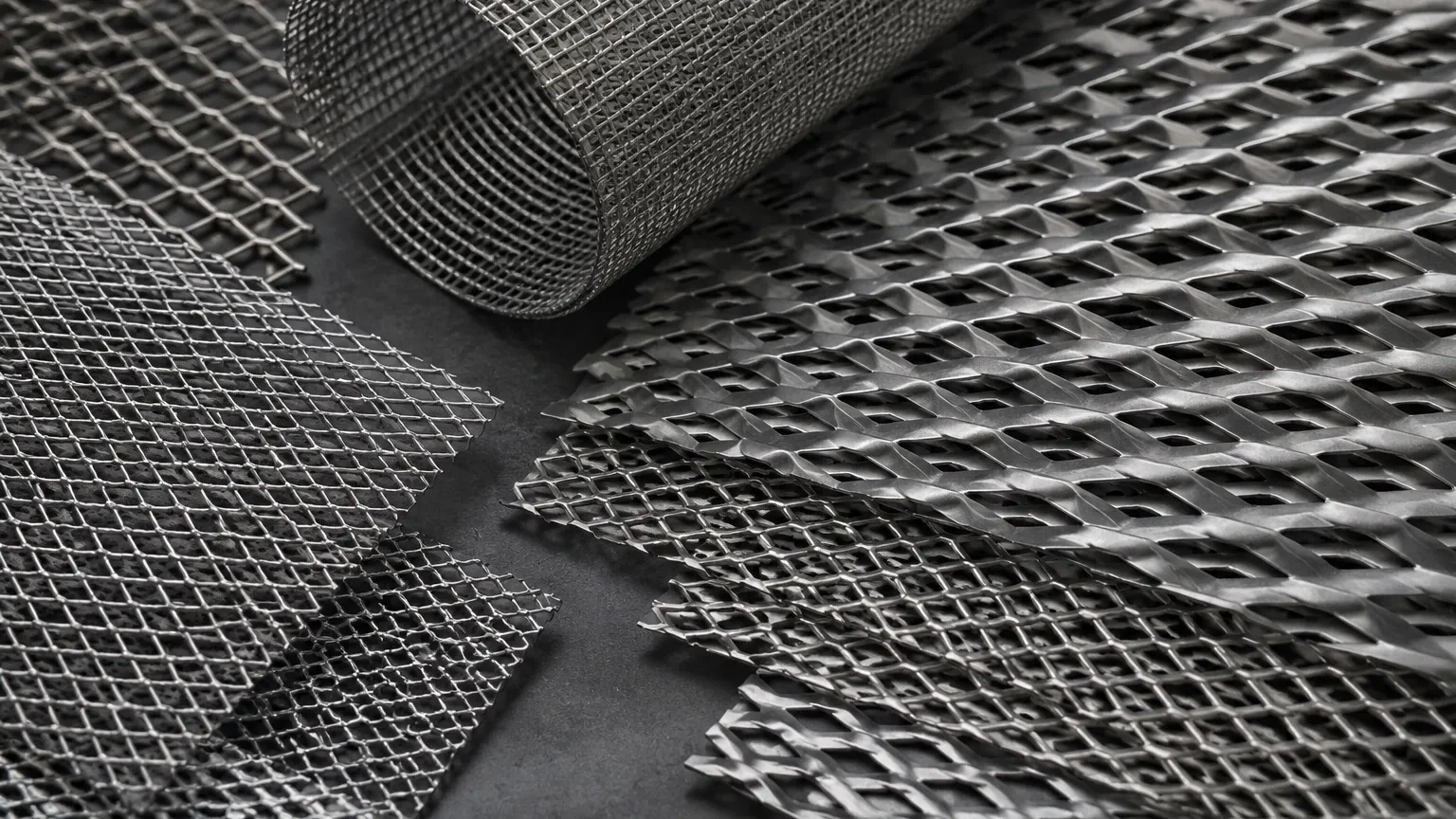
Expanded mesh is distinct from other forms of metal processing, such as weaving or perforating. The manufacturing process involves a specialized machine that simultaneously slits and stretches a solid metal sheet. This process creates a series of diamond-shaped openings, resulting in a continuous piece of material without any joins or welds.
From an engineering perspective, this production method offers several advantages. First, there is zero material waste, as the stretching process increases the overall surface area of the original sheet. Second, the resulting mesh possesses a high strength-to-weight ratio. Because the strands and bonds are angled to the plane of the sheet, the material exhibits greater structural rigidity than a flat sheet of the same weight. For industrial applications in Kenya, where transport and material costs are critical factors, this efficiency provides a clear economic advantage.
There are two primary types of expanded mesh used in industrial settings:
1. Raised (Standard) Expanded Mesh: The strands are turned at an angle to the plane of the sheet. This provides a slip-resistant surface and high rigidity, making it ideal for walkways, grilles, and coarse filtration stages where turbulence might be beneficial.
2. Flattened Expanded Mesh: The raised mesh is passed through a cold-rolling mill, which flattens the strands back into the original plane of the sheet. This results in a smooth, flat surface suitable for fine filtration supports, decorative panels, and components requiring precise thickness tolerances.
Applications of Expanded Mesh in Kenya’s Industrial Landscape
The utility of expanded mesh in Kenya spans several key sectors, each with specific technical requirements. In the food and beverage industry—a major pillar of the Kenyan economy—expanded mesh is frequently used as a support structure for finer wire mesh in juice filtration, grain drying, and dairy processing. The open area of the mesh allows for high flow rates while providing the mechanical strength necessary to withstand the pressure of industrial pumps.
In the water treatment sector, particularly in municipal and industrial wastewater facilities, expanded mesh serves as a primary screening layer. It effectively removes large debris before the water reaches more sensitive filtration stages, such as stainless steel filter cartridges or reverse osmosis membranes. The durability of stainless steel expanded mesh is particularly valued in these environments due to its resistance to the corrosive chemicals often used in water purification.
Furthermore, the chemical processing and pharmaceutical industries in Kenya utilize expanded mesh in specialized reactors and centrifuges. In these high-stakes environments, the material must meet stringent AISI standards to ensure that no contaminants are introduced into the production line. The seamless nature of expanded mesh is a significant benefit here, as it eliminates the risk of weld failure or bacterial growth in crevices.
Technical Parameters: SWD, LWD, and Open Area Calculations
When specifying Perforated & Expanded Metal for a project, engineers must use precise terminology to ensure the delivered product meets the application's requirements. The geometry of the diamond opening is defined by four primary measurements:
* SWD (Short Way of Design): The distance from the center of one bond to the center of the next bond across the short axis of the diamond.
* LWD (Long Way of Design): The distance from the center of one bond to the center of the next bond across the long axis of the diamond.
* Strand Width: The amount of metal fed into the machine between each stroke of the die.
* Strand Thickness: The thickness of the original metal sheet.
Calculating the "Open Area" is perhaps the most critical step for filtration applications. The open area determines the flow rate and the pressure drop across the filter. A higher open area reduces resistance to flow but may compromise the structural integrity of the mesh if the strands are too thin. For industrial engineers in Kenya, finding the "sweet spot" between these two factors is essential for preventing equipment downtime caused by mesh deformation or clogging.
Material Selection: Why Stainless Steel Dominates Industrial Filtration
While expanded mesh can be manufactured from carbon steel, aluminum, or copper, stainless steel remains the preferred choice for industrial filtration in the Kenyan market. This is primarily due to the environmental and operational conditions found in the region.
* Corrosion Resistance: Kenya’s coastal industries in Mombasa face high salinity, while inland chemical plants deal with acidic or alkaline processing fluids. Grade 304 stainless steel offers excellent resistance for general applications, while Grade 316, which contains molybdenum, is required for high-chloride environments or more aggressive chemical processes.
* Temperature Stability: Many industrial processes involve high temperatures. Stainless steel expanded mesh maintains its mechanical properties at temperatures that would cause aluminum to soften or carbon steel to oxidize rapidly.
* Hygiene and Cleanability: In the pharmaceutical and food sectors, the ability to sanitize equipment is paramount. Stainless steel’s non-porous surface allows for effective Clean-in-Place (CIP) procedures, ensuring that the expanded mesh does not harbor pathogens or cross-contaminants between batches.
Evaluating Performance: Filtration Efficiency and Structural Integrity
When integrating expanded mesh into a filtration system, it is often utilized as a "support mesh" or a "drainage layer." In a multi-layer filter cartridge, the expanded mesh provides the skeleton that holds the finer, more delicate wire cloth in place. Without this support, the fine mesh would collapse under the differential pressure generated during the filtration cycle.
Engineers must also consider the "Percentage of Open Area" (POA). For instance, an expanded mesh with a 60% open area will allow for significantly higher throughput than one with 40%, but it will also have a lower burst pressure rating. In hydraulic systems, where pressure spikes are common, selecting a mesh with a thicker strand width is often more important than maximizing the open area.
Another factor to consider is the edge finish. For many Kenyan industrial applications, expanded mesh is supplied with "random sheared" edges, where the diamonds are cut through. However, for applications requiring safe handling or precise fitting into a frame, "bond sheared" edges—where the cut is made through the intersection of the strands—are preferred to provide a finished, blunt edge.
Customization and OEM Solutions for Local Requirements
One of the primary challenges for procurement teams in Kenya is sourcing components that fit legacy machinery or unique local designs. Standard off-the-shelf mesh often fails to meet the specific tolerances required for specialized chemical reactors or custom-built water intake screens.
Customization options for expanded mesh include:
* Custom Aperture Sizes: Tailoring the SWD and LWD to capture specific particle sizes in coarse filtration.
* Variable Strand Widths: Adjusting the strength of the mesh without changing the overall dimensions.
* Specialized Alloys: Sourcing high-nickel alloys or duplex stainless steels for extreme environments where standard 316 grade is insufficient.
* Post-Processing: Services such as degreasing, pickling, and passivating to ensure the mesh is ready for immediate use in high-purity environments.
By working with a manufacturer that understands these technical requirements, Kenyan businesses can ensure that their filtration systems are not only effective but also durable enough to withstand the rigors of continuous industrial operation.
Total Cost of Ownership and Maintenance
When evaluating expanded mesh options, it is a mistake to focus solely on the initial purchase price. The "Total Cost of Ownership" (TCO) includes the cost of installation, the frequency of replacement, and the impact of the component on the rest of the system.
A lower-quality mesh may suffer from "blinding" (clogging) more quickly or may deform under pressure, leading to bypass—where unfiltered fluid escapes the system. This can cause catastrophic damage to downstream components like high-pressure pumps or sensitive valves. In the context of the Kenyan industrial sector, where replacement parts may have long lead times, investing in high-quality, precision-engineered expanded mesh is a strategy for risk mitigation.
Regular inspection cycles should be established to check for signs of mechanical fatigue or localized corrosion (pitting). In many cases, stainless steel expanded mesh can be cleaned and reused multiple times, provided the cleaning process does not involve abrasive materials that could damage the strand edges.
Conclusion
As Kenya continues to solidify its position as a regional industrial leader, the role of high-quality filtration components cannot be overstated. Expanded mesh offers a unique combination of strength, efficiency, and versatility that makes it indispensable for modern manufacturing. By understanding the technical specifications—from material grades to diamond geometries—engineers and purchasing managers can make informed decisions that enhance the reliability and performance of their industrial systems. Whether used as a primary screen in water treatment or a support structure in a complex chemical filter, the right expanded mesh is a critical investment in operational excellence.