


Expanded Metal 1 2
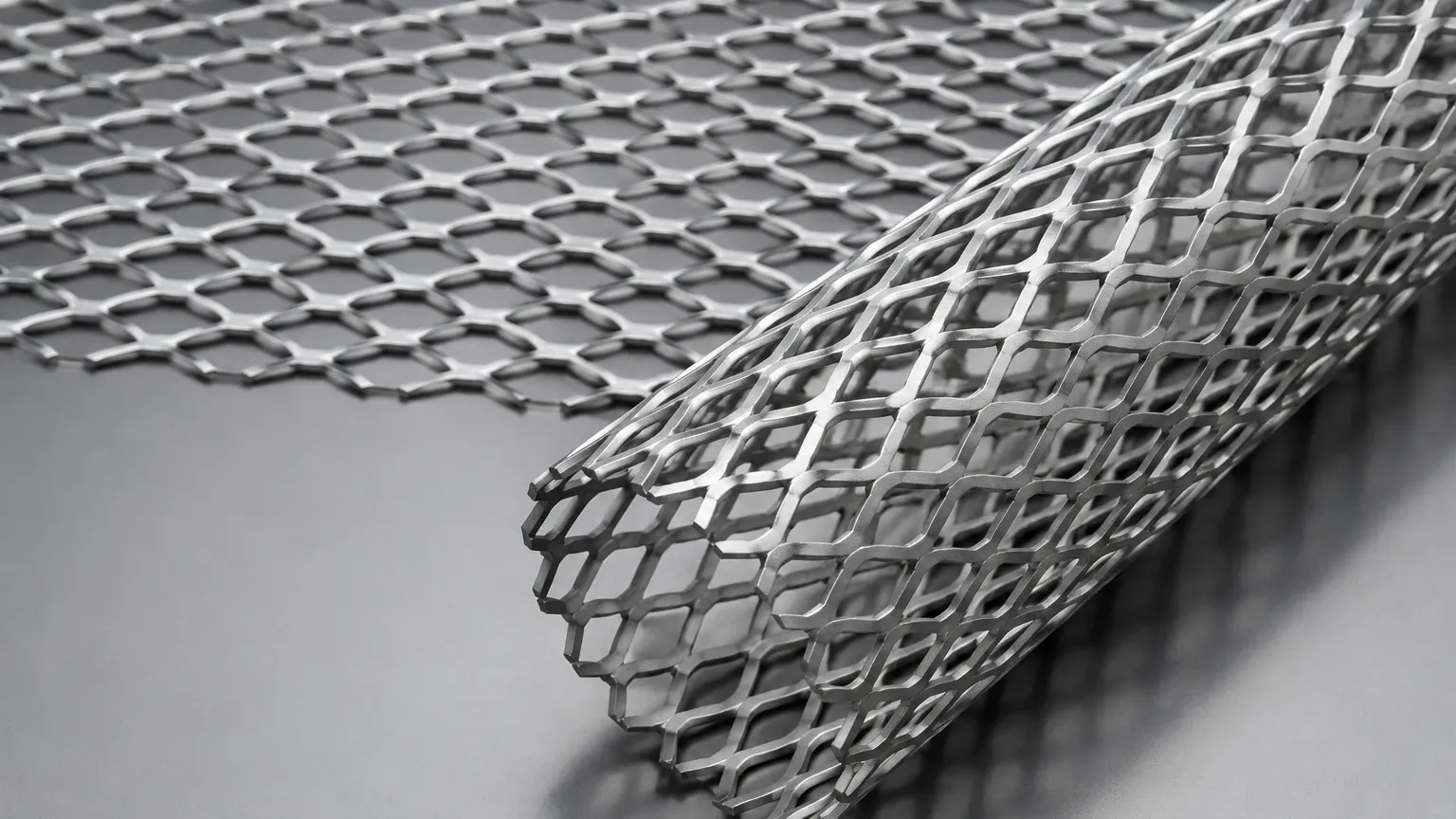
In the realm of industrial filtration and structural engineering, material selection is dictated by the balance between mechanical strength, open area, and environmental resistance. Among the various configurations available, expanded metal 1 2—referring to the nominal 1/2-inch diamond opening—stands as a versatile standard for support structures, protective cages, and coarse filtration media. Unlike perforated materials, expanded metal is produced by simultaneously slitting and stretching a solid sheet of metal, creating a continuous mesh without welds or joints. This process ensures structural integrity while maximizing material efficiency.
For engineers and procurement professionals, understanding the nuances of expanded metal 1 2 is essential for ensuring system longevity and performance. Whether used as a rigid core for a pleated filter cartridge or as a safety guard in a chemical processing plant, the specific dimensions, material grades, and finishing processes of this material significantly impact the total cost of ownership and operational efficiency.
Understanding the Technical Specifications of Expanded Metal 1 2
When specifying Perforated & Expanded Metal, the term "1/2" typically refers to the Short Way of Design (SWD), which is the distance from the center of one bond to the center of the next bond across the short axis of the diamond. However, a complete technical profile requires several other measurements to define the product's performance characteristics.
SWD and LWD
* Short Way of Design (SWD): For expanded metal 1 2, the SWD is nominally 0.500 inches. This dimension determines the density of the diamonds across the width of the sheet.
* Long Way of Design (LWD): This is the distance across the long axis of the diamond, typically ranging from 1.0 to 1.25 inches for this size. The ratio between SWD and LWD influences the directional strength of the mesh.
Strand Dimensions and Gauge
The thickness of the original base metal and the width of the strand (the amount of metal remaining between the openings) determine the weight and rigidity of the mesh. Common designations include:
* 1/2 #13: A heavier gauge often used for structural walkways or heavy-duty machine guards.
* 1/2 #16: A mid-range gauge suitable for industrial shelving and reinforced filter housings.
* 1/2 #18: A lighter gauge frequently utilized as a support wrap for secondary filtration layers.
Open Area Percentage
The open area is a critical metric for filtration applications. Expanded metal 1 2 typically offers an open area between 60% and 80%, depending on the strand width. A higher open area reduces pressure drop across the system but may compromise the burst strength of a filter cartridge if not properly calculated against the operating pressure.
Standard vs. Flattened: Selecting the Right Profile
Expanded metal 1 2 is available in two primary forms: Standard (Raised) and Flattened. The choice between these two significantly affects flow dynamics and mechanical interface with other components.
Standard (Raised) Expanded Metal
In its standard form, the strands and bonds are set at a uniform angle to the plane of the sheet. This creates a three-dimensional texture that provides several advantages:
* Enhanced Rigidity: The angled strands act like structural trusses, providing exceptional resistance to bending and shearing forces.
* Flow Turbulence: In certain filtration or heat exchange applications, the raised profile can induce beneficial turbulence, preventing the stagnation of fluids near the surface.
* Grip and Traction: If used in industrial flooring or platforms, the raised edges provide slip resistance.
Flattened Expanded Metal
Flattened expanded metal is produced by passing the standard expanded sheet through a cold-roll reducing mill. This process flattens the strands and bonds into the same plane as the sheet, resulting in a smooth, flat surface. This is often preferred for:
* Filter Media Support: A flat surface prevents the "pinching" or abrasion of delicate wire mesh or synthetic filter fabrics that may be layered against the expanded metal.
* Precision Clearances: Flattened metal maintains a consistent thickness, which is crucial when the component must fit within tight tolerances in a multi-stage filtration assembly.
* Ease of Cleaning: The absence of angled recesses makes flattened metal easier to sanitize in food-grade or pharmaceutical applications.
Material Considerations for Industrial Filtration Environments
The performance of expanded metal 1 2 is heavily dependent on the alloy from which it is manufactured. In industrial settings, environmental factors such as chemical exposure, temperature fluctuations, and moisture levels dictate the material choice.
Stainless Steel (304 and 316L)
As a specialist in stainless steel solutions, Kaifil emphasizes the use of 300-series stainless steel for expanded metal components.
* Type 304: Offers excellent corrosion resistance for most water treatment and general industrial applications. It is cost-effective and provides high structural strength.
* Type 316L: Contains molybdenum, which provides superior resistance to chlorides and pitting. This is the standard for marine environments, pharmaceutical processing, and aggressive chemical filtration where material leaching must be minimized.
Carbon Steel and Galvanized Options
While carbon steel is the most economical choice, it requires coating (such as hot-dip galvanizing or powder coating) to prevent oxidation. In high-precision filtration, galvanized coatings can sometimes flake or react with the process fluid, making stainless steel the safer long-term investment for critical systems.
Specialized Alloys
For extreme environments, expanded metal 1 2 can be produced from nickel alloys or titanium. These are reserved for high-temperature applications or highly acidic environments where standard stainless steels would fail prematurely.
The Role of Expanded Metal 1 2 in Filter Support and Reinforcement
In the design of industrial filter cartridges, expanded metal 1 2 serves as the "skeleton" of the system. Its primary function is to provide the mechanical strength necessary to withstand high differential pressures without collapsing.
Internal Support Cores
High-flow filter cartridges often utilize expanded metal as an internal core. The 1/2-inch diamond size provides a robust framework that can support heavy loads of captured contaminants. Because expanded metal is a single piece of material, it does not suffer from the weld-point failures that can occur in some types of welded wire mesh cores.
External Protective Cages
To protect delicate pleated media from mechanical damage during installation or backwashing, expanded metal 1 2 is used as an outer shroud. The large open area ensures that the protective cage does not contribute significantly to the overall pressure drop, while the rigid structure shields the filter from impact.
Multi-Stage Filtration
In coarse filtration applications, expanded metal 1 2 can act as a primary strainer, capturing large debris (such as scale or stones) before the fluid reaches more sensitive downstream components. Its durability allows it to be cleaned and reused multiple times, reducing the frequency of replacement cycles.
Engineering Advantages: Strength, Open Area, and Flow Dynamics
Engineers often choose expanded metal 1 2 over perforated metal or woven wire mesh due to its unique physical properties.
1. High Strength-to-Weight Ratio: Because the material is stretched rather than punched, the structural integrity of the original sheet is maintained. This allows for a lighter-weight component that can handle the same pressure loads as a much heavier solid or perforated plate.
2. No Material Waste: The expansion process involves no scrap. Unlike perforated metal, where the "slugs" are punched out and discarded, expanding metal utilizes the entire sheet. This makes it a more sustainable and often more cost-effective manufacturing method for large-scale projects.
3. Customizable Flow Characteristics: By adjusting the strand width and the angle of expansion, manufacturers can fine-tune the flow resistance of the mesh. This is particularly useful in hydraulic systems where maintaining a specific flow velocity is critical.
4. Structural Continuity: There are no joints or weaves to unravel. If a single strand is cut, the remaining structure remains intact, which is a vital safety feature in high-pressure industrial environments.
Procurement and Customization: What Engineers Need to Confirm
When sourcing expanded metal 1 2 for a specific project, providing a vague description can lead to performance failures or assembly issues. To ensure the component meets the application's demands, engineers should confirm the following technical details with the manufacturer:
* Exact Material Grade: Specify 304, 316L, or other alloys based on the chemical compatibility of the process fluid.
* Style Designation: Clearly state if the requirement is for "Standard" or "Flattened" expanded metal.
* Strand Width and Thickness: These dimensions directly impact the burst strength and the weight of the final product.
* Dimensional Tolerances: For components that must be rolled into cylinders or welded into frames, precise length and width tolerances are required to ensure a proper fit.
* Edge Configuration: Specify whether the edges should be "bonded" (closed diamonds) or "random sheared" (open diamonds). Bonded edges are generally safer to handle and easier to weld.
* Secondary Processing: Determine if the material requires degreasing, pickling, or electropolishing. For pharmaceutical and food-grade applications, removing all manufacturing oils and burrs is a non-negotiable requirement.
Total Cost Considerations
While the initial purchase price is a factor, the total cost of ownership for expanded metal 1 2 includes durability, maintenance, and system downtime. Stainless steel expanded metal, while more expensive than carbon steel, often pays for itself by eliminating the need for frequent replacements due to corrosion. Furthermore, the structural reliability of expanded metal reduces the risk of catastrophic filter failure, which can lead to expensive downstream damage to pumps and valves.
Kaifil’s expertise in manufacturing custom filtration solutions allows for the integration of expanded metal 1 2 into complex assemblies designed for specific flow rates and pressure requirements. By working closely with an OEM partner, engineering teams can optimize the design of their filtration components, ensuring that the chosen expanded metal profile provides the ideal balance of protection, support, and performance.
In conclusion, expanded metal 1 2 is more than just a commodity; it is a critical engineering component. Its high open area, mechanical rigidity, and material efficiency make it an indispensable tool in the industrial filtration landscape. Whether used as a simple guard or a complex filter core, selecting the right specifications is the first step toward achieving a reliable and cost-effective industrial process.
