


Expanded Metal 1000
In the landscape of industrial filtration and structural reinforcement, expanded metal serves as a critical component for ensuring mechanical integrity and flow efficiency. Among the various specifications available to engineers and procurement specialists, the designation of expanded metal 1000 often refers to a standardized width (1000mm) or specific mesh series used extensively in the fabrication of filter housings, support cages, and protective screens.
Understanding the technical nuances of Perforated & Expanded Metal is essential for optimizing filtration systems. This guide examines the engineering considerations, material selection, and performance metrics associated with expanded metal 1000 to assist technical professionals in making informed specification decisions.
Understanding the Technical Specifications of Expanded Metal 1000
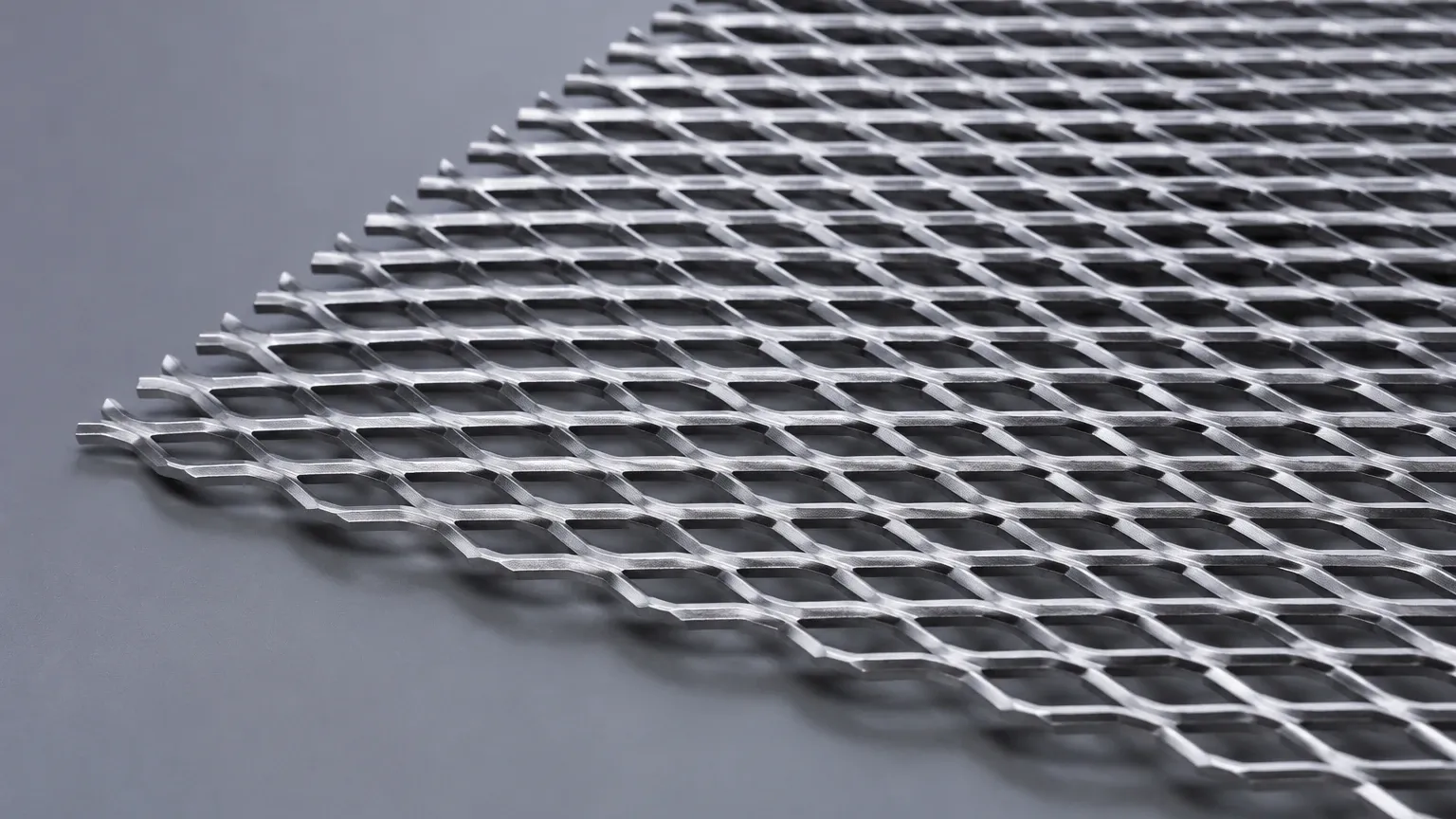
Expanded metal is manufactured by simultaneously slitting and stretching a solid sheet of metal. This process creates a diamond-shaped pattern of openings without any waste of material, resulting in a high strength-to-weight ratio. When discussing expanded metal 1000, the focus is typically on the 1000mm width standard, which is a common industrial dimension for roll and sheet stock used in global manufacturing.
Key Geometric Parameters
To specify expanded metal accurately, engineers must define several geometric factors:
* LWD (Long Way of Design): The distance from the center of one joint to the center of the next joint across the long diamond dimension.
* SWD (Short Way of Design): The distance from the center of one joint to the center of the next joint across the short diamond dimension.
* Strand Width: The amount of metal between the openings.
* Strand Thickness: The gauge or thickness of the original base metal.
In the context of expanded metal 1000, these dimensions determine the open area percentage, which directly influences the pressure drop across a filtration unit. A larger open area reduces resistance to flow but may compromise the structural support required for fine filter media.
Material Selection for Demanding Filtration Environments
The performance of expanded metal 1000 is heavily dependent on the alloy selected. For industrial filtration, stainless steel is the preferred material due to its resistance to corrosion, high temperatures, and mechanical stress.
Stainless Steel 304 vs. 316L
* Grade 304: This is the standard industrial grade suitable for most general applications. It offers excellent durability and cost-effectiveness for water treatment and hydraulic filtration where extreme chemical exposure is not a primary concern.
* Grade 316L: Containing molybdenum, 316L provides superior resistance to chlorides and acidic environments. In pharmaceutical and chemical processing, 316L expanded metal 1000 is often required to prevent localized corrosion and ensure the purity of the filtered medium.
Specialty Alloys
For extreme environments, such as high-temperature gas filtration or highly corrosive chemical baths, manufacturers may utilize Duplex stainless steel or nickel-based alloys. The choice of material must align with the chemical compatibility of the fluid and the operating temperature of the system to prevent premature failure due to stress corrosion cracking or oxidation.
The Role of Expanded Metal in Filter Support and Reinforcement
One of the primary functions of expanded metal 1000 in filtration is providing a rigid skeleton for delicate filter media. Fine wire mesh or synthetic membranes often lack the mechanical strength to withstand high differential pressures.
Preventing Pleat Collapse
In pleated filter cartridges, expanded metal is used as an outer wrap or an inner core. It maintains the spacing between pleats, ensuring that the maximum surface area remains available for filtration. Without the structural reinforcement provided by a precisely manufactured expanded metal layer, the pleats may collapse under pressure, leading to a significant reduction in flow rate and potential bypass of contaminants.
Coarse Pre-filtration
In some applications, expanded metal 1000 serves as a primary coarse filter. It is effective at capturing large debris and protecting downstream high-precision components. The diamond-shaped apertures create a tortuous path that can trap irregular particles more effectively than simple perforated plates in certain flow conditions.
Manufacturing Processes: Flattened vs. Raised Expanded Metal
When specifying expanded metal 1000, engineers must choose between two distinct finishes: raised and flattened. Each has specific implications for filtration performance.
Raised Expanded Metal (Standard)
In its standard form, expanded metal has strands that are turned at an angle to the plane of the sheet. This creates a three-dimensional surface that provides maximum rigidity and a high degree of grip. In filtration, raised expanded metal is often used for outer protective cages where structural strength is the priority.
Flattened Expanded Metal
Flattened expanded metal is produced by passing the standard expanded sheet through a cold-roll reducing mill. This process flattens the strands and bonds them back into the same plane as the sheet. For filtration applications involving fine mesh layers, flattened expanded metal is often preferred because it provides a smooth surface that will not abrade or tear the delicate filter media during assembly or operation.
Key Evaluation Criteria for Engineers and Procurement
Selecting the right expanded metal 1000 requires a balance between mechanical properties and filtration requirements. Before finalizing a purchase order, technical teams should evaluate the following criteria:
1. Open Area Percentage: This is the ratio of the area of the openings to the total area of the sheet. It is a critical variable for calculating the flow velocity and pressure drop. Manufacturers should provide precise open area data for each mesh configuration.
2. Dimensional Tolerances: For precision filtration components, tolerances on LWD, SWD, and sheet flatness are vital. Inconsistent dimensions can lead to assembly issues in automated filter production lines.
3. Surface Finish: In the food, beverage, and pharmaceutical industries, the surface must be free of oils, grease, and burrs. Electropolishing or ultrasonic cleaning may be required to meet sanitary standards.
4. Tensile Strength: The material must be able to withstand the maximum expected differential pressure without permanent deformation. This is particularly important in hydraulic systems where pressure spikes are common.
Common Risks and Quality Assurance in Industrial Applications
Using sub-standard expanded metal can lead to catastrophic system failures. One common risk is the presence of "edge burrs" or sharp fragments left over from the slitting process. In a filtration system, these fragments can break off and enter the downstream flow, acting as contaminants themselves.
Another risk is material fatigue. If the expanded metal 1000 is not properly annealed or if the expansion ratio is too high for the material thickness, the joints (bonds) may develop micro-cracks. Under the cyclic loading of a pressurized system, these cracks can propagate, leading to structural failure of the filter element.
To mitigate these risks, quality assurance protocols should include:
* Material Certification: Ensuring the alloy composition meets ASTM or ISO standards.
* Visual Inspection: Checking for uniformity in the diamond pattern and the absence of broken bonds.
* Dimensional Verification: Confirming that the sheet width (1000mm) and thickness meet the specified tolerances.
Customization and OEM Solutions for Specialized Filtration
While expanded metal 1000 provides a standard baseline, many industrial applications require customized solutions. Manufacturers like Kaifil specialize in tailoring expanded metal to meet specific engineering challenges. Customization options often include:
* Variable Mesh Sizes: Adjusting the LWD and SWD to achieve a specific filtration rating or flow characteristic.
* Custom Slitting and Cutting: Providing expanded metal in specific widths or pre-cut shapes to reduce waste and streamline the customer's manufacturing process.
* Integrated Components: Combining expanded metal with other filtration layers, such as sintered wire mesh or perforated tubes, to create a complete filtration sub-assembly.
By working closely with an OEM partner, engineers can ensure that the expanded metal component is optimized for the specific viscosity, temperature, and chemical profile of their application.
Conclusion: Optimizing Filter Performance with Expanded Metal 1000
The selection of expanded metal 1000 is more than a commodity purchase; it is a critical engineering decision that affects the efficiency, durability, and safety of industrial filtration systems. By focusing on material integrity, precise geometric specifications, and appropriate surface finishes, technical professionals can ensure their systems operate at peak performance.
Whether used as a support structure for high-efficiency membranes or as a robust pre-filter in harsh chemical environments, the right expanded metal configuration provides the necessary balance of flow and strength. For those seeking reliable, high-performance Perforated & Expanded Metal solutions, partnering with an experienced manufacturer ensures that every technical requirement—from material grade to dimensional tolerance—is met with precision.
