


Expanded Metal 4ft X 8ft
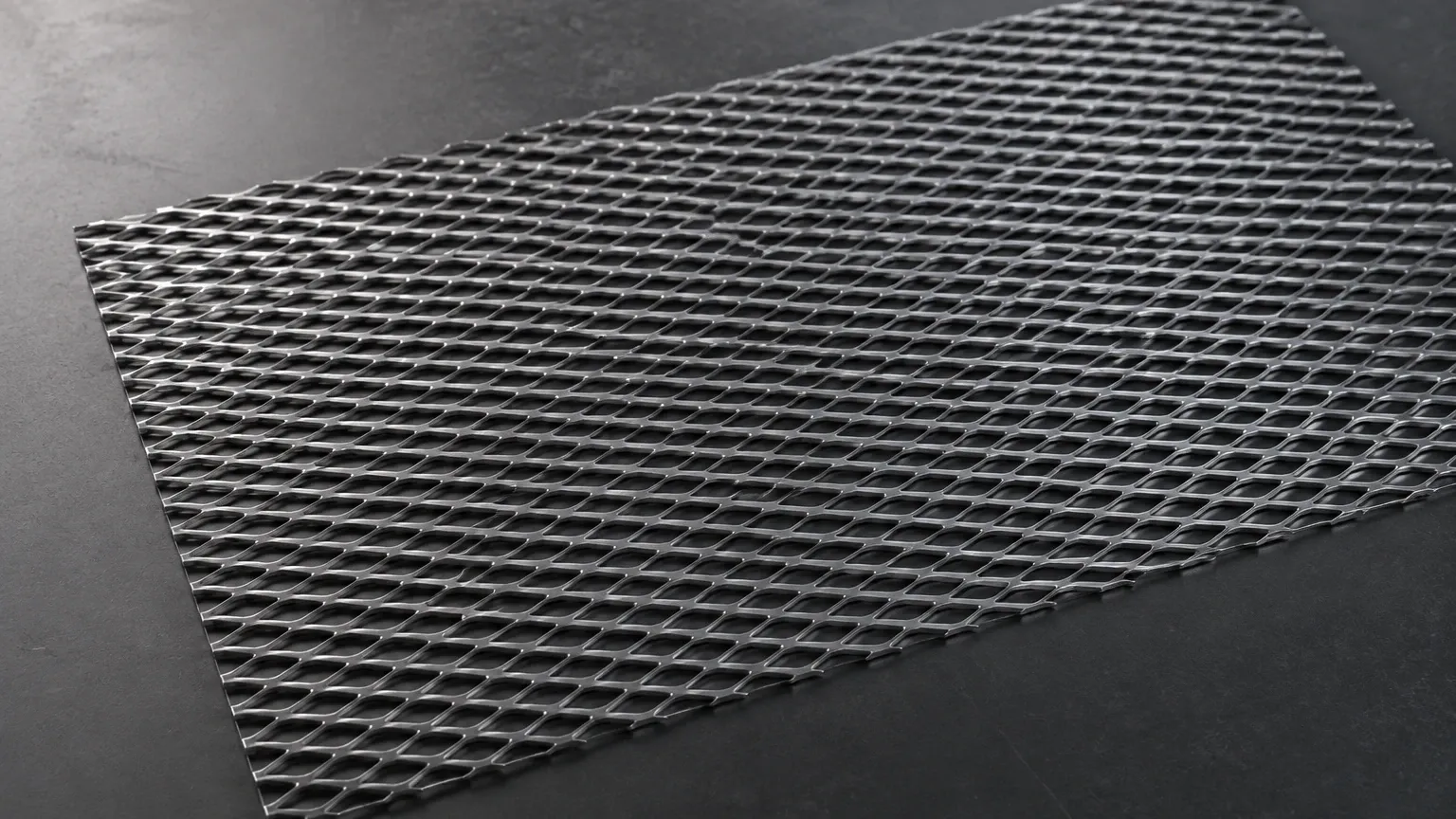
In industrial manufacturing and filtration engineering, the 4ft x 8ft sheet is the foundational standard for metal substrates. When specifying materials for filtration support, architectural grilles, or structural reinforcement, expanded metal 4ft x 8ft sheets offer a unique combination of structural integrity and permeable surface area. Unlike perforated metal, which is created by punching holes and removing material, expanded metal is produced by shearing and stretching a single solid sheet of metal simultaneously. This process creates a diamond-shaped pattern without any material waste, making it an efficient choice for large-scale industrial applications.
For engineers and procurement specialists, understanding the technical nuances of expanded metal—ranging from diamond dimensions to metallurgical properties—is essential for ensuring long-term performance in demanding environments such as chemical processing, water treatment, and hydraulic systems.
Technical Anatomy of Expanded Metal
To effectively integrate expanded metal into an industrial system, one must understand the specific terminology used to define its geometry. These measurements determine the flow characteristics, mechanical strength, and filtration efficiency of the final component.
SWD and LWD (Short Way and Long Way of Design)
The diamond pattern in expanded metal is defined by two primary axes:
* SWD (Short Way of Design): The distance from the center of one bond to the center of the next bond across the short axis of the diamond.
* LWD (Long Way of Design): The distance from the center of one bond to the center of the next bond across the long axis of the diamond.
In a standard 4ft x 8ft sheet, the orientation of these diamonds relative to the sheet dimensions is critical. Typically, the LWD runs parallel to the length of the sheet (8ft), while the SWD runs parallel to the width (4ft). However, custom orientations can be manufactured depending on the structural load requirements of the application.
Strand and Bond
The "strand" is the single metal strip that forms the border of the diamond opening. The "bond" is the point where two strands intersect. The thickness of the strand and the width of the bond directly influence the sheet's weight-bearing capacity and its resistance to mechanical deformation under high-pressure flow.
Raised vs. Flattened Expanded Metal
When sourcing Perforated & Expanded Metal, the choice between raised and flattened profiles is one of the most significant engineering decisions.
Raised (Standard) Expanded Metal
Raised expanded metal is the product as it comes off the expanding machine. The strands and bonds are set at a uniform angle to the plane of the sheet. This creates a three-dimensional surface that provides excellent grip and high structural rigidity. In filtration, raised expanded metal is often used as a primary coarse filter or a protective outer cage for delicate filter media, as the angled strands can help deflect larger particulates.
Flattened Expanded Metal
Flattened expanded metal is produced by passing the raised sheet through a cold-roll reducing mill. This process flattens the strands and bonds into the same plane, resulting in a smooth, two-dimensional surface. Flattened sheets are slightly thinner and longer than the original raised sheet. For filtration applications, flattened expanded metal is preferred when the sheet serves as a support layer for fine wire mesh. The smooth surface prevents the mesh from being abraded or punctured by the sharp edges of raised strands.
Material Selection for Industrial Environments
The performance of an expanded metal 4ft x 8ft sheet is largely dictated by its material composition. While carbon steel and aluminum are common in general construction, industrial filtration and chemical processing require high-performance alloys to withstand corrosion and thermal stress.
Stainless Steel (304 and 316L)
As a specialist in stainless steel filtration, Kaifil emphasizes the use of austenitic stainless steels for most industrial applications.
* Grade 304: Offers excellent corrosion resistance and formability, making it suitable for food and beverage processing or general industrial filtration.
* Grade 316L: Contains molybdenum, which provides superior resistance to chlorides and pitting. This is the standard choice for marine environments, pharmaceutical manufacturing, and aggressive chemical processing.
Specialty Alloys
In high-temperature or highly acidic environments, materials such as Duplex stainless steel, Monel, or Inconel may be required. These alloys maintain their structural integrity and oxidation resistance where standard steels would fail. Selecting the correct alloy ensures that the 4ft x 8ft sheet does not introduce metallic contamination into the process stream through corrosion.
Applications in Industrial Filtration
Expanded metal is a versatile component in the design of complex filtration systems. Its primary role is often structural, providing the "skeleton" for more precise filtration media.
Support Cores for Filter Cartridges
In high-pressure hydraulic or liquid filtration, fine wire mesh or pleated paper media lacks the inherent strength to resist collapsing. Expanded metal sheets are rolled into cylinders to serve as internal support cores. The high open-area percentage ensures minimal pressure drop, while the rigid diamond structure prevents the media from deforming under differential pressure.
Debris Guards and Strainers
In water treatment and intake systems, expanded metal 4ft x 8ft sheets are used as primary strainers. They effectively capture large debris (leaves, plastic, stones) before the fluid reaches more sensitive downstream equipment like pumps or fine membrane filters. The 4×8 size allows for large, seamless panels that simplify installation and maintenance.
Catalyst Support in Chemical Reactors
In gas-phase chemical reactions, expanded metal provides a stable bed for catalyst pellets. The uniform diamond openings allow for even gas distribution across the reactor bed, which is critical for maintaining reaction efficiency and preventing "hot spots."
Engineering Considerations: Open Area and Flow Rates
One of the most critical factors for engineers is the percentage of open area. This value determines the flow velocity and the pressure drop across the filter element.
Calculating the open area of expanded metal is more complex than perforated metal due to the angled strands. Generally, the formula involves the strand width and the SWD. A higher open area reduces the initial pressure drop (clean pressure drop) but may decrease the mechanical strength of the sheet. Engineers must find the optimal balance between flow capacity and the ability to withstand the maximum expected differential pressure during the filtration cycle.
Procurement and Quality Standards
When ordering expanded metal 4ft x 8ft, technical professionals should confirm several quality benchmarks to ensure the material meets industrial standards.
1. Dimensional Tolerances: Standard sheets often have tolerances for length, width, and squareness. For precision OEM components, tighter tolerances may be required to ensure the sheet fits perfectly into housing units or welding jigs.
2. Surface Finish: For pharmaceutical and food-grade applications, the metal must be free of oils, burrs, and scale. Electropolishing or passivating the stainless steel after expansion can further enhance corrosion resistance and cleanability.
3. Flatness: Especially for 4ft x 8ft sheets, maintaining flatness is crucial for subsequent fabrication steps like laser cutting or automated welding. "Camber" or "bow" in the sheet can lead to alignment issues in the production line.
Customization Beyond the Standard 4ft x 8ft
While the 4ft x 8ft format is a standard stock size, many industrial applications require customized dimensions or configurations. As a professional manufacturer, Kaifil provides OEM solutions that go beyond simple sheet supply. This includes:
* Custom Slitting and Shearing: Cutting the 4×8 sheet into specific strips or shapes to minimize waste in the customer's manufacturing process.
* Varying Expansion Ratios: Adjusting the machine settings to create specific diamond sizes (SWD/LWD) tailored to a particular flow rate or particle size retention requirement.
* Integrated Fabrication: Providing finished components, such as rolled and welded cylinders or framed panels, ready for immediate installation into industrial systems.
Conclusion: Selecting the Right Solution
The choice of an expanded metal 4ft x 8ft sheet involves more than just selecting a material and a thickness. It requires a deep understanding of the fluid dynamics, mechanical stresses, and chemical environment of the specific application. By evaluating the differences between raised and flattened profiles, calculating the necessary open area, and selecting the appropriate stainless steel grade, engineers can ensure their filtration systems operate with maximum efficiency and minimal downtime.
For those seeking high-precision metal components, exploring the full range of Perforated & Expanded Metal options is the first step toward optimizing industrial performance. Whether used as a robust support structure or a primary filtration media, expanded metal remains an indispensable tool in the modern industrial landscape.
