


Expanded Metal Flooring
In industrial engineering and facility design, the selection of flooring materials is a critical decision that impacts structural integrity, worker safety, and long-term maintenance costs. Expanded metal flooring has emerged as a preferred solution for demanding environments, offering a unique combination of high strength-to-weight ratios, slip resistance, and excellent drainage capabilities. Unlike traditional solid plating or welded bar grating, expanded metal is manufactured through a specialized process that creates a continuous, one-piece structure without the inherent weaknesses of welds or joints.
For engineers and procurement professionals, understanding the technical nuances of Perforated & Expanded Metal is essential for ensuring that the specified material meets the specific load-bearing and environmental requirements of the application. This guide examines the engineering principles, material considerations, and selection criteria necessary for implementing expanded metal flooring in industrial settings.
The Engineering of Expanded Metal Flooring
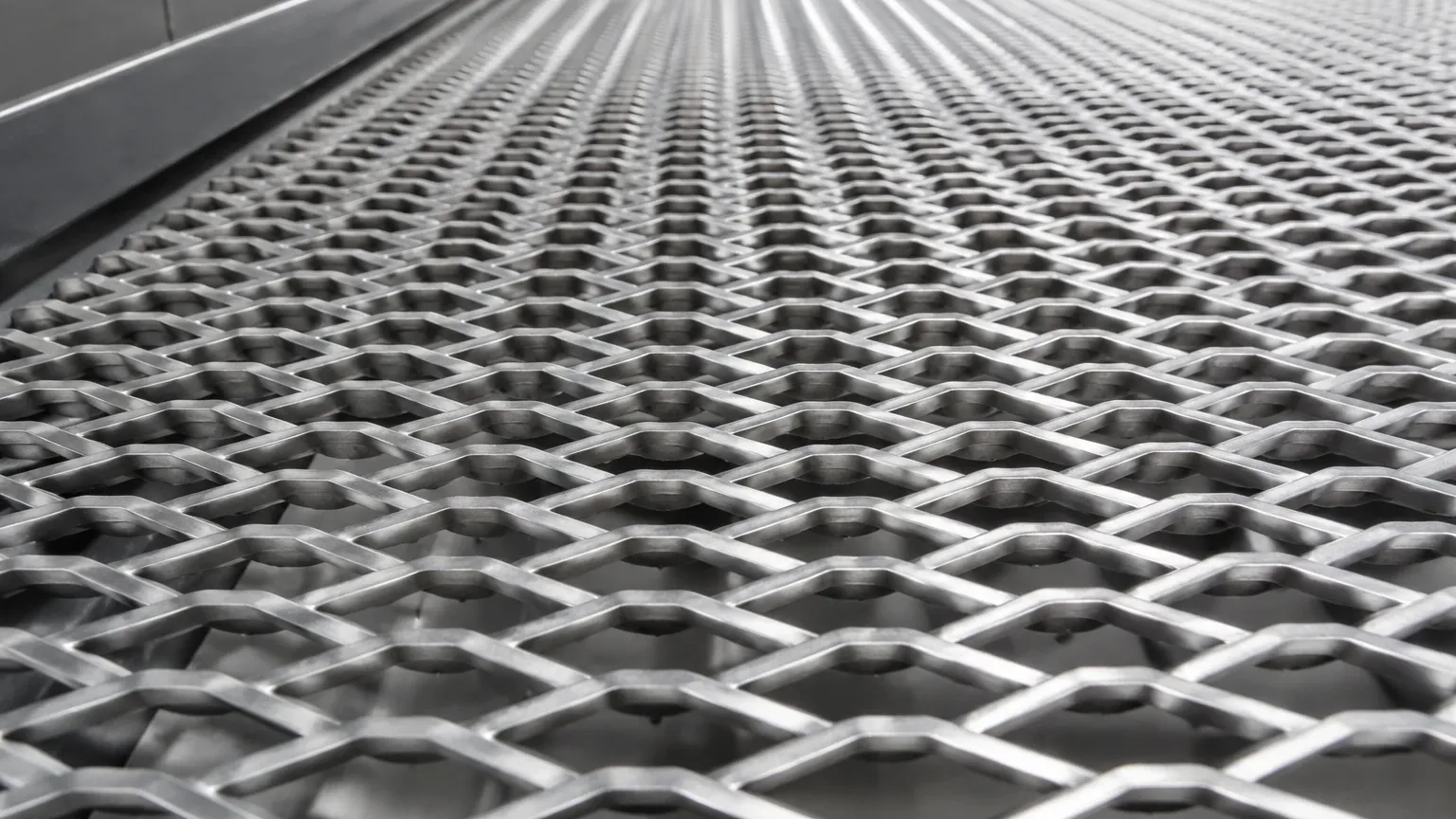
The production of expanded metal involves a simultaneous slitting and stretching process. A solid sheet of metal—typically stainless steel, carbon steel, or aluminum—is fed through a machine equipped with reciprocating knives. These knives slit the metal and then stretch it into a diamond-shaped pattern. Because the metal is expanded rather than punched, there is zero material waste, making it a highly resource-efficient manufacturing method.
From an engineering perspective, the most significant advantage of this process is the preservation of structural continuity. In a piece of expanded metal, the "bonds" (where the strands intersect) are part of the original metal sheet. This creates a truss-like structure where loads are distributed across the entire panel. This inherent rigidity allows expanded metal flooring to support significant weights while remaining much lighter than solid plate of the same thickness.
Technical Specifications: LWD, SWD, and Strand Geometry
When specifying expanded metal for flooring, engineers must define several geometric parameters that dictate the performance of the panel. These include:
* LWD (Long Way of Design): The distance from the center of one bond to the center of the next bond across the long axis of the diamond.
* SWD (Short Way of Design): The distance from the center of one bond to the center of the next bond across the short axis of the diamond.
* Strand Width: The amount of metal fed into the knives for each stroke.
* Strand Thickness: The original thickness of the base metal sheet.
* Opening Size: The clear space between strands, which determines the percentage of open area.
For flooring applications, the orientation of these diamonds is critical. To maximize load-bearing capacity, the LWD should typically run perpendicular to the support beams (the span). If the panel is installed with the LWD parallel to the supports, the structural integrity is significantly compromised, leading to excessive deflection or failure under load.
Raised vs. Flattened Expanded Metal
One of the most important distinctions in Perforated & Expanded Metal products is the choice between raised and flattened profiles.
Raised Expanded Metal
Standard or "raised" expanded metal is the product as it comes off the expanding machine. The strands and bonds are set at a sharp angle to the plane of the sheet. This creates a textured, three-dimensional surface that provides exceptional multi-directional slip resistance. In industrial flooring, particularly for walkways, ramps, and stair treads, raised expanded metal is almost always the preferred choice because it offers superior grip even when the surface is contaminated with oil, grease, or moisture.
Flattened Expanded Metal
Flattened expanded metal is produced by passing the raised sheet through a cold-rolling reducing mill. This process levels the strands and bonds, resulting in a smooth, flat surface. While flattened metal is useful for architectural partitions or machine guards where a flush surface is required, it is rarely used for primary flooring because it lacks the slip-resistant properties of the raised variety. However, it may be used in light-duty flooring applications where trolley or cart movement requires a smooth transition.
Material Selection for Corrosive Environments
The longevity of expanded metal flooring is heavily dependent on the material's compatibility with its operating environment. As a specialist in stainless steel filtration and precision metal components, Kaifil emphasizes the importance of selecting high-performance alloys for industrial applications.
1. Stainless Steel 304: The most common grade for industrial flooring. It offers excellent corrosion resistance in standard industrial environments and is suitable for food and beverage processing areas where frequent wash-downs occur.
2. Stainless Steel 316: For more aggressive environments, such as chemical processing plants, marine applications, or pharmaceutical facilities, SS316 is the standard. The addition of molybdenum provides superior resistance to chlorides and pitting corrosion.
3. Carbon Steel (Galvanized): While carbon steel is cost-effective, it requires post-production hot-dip galvanizing to prevent oxidation. This is a common choice for outdoor walkways and general industrial platforms where the chemical resistance of stainless steel is not required.
4. Aluminum: Used primarily where weight reduction is the primary concern or in environments where non-sparking properties are required.
Load-Bearing Capacity and Deflection Limits
Designing an expanded metal flooring system requires a rigorous assessment of the expected loads. Unlike solid plates, the load-bearing capacity of expanded metal is a function of the strand thickness, strand width, and the diamond size.
Engineers must calculate the Concentrated Load (a load applied to a small area, such as a person standing) and the Uniformly Distributed Load (load spread across the entire surface). In most industrial walkway designs, a deflection limit of L/240 (the span divided by 240) is used to ensure the floor feels stable underfoot. If the deflection is too high, it can cause worker fatigue or a sense of instability, even if the material is technically within its yield strength.
When reviewing technical data sheets for Perforated & Expanded Metal, it is vital to confirm that the load tables provided by the manufacturer correspond to the specific orientation (LWD across the span) intended for the project.
Safety Benefits: Drainage and Visibility
One of the primary reasons for choosing expanded metal flooring over solid plate is the high percentage of open area. In industrial facilities, this provides several safety and operational advantages:
* Self-Cleaning Properties: Liquids, small debris, and snow pass through the openings rather than accumulating on the surface. This reduces the risk of hydroplaning or slipping on loose materials.
* Airflow and Ventilation: In mezzanine applications, expanded metal allows for the free flow of air, which is essential for HVAC efficiency and the cooling of machinery located below the flooring.
* Light Permeability: Open flooring allows light to reach lower levels of a facility, improving overall visibility and reducing the need for additional lighting fixtures in multi-story structures.
* Fire Safety: Standard fire suppression systems (sprinklers) can penetrate expanded metal flooring, allowing water to reach lower levels in the event of an emergency. This often leads to lower insurance premiums and easier compliance with fire codes.
0
Installation and Maintenance Considerations
Proper installation is as critical as material selection. Expanded metal flooring panels are typically secured to the supporting framework using welding or mechanical fastening.
* Welding: Tack welding at every third or fourth bond along the support is common. However, for stainless steel or galvanized panels, the weld points must be treated post-installation to prevent localized corrosion.
* Clips and Fasteners: Specialized grating clips can be used to secure the panels without the need for on-site welding. This is particularly useful in environments where "hot work" is restricted or where the panels may need to be removed for maintenance access.
Maintenance requirements for stainless steel expanded metal are minimal. Regular inspections should focus on the integrity of the attachment points and checking for any signs of mechanical damage or deformation from impact loads. In highly corrosive environments, periodic cleaning to remove accumulated salts or chemicals will extend the service life of the material.
Specifying Custom Solutions
Standard expanded metal sizes may not always meet the specific requirements of complex industrial systems, especially when integrated with filtration or chemical processing equipment. Customization options include:
* Variable Open Areas: Adjusting the SWD and LWD to achieve specific drainage or visibility ratios.
* Heavy-Duty Grating: Utilizing thicker base materials (up to 1/4 inch or more) for high-traffic or heavy-load areas.
* Edge Banding: Welding flat bars to the edges of the expanded metal panels to increase perimeter rigidity and simplify installation.
As a manufacturer specializing in custom stainless steel solutions, Kaifil provides the technical expertise necessary to bridge the gap between standard material specifications and the unique demands of industrial filtration and structural applications.
Conclusion: Selecting the Right Flooring Partner
Expanded metal flooring is a highly engineered product that requires careful consideration of material science, structural mechanics, and safety standards. By focusing on the specific needs of the application—whether it be the corrosion resistance of SS316 for a chemical plant or the high-grip surface of raised metal for an outdoor ramp—engineers can ensure a safe and durable flooring solution.
Before finalizing a purchase, technical teams should confirm the following with their supplier:
1. The exact alloy and its suitability for the chemical environment.
2. The required load-bearing capacity and the corresponding LWD/SWD orientation.
3. The necessary surface finish (standard, pickled, or polished) to meet hygiene or corrosion standards.
4. The percentage of open area required for ventilation and drainage.
For more detailed technical specifications and to explore customization options for your next project, Review product options and application support to ensure your filtration and structural components meet the highest industrial standards.
