


Expanded Metal How to Measure
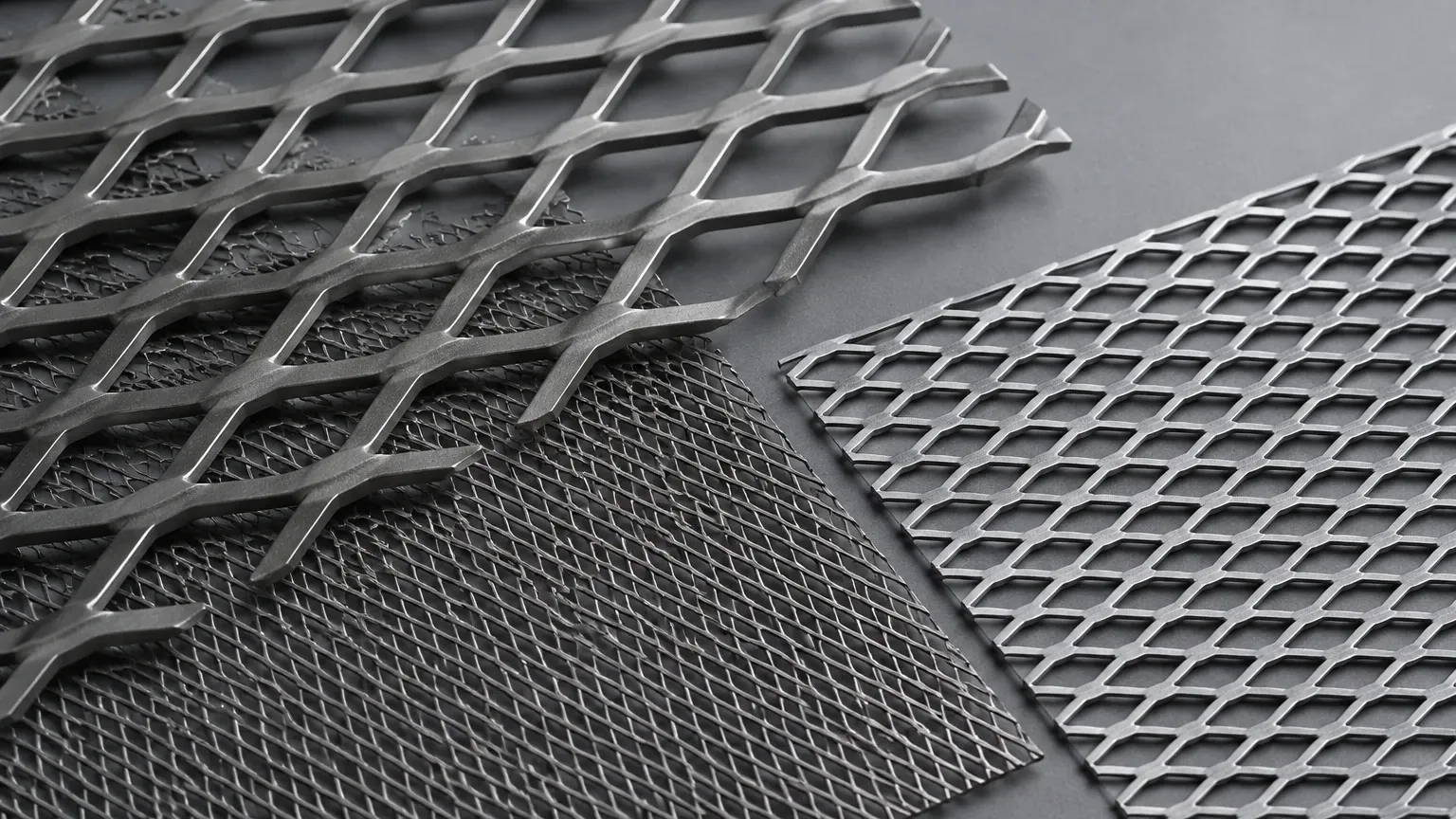
In industrial filtration and structural engineering, the precision of component dimensions directly dictates the efficiency and lifespan of the system. Expanded metal, a versatile material created by simultaneously slitting and stretching metal sheets to form a diamond-patterned mesh, is a staple in various demanding sectors. Unlike woven wire mesh, expanded metal is a single-piece construction with no joins or welds, offering superior structural integrity. However, its unique geometry requires a specific technical vocabulary and measurement methodology. Understanding expanded metal how to measure is essential for engineers and procurement teams to ensure that the Perforated & Expanded Metal components they specify will fit precisely within filter housings, support structures, or fluid processing units.
Accurate measurement prevents costly errors in OEM manufacturing and ensures that performance variables, such as pressure drop and filtration accuracy, remain within design parameters. This guide details the standard industrial practices for measuring expanded metal, the differences between standard and flattened varieties, and the engineering considerations necessary for industrial applications.
Fundamental Terminology: SWD, LWD, SWO, and LWO
The most critical aspect of measuring expanded metal is understanding the orientation of the diamond-shaped openings. Unlike a simple square grid, expanded metal has a "short way" and a "long way." Standard industry terminology uses four primary abbreviations to define these dimensions.
SWD (Short Way of Design)
This is the distance from a point on one bond to the corresponding point on the next bond, measured across the short axis of the diamond. It is important to note that SWD is measured center-to-center of the bonds, not the clear opening itself. This dimension is crucial for determining the overall density of the mesh.
LWD (Long Way of Design)
Similar to SWD, the LWD is the distance from a point on one bond to the corresponding point on the next bond, measured across the long axis of the diamond. This measurement is also taken center-to-center. The ratio between LWD and SWD defines the shape of the diamond and influences the material's mechanical strength and aesthetic appearance.
SWO (Short Way of Opening)
For filtration applications, the SWO is often more important than the design measurements. It refers to the clear distance of the opening across the short axis. This does not include the width of the metal strands. If a filter needs to block particles of a specific size, the SWO is the primary dimension used to calculate the exclusion limit.
LWO (Long Way of Opening)
This is the clear distance of the opening across the long axis. While the SWO usually determines the "mesh size" for filtration, the LWO affects the total open area and the flow characteristics of the fluid passing through the metal.
Measuring Strands and Material Thickness
Beyond the dimensions of the diamond openings, the physical properties of the metal itself must be measured. This involves two distinct dimensions: strand width and strand thickness.
Strand Width
Strand width refers to the amount of metal between the diamond openings. In the manufacturing process, this is the amount of metal fed into the machine for each stroke of the die. In a finished product, you measure this by calculating the distance from one edge of a strand to the opposite edge. Strand width is a key factor in determining the structural rigidity and the weight of the Perforated & Expanded Metal.
Strand Thickness (Gauge)
Strand thickness is the thickness of the base metal from which the expanded metal was produced. It is usually measured with a micrometer or a gauge tool. In industrial filtration, using high-grade stainless steel (such as 304 or 316L) is common to ensure corrosion resistance. When measuring thickness, engineers must distinguish between the thickness of the raw material and the "overall thickness" of the finished raised mesh.
Standard vs. Flattened Expanded Metal: Measurement Differences
When researching expanded metal how to measure, it is vital to identify whether the material is "Standard" (Raised) or "Flattened." The measurement approach changes slightly depending on the finish.
Standard (Raised) Expanded Metal
In its standard form, expanded metal exits the machine with the strands at a slight angle to the plane of the sheet. This creates a three-dimensional surface that provides excellent grip and high structural strength. When measuring standard expanded metal, the "overall thickness" will be significantly greater than the original material thickness because of the angled strands. Engineers must measure this total profile thickness if the metal is to be inserted into a narrow slot or frame.
Flattened Expanded Metal
Flattened expanded metal is produced by passing standard expanded metal through a cold-roll reducing mill. This process flattens the strands and bonds into a single plane, resulting in a smooth, flat surface.
* Thickness: The thickness of flattened expanded metal is slightly less than the original base metal thickness due to the pressure of the rolling process.
* Dimensions: Flattening typically increases the LWD and SWD slightly as the material is stretched during the rolling process. Therefore, measurements taken on a raised sheet will not be identical to those taken after flattening.
Step-by-Step Guide: Expanded Metal How to Measure
To ensure accuracy when providing specifications for a custom filtration project, follow these steps using a set of digital calipers and a tape measure.
1. Identify the Diamond Direction: Place the sheet in front of you. Determine which direction the diamonds are running. The "width" of a sheet is traditionally the dimension parallel to the SWD, while the "length" is parallel to the LWD.
2. Measure the SWD and LWD: Use your calipers to measure from the center of one bond to the center of the next. Do this for both the short and long axes. Repeat this in several areas of the sheet to ensure consistency, as manufacturing tolerances can vary.
3. Measure the Openings (SWO and LWO): Measure the clear space inside the diamond. This is critical for filtration media where the size of the "hole" determines what particles can pass through.
4. Measure the Strand Width: Use the calipers to measure the width of a single strand. Be careful to measure perpendicular to the strand's edge.
5. Measure the Material Thickness: For flattened metal, measure the thickness of a strand. For raised metal, measure both the strand thickness and the overall height of the raised profile.
6. Confirm Sheet Dimensions: Measure the overall width and length of the sheet. In the industry, these are often expressed as "Width x Length." For example, a 4' x 8' sheet usually means the SWD runs across the 4' dimension.
Calculating Open Area for Filtration Efficiency
For engineers designing filtration systems, the most important derivative of these measurements is the "Percentage of Open Area." This value determines the flow rate and the pressure drop across the filter. A higher open area allows for higher flow rates but may reduce the structural strength of the mesh.
While manufacturers like Kaifil provide technical data sheets for their Perforated & Expanded Metal products, you can estimate the open area of flattened expanded metal using the following formula:
**Open Area % = (1 – (Strand Width * 2 / SWD)) * 100**
(Note: This is a simplified calculation. For raised expanded metal, the effective open area for fluid flow may be different due to the angle of the strands, which can create a "louvre" effect.)
Engineering Considerations and Common Pitfalls
When specifying measurements for industrial orders, there are several nuances that can impact the final application:
Diamond Orientation
In many filtration applications, the orientation of the diamond (whether the LWD is vertical or horizontal) affects the structural integrity of the filter cartridge. If the expanded metal is used as a support core for a pleated filter, the LWD should typically be oriented to provide maximum hoop strength.
Manufacturing Tolerances
Expanded metal is subject to industry-standard tolerances. It is rarely 100% precise across a large sheet. When measuring, always account for a small margin of error (typically +/- 5% to 10% on SWD and LWD). If your application requires high-precision tolerances, this must be communicated during the design phase.
Edge Conditions (Random vs. Bond Shear)
How the sheet is cut (sheared) matters.
* Bond Shearing: The cut is made exactly through the center of the bonds, resulting in a closed diamond edge. This is safer to handle and provides a cleaner edge for welding.
* Random Shearing: The cut is made at any point, often resulting in "open" diamonds or jagged edges. This is more common in standard stock but may require additional framing or deburring for filtration use.
Procurement Checklist: Confirming Your Requirements
Before finalizing a purchase or requesting a custom quote for Perforated & Expanded Metal, ensure you have confirmed the following details with your engineering team:
* Material Grade: Is 304 stainless steel sufficient, or does the chemical environment require 316L?
* Style: Standard (raised) or Flattened?
* Critical Dimensions: Have you specified SWD, LWD, and Strand Width?
* Opening Size: Does the SWO meet your filtration particle size requirements?
* Sheet Orientation: Which way should the diamonds run relative to the sheet dimensions?
* Quantity and Size: The exact dimensions of the pieces needed (to minimize scrap and cost).
By mastering expanded metal how to measure, technical professionals can bridge the gap between design theory and practical application. Whether you are developing a new hydraulic filter or a chemical strainer, precise measurements ensure that the expanded metal components provide the necessary durability and filtration performance required for demanding industrial environments. Kaifil’s expertise in custom metal fabrication allows for the production of expanded metal components tailored to these exact specifications, ensuring seamless integration into your industrial processes.
