


Expanded Metal Kitchen Cabinets
In industrial and commercial kitchen design, the selection of materials for storage and cabinetry is driven by a balance of structural integrity, hygiene, and functional performance. While solid stainless steel panels remain a staple, the integration of expanded metal into cabinetry systems has become a preferred solution for environments requiring enhanced ventilation, visual accessibility, and high strength-to-weight ratios. For engineers and facility managers, understanding the technical nuances of expanded metal is essential for optimizing the performance of kitchen infrastructure.
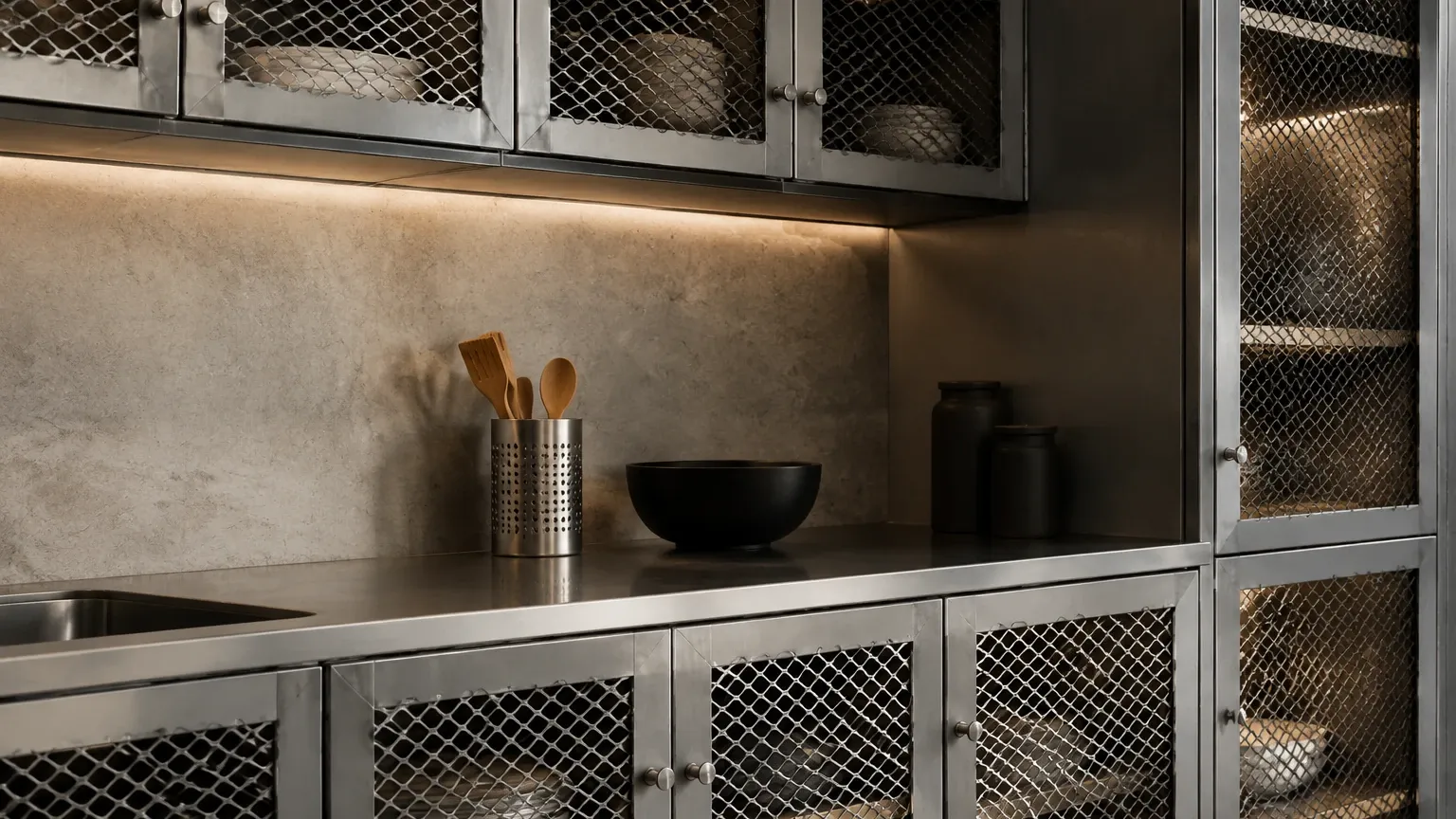
Expanded metal is not a woven or welded product; rather, it is produced from a single sheet of metal that is simultaneously slit and stretched. This process creates a uniform diamond-shaped pattern that is structurally sound because the strands and bonds are part of the original piece of metal. When applied to expanded metal kitchen cabinets, this material offers unique advantages that traditional perforated or solid materials cannot match.
The Technical Fundamentals of Expanded Metal for Cabinetry
To specify the correct material for industrial kitchen applications, it is necessary to distinguish between the two primary forms of expanded metal: raised (standard) and flattened.
Raised expanded metal features strands that are set at an angle to the plane of the sheet. This provides a three-dimensional texture that increases the overall thickness and rigidity of the panel. In a kitchen cabinet context, raised mesh can provide excellent grip for shelving or a more aggressive aesthetic for industrial interiors. However, for cabinet doors or high-touch surfaces, flattened expanded metal is often preferred. Flattened mesh is passed through a cold-rolling mill, which levels the strands and bonds into a single plane. This results in a smooth, safe surface that is easier to clean and finish.
When evaluating Perforated & Expanded Metal for cabinetry, engineers must consider the mesh dimensions, specifically the Long Way of Design (LWD) and the Short Way of Design (SWD). These measurements define the size of the diamond opening and directly influence the "open area" percentage. A higher open area percentage facilitates greater airflow and visibility but may reduce the structural rigidity of the panel if the gauge of the metal is too thin.
Material Selection: Durability and Hygiene Standards
In the food and beverage and pharmaceutical industries, material selection is governed by strict hygiene and corrosion resistance requirements. Expanded metal kitchen cabinets are almost exclusively fabricated from stainless steel, typically Grade 304 or Grade 316.
1. Grade 304 Stainless Steel: This is the standard choice for most commercial kitchen environments. It offers excellent corrosion resistance to common food acids and cleaning chemicals. It is durable, easy to sanitize, and maintains its structural integrity under high temperatures.
2. Grade 316 Stainless Steel: For kitchens located in coastal areas or those utilizing high concentrations of chlorides or salts (such as in certain food processing applications), Grade 316 is recommended. The addition of molybdenum provides superior resistance to pitting and crevice corrosion.
Beyond the alloy, the surface finish of the expanded metal is critical. Electropolishing is a common post-production treatment that removes a fine layer of surface material, eliminating microscopic peaks and valleys where bacteria could potentially colonize. This process also enhances the brightness of the metal, contributing to a clean, professional aesthetic in the workspace.
Engineering Benefits: Ventilation and Visual Management
One of the primary drivers for selecting expanded metal kitchen cabinets over solid-panel alternatives is the need for passive ventilation. In industrial kitchens, heat and moisture management are constant challenges. Solid cabinets can trap humidity, leading to condensation and potential hygiene issues or the degradation of stored dry goods.
Airflow and Heat Dissipation
Expanded metal panels allow for continuous airflow throughout the cabinet interior. This is particularly beneficial for storing hot cookware or equipment that needs to cool down after sterilization. In environments where electronic components or small appliances are stored within cabinets, the mesh design prevents heat buildup, extending the lifespan of the equipment.
Visual Inventory Control
In high-volume commercial kitchens, efficiency is paramount. Expanded metal doors allow staff to perform visual inventory checks without opening the cabinets. This reduces the time spent searching for supplies and helps maintain a more organized workflow. For security-sensitive environments, such as pharmaceutical labs or high-end catering facilities, the transparency of the mesh allows for the monitoring of contents while maintaining a locked, secure enclosure.
Structural Integrity and Load-Bearing Considerations
Engineers must calculate the load-bearing requirements of cabinet shelving and frames when using expanded metal. Unlike solid sheets, the strength of expanded metal is directional. The Long Way of Design (LWD) should typically run across the span of the shelf or door to provide maximum resistance to sagging or deformation.
For heavy-duty industrial storage, the gauge of the metal—the thickness of the original sheet—is a critical specification. A thicker gauge combined with a smaller diamond pattern results in a more robust panel. However, this also increases the total weight of the cabinet. Designers often use a combination of materials: a heavy-duty stainless steel frame to provide the primary structure, with expanded metal panels welded or mechanically fastened into the frame to serve as the infill.
Procurement Risks and Quality Evaluation Criteria
When sourcing components for expanded metal kitchen cabinets, purchasing teams and engineers must be vigilant regarding the quality of the fabrication. Lower-quality expanded metal can present several risks in a B2B environment:
* Burrs and Sharp Edges: The slitting and stretching process can leave sharp edges (burrs) on the strands. For kitchen applications, these must be thoroughly deburred or encapsulated within a frame to prevent injury to staff or damage to cleaning cloths. Professional manufacturers utilize specialized leveling and deburring equipment to ensure a safe finish.
* Dimensional Inconsistency: If the expansion process is not tightly controlled, the diamond pattern may vary across the sheet. This can lead to alignment issues during the assembly of multiple cabinet units, resulting in an unprofessional appearance and potential structural weaknesses.
* Material Certification: In regulated industries, it is essential to confirm that the stainless steel used meets the specified ASTM or ISO standards. Lack of proper certification can lead to premature corrosion and failure to meet health and safety inspections.
To mitigate these risks, it is advisable to work with manufacturers who specialize in precision metal filtration and components. Expertise in Perforated & Expanded Metal ensures that the material is produced with the tight tolerances required for industrial-grade cabinetry.
Customization and Integration into Modular Systems
Modern industrial kitchens often rely on modularity to adapt to changing operational needs. Expanded metal is highly customizable, allowing for a range of configurations that go beyond standard door panels.
* Custom Mesh Patterns: While the standard diamond pattern is most common, architectural expanded metal can be produced in hexagonal or square patterns to meet specific aesthetic or airflow requirements.
* Framing Options: Expanded metal panels can be integrated into U-edging, angle frames, or tube frames. The choice of framing affects the ease of installation and the overall rigidity of the cabinet system.
* Coating and Finishing: While stainless steel is typically left unfinished or electropolished, expanded metal can also be powder-coated in various colors. This is often done in front-of-house commercial kitchens where the industrial look is part of the brand identity, though care must be taken to ensure the coating is food-safe and durable enough for high-traffic use.
Maintenance and Long-Term Performance
The durability of stainless steel expanded metal makes it a cost-effective long-term investment for industrial facilities. Unlike wood or plastic laminates, it will not warp, rot, or absorb odors. Maintenance primarily involves regular cleaning with standard stainless steel cleaners. Because of the open mesh design, it is important to use cleaning methods that reach into the diamond openings, such as pressurized air or soft-bristle brushes, to ensure that no debris or grease accumulates in the corners of the diamonds.
In the event of damage, expanded metal panels are relatively easy to replace if they have been designed as modular infills. This repairability is a significant advantage for facility managers looking to minimize downtime and maintenance costs over the lifecycle of the kitchen infrastructure.
Conclusion for Technical Decision Makers
Selecting expanded metal kitchen cabinets involves more than just choosing a visual style; it is an engineering decision that impacts the safety, efficiency, and hygiene of a commercial or industrial workspace. By focusing on material grade, mesh geometry, and fabrication quality, engineers can ensure that their storage solutions meet the rigorous demands of the food and beverage, pharmaceutical, and industrial sectors.
Working with a manufacturer that understands the complexities of metal expansion and filtration technology provides the technical support necessary to navigate these specifications. Whether the priority is maximizing airflow, ensuring visual transparency, or achieving a high-strength industrial build, Perforated & Expanded Metal remains a versatile and dependable material for modern kitchen cabinetry. Before proceeding with a project, technical teams should confirm the specific gauge, open area requirements, and finishing standards to ensure the final product aligns with both operational needs and regulatory compliance.
