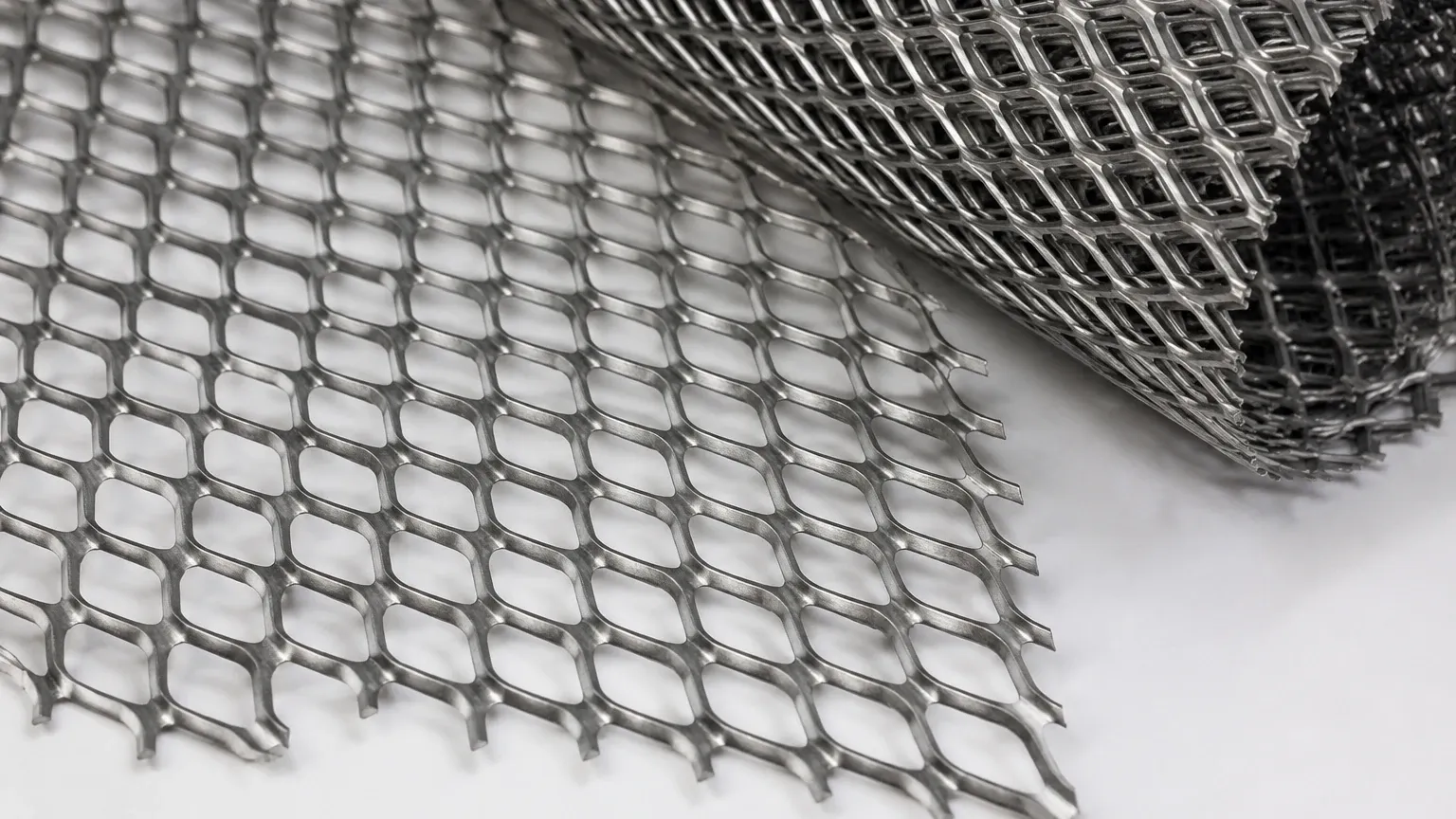
Expanded Metal Lathing Eml
In the realm of industrial structural reinforcement and substrate preparation, expanded metal lathing eml serves as a foundational component for ensuring the mechanical bond and longevity of coatings, plasters, and specialized industrial renders. While often associated with the construction sector, the engineering principles behind expanded metal lathing are deeply rooted in the same precision manufacturing techniques used to produce high-performance Perforated & Expanded Metal for filtration and industrial screening. Understanding the technical specifications, material properties, and installation nuances of EML is critical for engineers and procurement professionals who require durable, corrosion-resistant solutions for demanding environments.
The Engineering Principles of Expanded Metal Lathing
Expanded metal lathing eml is manufactured through a process of simultaneous slitting and stretching. Unlike perforated metal, which involves punching holes and generating significant material waste (slugs), expanded metal is produced from a solid sheet or coil without any loss of material. This process creates a continuous mesh of diamond-shaped openings, where the "strands" and "bonds" are set at a uniform angle to the plane of the sheet.
From an engineering perspective, this structure offers several advantages:
1. Structural Integrity: Because the mesh is formed from a single piece of metal, there are no welds or joins that can fail under stress. The inherent rigidity of the diamond pattern allows for excellent load distribution.
2. Mechanical Keying: The raised edges of the expanded metal provide an exceptional "key" for plasters, cements, or fireproofing materials. This mechanical bond is far superior to smooth surfaces, preventing delamination and cracking over time.
3. Material Efficiency: Since the metal is stretched rather than punched, the final product covers a much larger area than the original raw material, making it a cost-effective choice for large-scale industrial projects.
Material Selection and Corrosion Resistance
The performance of expanded metal lathing eml is heavily dependent on the alloy selected. Industrial applications often subject these components to moisture, chemical exposure, or extreme temperatures, necessitating careful material evaluation.
Galvanized Steel (G90/Z275)
For standard internal applications or environments with controlled humidity, galvanized steel is the most common choice. The zinc coating provides sacrificial protection against oxidation. However, in industrial settings where the lathing may be exposed to condensation or alkaline cementitious materials, the thickness of the galvanization (measured in g/m²) must be specified to ensure a sufficient service life.
Stainless Steel (Grade 304 and 316)
In chemical processing plants, coastal facilities, or food and beverage environments, stainless steel EML is the industry standard. Grade 304 offers excellent resistance to most oxidizing acids, while Grade 316, which contains molybdenum, is required for environments with high chloride concentrations. Stainless steel lathing eliminates the risk of "rust bleeding," which can compromise the aesthetic and structural integrity of the finished surface.
Aluminum and Specialty Alloys
For weight-sensitive applications or specific chemical compatibilities, aluminum expanded metal may be utilized. Aluminum provides natural corrosion resistance through its oxide layer and is non-magnetic, which can be a requirement in certain electronic or laboratory environments.
Technical Specifications: Mesh Size and Gauges
When specifying expanded metal lathing eml, engineers must look beyond the generic term and define the precise geometry required for the application. The two primary measurements are the Long Way of Mesh (LWM) and the Short Way of Mesh (SWM).
* LWM (Long Way of Mesh): The distance from a point on a bond to the corresponding point on the next bond measured across the long diamond axis.
* SWM (Short Way of Mesh): The distance across the short diamond axis.
* Strand Width and Thickness: These dimensions determine the overall weight and stiffness of the lath. A thicker strand provides more surface area for the mechanical bond but increases the weight of the assembly.
In industrial filtration and support contexts, the "open area" percentage is also a critical metric. While EML is designed to be covered, if it is used as a support for insulation or as a guard, the open area determines airflow and visibility. Kaifil’s expertise in Perforated & Expanded Metal allows for the customization of these dimensions to meet specific structural load requirements.
Industrial Applications Beyond Traditional Plastering
While expanded metal lathing eml is a staple for wall and ceiling reinforcement, its industrial utility extends into several specialized fields:
Thermal Insulation Support
In high-temperature industrial piping or vessel insulation, EML is used to wrap the insulation material. It provides a stable surface for the application of weather-barrier coatings or mastics, ensuring the insulation remains intact despite thermal expansion and contraction cycles.
Fireproofing of Structural Steel
Industrial facilities often require Intumescent or cementitious fireproofing on structural steel beams. Expanded metal lathing is wrapped around the steel profiles to provide a mechanical anchor for the fireproofing material, ensuring it remains attached to the steel during a fire event, thereby maintaining the building's structural integrity.
Acoustic Panels and Sound Dampening
EML is frequently used as a facing material for acoustic mineral wool in engine rooms or manufacturing floors. The mesh allows sound waves to pass through into the absorbent material while providing a durable, impact-resistant surface that protects the delicate fibers behind it.
Reinforcement for Industrial Flooring
In certain heavy-duty flooring applications, expanded metal is embedded within the screed to prevent cracking caused by the movement of heavy machinery or forklifts. The three-dimensional nature of the expanded mesh provides reinforcement in multiple directions simultaneously.
Installation Best Practices and Engineering Considerations
To achieve the intended performance of expanded metal lathing eml, installation must follow rigorous technical guidelines. Improperly installed lathing can lead to structural failure or the premature degradation of the coating material.
1. Orientation: The diamond mesh has a specific orientation. For vertical applications, the lath should be installed with the "slants" of the strands facing upwards and inwards toward the wall. This creates a "cup" that holds the wet plaster or render in place during application.
2. Overlapping: To maintain continuity of reinforcement, sheets should be overlapped by at least 25mm on the sides and 50mm at the ends. These overlaps should be securely wired together using galvanized or stainless steel tying wire, depending on the base material.
3. Fixing Centers: Fixings should be spaced according to the weight of the lath and the thickness of the intended coating. Generally, fixings are placed at 150mm to 300mm centers. Using the wrong type of fastener (e.g., using carbon steel screws with stainless steel lath) can lead to galvanic corrosion, which will eventually cause the fixing to fail.
4. Expansion Joints: In large industrial surface areas, expansion joints must be incorporated to accommodate thermal movement. The EML should be discontinued at these joints to prevent stress buildup that could lead to cracking.
Evaluating Total Cost of Ownership (TCO)
When procurement teams evaluate expanded metal lathing eml, the initial purchase price is only one component of the total cost. A technical evaluation should consider:
* Durability and Maintenance: Choosing stainless steel over galvanized may have a higher upfront cost but can eliminate the need for costly repairs in corrosive environments 10 to 15 years down the line.
* Labor Efficiency: High-quality EML that is flat and consistent in gauge is easier to cut and fix, reducing labor hours on-site.
* Material Waste: Because expanded metal is manufactured with zero waste, it is inherently more sustainable and often more price-stable than perforated alternatives that are subject to fluctuating scrap metal values.
Conclusion: Selecting a Technical Partner
Selecting the right expanded metal lathing eml requires a deep understanding of metallurgy, mechanical bonding, and environmental stressors. As a specialized manufacturer, Kaifil provides the technical expertise necessary to bridge the gap between standard construction materials and high-performance industrial components. Whether the application involves complex filtration support or robust structural reinforcement, the precision offered in our Perforated & Expanded Metal range ensures that engineers can specify products with confidence.
Before proceeding with a purchase, technical teams should confirm the specific atmospheric conditions, the chemical composition of the render or plaster to be used, and the required structural load-bearing capacity. By addressing these factors during the design phase, industrial projects can achieve superior longevity and performance.