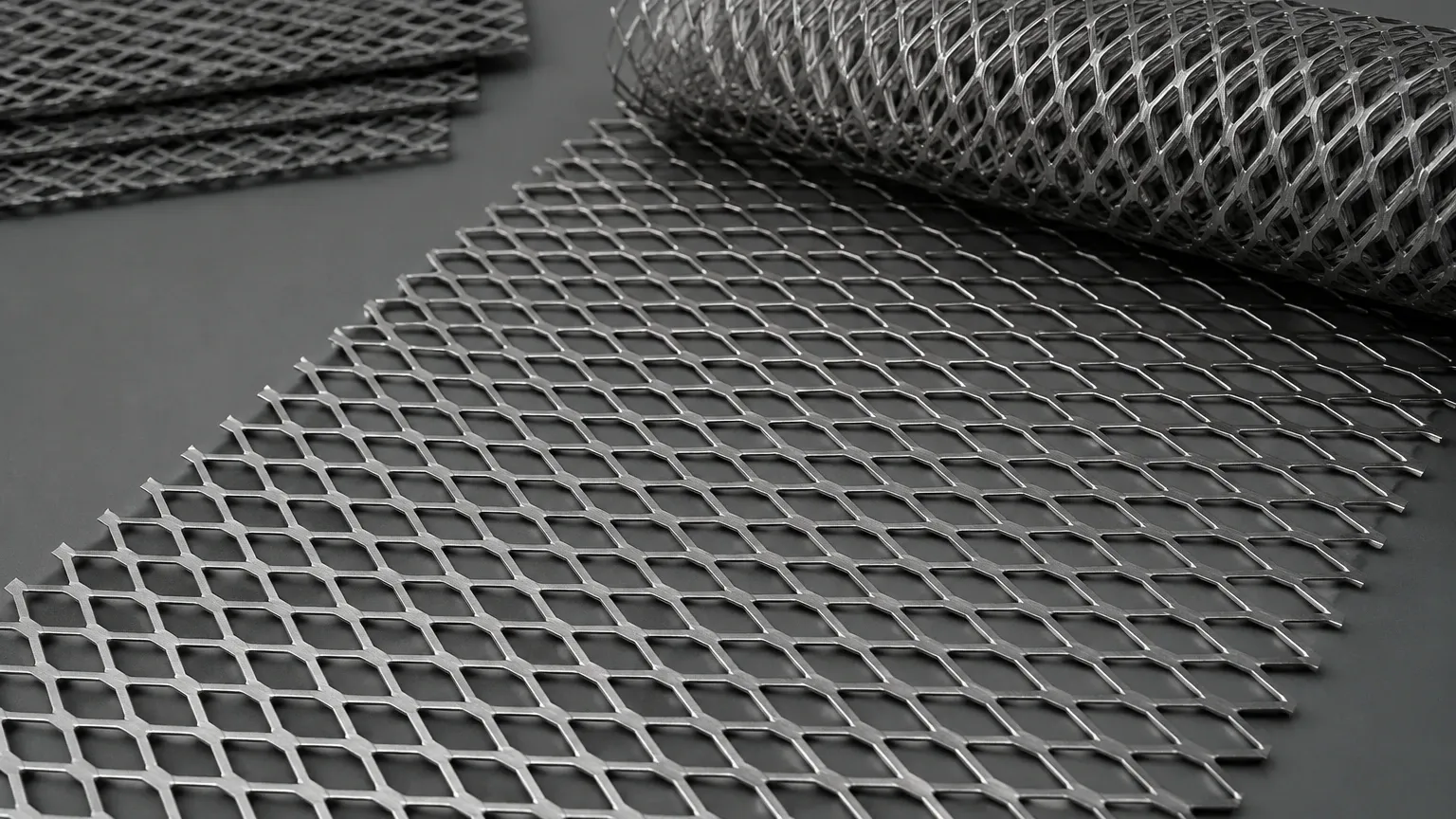
Expanded Metal Mesh 6mm
In industrial filtration and structural engineering, the selection of media is dictated by the precise balance of mechanical strength, open area, and material compatibility. Expanded metal mesh 6mm—referring to a specific diamond opening or pitch dimension—is a critical component in the manufacturing of robust filtration systems and protective enclosures. Unlike perforated sheets, expanded metal is produced by simultaneously slitting and stretching a solid metal sheet, creating a continuous mesh without welds or joints. This process ensures structural integrity while optimizing material usage, making it a preferred choice for engineers designing high-performance industrial components.
Understanding the Technical Specifications of Expanded Metal Mesh 6mm
When specifying expanded metal mesh 6mm, technical professionals must distinguish between the various dimensions that define the mesh geometry. In most industrial contexts, the "6mm" designation refers to either the Short Way of the Diamond (SWD) or the Long Way of the Diamond (LWD). These measurements are taken from the center of one bond to the center of the next bond.
1. SWD (Short Way of Diamond): This is the distance across the short axis of the diamond-shaped opening. A 6mm SWD provides a dense, rigid structure often used for fine-particle pre-filtration or as a support layer for thinner wire mesh.
2. LWD (Long Way of Diamond): This is the distance across the long axis. If the 6mm refers to the LWD, the mesh is significantly tighter, providing higher resistance to mechanical impact but potentially increasing pressure drop in fluid applications.
3. Strand Width and Thickness: The strand width is the amount of metal between the openings, while the thickness refers to the gauge of the original sheet. For a 6mm mesh, the strand width typically ranges from 0.5mm to 1.5mm, depending on the required rigidity.
There are two primary forms of this mesh: Standard (Raised) and Flattened. Standard expanded metal has strands that are turned at an angle to the plane of the sheet, providing a high strength-to-weight ratio and excellent grip. Flattened expanded metal is processed through a cold-rolling mill, resulting in a smooth, flat surface. For filtration applications involving Perforated & Expanded Metal, flattened mesh is often preferred because it prevents turbulence in fluid flow and provides a uniform surface for bonding secondary filtration layers.
Material Selection for Industrial Filtration
The performance of expanded metal mesh 6mm is heavily dependent on the alloy used. Because these components are frequently exposed to corrosive chemicals, high pressures, and extreme temperatures, material selection is a primary engineering consideration.
* Stainless Steel 304: The most common grade for general industrial use. It offers good corrosion resistance and is suitable for food and beverage applications where sanitation is required but exposure to chlorides is limited.
* Stainless Steel 316L: Specified for more demanding environments, such as pharmaceutical processing or marine applications. The addition of molybdenum and a lower carbon content provides superior resistance to pitting and crevice corrosion in acidic or saline environments.
* Specialty Alloys: In high-temperature chemical processing, alloys like Monel or Inconel may be used, though stainless steel remains the standard for most liquid and gas filtration housings.
Selecting the correct material ensures that the 6mm mesh maintains its dimensional stability throughout its service life, preventing the "blind opening" effect where corrosion products or material fatigue cause the mesh to deform and alter filtration accuracy.
Engineering Performance: Flow Rates and Pressure Drop
For engineers, the most critical aspect of expanded metal mesh 6mm is its impact on fluid dynamics. The open area percentage determines the flow capacity and the initial pressure drop across the filter element.
A typical 6mm expanded mesh might offer an open area ranging from 40% to 70%. A higher open area reduces the energy required to pump fluids through the system but may sacrifice the structural support needed for high-pressure hydraulic applications. When used as a support core in a filter cartridge, the expanded metal must withstand the collapse pressure—the point at which the differential pressure across the filter causes the structural support to fail.
In air filtration or gas diffusion, the angled strands of raised expanded metal can be used to redirect flow or create controlled turbulence, which can be beneficial for certain catalytic processes. However, in liquid filtration, the goal is usually to minimize turbulence to prevent the release of captured contaminants (unloading). In these cases, the precision of the 6mm opening is vital for maintaining a consistent flow velocity across the filter face.
Key Evaluation Criteria for Procurement and Quality Control
When sourcing expanded metal mesh 6mm for B2B industrial projects, procurement teams should evaluate suppliers based on several technical benchmarks:
* Dimensional Consistency: The expansion process must be tightly controlled to ensure that the 6mm pitch is uniform across the entire sheet. Inconsistencies can lead to weak spots in the mesh or uneven flow distribution in filtration systems.
* Edge Quality: For components that will be integrated into larger assemblies, the quality of the sheared edges is paramount. Burrs or sharp edges can damage sensitive filter media (such as fiberglass or polymer membranes) that are often layered against the expanded metal.
* Flattening Tolerance: If flattened mesh is required, the thickness tolerance must be minimal. Variations in thickness can interfere with automated welding processes or prevent a proper seal within a filter housing.
* Surface Cleanliness: Especially in the pharmaceutical and food industries, the mesh must be free of residual oils from the expansion process. Suppliers should provide information on their cleaning and passivation protocols.
The Role of 6mm Mesh in Multi-Layer Filtration Systems
Expanded metal mesh 6mm rarely acts as the primary filtration media for fine particles. Instead, its primary role is as a "support and protection" layer. In a typical pleated filter cartridge, a thin wire mesh or non-woven fabric performs the actual filtration, while the expanded metal provides the necessary rigidity to keep the pleats open under flow pressure.
By using a 6mm opening, engineers provide enough support to prevent the media from sagging while ensuring that the "shielding" effect is minimized. If the opening were too small (e.g., 2mm), it might block too much of the primary media's surface area. If it were too large (e.g., 12mm), the primary media might stretch or tear under high differential pressure. The 6mm specification is often the "sweet spot" for medium-to-heavy duty industrial filters used in water treatment and hydraulic oil systems.
Common Risks in the Specification Process
One of the most common risks when ordering expanded metal is the ambiguity of the "6mm" measurement. Without a technical drawing specifying SWD, LWD, strand width, and thickness, the resulting product may not fit the intended housing.
Another risk is neglecting the "bond" geometry. The bond is the point where the strands intersect. In expanded metal, the bond is solid metal, not a weld. If the expansion ratio is too high, the bonds can become stressed, leading to micro-cracks that fail under vibration or thermal cycling. This is particularly dangerous in high-vibration environments like aerospace or heavy machinery hydraulics. Engineers should confirm that the material has undergone proper stress-relieving processes if it is to be used in high-cycle applications.
Customization and OEM Integration
Manufacturers like Kaifil specialize in tailoring expanded metal components to specific OEM requirements. Customization goes beyond just the 6mm dimension; it includes:
1. Custom Sheet Sizes and Circles: Reducing waste by ordering pre-cut discs or specific sheet dimensions that fit directly into the production line.
2. Forming and Cylindrical Welding: Expanded metal can be rolled into cylinders to act as the inner core or outer guard of a filter. This requires precise welding techniques to ensure the 6mm pattern remains continuous at the seam.
3. Surface Treatments: Options such as electropolishing can enhance the corrosion resistance of stainless steel mesh, while powder coating may be used for non-filtration structural applications.
By working with a manufacturer that understands the nuances of Perforated & Expanded Metal, purchasing teams can ensure that the components they receive are optimized for both performance and manufacturability.
Information to Confirm Before Finalizing Procurement
Before moving forward with a purchase or production run of expanded metal mesh 6mm, technical teams should confirm the following data points with their supplier:
* The exact definition of 6mm: Is it SWD or LWD? This is the most frequent cause of order errors.
* Material Grade and Certification: Request Mill Test Reports (MTRs) to verify the chemical composition of the stainless steel, especially for 316L requirements.
* Load Requirements: If the mesh is supporting a heavy filter cake or high-pressure flow, provide the supplier with the expected differential pressure to ensure the strand thickness is sufficient.
* Orientation of the Diamonds: In some flow applications, the direction of the LWD (parallel or perpendicular to the flow) can affect the structural strength of a cylindrical filter.
* Packaging and Shipping: Expanded metal can be easily deformed if not packaged correctly. Ensure the supplier uses rigid crating for large sheets or protective cores for rolled mesh.
In conclusion, expanded metal mesh 6mm is a versatile and essential component in the industrial filtration landscape. Its strength, cost-effectiveness, and adaptability make it a staple for engineers who require reliable support structures and pre-filtration media. By focusing on technical specifications, material integrity, and precise manufacturing standards, industrial buyers can achieve long-term durability and optimal performance in their filtration systems.