


Expanded Metal Options
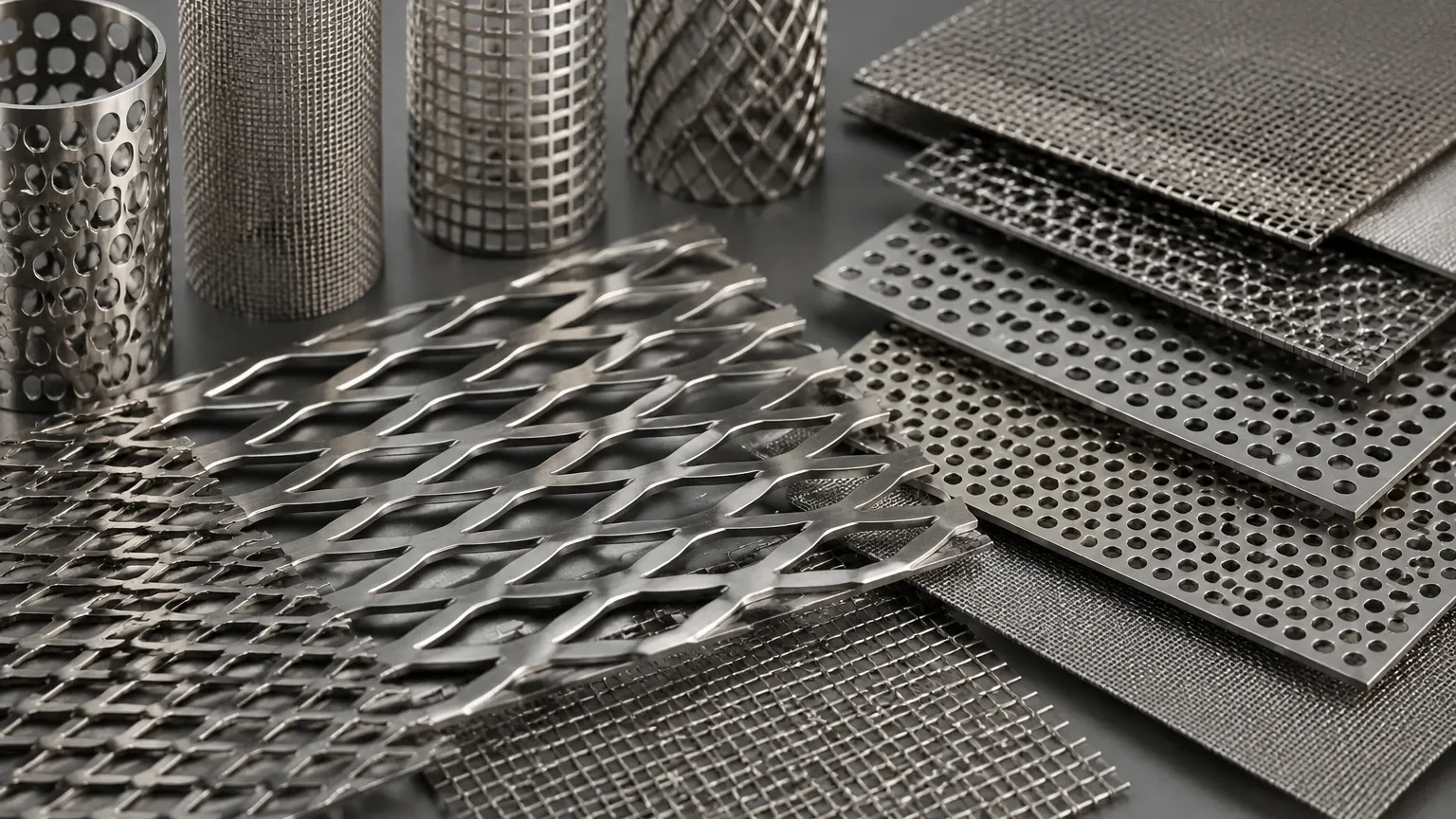
In industrial filtration and structural engineering, selecting the right media is critical for ensuring long-term performance, mechanical integrity, and cost-efficiency. Expanded metal is a versatile material produced by simultaneously slitting and stretching a metal sheet, creating a diamond-shaped pattern of openings. Unlike perforated metal, which involves punching holes and generating scrap, the expanding process is a zero-waste manufacturing method that results in a high strength-to-weight ratio.
For engineers and procurement professionals, navigating the various expanded metal options requires an understanding of material properties, geometric configurations, and how these factors influence flow dynamics and structural support within a filtration system. As a specialist in precision metal components, Kaifil provides a range of Perforated & Expanded Metal solutions designed to meet the rigorous demands of chemical processing, water treatment, and hydraulic applications.
Understanding the Manufacturing Process and Its Impact on Performance
The fundamental characteristic of expanded metal is its monolithic structure. Because the material is slit and stretched rather than woven or welded, there are no joints or seams that can unravel or break under high-pressure conditions. This makes it an ideal choice for support cages in pleated filter cartridges or as a protective outer wrap for delicate wire mesh layers.
When evaluating expanded metal options, it is essential to distinguish between the two primary forms available: standard (raised) and flattened.
Standard (Raised) Expanded Metal
Standard expanded metal comes directly from the expanding machine. The strands and bonds (the intersections of the strands) are set at a uniform angle to the plane of the sheet. This creates a three-dimensional surface that offers several functional advantages:
* Increased Rigidity: The angled strands provide greater structural stiffness compared to a flat sheet of the same weight.
* Flow Turbulence: In certain filtration applications, the raised edges can induce controlled turbulence, which may help in preventing the rapid buildup of a filter cake on the primary media.
* Enhanced Grip: The textured surface is often used in industrial walkways or grates where slip resistance is required, though in filtration, it is primarily valued for its mechanical strength.
Flattened Expanded Metal
Flattened expanded metal is produced by passing the standard expanded sheet through a cold-roll reducing mill. This process flattens the strands and bonds into the same plane as the original sheet. Engineers often prefer flattened expanded metal options for the following reasons:
* Smooth Surface: The absence of raised edges prevents abrasion against secondary filter media, such as fine wire mesh or synthetic membranes.
* Precision Thickness: The rolling process allows for tighter control over the final thickness of the material, which is critical when the component must fit into a precision-machined housing.
* Ease of Fabrication: Flattened sheets are easier to shear, weld, and form into cylindrical shapes for filter cartridges.
Material Selection for Corrosive and High-Temperature Environments
The choice of material is perhaps the most critical decision when specifying expanded metal for industrial use. The environment—including temperature, chemical exposure, and pressure—will dictate which metal alloy is most suitable.
Stainless Steel Options
Stainless steel is the industry standard for high-performance filtration due to its excellent corrosion resistance and mechanical durability.
* Grade 304/304L: Suitable for general industrial applications, food and beverage processing, and mildly corrosive environments. It offers good weldability and formability.
* Grade 316/316L: Contains molybdenum, which provides superior resistance to chlorides and pitting. This is the preferred option for marine environments, pharmaceutical manufacturing, and aggressive chemical processing.
* Specialty Alloys: For extreme conditions involving high heat or highly acidic/alkaline fluids, materials like Monel, Inconel, or Duplex stainless steel can be expanded to provide the necessary longevity.
Carbon Steel and Aluminum
While stainless steel is dominant in filtration, other expanded metal options serve specific roles:
* Carbon Steel: Often used in hydraulic oil filtration or structural supports where the fluid is non-corrosive or the component is coated (galvanized or powder-coated) to prevent oxidation. It is a cost-effective choice for heavy-duty mechanical support.
* Aluminum: Valued for its lightweight properties and natural resistance to atmospheric corrosion. It is frequently used in air filtration systems and HVAC applications where weight reduction is a priority.
Technical Specifications: Defining the Geometry
To ensure a filter component performs as intended, engineers must provide precise geometric specifications. The terminology used in the expanded metal industry is standardized to help avoid communication errors during the design phase.
1. SWD (Short Way of Design): The distance from the center of one bond to the center of the next bond measured across the short diamond diagonal.
2. LWD (Long Way of Design): The distance from the center of one bond to the center of the next bond measured across the long diamond diagonal.
3. SWO (Short Way of Opening): The actual width of the opening, excluding the strand width.
4. LWO (Long Way of Opening): The actual length of the opening, excluding the strand width.
5. Strand Width: The amount of metal fed into the machine between the slits.
6. Strand Thickness: The gauge of the original base metal.
Calculating Open Area
The open area percentage is a vital metric for filtration efficiency. It determines the pressure drop across the media and the flow rate capacity. A higher open area reduces resistance to flow but may compromise the structural integrity of the part. Conversely, a lower open area provides robust support but can lead to higher energy costs due to increased pumping pressure. Finding the optimal balance is a key part of the engineering process.
Application-Specific Expanded Metal Options in Filtration
Expanded metal serves several distinct roles within an industrial filtration assembly. Understanding these roles helps in selecting the correct mesh size and material.
Support and Drainage Layers
In many high-pressure filtration systems, the primary filtration media (such as a fine stainless steel wire mesh) is not strong enough to withstand the differential pressure on its own. Expanded metal is used as a support layer to prevent the fine mesh from collapsing or deforming. In pleated filters, expanded metal can act as a "spacer" or drainage layer, ensuring that the pleats remain open and that the fluid can flow freely across the entire surface area of the media.
Pre-Filtration and Trash Racks
For water treatment or intake systems, heavy-duty expanded metal options function as pre-filters. They capture large debris, such as leaves, plastic, or stones, before the fluid reaches more sensitive downstream components. In these cases, the durability and impact resistance of the expanded metal are more important than fine filtration accuracy.
Protective Cages
Industrial filter cartridges are often subjected to rough handling during installation and maintenance. An outer cage made of expanded metal protects the internal filter media from mechanical damage. This is particularly common in hydraulic systems and chemical reactors where the filter must maintain its shape under turbulent flow conditions.
Engineering Considerations and Risk Mitigation
When specifying expanded metal options, engineers should be aware of potential risks that can affect the performance and lifespan of the filtration system.
Burr Removal and Surface Finish
The expanding process can leave sharp edges or burrs on the strands. In filtration, these burrs can trap fibers, cause localized turbulence, or even puncture adjacent soft media. Specifying a de-burring process or opting for flattened and polished expanded metal can mitigate these risks. For food-grade or pharmaceutical applications, electropolishing is often recommended to ensure a smooth, easy-to-clean surface that meets hygiene standards.
Tolerance and Flatness
Standard manufacturing tolerances for expanded metal can vary by material and thickness. If the component is intended for a precision fit, it is crucial to confirm the allowable tolerances for SWD, LWD, and overall sheet flatness. Variations in thickness can lead to bypass issues if the filter element does not seal correctly within its housing.
Fatigue and Stress Cracking
In applications involving pulsating flow or mechanical vibration, the bonds of the expanded metal can become stress points. Selecting a material with high fatigue strength and ensuring the strand width is sufficient for the load can prevent premature failure. Engineers should also consider the orientation of the diamonds (LWD vs. SWD) relative to the direction of stress, as the material's strength is anisotropic.
Confirming Requirements for Custom Fabrication
To achieve the best results, purchasing teams and engineers should work closely with the manufacturer to define the exact requirements of the project. Before moving to production, the following details should be confirmed:
* Material Grade: Specify the exact alloy (e.g., SS316L) to ensure chemical compatibility.
* Dimensional Accuracy: Provide the required SWD/LWD and opening sizes, along with acceptable tolerances.
* Forming Requirements: Indicate if the material needs to be rolled into cylinders, welded, or cut into specific shapes.
* Surface Treatment: Determine if the part requires pickling, passivation, electropolishing, or coating.
* Quantity and Delivery: Discuss batch sizes and lead times to align with project schedules.
Kaifil’s expertise in manufacturing custom stainless steel filtration solutions ensures that every expanded metal component is engineered for reliability. By offering a wide array of expanded metal options, we help industrial clients optimize their filtration processes, reduce maintenance costs, and improve the durability of their equipment. Whether you require a high-strength support cage or a precision-flattened pre-filter, understanding the technical nuances of these materials is the first step toward a successful application.
