


Expanded Metal Panels
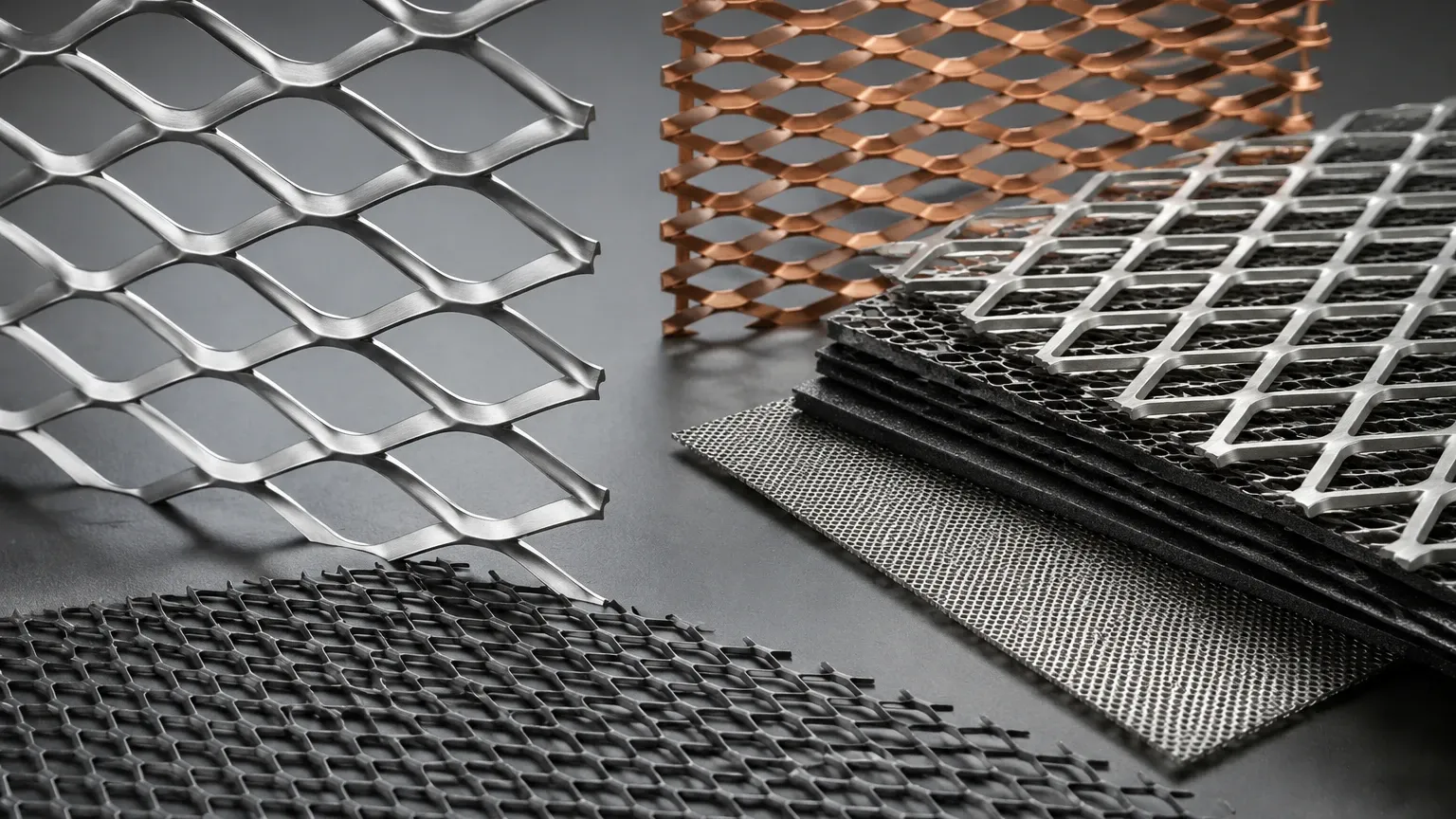
In the landscape of industrial filtration and structural engineering, expanded metal panels represent a unique intersection of material efficiency and mechanical integrity. Unlike perforated metal, which is created by punching holes and removing material, expanded metal is manufactured through a process of simultaneous slitting and stretching. This precision engineering technique results in a continuous, jointless mesh that offers distinct advantages in terms of strength-to-weight ratio, conductivity, and filtration support. For engineers and procurement specialists, understanding the technical nuances of these panels is essential for optimizing system performance and ensuring long-term durability in demanding environments.
Understanding the Engineering Principles of Expanded Metal Panels
The fundamental characteristic of expanded metal panels is their monolithic structure. Because the metal is stretched rather than woven or welded, there are no joints or seams that can unravel or break under stress. This inherent structural continuity makes expanded metal an ideal choice for high-pressure applications where mechanical failure is not an option.
From a manufacturing perspective, the process begins with a solid sheet or coil of metal—typically stainless steel, carbon steel, or aluminum. A machine equipped with a reciprocating knife slits the metal at regular intervals while simultaneously stretching it. This creates diamond-shaped openings. Because no material is lost during this process, expanded metal is often a more cost-effective and environmentally sustainable alternative to perforated metal, which can result in significant scrap waste.
In filtration systems, Perforated & Expanded Metal components serve as critical structural elements. They are frequently utilized as support cages for finer wire mesh filters or as primary strainers in heavy-duty industrial processes. The geometry of the diamond openings provides a high percentage of open area while maintaining the rigidity required to withstand significant pressure differentials.
Key Technical Specifications and Terminology
To accurately specify expanded metal panels for industrial use, engineers must be familiar with the standardized terminology used to describe their dimensions and properties. These specifications determine the flow rate, filtration efficiency, and load-bearing capacity of the panel.
* SWD (Short Way of Design): This refers to the distance from the center of one bond to the center of the next bond, measured across the short diamond diagonal.
* LWD (Long Way of Design): This is the distance measured across the long diamond diagonal.
* Strand Width: The amount of metal between the openings. This measurement, combined with the strand thickness, dictates the overall strength of the panel.
* Strand Thickness: The thickness of the original base material.
* Open Area: Expressed as a percentage, this indicates the ratio of the openings to the total area of the panel. This is a critical metric for calculating flow resistance and pressure drop in filtration applications.
Furthermore, expanded metal is categorized into two primary forms: Raised (Standard) and Flattened. Raised expanded metal retains the angular strands created during the expansion process, providing a slip-resistant surface and high structural rigidity. Flattened expanded metal undergoes an additional cold-rolling process to create a smooth, level surface. Flattened panels are often preferred when the mesh must be integrated into tight-tolerance assemblies or when a smooth interface with other filter media is required.
Material Selection for Industrial Filtration Environments
The performance of expanded metal panels is heavily dependent on the alloy selected. In industrial filtration, where exposure to corrosive chemicals, high temperatures, and abrasive particles is common, stainless steel is the industry standard.
1. Stainless Steel 304: Offers excellent corrosion resistance and is suitable for most general industrial applications, including food and beverage processing and basic chemical handling.
2. Stainless Steel 316/316L: Contains molybdenum, which provides superior resistance to chlorides and pitting. This is the preferred material for marine environments, pharmaceutical production, and aggressive chemical processing.
3. Specialty Alloys: For extreme environments, materials such as Duplex stainless steel or nickel-based alloys may be specified to handle high-temperature oxidation or highly acidic conditions.
When selecting a material, engineers must consider the "Total Cost of Ownership." While a higher-grade stainless steel may have a higher initial procurement cost, its resistance to corrosion and extended service life often result in lower maintenance costs and fewer system shutdowns over the long term.
Comparing Expanded Metal Panels with Perforated Metal
While both Perforated & Expanded Metal are used for similar industrial purposes, their mechanical properties differ significantly. Choosing between them requires an analysis of the specific application requirements.
* Material Efficiency: As previously noted, expanded metal produces zero scrap. Perforated metal involves punching out holes, which can result in 10% to 40% material waste. This makes expanded metal panels a more economical choice, particularly when using expensive alloys.
* Strength and Weight: For the same weight per square foot, expanded metal is generally stronger than perforated metal. The "truss-like" structure of the strands provides excellent directional strength.
* Flow Characteristics: Perforated metal offers more precise control over hole size and shape (round, square, slotted), which can be critical for specific particle size exclusion. Expanded metal, however, typically offers a higher open area percentage, which facilitates higher flow rates and lower pressure drops.
* Aesthetics and Surface: Perforated metal provides a cleaner, more uniform appearance and a flatter surface without the need for secondary processing. In applications where the filter media must be bonded to the support, the flat surface of perforated metal or flattened expanded metal is essential.
Critical Performance Factors in Filtration Applications
In the context of industrial filtration, expanded metal panels are rarely used in isolation. Instead, they function as a component of a larger filtration assembly. Their primary roles include:
1. Structural Support for Fine Media
Fine wire mesh or synthetic filter fabrics lack the mechanical strength to withstand high-pressure flows. Expanded metal panels act as a "skeleton," preventing the fine media from collapsing or deforming. The strand geometry must be carefully selected to ensure it does not obstruct too much of the active filtration area of the primary media.
2. Pre-Filtration and Coarse Straining
In systems dealing with large debris, expanded metal can serve as a primary strainer. Its robust construction allows it to capture large particles that would otherwise clog or damage more sensitive downstream filtration components. This is common in water treatment, pulp and paper processing, and mining operations.
3. Flow Diffusion and Turbulence Control
The angular nature of raised expanded metal can be used to manipulate fluid dynamics. By breaking up laminar flow and inducing controlled turbulence, these panels can improve the efficiency of heat exchangers or ensure more even distribution across a filter bed.
Customization and Engineering Considerations for Procurement
When sourcing expanded metal panels, a "one-size-fits-all" approach is rarely effective. Customization is necessary to meet the specific demands of industrial equipment. Procurement teams should work closely with manufacturers to confirm several key factors before production:
* Dimensional Tolerances: Industrial housings often have very tight tolerances. It is vital to specify the exact length, width, and flatness requirements to ensure seamless integration.
* Edge Treatment: Expanded metal can have "random" edges (where the diamonds are cut mid-pattern) or "bonded" edges (where the cut follows the bond of the diamonds). For safety and ease of installation, bonded edges or U-edging frames are often preferred.
* Load Requirements: Engineers must calculate the maximum pressure or mechanical load the panel will face. This determines the required strand thickness and material grade.
* Surface Finish: Depending on the application, panels may require electropolishing to remove burrs and improve corrosion resistance, or specialized coatings for added chemical protection.
Maintenance and Replacement Cycles
The durability of stainless steel expanded metal panels makes them a low-maintenance solution, but they are not indestructible. In filtration applications, the primary cause of failure is usually related to mechanical abrasion or chemical degradation over many years.
Regular inspection should focus on identifying any signs of "blinding" (where particles become permanently lodged in the diamond openings) or stress fractures at the bonds. Because expanded metal is a single piece of material, a fracture in one area can eventually compromise the integrity of the entire panel. However, in most properly engineered systems, these panels will outlast multiple cycles of the finer filter media they support, contributing to a lower overall maintenance burden.
Conclusion
Expanded metal panels are an indispensable component in the modern industrial filtration toolkit. By offering a combination of high structural strength, material efficiency, and customizable flow characteristics, they provide a reliable foundation for complex filtration systems. Whether used as a support structure for precision wire mesh or as a standalone coarse strainer, the technical advantages of expanded metal—particularly when fabricated from high-grade stainless steel—ensure that industrial processes can operate with maximum efficiency and minimal downtime. When selecting these components, focusing on technical specifications such as SWD, LWD, and material compatibility will lead to superior performance and long-term cost savings in even the most demanding chemical, pharmaceutical, and industrial environments.
