


Expanded Metal Video
In the procurement and engineering of industrial filtration components, visual verification often serves as a bridge between theoretical specifications and practical application performance. An expanded metal video or technical visual demonstration provides engineers and purchasing teams with a clear understanding of material behavior, structural integrity, and manufacturing precision that static data sheets may not fully convey. For industries relying on high-performance filtration, such as chemical processing, pharmaceuticals, and hydraulic systems, understanding the nuances of how expanded metal is formed and finished is critical for ensuring long-term reliability.
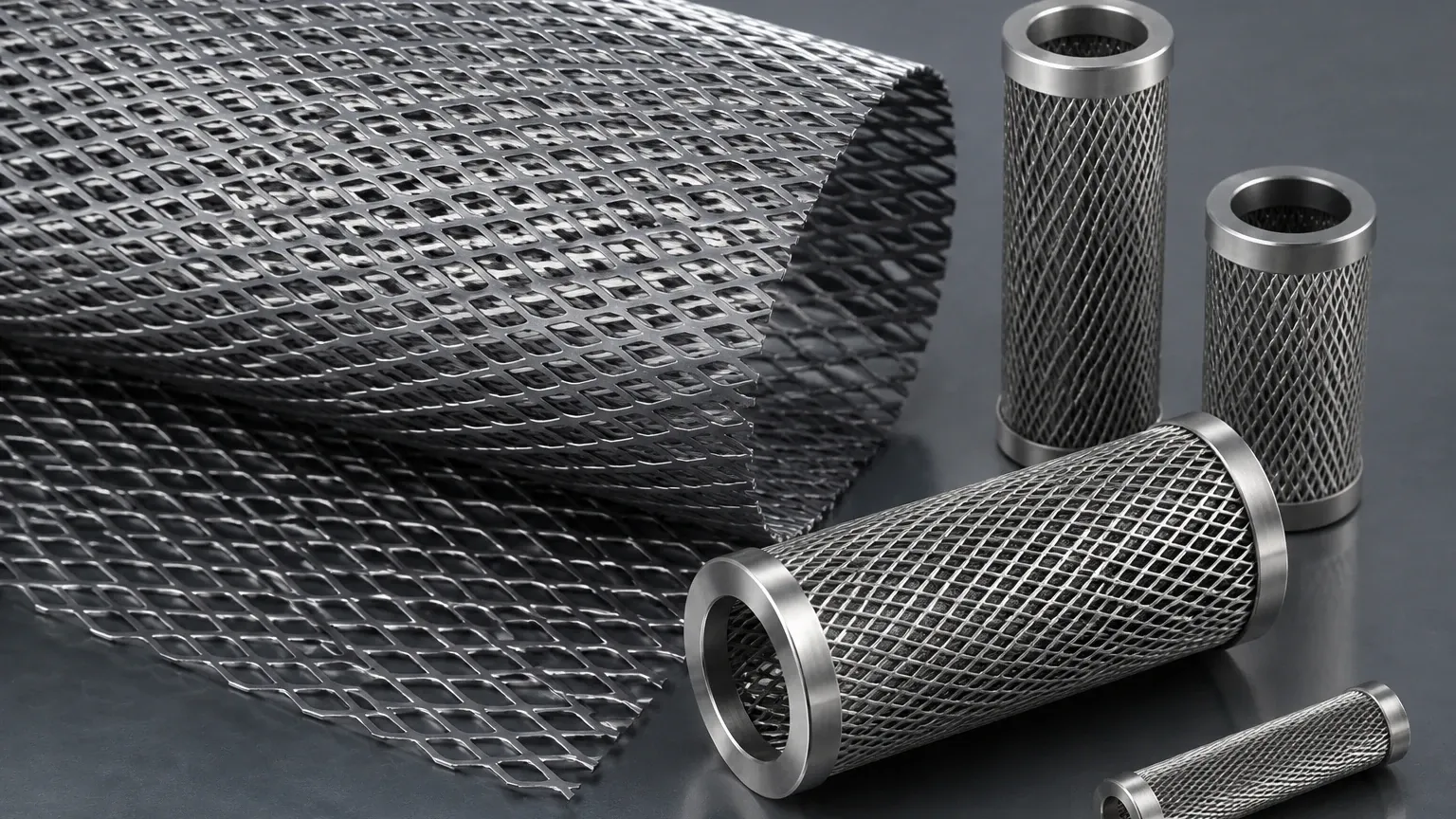
Expanded metal is a versatile material used extensively as a support structure for filter media or as a primary filtration layer itself. Unlike perforated metal, which is created by punching holes and removing material, expanded metal is produced through a simultaneous slitting and stretching process. This method results in a continuous piece of metal with no joins or welds, offering a high strength-to-weight ratio and a unique three-dimensional geometry. Watching an expanded metal video of the production process reveals the mechanical precision required to maintain consistent diamond sizes and strand widths, which are essential for uniform flow distribution in filtration systems.
Technical Evaluation via Visual Documentation
When reviewing an expanded metal video for industrial sourcing, technical professionals should focus on several key indicators of quality and suitability. Visual documentation allows for the assessment of the "bond"—the point where the strands intersect. In high-quality expanded metal, these bonds should be uniform and free from stress fractures or micro-cracks that could lead to structural failure under high-pressure conditions.
Furthermore, the video allows for a better understanding of the "raised" versus "flattened" states. Raised expanded metal retains the natural angle of the strands, providing a textured surface that can be beneficial for mechanical interlocking in composite filter structures. Flattened expanded metal has been passed through a cold-rolling mill to create a smooth, level surface. A visual demonstration clarifies the degree of flatness and the consistency of the thickness across the sheet, which is vital for ensuring a proper seal within a filter housing.
Comparing Perforated & Expanded Metal in Filtration
The choice between Perforated & Expanded Metal often depends on the specific requirements of the filtration environment, including pressure drop, mechanical load, and cost-efficiency. While both materials provide structural support, they offer different performance characteristics.
Perforated metal offers precise hole sizes and shapes, which is ideal for applications requiring exact particle retention at the support layer. However, the punching process generates scrap material, which can increase the total cost, especially when using expensive alloys like 316L stainless steel. In contrast, expanded metal is a "zero-waste" product. The expansion process increases the surface area of the original sheet, making it a highly cost-effective solution for large-scale industrial filters. When viewing an expanded metal video, engineers can observe how the material maintains its structural continuity, which often results in superior rigidity compared to perforated sheets of the same weight.
Key Specifications to Observe
To make an informed purchasing decision, it is necessary to correlate visual evidence with technical measurements. An expanded metal video often highlights the following dimensions, which are critical for filtration design:
* SWD (Short Way of Diamond): The distance from the center of one bond to the center of the next bond across the short axis. This determines the density of the mesh.
* LWD (Long Way of Diamond): The distance across the long axis of the diamond opening. Together with the SWD, this defines the open area percentage.
* Strand Width and Thickness: These dimensions dictate the mechanical strength and the total weight of the component. In filtration, the strand width also influences the "tortuous path" that a fluid must take, potentially affecting turbulence and pressure drop.
* Open Area Percentage: This is the most critical factor for flow rate. Visualizing the open area through a video helps engineers estimate how much resistance the support layer will contribute to the overall system.
Quality Risks and Inspection Points
Industrial filtration demands high-purity standards, particularly in the food and beverage or pharmaceutical sectors. A detailed expanded metal video can help identify potential manufacturing defects that might compromise the end product. Key risks to look for include:
1. Burrs and Sharp Edges: The slitting process can leave sharp edges if the tooling is not properly maintained. In filtration, these burrs can tear delicate wire mesh or synthetic filter media during the pleating or assembly process.
2. Camber and Out-of-Squareness: If the expansion process is not perfectly calibrated, the resulting sheet may have a "camber" (a curve along the edge). This makes it difficult to weld or fit into cylindrical filter cartridges.
3. Inconsistent Openings: Variations in the diamond size across the sheet indicate poor tension control during manufacturing, which can lead to uneven flow and premature filter clogging.
By requesting or viewing a production-grade expanded metal video, procurement teams can verify that the manufacturer employs rigorous quality control measures, such as automated optical inspection or precision leveling, to mitigate these risks.
Customization and OEM Capabilities
For many specialized industrial applications, standard expanded metal specifications are insufficient. Kaifil specializes in providing customized filtration solutions that require precise material selection and geometry. Whether the application involves high-temperature chemical vapors or high-viscosity hydraulic fluids, the choice of material—ranging from standard stainless steels to exotic alloys—is paramount.
An expanded metal video showing the customization process can demonstrate how the material is slit to specific widths for spiral-welded filter cores or how it is annealed to achieve the necessary ductility for deep-drawing or complex forming. Engineering teams should confirm that their supplier can provide custom SWD/LWD ratios to optimize the balance between structural support and maximum flow efficiency.
Maintenance and Replacement Cycles
In the context of total cost of ownership, the durability of the expanded metal support layer directly impacts the replacement cycle of the entire filter element. While the primary filter media (such as fine wire mesh or fiber felt) may be cleaned or replaced, the structural core must withstand repeated pressure cycles and cleaning procedures, including backwashing or ultrasonic cleaning.
Visual documentation of the material's performance under stress—often shown in an expanded metal video featuring pressure testing or fatigue analysis—provides confidence in the component's longevity. Stainless steel expanded metal is particularly favored for its corrosion resistance and ability to maintain its shape even after multiple cleaning cycles, reducing the frequency of total assembly replacements.
Conclusion: Confirming the Next Steps
Before proceeding with a bulk order for industrial filtration components, engineers and purchasing managers should confirm that the technical specifications align with the visual reality of the product. An expanded metal video serves as a vital tool in this verification process. By observing the manufacturing precision, surface finish, and structural uniformity, technical teams can ensure they are selecting a product that will perform reliably in demanding environments.
When evaluating Perforated & Expanded Metal for your next project, consider the following checklist:
* Does the material meet the specific corrosion resistance requirements (e.g., Grade 304 vs. 316L)?
* Is the open area percentage optimized for the required flow rate and pressure drop?
* Are the bonds and strands free from visual defects like cracks or excessive burrs?
* Can the manufacturer provide the material in the specific dimensions or forms (rolls, sheets, or fabricated cylinders) required for your assembly?
By integrating visual evaluation with rigorous engineering standards, companies can optimize their filtration processes, improve product purity, and achieve a more cost-effective production cycle.
