


Expanded Metal vs Diamond Mesh
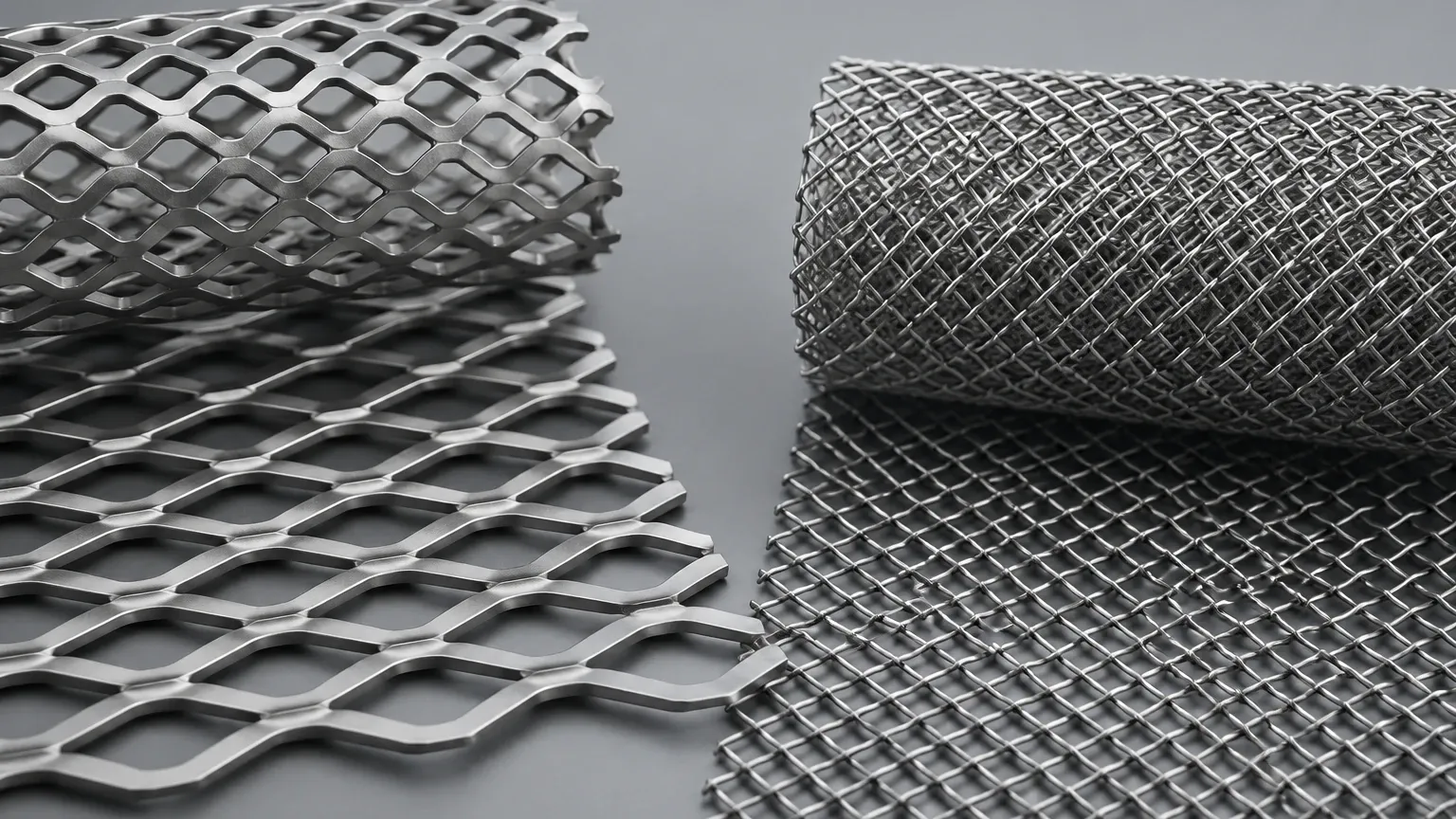
In the realm of industrial filtration, structural support, and architectural design, terminology often overlaps, leading to confusion during the procurement and engineering phases. Two terms frequently used interchangeably are expanded metal and diamond mesh. While they often describe the same physical geometry—a series of diamond-shaped openings—they represent different manufacturing methodologies and functional characteristics.
For engineers and purchasing teams sourcing components for high-performance filtration or industrial enclosures, understanding the nuances of expanded metal vs diamond mesh is critical. This guide examines the technical distinctions, manufacturing processes, and selection criteria necessary to optimize performance in demanding environments.
Understanding the Manufacturing Fundamentals
To distinguish between expanded metal and other forms of diamond-patterned mesh, one must first look at how the material is produced.
The Expanded Metal Process
Expanded metal is manufactured from a single solid sheet or coil of metal, typically stainless steel, carbon steel, or aluminum. The process involves a machine that simultaneously slits and stretches the metal. As the shears move, they create a series of uniform diamond-shaped openings.
Because the material is stretched rather than punched, there is zero scrap or waste in the primary production phase. This makes Perforated & Expanded Metal a highly resource-efficient choice compared to perforated metal, where the "slugs" or holes are removed and must be recycled. The resulting product is a continuous piece of metal without joins or welds, which contributes to its inherent structural integrity.
Defining Diamond Mesh
In many industrial contexts, "diamond mesh" is used as a descriptive term for the visual pattern of the openings. However, technically, diamond mesh can refer to several different products:
1. Expanded Metal: The most common industrial reference for diamond-shaped rigid mesh.
2. Chain Link Fencing: Often referred to as diamond mesh in construction and security, though it is a woven product rather than a rigid sheet.
3. Woven Wire Mesh: Specifically, wire mesh woven at an angle to create diamond apertures rather than square ones.
When comparing expanded metal vs diamond mesh in a B2B or engineering context, the focus is usually on whether a rigid, expanded structure is superior to a woven or welded alternative for a specific application like filtration support or protective screening.
Expanded Metal vs Diamond Mesh: Structural and Functional Differences
The primary difference between a true expanded metal and a woven diamond mesh lies in the mechanical bond of the material.
Structural Integrity
Because expanded metal is slit and stretched from a single sheet, the "bonds" (the points where the diamonds intersect) are part of the original metal. There are no welds to break and no wires to unravel. This provides a superior strength-to-weight ratio. If a single strand in an expanded metal sheet is cut, the rest of the sheet retains its shape and structural capacity. In contrast, woven diamond mesh relies on the tension and friction between wires; if a wire is cut, the mesh can begin to unravel or lose its tension.
Raised vs. Flattened Profiles
One of the unique features of expanded metal is the choice between "raised" and "flattened" profiles, a distinction rarely found in standard woven diamond mesh.
* Raised Expanded Metal: Also known as standard expanded metal, the strands are turned at an angle to the plane of the sheet. This creates a 3D surface that offers excellent grip and rigidity. In filtration, this profile can be used to create turbulence or provide high-strength support for finer filter media.
* Flattened Expanded Metal: The raised sheet is passed through a cold-rolling reducing mill. This flattens the strands and bonds back into a single plane, resulting in a smooth, flat surface. Flattened expanded metal is often preferred for filter cartridge outer guards where a smooth surface is required to prevent abrasion of the inner media.
Engineering Considerations for Filtration and Support
In industrial filtration, the choice between expanded metal and other mesh types is driven by the need for durability under pressure and chemical compatibility. Kaifil specializes in manufacturing these components to meet the rigorous standards of the chemical processing, pharmaceutical, and food and beverage industries.
Support Cores and Outer Guards
In high-pressure hydraulic or chemical filtration, the filter media (such as pleated paper or fine wire cloth) lacks the structural strength to withstand high differential pressures. Expanded metal is frequently used as the internal support core or the external protective wrap. Its rigid diamond structure prevents the media from collapsing or bursting.
Flow Dynamics and Open Area
The diamond pattern is not merely aesthetic; it impacts the flow of fluids and gases. The "open area" percentage determines the pressure drop across the filter. Engineers must calculate the Long Way of Diamond (LWD) and Short Way of Diamond (SWD) to ensure the mesh provides sufficient support without unacceptably restricting flow.
Technical Specifications: LWD, SWD, and Strand Geometry
When specifying expanded metal vs diamond mesh for a project, engineers must use precise terminology to ensure the component meets the design requirements.
* LWD (Long Way of Diamond): The distance from the center of one bond to the center of the next bond across the long axis of the diamond.
* SWD (Short Way of Diamond): The distance across the short axis of the diamond.
* Strand Width: The amount of metal fed into the shears between strokes.
* Strand Thickness: The thickness of the original base metal sheet.
In a filtration assembly, the orientation of the LWD and SWD can affect the wrap-ability of the mesh around a cylinder. Typically, for filter cartridges, the mesh is oriented so that it can be rolled easily into a tube while maintaining maximum hoop strength.
Material Selection for Demanding Environments
The performance of expanded metal is heavily dependent on the alloy used. Since many industrial applications involve corrosive fluids or high temperatures, material selection is a primary engineering concern.
1. Stainless Steel 304/304L: The standard for most industrial applications, offering good corrosion resistance and excellent forming characteristics.
2. Stainless Steel 316/316L: Contains molybdenum, providing superior resistance to chlorides and acids. This is the preferred choice for marine environments, pharmaceutical processing, and aggressive chemical filtration.
3. Specialty Alloys: For extreme conditions, expanded metal can be produced in Monel, Inconel, or Titanium, though these are typically reserved for highly specialized aerospace or chemical reactors.
Kaifil’s expertise in stainless steel fabrication ensures that the expanded metal components maintain their metallurgical properties throughout the slitting and stretching process, preventing premature failure due to stress corrosion cracking or intergranular corrosion.
Common Risks and Selection Mistakes
Choosing the wrong specification when comparing expanded metal vs diamond mesh can lead to system inefficiencies or mechanical failure.
Miscalculating Open Area
A common mistake is overestimating the open area of raised expanded metal. Because the strands are angled, the "effective" open area for a fluid passing straight through may be less than the visual open area. This can lead to a higher-than-expected pressure drop in filtration systems.
Ignoring Edge Conditions
In many B2B applications, the expanded metal sheet must be welded or bonded into a frame or a filter end cap. If the mesh is not cut correctly (e.g., leaving "random" edges rather than "bond" edges), it can create sharp points that damage other components or make the welding process difficult. Specifying "matched edges" or "closed diamonds" is often necessary for precision assemblies.
Material Fatigue
While expanded metal is incredibly strong, it can be subject to fatigue if exposed to constant high-frequency vibration or rapid pressure cycling. In these cases, the thickness of the strand and the radius of the bond become critical design factors to prevent stress risers.
Customization and OEM Capabilities
Every industrial filtration challenge requires a tailored solution. Standard off-the-shelf mesh rarely meets the exact tolerances required for high-efficiency filter cartridges or precision metal components.
Customization options include:
* Variable Opening Sizes: Adjusting the LWD and SWD to match the specific support requirements of a pleated media.
* Custom Slitting: Providing expanded metal in precise strip widths to eliminate the need for secondary cutting on the assembly line.
* Surface Finishes: Beyond flattening, components can be electropolished to improve corrosion resistance and cleanability, which is essential in food-grade and pharmaceutical applications.
Information to Confirm Before Purchasing
Before moving forward with an order for expanded metal or diamond mesh, procurement teams and engineers should verify the following data points to ensure the product is fit for purpose:
1. Material Grade: Is 304 sufficient, or does the environment require 316L?
2. Profile Type: Is raised expanded metal needed for grip/turbulence, or is flattened required for a smooth interface?
3. Dimensional Tolerances: What are the acceptable variances for LWD, SWD, and overall sheet flatness?
4. Open Area Requirements: Has the pressure drop been calculated based on the specific strand width and thickness?
5. Forming Requirements: Will the mesh be rolled into a tube? If so, the direction of the diamond (LWD vs. SWD) relative to the roll direction must be specified.
By focusing on these technical details, companies can avoid the pitfalls of vague terminology and ensure they receive a component that enhances the longevity and efficiency of their filtration systems. For more detailed specifications and to explore the range of available patterns, engineers can Review product options and application support to find the optimal balance of strength, flow, and durability.
