


Expanded Metal Window Guards
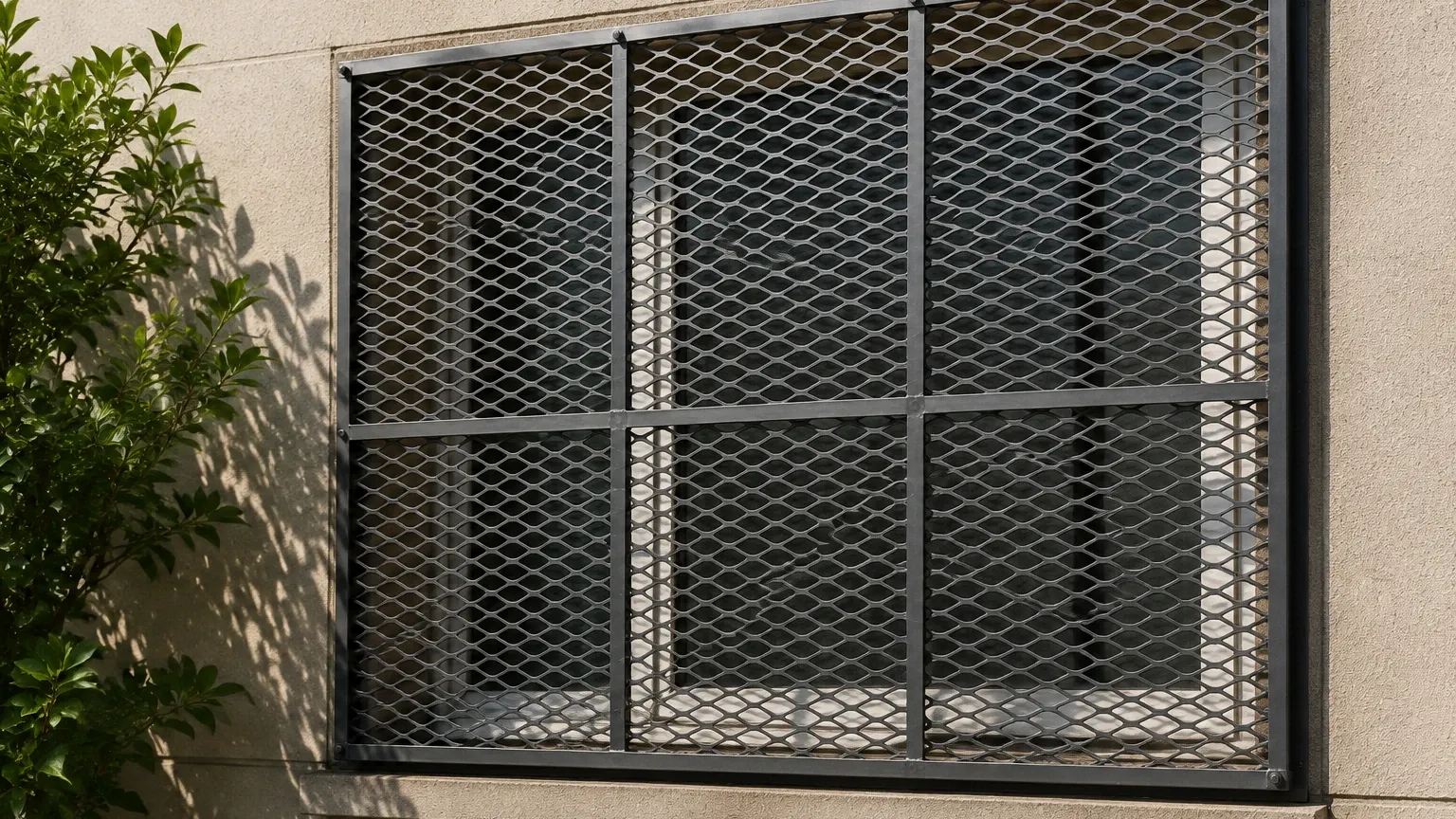
In industrial and commercial environments, protecting structural openings while maintaining airflow and visibility is a critical engineering challenge. Expanded metal window guards represent a versatile and cost-effective solution for securing facilities against unauthorized access, vandalism, and accidental impact. Unlike solid barriers, these guards utilize the unique structural properties of expanded metal to provide high-strength reinforcement without the weight or material waste associated with other fabrication methods.
For engineers and facility managers, selecting the right window guard involves more than just choosing a mesh size. It requires an understanding of material behavior, manufacturing tolerances, and the specific environmental stressors the guard will encounter. This guide explores the technical aspects of expanded metal window guards, from material selection to structural configuration, to assist in the procurement of high-performance protection systems.
Understanding Expanded Metal in Industrial Security
Expanded metal is produced through a unique "slit and stretch" process. A metal sheet is simultaneously slit and cold-stretched, expanding the slits into uniform diamond-shaped openings. This process is inherently efficient because it does not produce scrap material, unlike perforated metal where the holes are punched out.
When utilized for window guards, the resulting mesh is a single piece of metal with no joins or welds within the mesh body. This lack of mechanical fasteners or welds within the pattern is a significant security advantage; there are no points that can be easily pried apart or weakened by vibration. The "knuckles" or bonds where the strands intersect are part of the original metal sheet, providing superior structural integrity compared to woven wire mesh, which can be unraveled if a single strand is cut.
Standard vs. Flattened Expanded Metal
For window guards, engineers typically choose between two types of expanded metal:
1. Standard (Raised) Expanded Metal: This is the product as it comes off the expanding machine. The strands and bonds are set at a sharp angle to the plane of the sheet. This creates a three-dimensional surface that offers excellent anti-climb properties and can act as a louver, providing shade or privacy depending on the viewing angle.
2. Flattened Expanded Metal: After the expansion process, the sheet is passed through a cold-rolling reducing mill. This flattens the strands and bonds into the same plane as the original sheet. Flattened expanded metal is often preferred for window guards where a smooth surface is required to prevent snagging or where the guard needs to be mounted flush against a frame.
Material Selection and Engineering Properties
The performance of Perforated & Expanded Metal window guards is heavily dependent on the base material. In industrial settings, the choice of material is usually dictated by the atmospheric conditions and the required lifecycle of the installation.
Stainless Steel
Stainless steel is the premium choice for expanded metal window guards, particularly in chemical processing, pharmaceutical, and food and beverage facilities. Grades 304 and 316 are the most common. Grade 304 offers excellent corrosion resistance for most indoor and general outdoor applications. However, for facilities located near the coast or those exposed to harsh chemical vapors, Grade 316 is recommended due to its molybdenum content, which provides superior resistance to pitting and chloride-induced corrosion.
Carbon Steel
Carbon steel is the most economical option for high-security window guards. While it offers high tensile strength, it requires a protective finish to prevent oxidation. In industrial environments, carbon steel guards are typically hot-dip galvanized or powder-coated. Hot-dip galvanizing provides a thick layer of zinc that offers sacrificial protection, making it ideal for exterior use in non-corrosive environments.
Aluminum
Aluminum expanded metal is used where weight is a primary concern or where the guard needs to be naturally resistant to atmospheric corrosion without additional coatings. While not as strong as steel, aluminum guards are easier to install and are often used in commercial architecture where aesthetics and weight savings are prioritized.
Technical Specifications: LWD, SWD, and Open Area
When specifying expanded metal window guards, engineers must use standardized terminology to ensure the product meets the security and ventilation requirements of the project. The diamond pattern is defined by two primary dimensions:
* LWD (Long Way of Diamond): The distance from the center of a bond to the center of the next bond across the long axis of the diamond.
* SWD (Short Way of Diamond): The distance from the center of a bond to the center of the next bond across the short axis of the diamond.
* Strand Width: The amount of metal fed into the machine between slits.
* Strand Thickness: The gauge of the original metal sheet.
Calculating Open Area
The open area percentage is a critical metric for window guards, as it determines the amount of light and air that can pass through the opening. For facilities requiring high-volume ventilation, such as compressor rooms or chemical storage areas, a larger SWD/LWD ratio with thinner strands is preferred. Conversely, for high-security applications where the goal is to prevent the passage of small objects or tools, a smaller diamond pattern is required.
Engineers should confirm the "percent open area" with the manufacturer to ensure compliance with HVAC requirements and building codes. Standard expanded metal provides a different effective open area than flattened metal due to the angle of the strands, which can partially obstruct airflow if not accounted for in the design phase.
Comparing Expanded Metal to Perforated Metal for Guards
While both perforated and expanded metals are used for window protection, expanded metal offers several distinct advantages in industrial security contexts:
1. Strength-to-Weight Ratio: Because the material is stretched rather than punched, the resulting mesh is lighter than a solid sheet of the same thickness while maintaining significant structural rigidity. The directional orientation of the strands allows the mesh to distribute loads more effectively across the entire panel.
2. Anti-Climb and Anti-Cut: The angular nature of standard expanded metal makes it extremely difficult to climb. Furthermore, the interconnected diamond structure means that if a single strand is cut, the rest of the mesh remains intact and the opening does not significantly enlarge, unlike woven wire which can be unraveled.
3. Cost Efficiency: The zero-waste manufacturing process makes expanded metal a more sustainable and cost-effective choice for large-scale industrial projects compared to perforated metal, where up to 40% of the material may be lost as scrap during production.
However, perforated metal may be preferred when a specific aesthetic hole pattern (such as round or square) is required or when the guard must have a perfectly flat profile with very specific, small-diameter openings that are difficult to achieve with expansion processes.
Customization and Framing for Industrial Applications
A window guard is only as secure as its mounting system. For expanded metal window guards to function effectively, they must be properly framed and anchored to the building structure.
Framing Options
* U-Edging: A metal channel that fits over the edge of the expanded metal sheet. This provides a finished edge and a surface for welding or bolting. It is the most common framing method for industrial guards.
* Angle Iron Frames: For heavy-duty applications, expanded metal is often welded into an angle iron frame. This provides maximum rigidity and allows for the guard to be offset from the window glass, preventing impact damage to the glazing.
* Tube Framing: Square or rectangular tubing provides a modern look and high torsional strength, often used in commercial or high-traffic areas.
Finishes and Coatings
Beyond material selection, the finish of the guard impacts both its durability and its integration into the facility's design.
* Powder Coating: Offers a wide range of colors and provides a durable, UV-resistant finish that protects the underlying metal from moisture.
* Anodizing: Specifically for aluminum, this process increases the thickness of the natural oxide layer, improving corrosion and wear resistance.
* Electropolishing: For stainless steel guards in pharmaceutical or food grade environments, electropolishing removes surface impurities and creates a high-luster, easy-to-clean finish.
Installation and Maintenance Considerations
Proper installation is paramount to the efficacy of expanded metal window guards. Engineers should specify the mounting hardware—typically tamper-resistant bolts or security screws—to prevent the guards themselves from being removed by unauthorized personnel.
Maintenance Cycles
In most industrial environments, expanded metal guards are low-maintenance. However, periodic inspections should be conducted to check for:
* Corrosion at Weld Points: Welds are often the first place corrosion begins. Ensuring that welds are properly treated with cold-galvanizing spray or paint is essential.
* Debris Accumulation: The diamond mesh can trap dust, leaves, or industrial debris. Regular cleaning with pressurized air or water ensures that airflow and visibility remain unobstructed.
* Structural Integrity: Checking for loose mounting bolts or physical deformation after a known impact event ensures the guard continues to provide the intended level of protection.
Selecting the Right Solution for Your Project
When specifying expanded metal window guards, purchasing teams and engineers should confirm the following details with their manufacturer to ensure the final product meets the application's demands:
1. Material Grade: Is 304 stainless steel sufficient, or does the environment require 316?
2. Mesh Dimensions: What are the required LWD and SWD dimensions to balance security with light transmission?
3. Loading Requirements: Will the guard be subjected to high-velocity impacts or wind loads?
4. Framing and Mounting: How will the guard be attached to the existing structure, and what framing profile is required for compatibility?
By focusing on these technical parameters, industrial professionals can implement a window protection strategy that balances cost, durability, and security. Expanded metal remains one of the most reliable materials for this purpose, offering a unique combination of structural integrity and functional transparency.
For more information on material specifications and custom fabrication options, you can Review product options and application support to find the optimal configuration for your facility's specific needs. Whether for a chemical plant, a warehouse, or a commercial storefront, the right expanded metal solution provides long-term peace of mind and structural reliability.
