


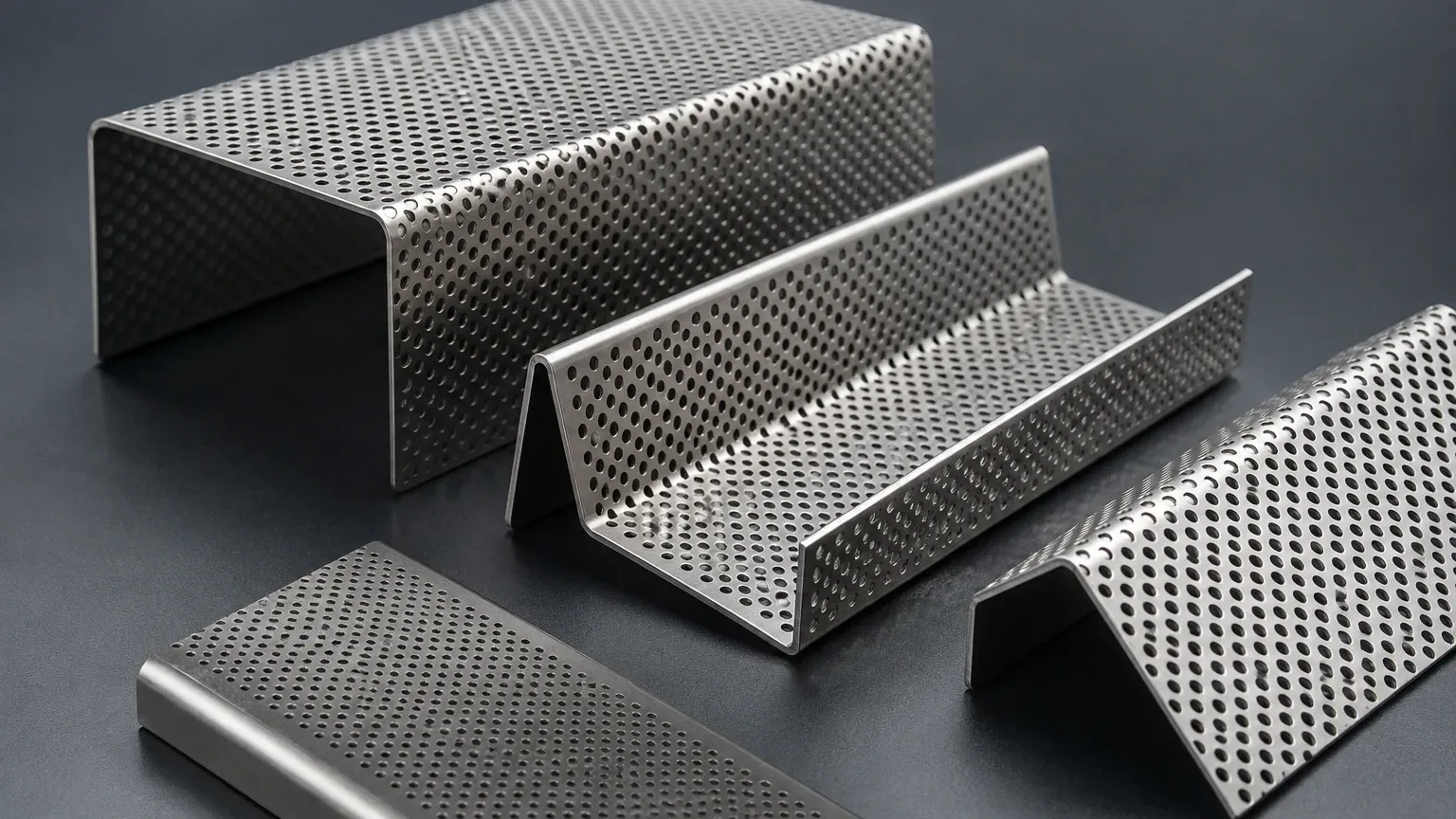
Folded Perforated Metal Sheet
In industrial filtration and structural engineering, the utility of a flat metal sheet is often limited by its two-dimensional nature. To meet the rigorous demands of chemical processing, hydraulic systems, and pharmaceutical manufacturing, these materials must be transformed into three-dimensional components. The folded perforated metal sheet represents a critical evolution in material fabrication, providing the structural rigidity and specific geometries required for high-performance filtration media and protective housings.
At its core, a perforated metal sheet is a plate or coil of material—typically stainless steel—that has been mechanically or laser-punched to create a pattern of holes. When these sheets are subjected to precision folding and bending, they become integral components of industrial systems. This article explores the technical specifications, engineering considerations, and application-specific benefits of utilizing folded perforated metal in professional B2B environments.
Understanding the Role of Folded Perforated Metal in Industrial Applications
The primary function of a folded perforated metal sheet is to provide a balance between open area for fluid or gas passage and structural integrity. Unlike standard wire mesh, which may require external frames for support, a perforated sheet possesses inherent mechanical strength. When folded, this strength is amplified through geometric reinforcement.
In the context of Perforated & Expanded Metal, folding serves several purposes:
1. Structural Support: Creating internal cores or external cages for filter cartridges to prevent the collapse of finer mesh layers under high differential pressure.
2. Space Optimization: Folding allows for a larger surface area to be contained within a smaller footprint, which is essential in compact hydraulic or aerospace filtration units.
3. Flow Directional Control: Specific fold angles can help manage the velocity and direction of fluid flow within a processing vessel.
Engineers often specify folded perforated components when the application involves high-viscosity fluids or high-pressure environments where a simple flat screen would fail. The ability to customize the fold geometry ensures that the component fits precisely into existing hardware, reducing the need for extensive system retrofitting.
Engineering Considerations for Perforated & Expanded Metal Fabrication
When designing a folded perforated metal sheet, material selection and hole geometry are the two most critical factors. These determine the component's resistance to corrosion, its mechanical durability, and its filtration efficiency.
Material Selection
For most industrial B2B applications, stainless steel is the preferred material due to its longevity and chemical compatibility.
- SS304/304L: Suitable for general industrial use, providing good corrosion resistance and excellent formability for folding operations.
- SS316/316L: The standard for chemical processing and marine environments. The addition of molybdenum enhances resistance to pitting and crevice corrosion, especially in chloride-rich environments.
- Specialty Alloys: In high-temperature or highly acidic environments, alloys like Monel or Hastelloy may be used, though these require specialized folding techniques due to their different work-hardening properties.
Hole Patterns and Open Area
The "open area" percentage is a fundamental calculation for any engineer. It is the ratio of the total area of the holes to the total area of the sheet. For a folded perforated metal sheet, the open area must be calculated carefully to ensure that the folding process does not restrict flow at the bend lines. Common patterns include:
- Round Holes (Staggered or Straight): The most common and cost-effective pattern, offering a good balance of strength and open area.
- Square Holes: Provide a higher open area but may result in lower structural rigidity compared to round holes.
- Slotted Holes: Often used for screening elongated particles or in applications where flow direction is critical.
The Mechanics of Folding Perforated Metal Sheets
Folding a perforated sheet is more complex than folding a solid metal plate. The presence of holes changes how the material reacts to stress during the bending process. If the fold line passes directly through a row of holes, the material is more likely to deform or crack. Conversely, if the fold line is between holes, the bend radius must be carefully managed to avoid excessive stretching of the remaining metal "bridges."
Bend Radius and Material Thickness
The minimum bend radius is a function of the material thickness and the hole pattern. In industrial filtration, maintaining the integrity of the folded perforated metal sheet is paramount. A radius that is too tight can lead to micro-fractures, which become failure points under cyclic pressure loading. Professional manufacturers like Kaifil utilize precision CNC press brakes to ensure that every fold meets the exact tolerances required for industrial assembly.
Avoiding Hole Distortion
One of the technical challenges in folding perforated metal is preventing the holes near the bend from becoming elliptical. This distortion can change the filtration characteristics and may interfere with the fitment of internal components. Engineers must account for the "k-factor" (the location of the neutral axis during a bend) to predict how the hole pattern will shift during fabrication.
Key Performance Criteria for Folded Perforated Metal Sheet
Before purchasing or specifying a folded component, technical teams must evaluate several performance metrics to ensure the long-term reliability of the filtration system.
Mechanical Load-Bearing Capacity
In hydraulic and high-pressure liquid filtration, the perforated sheet often acts as the primary support for a finer wire mesh. The folded sheet must withstand the maximum expected differential pressure without permanent deformation. This is particularly important in "outside-in" flow configurations where the perforated core is subject to compressive forces.
Corrosion Resistance and Passivation
Since these components are often used in aggressive chemical environments, the surface finish is vital. After the punching and folding processes, the stainless steel surface may have microscopic contaminants or depleted chromium layers. Passivation or electropolishing is often required to restore the protective oxide layer, ensuring the folded perforated metal sheet does not succumb to localized corrosion.
Precision and Tolerances
In B2B procurement, dimensional accuracy is non-negotiable. A folded filter cage that is even 0.5mm out of spec can lead to bypass—where unfiltered fluid escapes around the filter element—or may prevent the filter from seating correctly in its housing. Technical documentation should always specify the allowable tolerances for length, diameter (if cylindrical), and fold angles.
Applications in Filtration and Fluid Management
The versatility of the folded perforated metal sheet allows it to be used across a wide spectrum of industries. Its primary role is often as a structural backbone for more complex filtration assemblies.
Support Cores for Filter Cartridges
In many industrial filter cartridges, a perforated metal sheet is rolled or folded into a cylinder to serve as the inner core. This core prevents the pleated filter media from collapsing inward as the pressure drop increases across the filter. The folding of the edges ensures a secure seam, often finished with spot welding or longitudinal welding for maximum strength.
Protective Outer Cages
For large-scale industrial strainers, a folded perforated sheet acts as an outer cage. This protects the delicate inner filtration layers from large debris and mechanical impact during installation or maintenance. The rigidity provided by the folds ensures the cage maintains its shape even when handled roughly in field environments.
Custom Baskets and Trays
In the food and beverage and pharmaceutical industries, folded perforated metal is used to create custom baskets for sterilization or washing. The folds provide the necessary depth and structural strength to hold heavy loads of components while allowing steam or cleaning agents to circulate freely through the perforations.
Sourcing and Customization: What Engineers Need to Confirm
When sourcing a folded perforated metal sheet, the procurement process should be driven by technical specifications rather than just price. To ensure the component meets the application requirements, engineers should confirm the following with their manufacturer:
1. Hole Alignment: Ensure the hole pattern is aligned correctly relative to the fold lines to maintain structural integrity.
2. Edge Conditions: Specify whether the edges should be "safe" (with a solid border) or "full-perf" (where the pattern goes to the edge). For folded components, a solid border at the fold or weld point is often preferred for strength.
3. Surface Finish: Confirm if the application requires a specific Ra (roughness average) value, especially in pharmaceutical or food-grade applications where bacterial growth must be prevented.
4. OEM Compatibility: If the part is a replacement for an existing system, provide the original equipment manufacturer's specifications to ensure a perfect fit.
Kaifil provides a comprehensive range of Perforated & Expanded Metal solutions, focusing on the precision required for demanding industrial environments. By working closely with a manufacturer that understands the nuances of metal forming and filtration science, purchasing teams can reduce the risk of premature component failure.
Total Cost of Ownership and Maintenance
While the initial cost of a precision-engineered folded perforated metal sheet may be higher than a standard off-the-shelf component, the total cost of ownership (TCO) is often lower. This is due to several factors:
- Durability: High-quality stainless steel and precision folding reduce the frequency of replacements.
- System Protection: A robust support core protects expensive pleated media, extending the life of the entire filter element.
- Ease of Cleaning: Properly passivated and finished perforated metal is easier to clean via backwashing or ultrasonic cleaning, allowing for multiple reuse cycles in certain applications.
Maintenance teams should regularly inspect folded components for signs of stress cracking at the bend lines or signs of erosion near the holes. In high-flow applications, the constant impingement of particles can eventually wear down the metal bridges, leading to a loss of structural integrity. Establishing a clear replacement cycle based on differential pressure and visual inspection is essential for maintaining system uptime.
In conclusion, the folded perforated metal sheet is a foundational component in modern industrial filtration. Its design requires a deep understanding of material science, mechanical engineering, and fluid dynamics. By prioritizing precision in fabrication and selecting the appropriate material grades, engineers can ensure their systems operate at peak efficiency with minimal downtime.
