


Galvanized Expanded Metal Lath
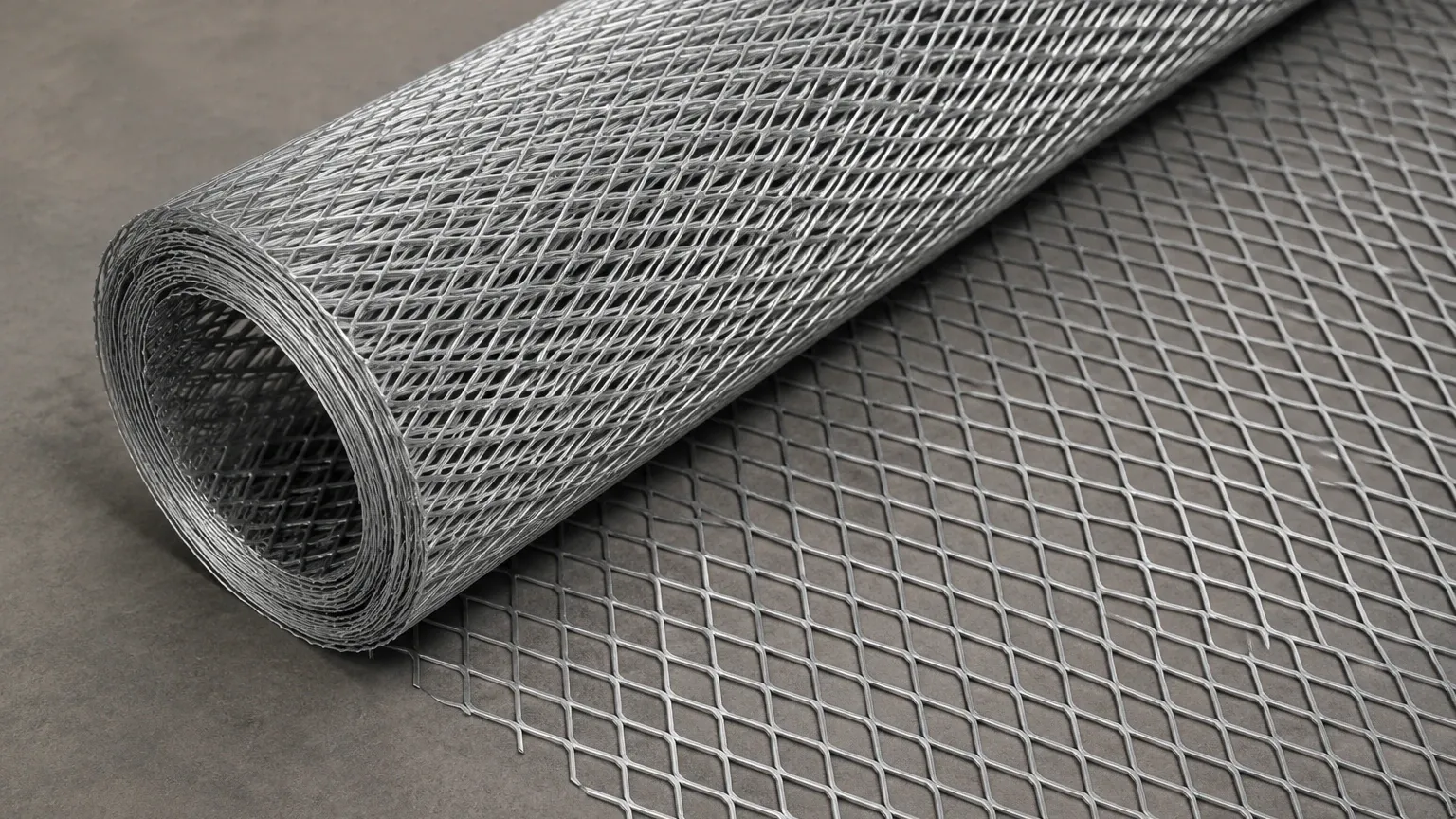
In the realm of industrial filtration and structural reinforcement, material selection is dictated by the balance between mechanical strength, corrosion resistance, and cost-efficiency. Galvanized expanded metal lath represents a specialized category of expanded metal designed to provide a high-surface-area substrate for various bonding and filtration applications. Unlike perforated metals that are created by punching holes and generating scrap, expanded metal is produced through a process of slitting and stretching, which maintains structural integrity while maximizing material usage.
For engineers and procurement professionals, understanding the technical nuances of Perforated & Expanded Metal is essential for optimizing the performance of industrial assemblies. This guide examines the manufacturing, specifications, and industrial applications of galvanized expanded metal lath, providing the technical context necessary for informed decision-making.
Manufacturing Process and Structural Characteristics
The production of galvanized expanded metal lath begins with a solid sheet of carbon steel. This sheet is fed through a machine that simultaneously slits and stretches the metal. The resulting pattern is typically a diamond-shaped mesh, though other geometries can be achieved depending on the tooling. Because the metal is stretched rather than cut out, the process produces no waste, making it a highly sustainable and cost-effective manufacturing method.
The Expansion Geometry
In the context of expanded metal, the geometry is defined by the "Short Way of Design" (SWD) and the "Long Way of Design" (LWD). The SWD refers to the distance from the center of one bond to the center of the next bond across the short axis of the diamond, while the LWD refers to the same measurement across the long axis. The thickness of the original sheet and the width of the resulting strands determine the overall weight and rigidity of the lath.
Raised vs. Flattened Lath
Expanded metal lath is generally available in two forms: raised (standard) and flattened.
- Raised Lath: In its standard form, the strands and bonds are set at a uniform angle to the plane of the sheet. This creates a three-dimensional surface that offers excellent mechanical grip and high rigidity-to-weight ratios.
- Flattened Lath: This is produced by passing the standard expanded metal through a cold-rolling reducing mill. Flattening turns the strands back into the same plane as the sheet, creating a smooth surface. While this reduces the thickness, it is often preferred in filtration applications where a flush surface is required to prevent damage to delicate filter media.
The Importance of Galvanization in Industrial Environments
The term "galvanized" refers to the application of a protective zinc coating to the steel substrate. This is a critical step for expanded metal lath, as the expansion process exposes the internal grain structure of the steel, making it susceptible to oxidation if left untreated.
Hot-Dip vs. Electro-Galvanizing
There are two primary methods for galvanizing expanded metal lath:
1. Hot-Dip Galvanizing: The metal is submerged in a bath of molten zinc. This creates a thick, robust metallurgical bond that covers all edges, including the internal surfaces of the slits. This is the preferred method for heavy-duty industrial environments where moisture or chemical exposure is prevalent.
2. Electro-Galvanizing: A thinner layer of zinc is applied through an electrolytic process. While this provides a smoother finish and better dimensional tolerances, it offers less corrosion protection than hot-dip galvanizing and is typically reserved for indoor or less aggressive environments.
For industrial filtration components, the zinc coating acts as a sacrificial anode, protecting the underlying steel from rust even if the coating is slightly scratched or abraded during installation.
Key Technical Specifications for Engineers
When specifying galvanized expanded metal lath for industrial projects, engineers must move beyond generic descriptions and focus on quantifiable metrics. The following parameters are standard in the industry:
Weight per Square Yard
In construction and light industrial applications, lath is often categorized by its weight. Common specifications include 1.75 lbs/sq. yd., 2.5 lbs/sq. yd., and 3.4 lbs/sq. yd. Heavier weights indicate thicker strands and smaller openings, providing greater structural support and resistance to deformation under pressure.
Opening Size and Percent Open Area
The size of the diamond openings (SWD x LWD) determines the flow characteristics and the size of particles that can pass through the mesh. The "percent open area" is a critical calculation for filtration engineers, as it directly impacts the pressure drop across a filter assembly. A higher open area reduces resistance to fluid or gas flow but may compromise the structural support of the primary filter media.
Material Grade
While galvanized carbon steel is the standard for lath, specific applications may require different base metals. However, in environments where the zinc coating may react with the process fluid, engineers often transition to stainless steel alternatives. Kaifil specializes in these high-performance materials, ensuring that the structural support components do not introduce contaminants into the system.
Industrial Applications in Filtration and Support
While galvanized expanded metal lath is widely recognized in the construction industry for stucco and plaster reinforcement, its utility in industrial B2B sectors is centered on its role as a support structure.
Filter Media Reinforcement
In high-pressure hydraulic or air filtration systems, the primary filter media (such as fine wire mesh or synthetic membranes) is often too delicate to withstand the force of the flow. Galvanized expanded metal lath is used as a "pleat support" or an outer cage. Its rigid diamond structure prevents the filter media from collapsing or migrating under differential pressure.
Protective Guards and Enclosures
Beyond filtration, expanded metal is used to create safety guards for machinery and ventilation covers. The galvanized coating ensures that these guards remain structurally sound even in humid factory environments or outdoor installations. The open mesh allows for necessary airflow and visibility while preventing personnel from coming into contact with moving parts.
Catalyst Support Grids
In chemical processing, expanded metal provides a stable platform for catalyst beds. The galvanized surface can be compatible with certain non-acidic chemical processes, offering a cost-effective alternative to expensive alloys when the operating temperature and chemical environment allow for zinc stability.
Selection Criteria: Evaluating Performance and Compatibility
Selecting the correct galvanized expanded metal lath requires a comprehensive evaluation of the operating environment. Engineers should consider the following factors:
1. Chemical Compatibility: Zinc is sensitive to both highly acidic and highly alkaline environments (typically outside the pH range of 6 to 12). If the process fluid falls outside this range, the galvanization will strip rapidly, leading to premature failure of the support structure.
2. Mechanical Load: Will the lath be subjected to constant vibration, pressure pulses, or static loads? Heavier gauge lath (3.4 lbs/sq. yd.) is recommended for applications involving high mechanical stress.
3. Temperature Limits: Galvanized coatings are generally stable up to approximately 200°C (392°F). Beyond this temperature, the zinc-iron alloy layers can become brittle, and the coating may begin to peel or delaminate from the steel substrate.
4. Formability: If the lath needs to be rolled into a cylinder for a filter cartridge, the ductility of the galvanized steel is a factor. Standard expanded metal is easier to form than flattened expanded metal, which undergoes work-hardening during the flattening process.
Common Risks and Quality Control in Procurement
Procuring industrial-grade galvanized expanded metal lath involves more than just checking the price per sheet. Quality variances can lead to significant downstream issues in manufacturing and assembly.
Edge Quality and Burrs
The expansion process naturally creates sharp edges. In filtration applications, these burrs can puncture fine mesh or synthetic media. It is vital to confirm with the manufacturer whether the material has been deburred or if the expansion process is controlled to minimize "edge wire" protrusions.
Coating Uniformity
Inconsistent galvanization can lead to "white rust" (zinc hydroxide) or areas of exposed steel. For B2B buyers, verifying that the material meets ASTM standards (such as ASTM A653 for galvanized steel) ensures that the coating thickness is sufficient for the intended service life.
Dimensional Stability
During the stretching process, the sheet can develop internal stresses that cause it to bow or twist (camber). For automated assembly lines, flat and square sheets are a prerequisite. Purchasing teams should confirm the tolerances for flatness and out-of-squareness before finalizing an order.
Installation and Integration into Filter Assemblies
Integrating galvanized expanded metal lath into a larger industrial component requires specific fabrication techniques.
- Welding: Welding galvanized steel requires specialized safety protocols due to the release of zinc oxide fumes. Furthermore, the weld point destroys the local galvanization. These areas must be treated with a zinc-rich cold galvanizing spray to restore corrosion resistance.
- Mechanical Fastening: In many filter housings, the lath is held in place by end caps or compression rings. This avoids the issues associated with welding but requires precise cutting to ensure a snug fit without gaps that could bypass the filter media.
- Orientation: The orientation of the diamonds (LWD vs. SWD) can affect the flow dynamics and the structural strength of the cylinder. Generally, the LWD should run parallel to the direction of the greatest stress.
Conclusion: Making Informed Engineering Choices
Galvanized expanded metal lath is a fundamental component in industrial design, offering a unique combination of transparency, strength, and economy. By understanding the manufacturing variables—from the expansion ratio to the type of galvanization—engineers can select a material that enhances the longevity and efficiency of their filtration systems.
When standard galvanized options do not meet the stringent requirements of high-purity or highly corrosive applications, transitioning to custom-engineered Perforated & Expanded Metal solutions becomes necessary. Whether the application involves a simple ventilation guard or a complex multi-stage filter cartridge, the structural integrity of the support lath is the foundation upon which system reliability is built. Confirming material grades, weights, and coating specifications during the design phase prevents costly field failures and ensures the total cost of ownership remains optimized.
