


Heavy Duty Expanded Metal
In industrial engineering and filtration design, the structural integrity of a system is often as critical as the filtration media itself. Heavy duty expanded metal represents a specialized category of materials engineered to provide maximum strength, durability, and open area for high-demand applications. Unlike standard expanded metal, which may be used for decorative or light-duty screening, the heavy-duty variant is defined by its thicker gauge and robust strand dimensions, making it an essential component in heavy industrial filtration, structural support, and protective shielding.
For engineers and procurement professionals, selecting the right heavy duty expanded metal requires a deep understanding of manufacturing processes, material properties, and how these factors influence flow dynamics and mechanical stability. This guide examines the technical specifications and engineering considerations necessary to integrate these components into industrial systems effectively.
The Engineering Behind Heavy Duty Expanded Metal
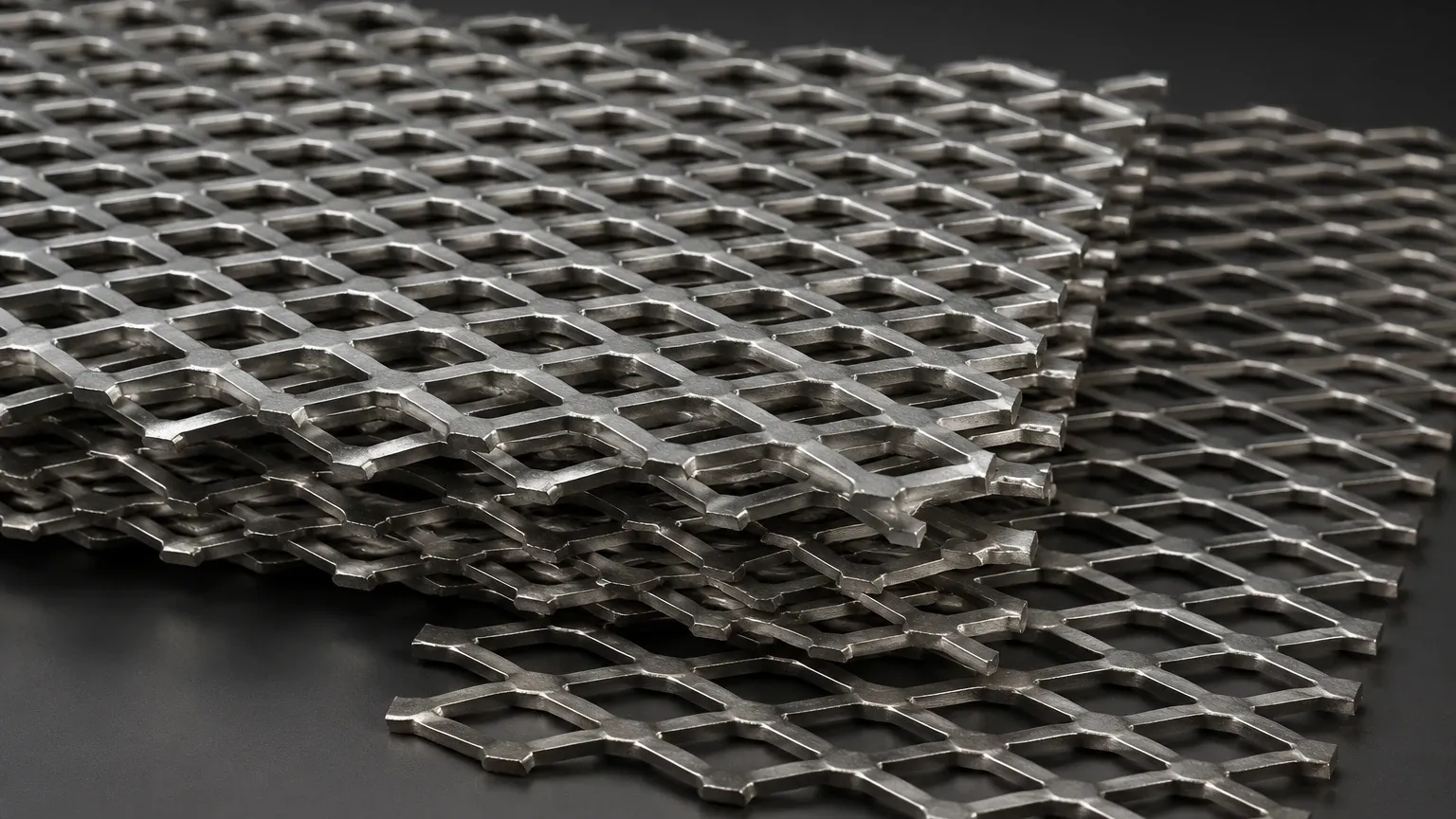
Heavy duty expanded metal is produced through a precise process of slitting and stretching metal sheets simultaneously. This process creates a diamond-shaped pattern of openings. Because the metal is stretched rather than punched, there is zero material waste, which contributes to the cost-effectiveness of the product compared to perforated alternatives.
In "heavy duty" specifications, the base material is typically a thick plate or heavy-gauge sheet. The resulting product features "strands" (the metal strips that form the diamond) and "bonds" (where the strands intersect). In heavy-duty applications, these strands are significantly wider and thicker than those found in commercial-grade mesh. This geometry provides a high strength-to-weight ratio, allowing the material to withstand significant mechanical loads, high-pressure differentials, and abrasive environments without deforming.
Key Geometric Definitions
To specify heavy duty expanded metal accurately, engineers must utilize standard industry terminology:
* LWD (Long Way of Design): The distance from the center of one bond to the center of the next bond across the long axis of the diamond.
* SWD (Short Way of Design): The distance across the short axis of the diamond.
* Strand Thickness: The thickness of the original base metal sheet.
* Strand Width: The amount of metal fed into the machine for each stroke, which determines the width of the individual strands.
* Opening Size: The clear space between the strands, often referred to as LWO (Long Way of Opening) and SWO (Short Way of Opening).
Material Selection for Industrial Environments
The performance of heavy duty expanded metal is heavily dependent on the alloy selected. In industrial filtration and chemical processing, material compatibility is the primary concern to prevent premature failure due to corrosion or thermal degradation.
Stainless Steel (304 and 316L)
Stainless steel is the preferred choice for most heavy-duty industrial applications. Type 304 provides excellent strength and basic corrosion resistance suitable for many industrial settings. However, in environments involving chlorides, high acidity, or pharmaceutical processing, Type 316L is required. The addition of molybdenum in 316L enhances resistance to pitting and crevice corrosion, ensuring the structural support remains intact even when exposed to aggressive cleaning agents or process fluids.
Carbon Steel
For applications where corrosion is not a primary concern—such as structural supports in hydraulic oil systems or heavy machinery guards—carbon steel offers a high-strength, economical solution. These components are often galvanized or powder-coated to provide a layer of protection against atmospheric moisture.
Specialty Alloys
In high-temperature applications or specialized chemical reactors, alloys such as Monel, Inconel, or Titanium may be used. These materials maintain their mechanical properties at extreme temperatures where standard steels would lose their tensile strength.
Applications in Industrial Filtration
Within the filtration sector, heavy duty expanded metal serves several critical functions. It is rarely the primary filtration media (which is usually a fine wire mesh or fiber), but rather the "skeleton" that allows the filtration system to function under pressure.
Filter Cartridge Support Cores
In high-pressure hydraulic or process fluid filtration, the filter media (such as pleated stainless steel wire mesh) lacks the inherent strength to resist the force of the fluid flow. Heavy duty expanded metal is rolled into cylinders to act as an internal support core or an external protective shroud. This prevents the media from collapsing or bursting as the pressure differential (delta P) increases due to contaminant loading.
Intake Screens and Trash Racks
For water treatment and power plant cooling systems, heavy duty expanded metal is used to create robust intake screens. These screens must withstand the impact of large debris and the constant force of moving water. The expanded metal's diamond pattern is particularly effective at shedding debris compared to traditional bar gratings, reducing the frequency of manual cleaning.
Catalyst Bed Support
In chemical reactors, heavy duty expanded metal plates are used to support catalyst beds. The material must be thick enough to support the weight of the catalyst while maintaining a high percentage of open area to ensure uniform flow distribution across the bed. The rigidity of the heavy-duty strands prevents the bed from shifting, which could otherwise lead to channeling and reduced reaction efficiency.
Standard vs. Flattened Expanded Metal
When specifying heavy duty expanded metal, engineers must choose between "standard" (raised) and "flattened" varieties. This choice significantly impacts the mechanical behavior and flow characteristics of the component.
Standard (Raised) Expanded Metal
In its standard form, the strands and bonds are set at a uniform angle to the plane of the sheet. This creates a three-dimensional surface that provides excellent grip and high structural rigidity. In filtration, the raised strands can help create turbulence, which may be desirable in certain mixing or heat exchange applications. However, the raised edges can also increase flow resistance and pressure drop.
Flattened Expanded Metal
Flattened expanded metal is produced by passing the standard expanded sheet through a cold-rolling reducing mill. This process flattens the strands and bonds into the same plane, resulting in a smooth, flat surface. Flattened heavy duty expanded metal is often preferred when the material is used as a support layer for fine wire mesh. The smooth surface prevents the fine mesh from being abraded or cut by the raised edges of the support structure, extending the lifecycle of the filter element.
Engineering Considerations: Load and Flow
Selecting heavy duty expanded metal involves a trade-off between mechanical strength and hydraulic performance.
Open Area and Pressure Drop
The "open area" percentage is a critical metric for engineers. It determines the velocity of the fluid passing through the screen and the resulting pressure drop. While a thicker strand increases the strength of the part, it reduces the open area. For filtration applications, designers must calculate the minimum required open area to ensure that the filter does not become a bottleneck in the system. Kaifil’s engineering team often assists in optimizing these dimensions to balance the need for structural support with the requirement for low-pressure resistance.
Load-Bearing Capacity
Heavy duty expanded metal is often subjected to point loads or uniform pressure. Unlike solid plate, the orientation of the diamonds matters. The LWD direction is significantly stronger than the SWD direction. When designing a support structure, the LWD should span the distance between supports to maximize the load-bearing capacity. Failure to orient the material correctly can lead to sagging or structural failure under high-pressure conditions.
Customization and OEM Integration
For most industrial B2B applications, off-the-shelf expanded metal is insufficient. Precision filtration systems require custom-fabricated components that meet exact tolerances.
Customization options include:
* Specific Alloy Grades: Tailoring the chemistry to the specific process fluid.
* Precision Slitting and Shearing: Ensuring the expanded metal fits perfectly into filter housings or frames without gaps.
* Cylindrical Forming and Welding: Creating seamless support cores for cartridges using advanced TIG or plasma welding techniques.
* Surface Treatments: Including electropolishing for pharmaceutical applications to ensure a burr-free, passivated surface that resists bacterial growth.
By working with a manufacturer like Kaifil, engineers can specify the exact Perforated & Expanded Metal configurations required for their OEM projects. This ensures that the heavy duty expanded metal is not just a raw material, but a precision-engineered component ready for assembly.
Risks of Improper Specification
Choosing the wrong specification for heavy-duty applications can lead to several industrial risks:
1. Media Migration: If the opening size of the expanded metal is too large relative to the primary filter media, the media may flex into the openings, leading to fatigue and eventual breakage (migration of media into the filtrate).
2. Galvanic Corrosion: If a carbon steel support is used with a stainless steel mesh in a conductive fluid, galvanic corrosion will rapidly destroy the interface between the two materials.
3. Flow Maldistribution: Improperly calculated open areas can lead to high-velocity zones, causing uneven loading of the filter media and reducing the overall dirt-holding capacity of the system.
Maintenance and Total Cost of Ownership
While heavy duty expanded metal has a higher initial material cost than lighter gauges, its total cost of ownership is significantly lower in demanding environments. The durability of the material reduces the frequency of replacement and prevents catastrophic failures that could lead to downstream equipment damage.
In filtration systems, the maintenance cycle is usually determined by the pressure drop across the media. However, the structural support (the expanded metal) should be inspected during every cleaning cycle for signs of stress cracking or corrosion. In high-vibration environments, such as those found in mining or large-scale pumping stations, the bonds of the expanded metal should be checked for fatigue.
Conclusion
Heavy duty expanded metal is a foundational component in the world of industrial filtration and structural engineering. Its ability to provide immense strength while maintaining necessary flow characteristics makes it indispensable for high-pressure and high-temperature applications. By understanding the nuances of LWD/SWD orientation, material selection, and the benefits of flattened versus standard profiles, engineers can design more efficient and reliable systems. For those developing custom filtration solutions, partnering with a specialist manufacturer ensures that these heavy-duty components are optimized for both performance and longevity.
