


Home Depot Perforated Metal Sheet
In the world of industrial maintenance and small-scale engineering projects, the search for a "home depot perforated metal sheet" is common. Big-box retailers like Home Depot provide accessible, off-the-shelf solutions for general-purpose applications, such as decorative panels, basic ventilation covers, or simple DIY guards. However, for engineers and procurement professionals operating within the chemical processing, food and beverage, or pharmaceutical sectors, the requirements for perforated and expanded metal often exceed the specifications found in retail-grade inventory.
Understanding the distinction between retail-grade materials and industrial-grade Perforated & Expanded Metal is critical for ensuring system longevity, filtration efficiency, and regulatory compliance. This guide examines the technical parameters, material considerations, and engineering trade-offs involved when sourcing these essential components.
The Difference Between Retail and Industrial Perforated Metal
When a technician or engineer looks for a home depot perforated metal sheet, they are typically seeking immediate availability for a non-critical repair or a prototype. Retail outlets stock standard sizes—often small sheets like 12"x24" or 24"x36"—with a limited selection of hole patterns and gauges. These are usually made from aluminum, galvanized steel, or basic 304 stainless steel.
In contrast, industrial-grade perforated metal is manufactured to meet specific tolerances required for mechanical systems. Industrial applications demand precise "open area" calculations to manage flow rates and pressure drops. While a retail sheet might suffice for a radiator cover, an industrial filter cartridge requires a specific hole diameter, pitch, and arrangement (staggered or straight) to ensure that the filtration media is supported without obstructing the fluid path. Furthermore, industrial manufacturers provide Material Test Reports (MTRs) that certify the chemical composition of the alloy, a requirement that retail products rarely meet.
Technical Specifications of Perforated & Expanded Metal
To make an informed purchasing decision, it is necessary to understand the two primary types of rigid mesh used in industrial settings: perforated metal and expanded metal.
Perforated Metal
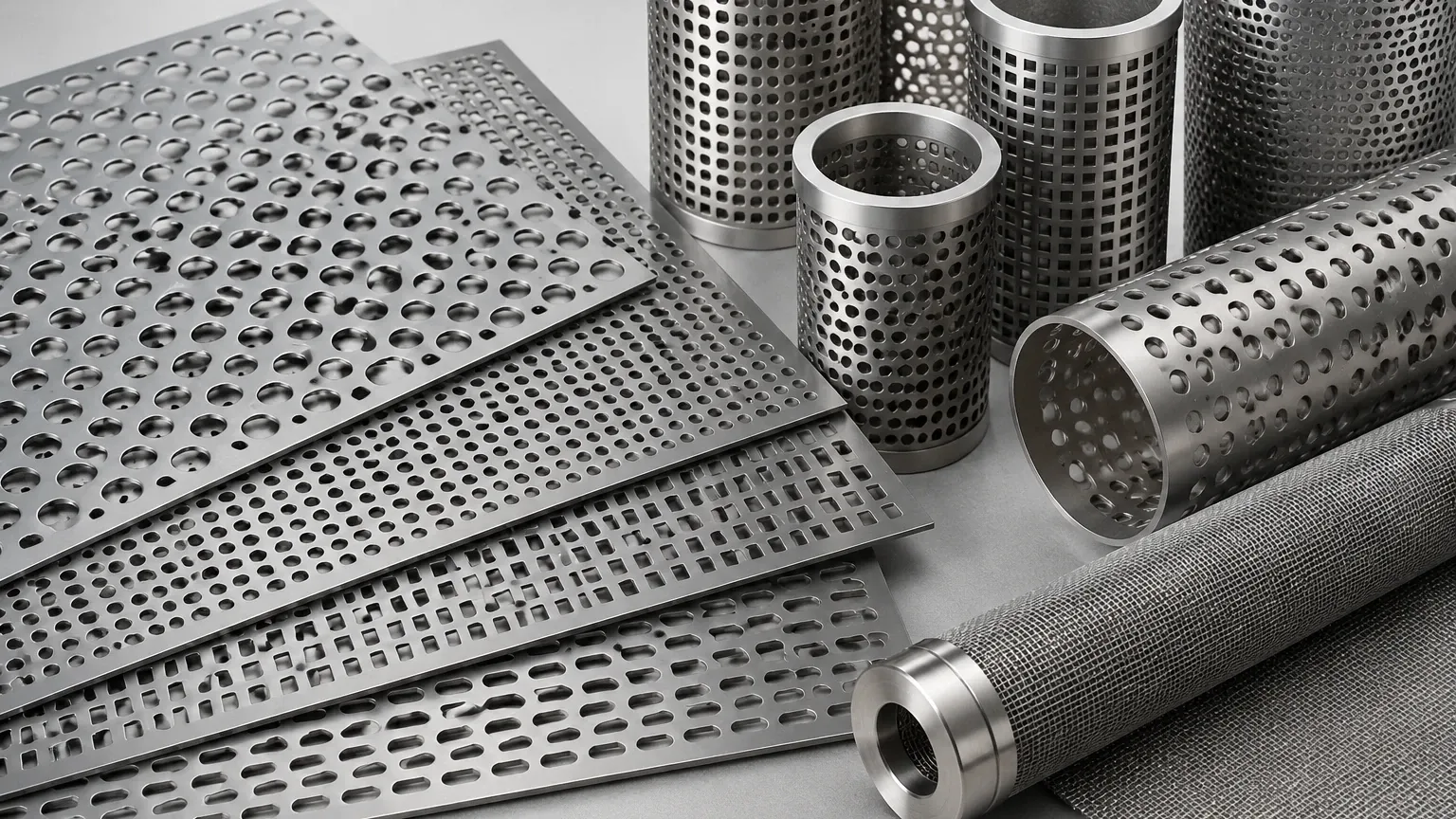
Perforated metal is created by mechanically punching a series of holes into a solid metal sheet. This process allows for high precision in hole size and placement. Common patterns include:
* Round Holes: The most versatile pattern, offering a balance of strength and open area. Staggered 60-degree patterns are the industry standard for maximizing structural integrity.
* Square Holes: Often used when a higher open area is required for airflow or visibility.
* Slotted Holes: Ideal for sorting or filtering elongated materials, such as grains or fibers.
Expanded Metal
Expanded metal is produced by simultaneously slitting and stretching a sheet. This process creates diamond-shaped openings. Because no material is lost during production, it is often more cost-effective than perforated metal. It is categorized into:
* Standard Expanded Metal: Features a raised surface that provides excellent grip and rigidity.
* Flattened Expanded Metal: The raised mesh is passed through a cold rolling mill to create a smooth, flat surface, which is often preferred for filtration supports to prevent damage to delicate mesh layers.
Material Selection: Why Stainless Steel Dominates Industrial Filtration
While a home depot perforated metal sheet might be available in carbon steel or aluminum, industrial environments usually necessitate stainless steel. The choice of alloy significantly impacts the component's resistance to corrosion, temperature, and chemical attack.
1. Type 304 Stainless Steel: The most common grade, offering good corrosion resistance and excellent formability. It is suitable for most water treatment and general industrial applications.
2. Type 316/316L Stainless Steel: Contains molybdenum, which provides superior resistance to chlorides and pitting. This is the standard for marine environments, chemical processing, and pharmaceutical manufacturing where aggressive cleaning agents are used.
3. Specialty Alloys: In high-temperature or highly corrosive environments, alloys like Monel, Inconel, or Hastelloy may be required. These are never found in retail inventory and must be sourced through specialized manufacturers like Kaifil.
Key Evaluation Criteria for Industrial Applications
Before selecting a perforated sheet, engineers must evaluate several performance metrics that go beyond simple dimensions.
Open Area Percentage
The open area is the ratio of the total area of the holes to the total area of the sheet. This is a critical calculation for filtration and ventilation. For example, if a sheet has a 40% open area, it means 40% of the material has been removed. A higher open area reduces the pressure drop across the filter but also reduces the structural strength of the sheet. Industrial manufacturers provide precise formulas to calculate this based on hole diameter and center-to-center spacing (pitch).
Hole Tolerance and Consistency
In precision filtration, a variation of even a few microns in hole diameter can lead to bypass or clogging. Retail-grade sheets often have wider tolerances. Industrial-grade perforated metal ensures that every hole is uniform, which is essential when the sheet serves as the primary filtration barrier or as a support for a fine wire mesh filter cartridge.
Surface Finish and Burrs
The punching process naturally creates burrs on the "exit" side of the sheet. For a home depot perforated metal sheet used in a backyard project, these burrs may not matter. However, in a hydraulic system or food processing line, these burrs can break off and contaminate the fluid or damage seals. Industrial manufacturers employ secondary processes such as deburring, degreasing, and polishing to ensure the product is safe for sensitive environments.
Common Risks of Using Standard Retail Sheets in Industrial Systems
Using a generic home depot perforated metal sheet in a high-stakes industrial environment carries several risks:
* Material Fatigue: Retail sheets are often thinner (higher gauge) than what is required for high-pressure hydraulic or steam applications. Under constant pressure cycles, thin metal can flex and eventually crack.
* Chemical Incompatibility: If a sheet is labeled simply as "stainless steel" without a specific grade (like 316L), it may fail prematurely when exposed to the caustic chemicals used in Clean-in-Place (CIP) cycles in the food and beverage industry.
* Lack of Customization: Industrial filters often require "blank margins"—solid areas around the perimeter of the perforated pattern to facilitate welding or seating into a housing. Retail sheets are typically perforated edge-to-edge, making them difficult to integrate into custom machinery without compromising the seal.
Customization Options for Precision Filtration
One of the primary advantages of working with an OEM manufacturer like Kaifil is the ability to customize every aspect of the perforated or expanded metal component. Customization ensures that the part fits perfectly within the existing system, reducing installation time and the risk of leaks.
* Custom Dimensions: Beyond standard sheet sizes, manufacturers can produce cylinders, cones, or baskets tailored to specific filter housings.
* Variable Pitch: In some applications, it is beneficial to have different hole densities on different parts of the same sheet to control flow distribution.
* Secondary Fabrication: This includes rolling the sheet into tubes, welding seams (using TIG or plasma welding), and adding end caps or flanges. These finished components are ready for immediate installation, unlike raw sheets purchased from a retail store.
Evaluating Total Cost of Ownership (TCO)
While the initial price of a home depot perforated metal sheet may be lower than a custom-engineered industrial component, the Total Cost of Ownership (TCO) often favors the latter. TCO includes the purchase price, installation costs, maintenance requirements, and the cost of downtime.
An industrial-grade Perforated & Expanded Metal component is designed for a specific service life. It is easier to clean, less likely to fail under pressure, and meets the necessary regulatory standards (such as FDA or ASME). In contrast, a retail sheet that fails after six months of service in a chemical plant can cause thousands of dollars in lost production and potential equipment damage.
Conclusion: Making the Right Sourcing Decision
For simple, non-structural, and non-critical applications, a home depot perforated metal sheet is a convenient and accessible option. However, when the application involves industrial filtration, high-pressure fluids, or strict sanitary requirements, the limitations of retail-grade materials become apparent.
Engineers should prioritize suppliers who can provide detailed technical data, material certifications, and customization capabilities. By focusing on the specific engineering requirements of the application—such as open area, alloy grade, and structural integrity—procurement teams can ensure they are selecting a filtration solution that provides long-term reliability and optimal performance. For those requiring precision and durability, partnering with a specialized manufacturer like Kaifil ensures that every perforated or expanded metal component is engineered to meet the most demanding industrial standards.
